Support

Ujung Berung Town Square

About

Ujung Berung Square is one of the interesting public spaces located in the city of Bandung, in the province of West Java, Indonesia. This square is part of the urban fabric and attracts both locals and curious travelers who want to get acquainted with the daily life of this significant Indonesian city.
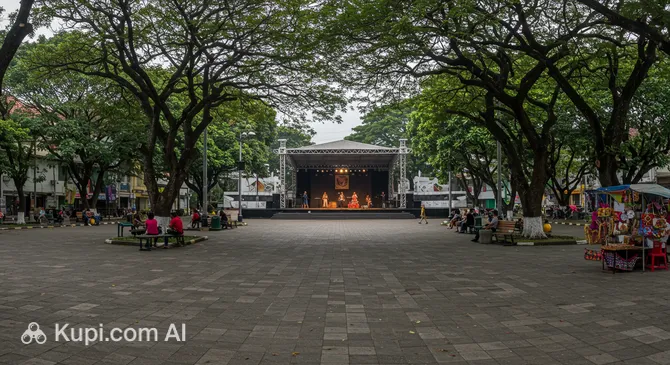
Ujung Berung Town Square. Illustration.
Source: Kupi.com AI

Traveler photos:

As an open space, Ujung Berung Square likely serves as a venue for various city events, meetings, or simply relaxation. Such squares often reflect the spirit of the city, becoming a crossroads for cultural and social activities. Bandung, being an important center on the island of Java, offers many such corners where you can feel the local color.

Visiting Ujung Berung Square provides an opportunity to observe the rhythm of life in Bandung, see how the citizens spend their time, and perhaps witness local events or traditions. While specific historical details or unique architectural features of the square may require on-site exploration, its very existence as a community hub makes it a noteworthy point on the city map.

For tourists exploring Bandung, this square can be a starting point for further exploration of the surroundings or a pleasant place for a short break. Indonesia, as the largest country in Southeast Asia, is rich in diversity, and city squares like Ujung Berung Square are an integral part of its multifaceted culture.

Contacts

Ujung Berung Square is an open public space, so it generally does not have specific contact details like a phone number or email. To reach the square, located in the Ujung Berung district of Bandung, you can use local public transport or a taxi. For the most up-to-date information on any events, it is best to check the official tourism websites of Bandung or local information centers.

How to contactContact
AddressAlun Alun Ujung Berung, Jl. Cigending No.3, Cigending, Kec. Ujung Berung, Kota Bandung, Jawa Barat 40611, Indonesia

What to Do

At Ujung Berung Square, visitors can immerse themselves in the daily life of Bandung. It’s a great place for people-watching, observing locals as they socialize and go about their daily rituals. You can simply sit on a bench and soak up the atmosphere of a bustling Indonesian city, watching passersby and the street hustle. Such squares often become a magnet for families with children, young people, and the elderly, creating a lively and dynamic scene.

Depending on the time of day and the day of the week, you can find street vendors at Ujung Berung Square or in its vicinity offering local snacks and drinks. This is a wonderful opportunity to taste authentic Indonesian cuisine and learn about the region's gastronomic traditions. Occasionally, small local events, exhibitions, or performances are held in such squares, which can be a pleasant addition to your walk.

For photography enthusiasts, Ujung Berung Square can offer interesting shots of urban life and the architecture of the surrounding buildings. It is also a place where you can relax after visiting other attractions in Bandung, catch your breath, and plan your next move. A walk through the square allows you to better feel the rhythm of the city and see its non-tourist side.

Visiting Ujung Berung Square is an opportunity to feel like part of the local community, even if only for a short time. It is not so much a specific attraction with exhibits as it is a living space reflecting the culture and spirit of Indonesia. Here, you can take a short pause, enjoy the moment, and gain a deeper insight into life in this corner of Southeast Asia.

Getting There

Ujung Berung Square is located in the district of the same name in Bandung, Indonesia. You can reach it in various ways, the most common being public transport and taxis. Your choice will depend on your current location in Bandung, your budget, and your comfort preferences.

For those who prefer public transport, Bandung has a network of minibuses known as "angkots," as well as city buses. There are likely routes that pass through the Ujung Berung district or in the immediate vicinity of the square. It is recommended to check route numbers and stops with locals or at your hotel, as the public transport system may not always be intuitive for tourists. This is the most budget-friendly way to get around and also allows you to observe the daily life of the city's residents.

A more convenient and faster option, especially if you are coming from the city center or another distant area of Bandung, is a taxi. Ride-hailing apps (such as Gojek or Grab) are popular in Indonesia, offering a user-friendly interface and often fixed trip costs. This helps avoid misunderstandings with the driver regarding the route and price. A taxi ride from central Bandung to Ujung Berung Square will take some time, depending on traffic conditions.

Before heading to Ujung Berung Square, it's helpful to check its exact location on a map to plan your route better. Keep in mind that Bandung is a large city, and traffic can be heavy, especially during rush hours. Allow plenty of travel time so your visit to the square is comfortable and unhurried.

Nearest city: Bandung

History & Facts

While specific details about the founding of Ujung Berung Square itself may be lost to time, its history is inextricably linked to the rich past of Bandung. The first mentions of Bandung date back to 1488, but archaeological finds indicate that this land was inhabited much earlier—Homo erectus lived here in prehistoric times on the banks of the Cikapundung River and around the ancient Lake Bandung. The Ujung Berung district, where the square is located, is part of this ancient and historically significant territory.

The colonial era left a significant mark on the development of Bandung and its districts, including Ujung Berung. In the 17th and 18th centuries, the Dutch East India Company actively developed these lands, establishing numerous plantations. A key event was the 1810 construction of the famous Great Post Road (De Groote Postweg), built by Dutch colonists through Bandung. This road connected the west and east coasts of Java, turning the city into a major transportation hub and undoubtedly stimulating the development of adjacent areas where public centers like Ujung Berung Square would eventually form.

A new stage in Bandung's development began in 1880 with the construction of the first railway line connecting it to Batavia (now Jakarta). This led to rapid growth in light industry and attracted many migrants, including from China. In 1906, Bandung was granted municipality status and quickly transformed into a fashionable resort city known as the “Paris of Java.” The appearance of high-end hotels, restaurants, and boutiques was accompanied by the development of urban infrastructure, including public spaces. It is likely that Ujung Berung Square, like other similar spots in the city, reflects these stages of growth and transformation in Bandung, serving as a gathering place and social hub for its residents for many years.

Time Needed

A visit to Ujung Berung Square in Bandung generally doesn't require a significant amount of time if your goal is just to look around and soak up the atmosphere. To walk around the square, observe the daily life of the locals, perhaps take a few photos, and rest for a bit, 30 minutes to 1 hour is usually enough. This time will suffice to get a general impression of this public space.

If you plan to do more than a quick look—for example, staying longer to try street food if it's offered nearby or waiting for a local event (if one is scheduled)—your stay may be extended. Also, if the square serves as your starting point for exploring the surrounding Ujung Berung district, the total time spent in this part of the city will naturally be longer. Overall, Ujung Berung Square is more of a place for a leisurely stroll and immersion in the local flavor rather than an attraction with a strictly regulated visiting time.

Working Hours

Ujung Berung Square is a public space, and generally, such places in Bandung are open to the public 24 hours a day or, at the very least, during all daylight hours. Entry to the square is likely free, and no advance booking or registration is required for a regular visit. You can come here at any convenient time to take a stroll and enjoy the atmosphere.

As it is an open urban area, it is accessible year-round. However, for the most accurate and up-to-date information regarding possible events, temporary restrictions, or special operating hours related to any activities at Ujung Berung Square, it is recommended to check the official tourism resources of Bandung or ask at local information centers upon arrival. This will help you plan your visit in the best way possible.

Open 24 hours

Nearby

Visiting Ujung Berung Square is a great way to get to know one of Bandung's districts. However, to make your trip through Indonesia even more rewarding, don't limit yourself to just one spot. Exploring the surrounding area will allow you to gain a deeper understanding of the culture and diversity of this amazing city.

Near Ujung Berung Square and in other parts of Bandung, there are many interesting sites worth your attention. Below, we have gathered information about some of them so you can plan your route and discover even more.

NameDistance
Trans Studio Bandung7.3 km
Trans Studio Mall Bandung7.3 km
Margacinta Park7.5 km
Afterhour Billiard & Lounge8.9 km
Geological Museum8.9 km
Gedung Sate9.2 km
Heritage Factory Outlet9.3 km

Have you reached the end of the page?

So the route has been studied inside and out