Support

Singkawang

About

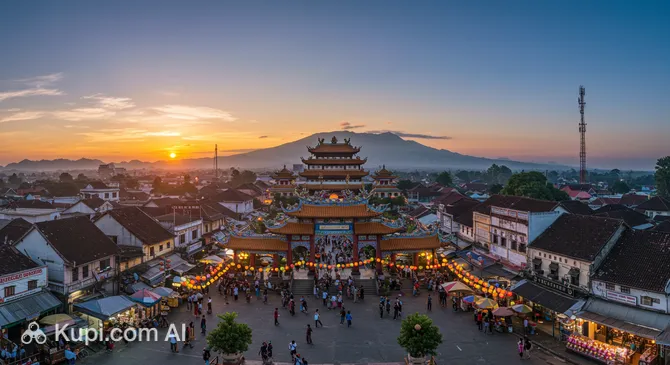
Singkawang is a picturesque and colorful city, comfortably nestled on the northwestern coast of the island of Kalimantan, in the province of West Kalimantan. Bathed by the warm waters of the South China Sea and surrounded by green hills, it offers travelers a unique combination of natural beauty and cultural diversity. Located in Indonesia, this city of about 230,000 people stands out for its special, harmonious atmosphere, where traditions of the past are seamlessly woven into modern life.
Singkawang. Illustration.
Source: Kupi.com AI

Often called the "City of a Thousand Temples," Singkawang captures the imagination with its sheer number of religious buildings, where Buddhism, Taoism, and Confucianism peacefully coexist. This place is a prime example of a multicultural society: Chinese, Malays, and Dayaks have lived here side by side for centuries. The rich history of Singkawang as an important trade and cultural hub is felt on every street, in the architecture of old buildings, and in unique local customs.

The city is famous not only for its tolerance but also for its gastronomic delights, offering tourists dishes born from the intersection of different culinary schools. Furthermore, Singkawang is world-renowned for its grand celebration of the Chap Go Meh festival, which annually attracts thousands of guests with colorful parades and mystical rituals.

Singkawang is an ideal destination for those seeking more than just a beach holiday—it's for those looking for a deep dive into the real, living culture of the region. Come here to enjoy the relaxed pace of life, explore lively markets, and experience the genuine hospitality that makes this city one of the coziest corners of the country.
Weather Overview

Weather:

The climate of Singkawang is a classic example of the equatorial tropics, where eternal summer reigns. The air temperature remains remarkably stable throughout the year, creating warm conditions for travelers. During the day, the thermometer usually stays in the 26–29°C range, while nights bring only a slight freshness with temperatures around 24–25°C.

Precipitation plays a significant role in the life of the city. The wettest period falls at the end and beginning of the year: in November, December, and January, it can rain almost daily (up to 28–29 days a month). Relatively drier periods are observed in February and July, when the number of rainy days decreases to 18–19. To choose the best time for your trip, it's worth checking in advance what weather in Singkawang is expected on your vacation dates.

Expect consistently warm weather with high humidity and occasional tropical downpours at any time of year. Even if you are traveling during the "dry" season, a light raincoat or umbrella will be indispensable items in your luggage, as rains here are often sudden but refreshing.

Average monthly temperature

Average monthly precipitation

Interesting Facts

Beyond its main attractions, Singkawang holds many fascinating secrets that make it a unique phenomenon not only in Indonesia but in all of Southeast Asia. This city is steeped in mysticism and ancient traditions that come alive before the eyes of amazed travelers.

Golden Dragon Monument. Illustration.
Source: Kupi.com AI

Traveler photos:

  • Singkawang bears the unofficial but well-deserved title of "City of a Thousand Temples." The density of religious buildings here is phenomenal: on literally every street, you can encounter a Buddhist pagoda, a Taoist shrine, or a Confucian altar, creating a unique architectural landscape.

  • The city's most striking and somewhat chilling tradition is the "Tatung" rituals during the Chap Go Meh festival. Local mediums enter a deep trance and pierce their bodies with metal skewers and blades, feeling no pain and sustaining no injuries. It is believed that at this moment, the spirits of ancestors possess them, granting invulnerability.

  • Local legend says that during major holidays, "gods descend" upon Singkawang. Residents sincerely believe that on certain days of the year, the boundary between worlds disappears, and one can receive direct heavenly blessings for luck and prosperity.

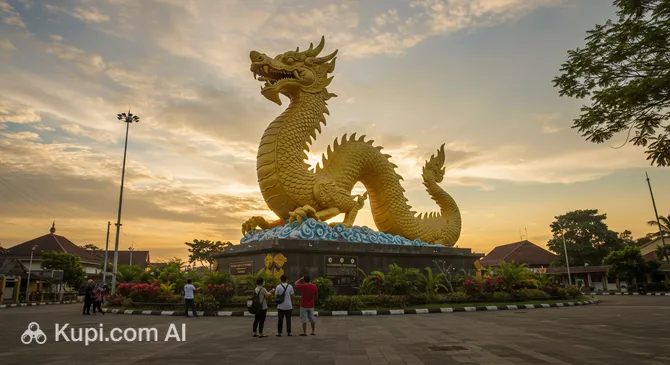
  • The symbol of Chinese heritage and power is the Golden Dragon Monument. This is not just a sculpture, but a tribute to the city's ethnic composition: over 40% of the population are Hakka Chinese, which is why Singkawang's culture is often compared to Hong Kong.

  • Here, you can literally walk into history. The famous Tjia Family House is not a museum in the classic sense, but a residential mansion where the founder's descendants have lived for many generations, preserving the daily life and atmosphere of the early 20th century in its original form.

How to Get There

When planning a trip to this colorful corner of Indonesia, it is important to think through the logistics in advance, as there are no direct flights to the city itself. You can find out more details on how to get to Singkawang by studying the various routes and transport modes available to tourists.

Singkawang itself does not have an airport, so the main transit point for most travelers is Supadio International Airport (PNK) in the city of Pontianak. It is located about 126 km from Singkawang and serves a significant flow of passengers as the key hub for the province. From here, you can reach your final destination by taxi or regular bus, with a travel time of approximately 3.5 hours.

Another option is to use the airport of a neighboring country. Kuching International Airport (KCH) is located in the Malaysian city of Kuching, at a distance of about 164 km. This is a major international airport with a high passenger flow. However, choosing this path requires crossing the border, so the trip by car or bus will take about 4.5–5 hours.

For clarity, here is summary information on the main airports:

AirportPassenger trafficDistance
Supadio International Airport2.3 mln126 km
Kuching International Airport5.3 mln164 km

The railway network on the island of Kalimantan is poorly developed, and there are no active passenger railway stations in Singkawang or its immediate surroundings. The main transport artery connecting the city to the outside world is the road from Pontianak. Tourists can use taxi services, rent a car, or take one of the numerous minibuses (travel) that regularly ply the route between cities.

Main Attractions

Singkawang is a city where history comes alive on the streets, and the architecture reflects an amazing blend of cultures. The main attractions here are not just monuments, but symbols of harmony between different ethnicities and religions that have coexisted on this land for centuries. A walk through its iconic sites will allow you to better understand the soul of this unique corner of Indonesia.

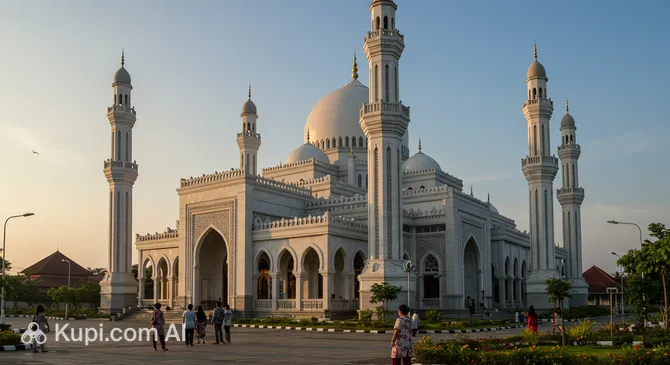
One of the city's most majestic buildings is the Great Mosque of Singkawang. This architectural masterpiece draws the eye with its elegant dome and tall minarets. The mosque serves as an important spiritual center for the Muslim community and stands in vivid contrast to the city's numerous Chinese temples, clearly demonstrating the region's tolerance and multiculturalism. Tourists come here to admire the facade's details and feel the atmosphere of peace.

Grand Mosque of Singkawang. Illustration.
Source: Kupi.com AI

Traveler photos:

To immerse yourself in the atmosphere of the past, a visit to the Tjia Family House is a must. This historic mansion, built in the early 20th century, transports you to the era of the first Chinese settlers. The building is interesting because it is still a residence for the founder's descendants while remaining open to visitors. Here, you can see authentic interiors, antique furniture, and learn about the daily life of a wealthy family of that time while enjoying the view of the inner courtyard and canal.

While walking through the center, you will surely find yourself at a landmark like the Singkawang Roundabout. This lively spot is often decorated with installations reflecting the city's spirit and serves as a popular meeting point and photo spot. Nearby is another bright symbol—the Golden Dragon Monument. This impressive sculpture embodies strength, luck, and the city's Chinese heritage, serving as one of Singkawang's most recognizable icons.

Local Cuisine

Singkawang's cuisine is an amazing fusion of Chinese, Malay, and Dayak traditions, making the city a true gastronomic capital of the region. Here, food is a cult, and many travelers come to Indonesia specifically for the local delicacies. The hallmark of local street food is Choipan—delicate steamed rice flour dumplings filled with jicama, chives, or shrimp, generously sprinkled with fried garlic and served with a spicy sauce.

For those who love hearty meals, it's worth trying Nasi Campur—rice served with a variety of meat and vegetable sides, the composition of which varies from place to place. Since the city is located by the sea, you can always find the freshest seafood here. To appreciate authentic local soups and meat dishes in a comfortable setting, we recommend visiting the Sop Mak Garang restaurant, known for its rich broths and traditional approach to cooking.

In the hot tropical climate, refreshing desserts are essential. A local hit is Es Kacang Merah—a drink based on shaved ice, sweet red beans, syrup, and coconut milk. Those with a sweet tooth will also enjoy Kue Keranjang—a sticky sweet cake traditionally prepared for Chinese New Year, but often sold on ordinary days as a favorite tea-time treat.

As evening falls, the epicenter of gastronomic life becomes the Hong Kong Market. This is not just a place of trade, but a cultural phenomenon where hundreds of people gather under the open sky. Here, amidst the noise and aromas, you can try the best examples of street food, watch the masterful work of street vendors, and experience the true taste of Singkawang at night.

Travel Tips

Welcome to Singkawang! To ensure your trip to this amazing "City of a Thousand Temples" in Indonesia is as comfortable as possible and leaves only pleasant memories, we have prepared a list of proven recommendations to help you feel confident in any situation.

  1. Clothing and Climate. Given the perpetual summer and high humidity, bring light, breathable clothing made from natural fabrics like cotton or linen. Be sure to pack a compact raincoat or umbrella—tropical downpours here are sudden and heavy. For visiting the numerous temples and mosques, modest clothing covering shoulders and knees is required, and comfortable flat shoes (easy to take off) will be your best friend on excursions.
  2. Transport and Navigation. Public transport (angkot minibuses) can be difficult for tourists without knowledge of the language and routes. The most reliable and safe way to get around is using mobile taxi apps like Grab or Gojek. This guarantees a fixed price and eliminates the need to bargain. For short, colorful trips around the center, you can hire a cycle rickshaw (becak), but agree on the price beforehand.
  3. Finances and Payment. The official currency is the Indonesian Rupiah (IDR). While large hotels and shopping malls accept Visa and Mastercard, Singkawang is a cash-oriented city. For buying street food, souvenirs at markets, and paying for small services, you will always need cash. There are enough ATMs in the center, but it's better to withdraw money at branches of large banks. Tipping is not a strict rule, but rounding up the bill or leaving a small change is always appreciated.
  4. Health and Safety. The city is quite safe, but don't forget basic precautions: watch your bags in crowded places and don't wear expensive jewelry ostentatiously. Drink exclusively bottled water, and use it for brushing your teeth as well. Stock up on repellents: mosquitoes can be active not only in the evening but also during the day. Pharmacies (Apotek) are common, but it's better to bring specific medications with you.
  5. Connection and Communication. English is not widely spoken here, so download an offline Indonesian translator to your phone. Locals often speak the Hakka dialect, but everyone understands the national language (Bahasa Indonesia). For stable internet, we recommend buying a local SIM card (e.g., Telkomsel) at an official service center upon arrival, as Wi-Fi in small cafes can be slow.
  6. Local Etiquette. Indonesians are very polite and smiling. When greeting someone or handing over money and objects, use only your right hand (the left is considered "unclean"). Always remove your shoes when entering any home, mosque, and most temples. A smile is a universal key to the hearts of locals and will help solve many issues.
  7. What to Avoid. Refrain from public displays of affection (kissing and hugging) in public places, as this contradicts local conservative norms. Also, never touch the head of a local, even a child—the head is considered a sacred part of the body where the soul resides, and touching it can be seen as an insult.
  8. Gastronomic Tip. Don't be afraid to try food at street stalls (warungs), especially at the night market. Singkawang is a gastronomic capital, and it is here, rather than in expensive restaurants, that you will find the tastiest "choipan" and freshest seafood. Simply choose the places where the locals themselves eat—that's the main sign of quality.

By following these simple tips, you can easily blend into the relaxed rhythm of Singkawang life and avoid awkward situations. Enjoy the hospitality of the locals, try new things, and may your journey be full of bright discoveries!

Entertainment & Nightlife

Nightlife in Singkawang has its own unique and unmistakable character. Unlike noisy metropolises with thumping discos, evening leisure here is permeated with an atmosphere of friendliness, gastronomic discoveries, and traditional Asian comfort. As the sun sets, the heat subsides, and locals head out to the streets to socialize, eat delicious food, and sing their favorite songs. The evening center of gravity is the area around Jalan Setia Budi and adjacent blocks, where life doesn't quiet down until late at night.

The main epicenter of evening activity is undoubtedly the famous Hong Kong Market. As darkness falls, this area is transformed: hundreds of lights flicker on, and the air fills with the aromas of spices and fried delicacies. It's the perfect place for those who want to feel the real rhythm of the city, try street food, and simply observe the colorful crowd. It is safe, noisy, and very fun, with trading and socializing continuing well past midnight.

If you are looking for more organized entertainment, it's worth checking out karaoke—a favorite pastime for Indonesians. This isn't just singing; it's an important part of social culture. One popular spot is the Masterpiece Family Karaoke Singkawang. Here, you can rent a private, comfortable room with excellent sound, order drinks and snacks, and spend time with your group away from prying eyes. The venue features a modern interior and a wide selection of songs, including international hits.

For lovers of fine dining in a pleasant setting, the city offers many restaurants that stay open late. An excellent choice would be Bebek Boedjang Singkawang. This place is famous for its duck dishes and cozy atmosphere, suitable for both a family dinner or a meeting with friends before continuing the evening. The dress code in most establishments is democratic: casual style is appropriate everywhere, though it's better to leave beachwear for the coast.

Regarding daytime and early evening entertainment, the Singkawang Grand Mall serves as a hub for shopping and moviegoers. Here, you can hide from the midday heat, visit a modern cinema, or simply browse the shops before heading out to explore the city at night.

Practical tips for tourists:

  • Safety: Singkawang is a peaceful city, and walking along the central lit streets at night is quite safe. However, as with everywhere, keep an eye on your personal belongings and avoid dark, deserted alleys on the outskirts.
  • Transport: At night, the most reliable way to get around is by taxi, which is best ordered through official apps (such as Grab or Gojek). This guarantees a fixed price and a safe trip.
  • Opening Hours: Night markets and street cafes usually operate until 1–2 AM, while restaurants in shopping centers close around 10:00 PM. Plan your dinner in advance if you prefer classic restaurants.
  • Prices: Evening entertainment here is quite affordable. Dinner at a night market will cost a nominal amount, and renting a karaoke room is reasonably priced, especially when splitting the bill with a group.

Parks & Museums

Singkawang offers travelers not only spiritual enrichment in its numerous temples but also the opportunity to enjoy nature and touch living history. The city's green zones and cultural sites create a harmonious ensemble, allowing for a mix of outdoor walks and exploring the region's rich heritage.

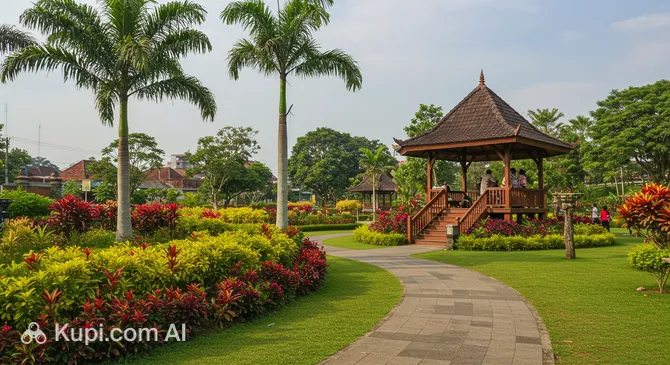
For those seeking solitude and beautiful scenery, Gunung Sari Park is a wonderful choice. This place is popular with both locals and tourists due to its relaxing atmosphere. Here, you can take a break from the city bustle, enjoying views of the surrounding hills and well-kept greenery. The park is perfect for morning jogs or leisurely evening strolls, allowing you to feel the natural rhythm of West Kalimantan.

Gunung Sari Park. Illustration.
Source: Kupi.com AI

Traveler photos:

Nature lovers should visit the Bird Park. This is not just a recreation area, but an opportunity to get acquainted with the diversity of local fauna. Visitors can see various species of birds in conditions close to their natural habitat. The park is a great place for a family visit: here, you can not only observe birds but also take colorful photos against the backdrop of tropical greenery, getting a boost of positive emotions.

While Singkawang lacks giant museum complexes of capital-city scale, the role of the main guardian of history is played by the Tjia Family House. This architectural monument is effectively a living museum of "Peranakan" culture (descendants of Chinese immigrants). Visiting this old mansion allows you to peek into the past and see how wealthy merchant families lived in the early 20th century. Authentic furniture, traditional layout, and historical artifacts make it a key site for anyone interested in ethnography.

Another important cultural site reflecting the city's spirit is the majestic Golden Dragon Monument. Although this structure is outdoors, it carries deep meaning comparable to a museum exhibit. The dragon symbolizes strength and prosperity, serving as a tribute to the Chinese roots of a significant portion of the city's population. This is a must-visit site to understand the cultural code of Singkawang.

For a truly authentic experience, we recommend simply strolling through the city's old quarters that are not marked on tourist maps. The architecture of many ordinary residential houses here is so unique that the entire center of Singkawang can be perceived as one large open-air gallery, where each facade tells its own story.

Getting Around

The public transport system in Singkawang differs significantly from what residents of megacities are used to. Here, you won't find subways, trams, or large bus networks with schedules. City logistics are built on road transport, and most movement through the streets is via route taxis, motorcycles, and modern online services, making city travel fairly simple but requiring some adaptation.

The most common and budget-friendly way to get around for locals is the "angkot"—small minibuses that run along specific routes. They don't have fixed stops: to get on, just wave your hand from the roadside, and to get off, tell the driver "kiri" (kee-ree), which means "left" or "stop here." Fare payment is made exclusively in cash to the driver upon exiting. Prices are very low, but routes can be confusing for a tourist unfamiliar with the city.

The most comfortable and predictable alternative for travelers is mobile taxi apps like Grab and Gojek. These services work excellently in Singkawang and allow you to order both a car (Gocar/GrabCar) and a motorcycle taxi (Goride/GrabBike). The main advantage is a fixed price known before the trip begins and the lack of a language barrier since you specify the destination on a map. You can pay with a linked card in the app or in cash to the driver.

For short trips around the center and to set a special mood, you should try the services of becaks—traditional Indonesian cycle rickshaws. This is the perfect option for leisurely sightseeing or a trip to the market. Becaks do not have meters, so the price must be negotiated with the driver in advance, before boarding. Bargaining here is not only appropriate but expected. Remember that this mode of transport is only suitable for short distances and flat roads.

If you feel confident behind the handlebars of two-wheeled transport, scooter rental is a popular solution. Rental points can be found at hotels or in tourist areas. This gives you complete freedom of movement, allowing you to explore not only the city but also the nearby beaches. Keep in mind that traffic can be chaotic, and you must have an international driver's license of the appropriate category and a helmet.

Accommodation

Where to stay:

Accommodation options in Singkawang are diverse enough to meet the needs of most travelers, even though the city is not a luxury resort in the traditional sense. The bulk of the hotel stock consists of budget guesthouses (losmen) and mid-range hotels offering comfortable conditions at affordable prices. In recent years, more modern hotels and resort complexes on the outskirts, aimed at family holidays, have been appearing.

The choice of area depends on your travel goals. If you want to be in the thick of things, enjoy street food, and be within walking distance of the main temples, it's best to stay in the City Center (Pusat Kota). Life here is bustling until late at night, especially near the famous market. For those who prefer peace and proximity to nature, areas on the periphery or closer to the coast are suitable, where the atmosphere is more relaxed.

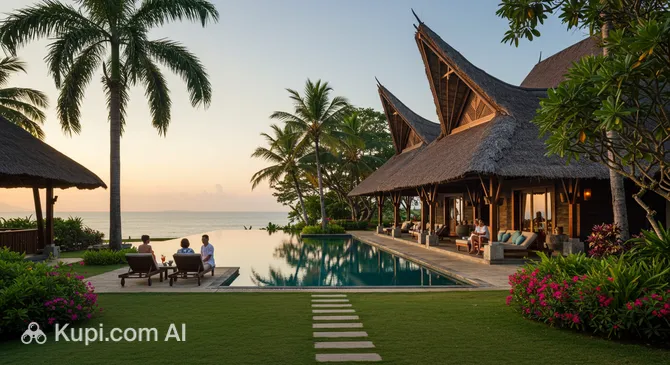
Among the specific accommodation options worth noting is the Danau Singkawang Resort. This place is great for those who want to escape the city bustle and enjoy picturesque views without traveling far from civilization. The complex offers a more spacious territory and a resort-like atmosphere.

Dangau Resort Singkawang. Illustration.
Source: Kupi.com AI

Traveler photos:

Another interesting option is Villa Bukit Mas Singkawang. This property is often chosen by tourists who value comfort and tranquility. Here, you can expect good service and amenities that allow for a comfortable rest after a busy day of sightseeing.

Booking tips and prices:

  • Price Range: During normal times, prices in Singkawang are very affordable. A budget room can be found for the equivalent of $10–15 USD, while comfortable rooms in good hotels will cost $30–50.
  • Peak Season: It is critically important to book accommodation in advance (3–6 months ahead) if you plan to visit during Chinese New Year and the Chap Go Meh festival. During these days, the city is overcrowded with tourists, prices can skyrocket several times over, and vacancies disappear instantly.
  • Booking Methods: Most large hotels are represented on international online platforms. However, small guesthouses often work only through direct calls or messaging apps (WhatsApp), and sometimes take "walk-in" guests if rooms are available.

Nearby Cities

For those who want to explore the surroundings, Singkawang serves as an excellent starting point for day trips to several interesting nearby locations:

The most popular destination for a short trip is the provincial capital—Pontianak. The journey there takes about 3–3.5 hours. This city is unique for its geographical position right on the equator. Here, you can visit the famous "Equator" monument, where you'll have the chance to stand with one foot in the Northern and the other in the Southern Hemisphere. Also of interest are river cruises along the majestic Kapuas River and getting to know the local culture in traditional stilt houses.

North of Singkawang, about a 1.5-hour drive away, lies the town of Sambas. This place attracts history buffs thanks to the Sambas Sultan's Palace (Keraton Sambas). The palace architecture and preserved artifacts offer a glimpse into the glorious past of the Malay sultanate. The atmosphere here is more peaceful and measured, perfect for a leisurely cultural trip.

If you are more interested in nature, consider a trip to nearby islands such as Lemukutan or Randayan. Although the logistics will require a boat, these places are famous for their coral reefs and crystal-clear water, offering excellent conditions for snorkeling and beach relaxation away from the city bustle.

CityPopulationDistance
Pemangkat44 78330 km
Pontianak618 388110 km
Sematan133 km
Sanga (Seika-cho)23 264168 km
Kuching325 132169 km

These nearby destinations allow you to get a sense of the diverse culture and landscapes of the region.

Shopping & Souvenirs

Shopping:

Shopping in Singkawang is a fascinating immersion into local culture, where modern conveniences sit alongside centuries-old traditions. The city doesn't claim to be a high-fashion capital, but it is famous for unique goods that are hard to find in other parts of Indonesia. Special attention should be paid to handmade items, especially the famous local ceramics, as well as gastronomic souvenirs reflecting the city's Chinese heritage.

The heart of commercial life is concentrated on the city's main streets, such as Jalan Diponegoro and Jalan Sejahtera. Here, you'll find rows of traditional shop-houses, where the ground floors bustle with trade in everything from clothes and shoes to electronics and gold jewelry. Walking along these streets allows you to feel the real rhythm of the city and find interesting goods at very democratic prices.

If you prefer comfortable shopping in air-conditioned environments, visit the Singkawang Grand Mall. This is the largest and most modern shopping complex in the city, featuring both well-known Indonesian brands and international labels. Here, you can update your wardrobe, visit the supermarket, or just relax at the food court. Another popular shopping destination is the ARLI Singkawang shopping center, offering a good assortment of daily necessities and clothing.

It's impossible to imagine shopping in Asia without visiting markets. The most colorful spot is the Hong Kong Market. During the day, you can buy fresh fruit and local products here, and in the evening, it transforms into a lively trading platform selling souvenirs, accessories, and, of course, street food. The atmosphere of this market, with its bright lights and smells, is an attraction in itself.

As souvenirs from Singkawang, tourists most often bring home:

  • Ceramics: The city is famous for its ancient "dragon kilns." Vases, pots, and decorative plates depicting dragons are considered the region's hallmark.
  • Gastronomy: Be sure to buy Kue Keranjang (sweet glutinous rice cake), especially if your trip coincides with Chinese holidays, as well as local coffee and salted seafood snacks.
  • Textiles: T-shirts with city symbols or traditional fabrics with local patterns.

Shops in shopping centers usually operate from 10:00 AM to 10:00 PM daily. Traditional street shops may close earlier, around 5:00–6:00 PM, but many food and souvenir stalls stay open until late at night. The main means of payment in markets and small shops remains cash rupiah. Shopping centers and large supermarkets accept bank cards (Visa, Mastercard) without any issues.

The Tax Free (VAT Refund) system exists in Indonesia but is mainly oriented toward large tourist centers like Bali and Jakarta. In Singkawang, finding shops participating in this program and issuing the necessary documents for tourists will be extremely difficult, so you should not count on a VAT refund for purchases made here.

Nearby cities

Reached the end of the page?

That means the route is fully explored