Support

Kampung Batik Kauman

About

Imagine a place where time seems to slow down to the rhythmic tapping of tools and the scent of hot wax. Kauman Batik Village is the oldest center of traditional art in the city of Solo, where the secrets of craftsmanship are passed down through generations. Located near the royal palace, this cozy location in Indonesia is recognized as an official cultural hub and a true paradise for connoisseurs of authentic textiles.
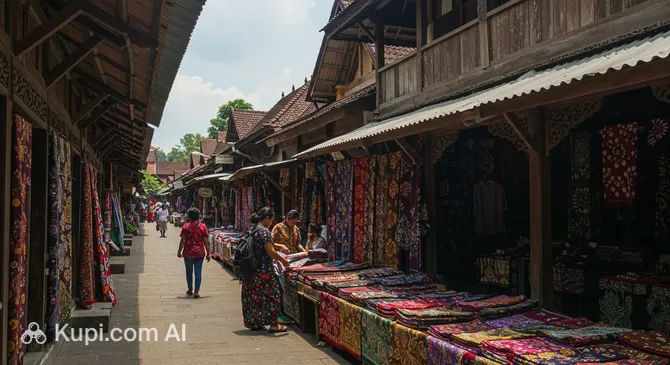
Kauman Batik Village
Kauman Batik Village. Иллюстрация. Источник: Kupi.com AI

In 2009, the art of batik was recognized by UNESCO as a Masterpiece of the Oral and Intangible Heritage of Humanity, and Kauman plays a key role in preserving this tradition. Here you can see the unique jlamprang style, in which Arabic, Indian, and Chinese motifs are intricately interwoven. Unlike other craft quarters, local batik is famous for its deep dark tones and complex hand-drawing techniques.

Today, Kauman is not just a production site but a full-fledged tourist complex with its own museum, training centers, and research laboratories. Walking along its colorful streets, you find yourself in a living open-air museum where every house facade and every roll of fabric tells its own amazing story.

Contacts

For those planning a visit to this craft center, it's useful to have the exact coordinates at hand. The village is located in the heart of the city's historic district.

How to contactContact
AddressJl. Trisula III No.1, Kauman, Kec. Ps. Kliwon, Kota Surakarta, Jawa Tengah 57112, Indonesia

What to Do

The main reason to visit this place is the opportunity to see the full production cycle of traditional batik with your own eyes. You can watch as masters skillfully use a canting (a special tool for wax) to apply intricate patterns to the canvas, and then dye and dry the fabric. The atmosphere of the workshops invites a thoughtful study of every detail of this painstaking process.

For those who do not want to be limited to the role of a spectator, engaging workshops are offered. Under the guidance of experienced mentors, you can try drawing a classic ornament yourself and learn the basics of dyeing. This is a great chance to take home not just a purchase, but an item created with your own hands and filled with personal energy.

Shopping enthusiasts and collectors should check out the numerous galleries and shops. A wide choice of products is presented here: from elegant scarves to luxurious sarongs with "forbidden" royal larangan patterns. The calm and authentic setting of the village is ideal for taking beautiful photos, chatting with artisans, and choosing unique handmade souvenirs that cannot be found in ordinary shopping centers.

Getting There

Finding this creative corner is easy, as it is conveniently located in the central part of the city between the famous Pasar Klewer market and the majestic Surakarta Palace. Most tourists prefer to get here on foot directly from the Kasunanan Palace—the walk takes only a few minutes, and signs posted everywhere will help you find your way.

If you are in another part of the city, you can use public transport. The Batik Solo Trans bus system, running from Balapan Station, stops very close to the village. Additionally, becak (traditional rickshaws) or taxis are always available and quite budget-friendly, easily ordered from Adisumarmo Airport or the train station.

For travelers with their own or a rented car, there is a small parking area (for about 4 cars). Enter the exact address into your navigator: Jl. Trisula III No.1, Kauman. Although the area is quite lively, it remains completely safe and welcoming for foreign guests.

Ближайший город: Solo

History & Facts

The history of this place is inextricably linked with the Surakarta Kraton—the Sultan's palace. The name "Kauman" itself comes from the word kaum, which means "a settlement of officials." Originally, the abdi dalem (court servants) lived here, serving at the palace mosque and meeting the needs of the royal family. It was their wives who, at the end of the 19th century, began creating batik as a home activity, producing exquisite fabrics exclusively for the nobility.

The real flourishing of the craft occurred in the 1930s. During this time, batik production brought significant wealth to the residents of Kauman, which was reflected in the architecture: luxurious gedhong style houses (Indo-European architecture) began to be built, serving as both residences and spacious workshops. During this same period, the unique jlamprang style was formed, incorporating Arabic, Indian, and Chinese motifs.

Interestingly, Kauman has long been the place where so-called larangan ("forbidden") patterns were created. These ornaments are endowed with deep philosophical meaning and in the past were intended only for members of the royal family. Today, these traditions are carefully preserved by local residents, and the location itself has been officially recognized as an important cultural and tourist site since 2006.

Time Needed

To take a leisurely stroll through the narrow streets and peek into the workshops, you usually need about 2–3 hours. This is enough time to observe the craftsmen at work, visit the local batik museum, and pick out a few memorable souvenirs in the galleries.

If you plan to take part in an interactive workshop and create your own pattern on fabric, you should allow at least half a day for your visit. The process of applying wax and dyeing requires patience and concentration, but it provides an unforgettable experience.

Working Hours

The batik village is open to visitors daily, making it accessible to tourists any day of the week. From Monday to Friday, craftsmen and shops await guests from 9:00 AM to 6:00 PM.

On weekends, life here begins to bustle a bit earlier: on Saturday and Sunday, the facilities operate from 8:00 AM to 6:00 PM. It is recommended to come in the first half of the day, when the production process in the workshops is most active.

DayWorking hours
Понедельник9:00 – 18:00
Вторник9:00 – 18:00
Среда9:00 – 18:00
Четверг9:00 – 18:00
Пятница9:00 – 18:00
Суббота8:00 – 18:00
Воскресенье8:00 – 18:00

Nearby

A visit to the batik village can easily be combined with sightseeing at other interesting locations, as the central part of the city is literally steeped in history. Exploring the surroundings will allow you to dive deeper into the atmosphere of Javanese culture and see Solo from different perspectives.

NameDistance
Great Mosque of the Surakarta Palace0.1 km
Slamet Riyadi Statue0.3 km
Northern Alun-Alun of Surakarta0.3 km
Surakarta Hadiningrat Palace0.5 km
Fort Vastenburg0.5 km
Djoeang 45 Building0.6 km
PION Executive KTV & Bar0.7 km

Reached the end of the page?

That means the route is fully explored