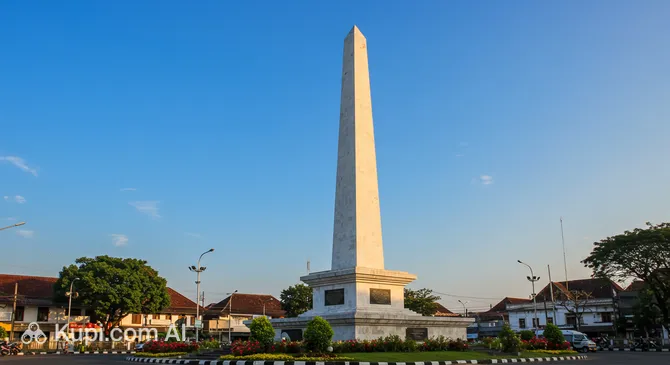
Tugu Yogyakarta is an iconic historical monument located in the heart of Yogyakarta on the island of Java in Indonesia. This elegant white column with a golden top is more than just an architectural decoration; it is one of the city's most important symbols and a key point of its cultural and spiritual axis. The monument was originally built in 1755 by order of Sultan Hamengkubuwono I and symbolized the unity of the people and the ruler.
The monument is situated at a busy intersection of main streets, serving as a landmark for both locals and numerous tourists. The name "Tugu" translates from Javanese as "post" or "obelisk." Throughout its long history, the monument survived destruction by an earthquake in 1867 and was subsequently rebuilt, albeit in a slightly altered form. It acquired its current appearance after reconstruction in 1889.
Traveller photos:
For the residents of Yogyakarta, Tugu is more than just a monument. It is part of a symbolic axis that connects the Southern Ocean, the Sultan's Palace (Kraton), and Mount Merapi. This line represents the harmony between humanity, nature, and the divine. The monument is frequently depicted on postcards and souvenirs, and the square around it has become a popular place for meetings and memorable photos, especially in the evening when the lights are turned on.