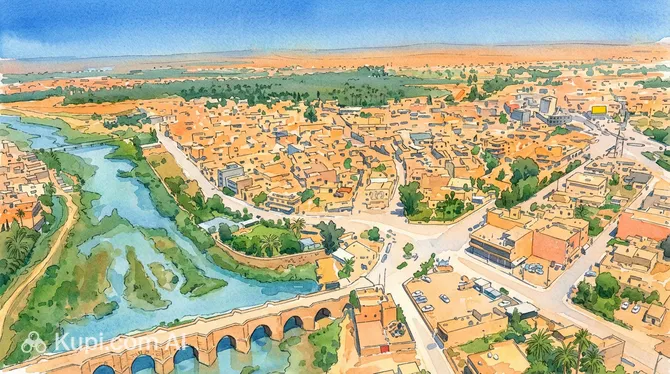
Baqubah is a dynamic administrative center of the Diyala Governorate, located just 50 kilometers northeast of Baghdad. The city is nestled on the banks of the Diyala River, which largely defines its character and rhythm of life. As an important regional hub, Baqubah represents a classic example of an Iraqi city where everyday bustle blends with the agricultural traditions of its surrounding fertile lands.
Baqubah. Illustration.
Source: Kupi.com AI
The city's geographic position makes it a key transport node in Iraq. With a population estimated at up to 600,000 people, it holds a leading position in its region. Although the city is not a typical tourist destination, its atmosphere allows for a deep immersion into the authentic life of modern Iraq, away from standard routes.
One of the unique features of the area is its agricultural heritage; Baqubah is widely known as a center for citrus cultivation. The history of the city's development is closely linked to the railway and river trade, which has created a unique urban environment here. Visiting this place is an opportunity to see the real, unvarnished Iraq, experience the hospitality of the locals, and stroll through lively markets.
Weather Overview
Baqubah is characterized by a hot desert climate typical of central Iraq. Summers here are long and extremely hot: from June to September, daytime temperatures regularly exceed +40°C, and sometimes even reach +45°C. During this time, there is virtually no rain, and the air can be quite dusty due to the terrain of the Diyala plain.
In contrast, winter in the city is very mild and pleasant. In January and February, the average daytime temperature is around +17°C...+19°C, though it can drop to +7°C at night. Most of the annual precipitation occurs during the winter months, although the total amount remains small. Spring and autumn are the most comfortable periods to visit, when the heat has not yet fully set in or has already begun to subside.
When planning your trip, be sure to study the detailed climate of Baqubah by month. The city's riverside location slightly softens the dry air, however, the dense urban development tends to retain heat. If your visit falls during the summer period, try to plan your activities for the early morning or evening hours to avoid the peak of solar activity.
Average monthly temperature
Average monthly precipitation
Interesting Facts
The name Baqubah has very ancient roots: it comes from the Aramaic "Bet Yaqub," which translates to "house of Jacob," reflecting the region's rich pre-Islamic heritage.
The city is the recognized "citrus capital" of the region—the surrounding plantations supply oranges and lemons to a significant part of the country.
With a central district area of approximately 223.3 km², Baqubah is among the forty largest cities in Iraq and serves as a vital transport hub on the way to the eastern borders.
One of the country's oldest railways passes through the city, connecting it to the capital and making it a strategically important logistics center.
How to Get There
Getting to Baqubah is quite simple thanks to its proximity to the Iraqi capital. Baghdad serves as the main transport hub for travelers, from where the city can be reached by car or train in just an hour or an hour and a half. The transport network of the Diyala Governorate is actively developing, making the city accessible for regional travel.
The railway is one of the most reliable ways to reach the city. Trains from Baghdad run regularly, and the journey usually takes between 1 and 2 hours. This is an excellent option for those who want to avoid traffic jams and enjoy views of the Iraqi plains from the carriage window. You can also use numerous shared taxis and buses that depart from the capital's stations throughout the day.
Station
Passenger traffic
Distance
Baghdad railway station
10
52 km
Kermanshah Railway Station
3
242 km
The city does not have its own airport, so air travelers should head to Baghdad International Airport (BGW). After arrival, you can use a transfer or take a taxi directly to the center of Baqubah. Detailed information about routes and schedules can be found in the how to get there section on our portal.
Baqubah is primarily a city of living history and everyday life, where the main attractions are not museums behind glass, but the elements of the urban environment itself. One of the most notable sites is the river bridge over the Diyala. This impressive engineering feat not only connects different parts of the city but also serves as an excellent vantage point for observing the river's flow and the bustle of riverside life.
The city's central markets are a true kaleidoscope of sounds and aromas. There are no specially created tourist zones, so a walk through the stalls allows you to see the real daily life of the Iraqi province. Baqubah's markets are the heart of the city, where you can find everything from the freshest local fruits, for which Diyala is famous, to traditional handicrafts.
A natural landmark of the city is the Diyala River itself. Its banks serve as a place for relaxation and walks for local residents. Despite the lack of grand embankments, the riverside location gives the city a special picturesque quality, especially during sunset hours when the water reflects the lights of administrative buildings and central squares, which serve as the main landmarks for any visitor.
Local Cuisine
The gastronomic face of Baqubah is traditional Iraqi cuisine with an emphasis on fresh local products. Thanks to the proximity of the river and developed agriculture, the local table is always rich in vegetables and fish. One of the main dishes to try is kabsa—aromatic and spicy rice cooked with tender lamb or chicken, often served on large platters for the whole group.
A special place in the residents' diet is held by samoon—traditional Iraqi diamond-shaped bread baked in stone ovens. It is served hot with almost every meal. Also, don't miss the chance to try dishes made from freshly caught river fish, which are often grilled over charcoal with lemon juice and local spices grown in the gardens of Diyala.
The culture of tea drinking in Baqubah is elevated to an important ritual. Local tea is very strong, sweet, and often flavored with cardamom. It is drunk from small glass cups called "istikan" at any time of day. Alcohol is almost never found in local establishments, but you will find many types of freshly squeezed juices and traditional Iraqi coffee, which will delight you with its thick and rich flavor.
Travel Tips
A trip to Baqubah will be an interesting experience of getting to know authentic Iraq, and these practical tips will help make your visit as comfortable and safe as possible.
Clothing and Dress Code: Choose lightweight clothing made from natural fabrics, as it can get very hot in the region. Remember modesty: for both men and women, covered shoulders and knees are preferred, especially when visiting administrative and residential neighborhoods.
Getting Around the City: Taxis are the optimal way to move around. Agree on the fare in advance. For trips to Baghdad, it is best to use the railway—it is fast and reliable.
Finances: The main currency is the Iraqi Dinar. Cards are rarely accepted, so always have a sufficient supply of cash with you. It is best to change money at official exchange offices in the city center.
Safety: Stick to central, busy areas and avoid walking on the outskirts after dark. Always carry your documents or copies of them with you.
Communication: The main language is Arabic. English is not widely spoken, so learn a few basic phrases or use an offline translator. A local operator's SIM card can be easily purchased in the city center.
Etiquette: Iraqis are very hospitable. Greet people with your right hand. If you are invited for tea, do not refuse—it is an important sign of respect.
What to Avoid: Do not photograph government buildings, military sites, or checkpoints. It is also best not to discuss political topics with people you don't know well.
Hydration: Always carry bottled water with you. The heat can be exhausting, and it is important to stay hydrated throughout the day.
May your journey to Baqubah be filled with bright impressions and warm encounters with the locals!
Entertainment & Nightlife
The entertainment scene in Baqubah is primarily focused on traditional family recreation and quiet pastimes. You won't find noisy night clubs or bars in the Western sense here, as city life follows a calm provincial rhythm. The main centers of attraction in the evening are the numerous tea houses and cafes located in the central districts and along the riverbank.
Local residents gather in these establishments to discuss news over a cup of strong tea or coffee, play board games, and enjoy the cool air after a hot day. These are ideal places to feel the authentic atmosphere of Baqubah and observe the lives of the townspeople. Most of these places stay open until late evening, offering simple but delicious food.
For those seeking larger-scale cultural events, cinemas, or modern amusement parks, the best option is a trip to neighboring Baghdad. However, even in Baqubah itself, you can enjoy your time at the central markets, which remain lively until dusk, or take an evening stroll across the bridges over the Diyala River, which offer peaceful and calming views of the city.
Parks & Museums
Although Baqubah does not abound with classic art galleries, its main "exhibits" are located outdoors. The city is densely built up, so the banks of the Diyala River serve as the primary recreational zones. Here, by the water, you can find quiet spots for relaxation that replace conventional parks for the townspeople, creating a natural green belt amidst the dense urban landscape.
History buffs will find it interesting to stroll through the old quarters of the city, where the architecture and street layouts themselves tell the story of the region's development as an important transport and trade center. The administrative buildings of the Diyala Governorate and central squares serve as the main landmarks and centers of public life, around which small landscaped areas with fountains are often formed.
Despite the lack of major state museums, Baqubah is interesting for its living culture and craft traditions, which can be observed in workshops and markets. The ecological situation in the city is gradually improving thanks to new greening projects, and visiting local gardens on the outskirts of the city is an excellent alternative to a formal park visit, allowing you to enjoy the nature of this fertile land.
Getting Around
The transport system in Baqubah is typical for a major Iraqi regional center. The basis of public transport consists of buses and shared taxis that run between the main districts and markets. This is the most budget-friendly way to get around, though it's worth considering that during peak hours, transport can be overcrowded and traffic jams are common.
For more comfortable and faster trips, tourists and locals prefer to use taxis. In Baqubah, this is the most flexible form of transport, allowing you to reach any point without being tied to a route. It is customary to agree on the price of the trip in advance, as meters are rarely used. In the central part of the city, many interesting locations are within walking distance, which is convenient for leisurely strolls.
An important part of the transport framework is the railway station, providing a connection to the capital. The railway remains a popular choice for those planning trips outside the city. Pedestrian routes and bicycle use in Baqubah are limited due to heavy traffic and the hot climate, so it is always better to choose motorized transport for traveling significant distances.
Accommodation
The hotel infrastructure in Baqubah is mainly oriented toward business travelers and those visiting the city for administrative purposes. Small private hotels and guesthouses predominate here, offering basic but quite comfortable living conditions. There are currently no luxury hotel chains in the city, which is compensated for by authenticity and affordable prices.
The central part of the city, located near the main transport hubs and markets, is considered the most convenient area to find accommodation. Staying here ensures you are within walking distance of key administrative buildings and shopping areas. There is also a developed segment of apartments for long-term rent, which may be of interest to those planning to stay in the region longer.
When planning your trip, keep in mind that online booking services may not show all available options. Sometimes the best solution is to find accommodation on the spot or through local operators. During periods of important regional events or holidays, it is recommended to arrange accommodation in advance, as the choice of quality options in the city center may be limited.
Nearby Cities
Baqubah is an excellent starting point for exploring central Iraq. Thanks to a developed road network and proximity to the capital, several interesting radial trips can easily be made from here. Nearby towns allow you to see both ancient agricultural communities and dynamically developing modern centers.
Just 8 kilometers away is the small town of Buhriz, which is effectively a suburb of Baqubah and is interesting for its orchards. It is also worth noting Khan Bani Saad—an important settlement on the way to the capital. For those interested in the history of the region, an interesting destination would be Ad-Dujayl, which is less than an hour's drive away.
City
Population
Distance
Buhriz
35 400
8 km
Khan Bani Saad
127 000
21 km
Ad Dujail
100 000
36 km
Taji
200 000
40 km
Miqdadiyah
155 968
40 km
Of course, the main destination for a day trip remains Baghdad with its museums, parks, and endless history. Exploring the surroundings of Baqubah will allow you to better understand the structure of the Iraqi province and see how people live outside the huge metropolis, preserving their traditions and way of life.
Shopping & Souvenirs
Shopping in Baqubah is a fascinating dive into the world of traditional Eastern bazaars. You won't find huge shopping malls with glass storefronts here, but you can experience the true spirit of trade at the central markets located near the Diyala River. These bazaars are the soul of the city: they sell everything from aromatic spices and fabrics to household items.
Special attention should be paid to local products. Baqubah is famous for its fruits, especially citrus and dates, which make excellent and delicious souvenirs. You can also find products by local craftsmen at the markets, including traditional ceramics and textiles. Bargaining here is not just a way to lower the price, but an important part of social interaction, so do not hesitate to politely discuss the cost of your purchase.
Shops in the city usually operate from early morning until late evening, with a short lunch break during the hottest time. Payment is most often made in cash in the local currency (Iraqi Dinars), so it is worth taking care of currency exchange in advance. A walk through the shopping rows of Baqubah is not just a search for necessary items, but an opportunity to see the daily life of the city in all its diversity.