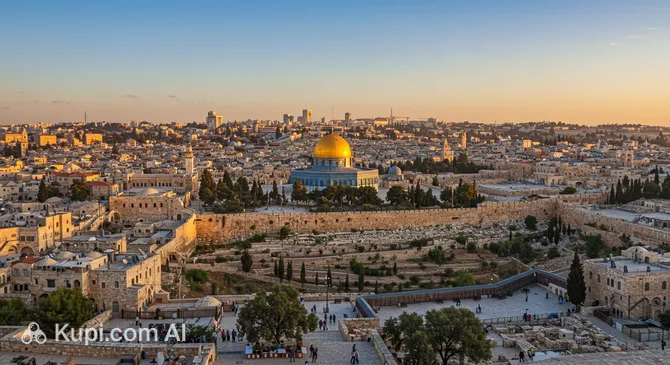
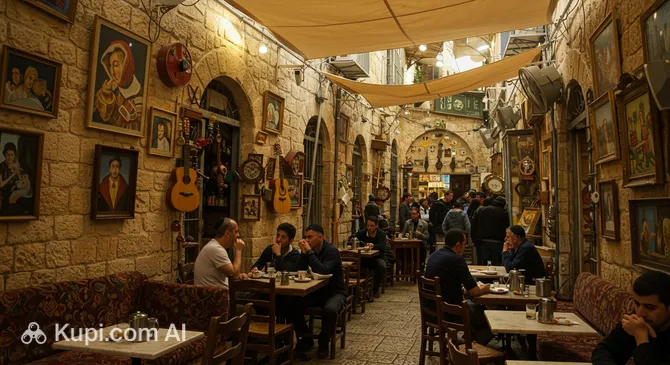
Jerusalem is one of the oldest and most significant cities in the world, located in the heart of Israel. It remarkably combines the functions of a modern capital with those of a major religious center. The city is spread across the Judean Hills, at an altitude of 650 to 840 meters above sea level, giving it a unique hilly terrain and cooler air compared to coastal areas.
Jerusalem. Illustration.
Source: Kupi.com AI
The rich history of Jerusalem spans several millennia, and its Old City is a UNESCO World Heritage site. This is a place where literally every stone is steeped in the past, and dense historical buildings sit alongside important government offices, educational centers, and cultural institutions. The city's population is approaching 920,000, creating a vibrant and multifaceted atmosphere.
Tourists are drawn here not only by the chance to visit world-renowned shrines but also by the unique architecture made of golden stone, colorful Eastern markets, and modern neighborhoods. We invite you to embark on an unforgettable journey to this eternal city to personally experience its powerful energy and discover the secrets it has kept for centuries.
Weather Overview
The climate of Jerusalem is Mediterranean, but its location in the mountains gives it its own peculiarities. Summers here are hot and very dry; however, the low humidity makes it easier to bear the high temperatures. Winters, on the other hand, can be quite cool and rainy, and in some years, the city may be covered in snow for a few days.
Typical weather in Jerusalem is characterized by significant seasonal differences. In the hottest months, July and August, the average maximum reaches +33°C, while in January, temperatures can drop to +8°C at night. The highest amount of precipitation falls between December and February, so those planning a visit during this time should pack an umbrella and warm clothes.
Due to the terrain and dense stone buildings in the city center, a "heat island" effect can occur, where the air feels drier and hotter. Spring and autumn are the most comfortable periods for long walks, as the warmth has not yet been replaced by exhausting heat, and rain is rare. Expect a sunny summer without precipitation and a mild, changeable winter.
Average monthly temperature
Average monthly precipitation
Interesting Facts
One of the oldest cities on the planet: the first settlements in Jerusalem appeared as early as the 4th millennium BC, and its name is mentioned in ancient Egyptian archives.
A sanctuary for three religions: the city holds a unique status as a sacred place for Judaism, Christianity, and Islam simultaneously, making it a global center for pilgrimage.
High-altitude climate: due to its location at up to 840 meters above sea level, it is noticeably cooler here than on the coast, and the city occasionally sees real snow in the winter.
A unified architectural style: according to a law passed in the early 20th century, all buildings in the city must be faced with local light limestone, known as "Jerusalem stone."
The Old City is under UNESCO protection: the historical center, covering less than one square kilometer, holds an incredible concentration of world-class monuments.
How to Get There
The most convenient way to reach Jerusalem is through Ben Gurion International Airport, located near Tel Aviv. It is the country's main aviation hub, connecting the city to the rest of the world. The journey from the airport to the capital takes about 40–50 minutes, and you can find more about how to get to the city by all available means on specialized transport resources.
In recent years, rail travel has become one of the most popular ways to get around. A modern high-speed line connects the city center with the coast, allowing you to comfortably cover the 60 km distance. The main train stations are located in the western part of the city and are integrated into the city's transport system.
For those who prefer buses, the city has a Central Bus Station that receives routes from all corners of the country. It is worth considering that due to the hilly terrain and specific building layouts, the final leg of the journey to the Old City or religious shrines often requires transferring to a tram or a walk on foot.
Main Attractions
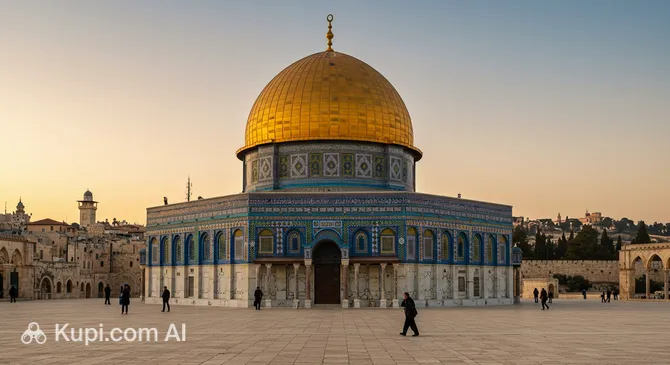
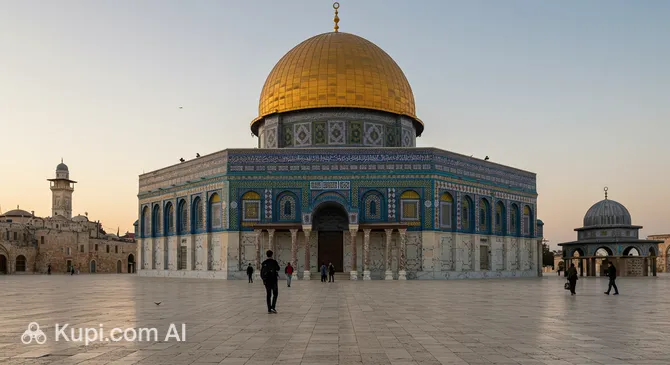
The main treasures of Jerusalem are concentrated in its historical core, where sacred heritage comes to life in every monument. One of the most recognizable landmarks is the Dome of the Rock — a magnificent architectural masterpiece with a golden dome that rises above the Temple Mount and is visible from almost anywhere in the city.
Dome of the Rock. Illustration.
Source: Kupi.com AI
Traveler photos:
Equally important is the Al-Aqsa Mosque, which is among the primary shrines of the Islamic world. A walk through the Old City invariably leads tourists to the walls and gates that hide quarters with a thousand-year history, the Church of the Holy Sepulchre, and the Western Wall, all forming the unique spiritual character of this place.
Al-Aqsa Mosque. Illustration.
Source: Kupi.com AI
Traveler photos:
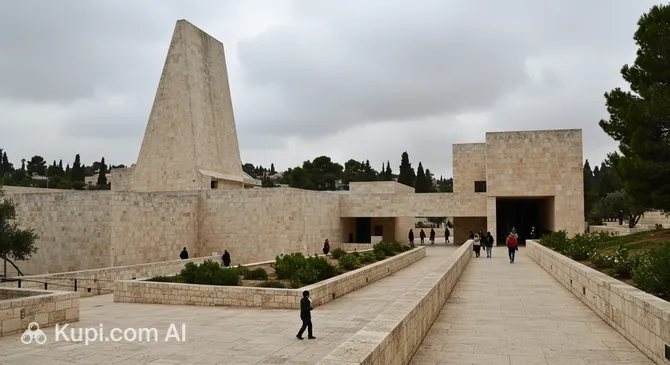
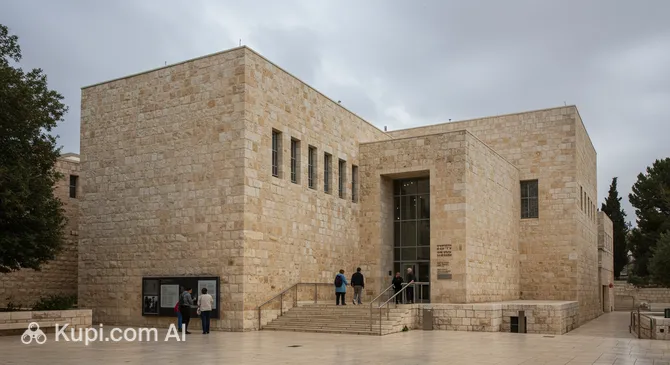
For those who want to understand the history of the Jewish people in the 20th century more deeply, the Yad Vashem memorial complex is a must-visit. It is not just a museum, but a national institute of remembrance located on the picturesque Mount of Remembrance. In addition to religious and historical sites, Jerusalem is rich in viewpoints on the hills that offer breathtaking panoramas of the ancient city.
Yad Vashem. Illustration.
Source: Kupi.com AI
Traveler photos:
Local Cuisine
The gastronomic scene of Jerusalem is a vibrant kaleidoscope of flavors where Eastern and Western traditions intertwine. The foundation of local cuisine consists of classic Middle Eastern dishes: creamy hummus, crispy falafel, and fragrant shakshuka. Throughout the city's streets, you can smell freshly baked pita bread and spiced grilled meat.
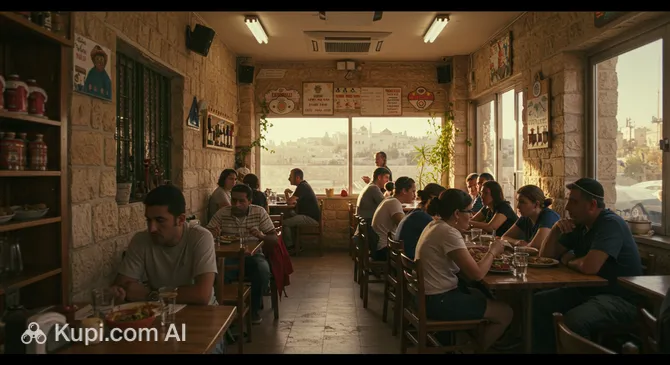
To experience a modern interpretation of local products, it's worth visiting Café Yehoshua, which serves dishes in a cozy urban atmosphere. If you're craving something exotic, stop by Tacos Luis, which offers an interesting take on street food. Markets are an essential part of the food culture, where you can try homemade food "like grandma makes," washed down with strong coffee with cardamom or freshly squeezed pomegranate juice.
Cafe Yehoshua. Illustration.
Source: Kupi.com AI
Traveler photos:
Don't forget to try local desserts like knafeh or baklava, which are prepared here according to ancient recipes. The city's gastro scene is constantly evolving: tiny family-run hummus joints that have operated for decades sit alongside refined fine-dining restaurants. Be prepared for prices to be higher in tourist zones, so for the most authentic taste, it's often worth walking a couple of blocks away from the main routes.
Tacos Luis. Illustration.
Source: Kupi.com AI
Traveler photos:
Travel Tips
Preparing for a trip to Jerusalem requires attention to detail to ensure your journey is as comfortable as possible and brings only positive emotions. We have gathered some practical recommendations to help you settle into this unique city.
Clothing and Dress Code: Choose comfortable shoes with good cushioning — you will have to walk a lot on stone pavements and stairs. When visiting religious sites (churches, synagogues, mosques), be sure to cover your shoulders and knees; women should carry a light scarf.
Transport and Logistics: Use the tram and a Rav-Kav card for getting around the city. Remember that during Shabbat (from Friday evening to Saturday evening), public transport does not run, and many establishments are closed.
Finances: The local currency is the New Israeli Shekel. Cards are accepted almost everywhere, but it's better to have some cash for markets and small shops in the Old City. The tipping culture in restaurants is usually 10–15%.
Safety: Jerusalem is a safe city, but it's best to stick to busy tourist routes and always have your documents with you. Don't forget to use sunscreen and drink plenty of water, even if the weather seems cool.
Communication: The main languages are Hebrew and Arabic, but English is very common in the tourism sector. Knowing a couple of words in the local language, such as "Shalom" (hello) or "Toda" (thank you), is always welcomed.
Local Etiquette: Respect the religious feelings of the residents. Try not to make noise or photograph people in ultra-Orthodox neighborhoods without permission, especially on Saturday.
What to Avoid: Do not engage in political discussions with strangers and avoid actions that could be perceived as disrespect toward shrines. Do not attempt to bring prohibited items through checkpoints at the Western Wall or Temple Mount.
Connectivity: For internet, it is most convenient to buy a local SIM card at the airport or in the city, as Wi-Fi in the Old City can be unstable.
May your introduction to Jerusalem be one of the most vivid impressions of your life, full of discoveries and peace of mind!
Entertainment & Nightlife
The nightlife in Jerusalem differs from the bustling Tel Aviv with a more reserved yet deep and authentic character. Evening activity here is often concentrated in cozy bars, restaurants, and cultural venues. One of the most atmospheric places is the art space and bar Hamiffal, where art, music, and socializing meet within the walls of an ancient building.
Hamiffal. Illustration.
Source: Kupi.com AI
Traveler photos:
For lovers of exquisite drinks, it's worth visiting Gatsby Cocktail Bar. This speakeasy-style bar transports guests to the "Roaring Twenties" with its low lighting and masterfully crafted cocktails. The main concentration of such places is found in the newer quarters of the city and in the area of the Mahane Yehuda market, which transforms into a lively recreation zone with dozens of tiny bars after sunset.
Gatsby Cocktail Room. Illustration.
Source: Kupi.com AI
Traveler photos:
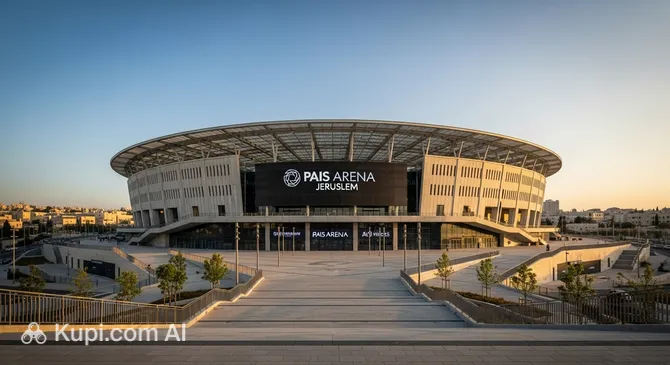
For those who prefer large-scale spectacles and sports, the Pais Arena Jerusalem is a key spot on the map. Significant basketball games and major concert shows are held here. Overall, entertainment in the city is oriented towards festivals, live music, and evening strolls through the central streets, allowing you to enjoy the capital at a more relaxed and contemplative pace.
Pais Arena Jerusalem. Illustration.
Source: Kupi.com AI
Traveler photos:
Parks & Museums
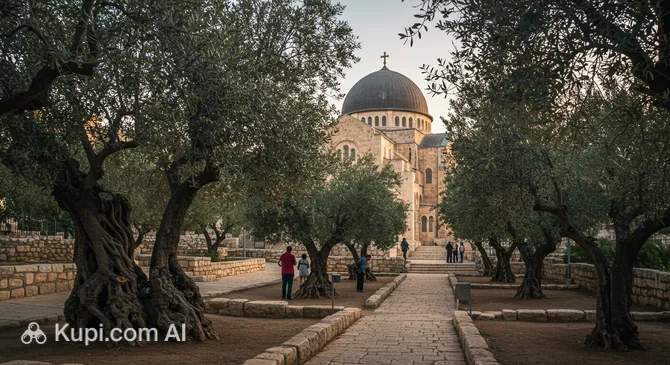
Despite its dense urban layout, Jerusalem offers wonderful places for walks and cultural enrichment. One of the most significant spiritual and natural sites is Gethsemane — a garden at the foot of the Mount of Olives, where olive trees that are centuries old grow. This place is filled with silence and deep meaning.
Gethsemane. Illustration.
Source: Kupi.com AI
Traveler photos:
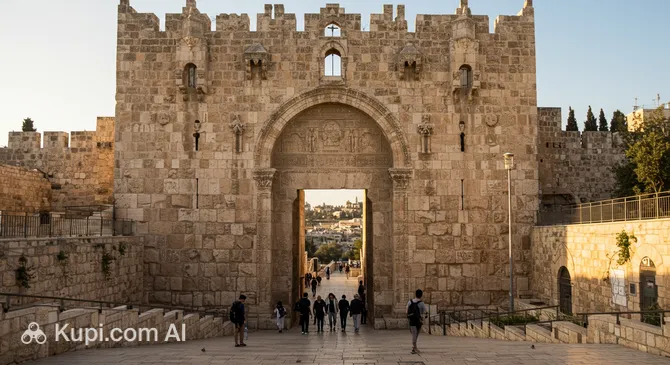
For those interested in defensive history and architecture, the Zion Gate is a must-see. Not only does it lead into the historic Armenian Quarter, but it is also a powerful monument to the past in its own right. The city's museum life is incredibly rich: it is home to world-class institutions such as the Israel Museum and the Bible Lands Museum, which reveal the archaeological secrets of the region.
Zion Gate. Illustration.
Source: Kupi.com AI
Traveler photos:
An important place of remembrance is the National Memorial Hall for Israel's Fallen, located on Mount Herzl. This architecturally impressive space serves as a place of mourning and pride. Overall, the city's parks and museums harmoniously complement its sacred nature, making a stay in Jerusalem intellectually enriching and emotionally profound.
National Memorial Hall for Israel's Fallen. Illustration.
Source: Kupi.com AI
Traveler photos:
Getting Around
The public transport system in Jerusalem is quite efficient and allows tourists to move conveniently between main districts. The city's pride is the modern Light Rail, whose single line connects the northeastern districts with the center and Mount Herzl. This is the fastest way to cross the city, bypassing traffic jams, while the route passes by many iconic sites.
The bus network is very extensive and covers areas where the tram does not reach. However, it is worth remembering that due to the hilly terrain and narrow streets in the center, trips can take longer than they appear on a map. During peak hours and before holidays, transport can be very crowded. A key feature is the observance of Shabbat: from Friday evening until Saturday evening, municipal transport (trams and most buses) stops operating.
A unified electronic card called Rav-Kav or mobile apps are used to pay for fares. It is impossible to buy a single ticket from the driver, so you should purchase a card at stations or kiosks and top it up in advance. Alternatively, taxis are always available and can be called via apps. For exploring the Old City, transport is not necessary — this zone is entirely pedestrian and requires comfortable shoes.
Accommodation
Choosing accommodation in Jerusalem largely depends on the purpose of your visit. Most tourists aim to stay closer to the Old City to be within walking distance of the main shrines. Historical hotels and cozy guesthouses predominate here. For pilgrims, accommodation is also available in special religious houses and monasteries, offering a simple but authentic atmosphere.
If you are looking for modern comfort and developed infrastructure, look to the newer quarters and neighborhoods along the central streets. There, you will find world-class chain hotels, boutique hotels, and apartments for short-term rent. Quieter, greener residential areas are suitable for those planning a long stay who want to avoid the tourist bustle while maintaining good transport links to the center.
Given the city's high popularity, especially during religious holidays and vacations, it is recommended to book accommodation in advance. Prices can vary significantly, from budget hostels to luxury five-star hotels. Remember that during holidays, many options can be booked up several months before the travel date.
Nearby Cities
Jerusalem serves as an ideal starting point for exploring the central and eastern regions of the country, offering many options for day trips. Historically significant places are located just a few kilometers away, such as Bethlehem, famous for its ancient churches and a special atmosphere that attracts pilgrims from all over the world.
For those who want to swap hilly landscapes for a sea breeze, a trip to the coastal cities or toward the Judean Desert to the Dead Sea is an excellent choice. Small towns in the immediate vicinity are also interesting, such as Beit Jala or Abu Dis, which allow you to see different aspects of life in the region and get acquainted with the local flavor.
City
Population
Distance
Abu Dis
12 604
4 km
Beit Jala
13 484
6 km
Bethlehem
28 591
7 km
Beit Sahour
13 281
8 km
Beitunia
26 604
14 km
Most of these destinations are easily reachable by public transport or taxi. Exploring the surroundings will allow you to complement your impressions of the capital and see the amazing variety of landscapes and cultures that fit into a very small area around the city.
Shopping & Souvenirs
Shopping in Jerusalem is an exciting adventure that can start at a bustling Eastern bazaar and end in a modern boutique. The Old City remains the main place for atmospheric purchases: in its narrow labyrinths, they sell ceramics, jewelry, spices, and an endless variety of religious souvenirs. Bargaining is expected here, and the purchase process itself becomes part of the cultural experience.
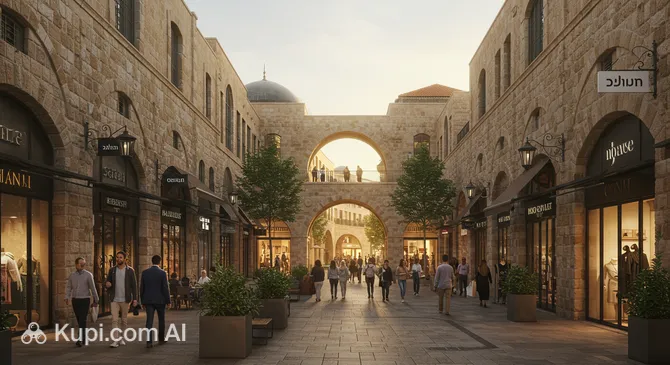
If you prefer European-style shopping, head to Mamilla Avenue. This is an elegant pedestrian street with shops of famous brands, cafes, and galleries, located right by the walls of the Old City. The combination of ancient architecture and modern storefronts makes walking here particularly pleasant.
Mamilla Avenue. Illustration.
Source: Kupi.com AI
Traveler photos:
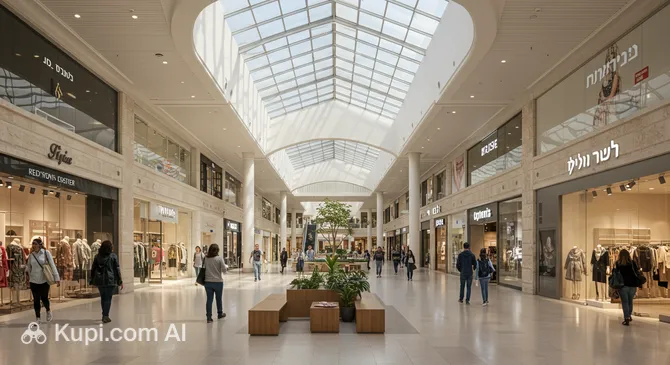
For more large-scale shopping, the Malha Mall — one of the largest in the region — is perfect. It features a wide selection of clothing, electronics, and home goods. From Jerusalem, it's worth bringing back Dead Sea natural cosmetics, high-quality olive oil, dates, and unique items made by local artisans. Most shops are open from morning until evening, closing only during Shabbat.