Support

Hebron

About

Hebron is one of the oldest continuously inhabited cities in the world, a place of profound historical and religious significance. Its atmosphere is steeped in centuries of history, making it a unique destination for travelers seeking to immerse themselves in the past.

Located in the Judean Mountains south of Jerusalem, in the West Bank, Hebron is one of the largest cities in the region with a population of approximately 215,000 people. The city sits at an altitude of about 930 meters above sea level, which accounts for its Mediterranean climate with hot, dry summers and cool, wet winters.

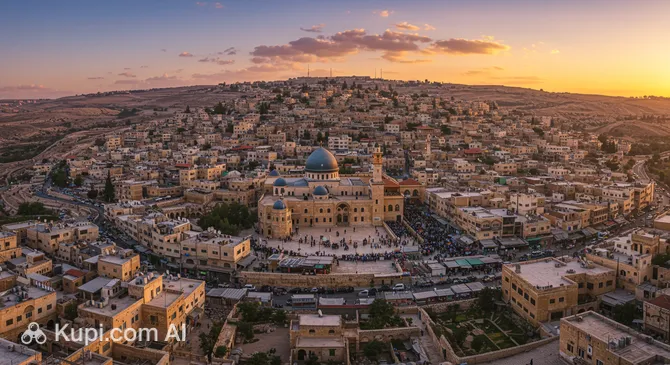
Hebron. Illustration.
Source: Kupi.com AI

The main holy site and center of attraction in Hebron is the Cave of the Patriarchs (also known as the Ibrahimi Mosque), revered by Jews, Christians, and Muslims as the burial place of the biblical patriarchs Abraham, Isaac, and Jacob, as well as their wives. Equally fascinating is Hebron's Old City with its narrow winding streets, ancient stone houses, and bustling traditional markets (souks), where you can discover local crafts such as the famous Hebron glass and ceramics.

Visiting Hebron is more than just a tourist trip; it is an opportunity to touch living history and ancient traditions. This city leaves a deep impression and offers a unique experience for anyone interested in the cultural and spiritual heritage of the Middle East.

You can find more interesting facts on the history of Hebron page.

Weather Overview

When planning a trip to Hebron, it's worth considering the local climate. Summers here are generally hot and dry: in July and August, the average temperature is about 28°C, with daytime highs often reaching 33-34°C. Rainfall during this period is very rare. Winters in Hebron are mild, with an average January temperature around 12°C. The winter months (December-February) account for the main, though small, part of the annual precipitation, averaging 1-2 mm per month but with 6-11 rainy days. Spring and autumn offer comfortable weather, perfect for walking and sightseeing. Overall, expect a typical Mediterranean climate with a pronounced dry, hot summer and a cooler, wetter winter. For more detailed monthly weather information, visit the Hebron's climate page.

Average monthly temperature

Average monthly precipitation

Interesting Facts

Beyond its world-famous holy sites, Hebron hides many fascinating details and stories that make it even more alluring. Ready to learn a few lesser-known facts about this ancient city?

  • Ancient Giant Walls: The enclosure around the Cave of the Patriarchs, built during the time of Herod the Great, consists of massive stone blocks, some of which weigh hundreds of tons. These walls are a testament to the incredible engineering skills of antiquity.

  • Secrets of Hebron Glass: The traditional art of making Hebron glass, known for its vibrant colors (especially the characteristic blue made with cobalt oxide and emerald green), has been passed down through several families for many centuries. Some workshops claim their ancestors have been practicing this craft since the Roman Empire.

  • The Oak of Abraham (Oak of Mamre): Near Hebron lies the spot where, according to tradition, the patriarch Abraham pitched his tent and spoke with angels. Although the exact age of the current tree growing there is a matter of debate (estimates vary), the site itself has been revered as sacred for millennia.

  • City of the "Friend": The name "Hebron" is believed to be derived from the Hebrew word "haver" (חבר), meaning "friend" or "ally." This is likely a reference to Abraham, who is called the "friend of God" in religious texts, and to the alliances he formed with local inhabitants.

How to Get There

When planning your trip, it is important to research all possible routes and choose the most convenient one; therefore, we recommend learning more about how to get to Hebron. Since the city does not have its own airport, most tourists arrive via the air hubs of neighboring cities and then continue their journey by land transport.

One of the main hubs for travelers is Ben Gurion Airport (TLV). This is a large international airport located in Tel Aviv, approximately 57 km from Hebron. A taxi ride from here takes about 1 hour and 45 minutes, though time can vary depending on traffic and checkpoint procedures. Due to high passenger traffic, this airport receives flights from many countries around the world, making it a popular choice.

Another option is Queen Alia International Airport (AMM) in Amman. It is located about 87 km from Hebron. Traveling through this airport involves a border crossing, which should be factored into your time planning. The estimated driving time, excluding border formalities, is approximately 2.5 hours. This is also a major transport hub convenient for transit flights.

For convenience, here is a summary of the main airports:

AirportPassenger trafficDistance
Ben Gurion International Airport21.1 mln57 km
Queen Alia International Airport9.2 mln87 km
Haifa Airport275 000142 km
Ramon Airport1.8 mln201 km
Gurayat Airport99 403207 km

There is no direct rail connection to Hebron. The nearest railway stations are in other cities in the region, but they are not the primary way for tourists to reach the city. The main travel burden falls on the roads.

The most common way to reach the city remains by car or bus. Shared taxis (servees) and buses run regularly from Jerusalem and Bethlehem to Hebron. Taking a shared taxi is an authentic and inexpensive way to travel, popular among locals. A private transfer or taxi is also always an option for a more comfortable journey.

Main Attractions

Hebron is a city with a rich history, and its attractions reflect centuries of cultural and religious heritage. When planning your visit, be sure to include these iconic sites in your itinerary.

The Cave of the Patriarchs (Ibrahimi Mosque) is undoubtedly the main holy site and most significant location in Hebron. This ancient structure, revered by Jews, Christians, and Muslims, is considered the burial place of the biblical patriarchs Abraham, Isaac, and Jacob, and their wives—Sarah, Rebecca, and Leah. Monumental walls, partially preserved from the time of Herod the Great, surround the complex, which today is divided into a synagogue and a mosque. Visiting the Cave of the Patriarchs allows you to touch thousands of years of history and feel the special spiritual atmosphere of this place.

Hebron's Old City (Casbah) is a true labyrinth of narrow winding streets, stone houses, and lively markets. A walk through the Casbah immerses you in the atmosphere of an ancient eastern city. Here you can see traditional architecture, observe the daily life of locals, and, of course, visit numerous shops and workshops. In the markets of the Old City, you will find spices, sweets, textiles, as well as the work of local artisans, including the famous Hebron ceramics and glass. It is a wonderful place for leisurely strolls and finding authentic souvenirs.

Hebron glass workshops are another hallmark of the city. The art of making colored glass has been passed down here from generation to generation for many centuries. By visiting one of these workshops, you can watch the fascinating process of glassblowing, as graceful vases, pitchers, jewelry, and other items—often colored in characteristic deep blues and greens—are born from the molten mass. This is not only an opportunity to see a unique craft but also to purchase beautiful handmade items directly from the masters.

Not far from the historical center of Hebron, on the grounds of the Russian Orthodox Monastery of the Holy Trinity, lies the Oak of Abraham (Oak of Mamre). According to tradition, it was under this ancient tree (or its predecessor) that the patriarch Abraham met three angels. This site holds great significance for pilgrims and attracts visitors with its peaceful atmosphere and the beautiful monastery grounds. A visit to the Oak of Abraham allows you to connect with biblical stories and enjoy the quiet away from the city bustle.

Local Cuisine

The gastronomic scene of Hebron is a true immersion into authentic Palestinian cuisine, known for its rich flavors, fresh ingredients, and centuries-old traditions of hospitality. Here, you can enjoy dishes prepared with love according to recipes passed down through generations.

Be sure to try maqluba—a hearty and fragrant dish of rice, meat (usually chicken or lamb), and fried vegetables, served "upside down." Another iconic dish is musakhan, which consists of chicken roasted with onions, sumac, and olive oil on traditional taboon bread. Don't overlook the various mezze: hummus, falafel, baba ghanoush, and fresh salads dressed with local olive oil. Hebron and its surroundings are famous for their olives, grapes, figs, and dairy products like labaneh (thick yogurt) and local cheeses.

As for drinks, fragrant Arabic coffee—often served with cardamom—and mint tea (shay bil na'na) are universally popular. On a hot day, fresh-pressed juices like pomegranate or orange are incredibly refreshing. Traditional fermented milk drinks, such as ayran or laban, are also an integral part of a local meal. The availability of alcoholic beverages may be limited, especially in public places.

Food culture in Hebron is closely tied to family and community. Locals often eat at home, but small restaurants offering traditional dishes are also popular. Street food is represented by stalls selling falafel, shawarma, and fresh pastries like ka'ak (sesame bread). Be sure to visit the local markets (souks), where you can not only buy the freshest produce, spices, and sweets but also experience the authentic atmosphere of the city. For tourists, this is a wonderful opportunity to try real home-style cooking and get to know local gastronomic traditions.

Travel Tips

Welcome to Hebron! To make your journey through this ancient and significant city as comfortable and safe as possible, we have prepared some practical tips. They will help you navigate better and understand the local specifics more deeply.

  1. Clothing and Essentials:
    • Climate: In summer (June-August), Hebron is hot and dry, so choose light, breathable clothing made from natural fabrics. Spring and autumn offer comfortable weather, but evenings can be cool—bring a light jacket or sweater. In winter (December-February), it can be chilly and rainy, so warm clothes and an umbrella are useful.
    • Dress Code: When visiting religious sites, such as the Cave of the Patriarchs, modest clothing is required: shoulders and knees must be covered for both men and women. Women may need a scarf to cover their heads.
    • Footwear: Comfortable shoes are your best companion for walking along the cobbled streets of the Old City.
    • Accessories: Sunglasses, a hat, and sunscreen are relevant most of the year. Don't forget a universal adapter for charging your devices.
  2. Transport:
    • Around Town: The main types of public transport are local buses and shared taxis (servees). These are affordable ways to get around.
    • Taxis: Regular taxis are also at your service. It is recommended to agree on the fare in advance or ensure the driver uses the meter.
    • On Foot: Hebron's Old City is best explored on foot to fully enjoy its unique atmosphere and architecture.
    • Car Rental: Renting a car can involve certain complexities due to the region's specifics. For most tourists, public transport or taxis will be a more convenient choice.
  3. Finances:
    • Currency: The primary currency is the Israeli New Shekel (ILS). Some tourist areas may accept US dollars or Jordanian dinars, but for daily transactions, it's better to have shekels.
    • Exchange: You can exchange currency at banks or specialized exchange offices (sarraf). Compare rates before making a transaction.
    • Cards: Credit and debit cards are accepted in major hotels and some shops; however, in small shops, markets, and many cafes, cash is preferred. Confirm the possibility of card payment in advance.
    • ATMs: ATMs are available, but it's worth checking your card's terms for international cash withdrawals and any possible fees.
    • Tipping: Tipping is not always mandatory but is appreciated as a sign of gratitude for good service (usually 10-15% in restaurants if service is not included). In taxis, you can round up the amount.
  4. Health and Safety:
    • Pharmacies: Pharmacies (saydaliya) are available in the city, but not all of them operate 24/7. It is recommended to carry a small first-aid kit with basic medications.
    • Medical Aid: Before your trip, arrange for medical insurance that covers expenses abroad and keep contact details for assistance handy.
    • Safety: Hebron is a city with a unique administrative character. Remain vigilant, avoid large crowds or demonstrations, and always follow the instructions of local authorities and safety personnel. Try not to walk alone in sparsely populated or poorly lit areas at night.
    • General Measures: Keep an eye on your personal belongings, especially in crowded places. Do not leave valuables unattended.
  5. Communication:
    • Language: The main language is Arabic. In tourist areas, hotels, and among younger people, many speak English.
    • Useful Phrases: Knowing a few basic phrases in Arabic, such as "As-salamu alaykum" (Hello/Peace be upon you), "Shukran" (Thank you), and "Min fadlak/fadlik" (Please – when addressing a man/woman), will be highly appreciated by locals.
    • SIM Card: For convenience, you can purchase a local SIM card for internet access and local calls.
    • Wi-Fi: Wireless internet (Wi-Fi) is usually available in hotels and many cafes.
  6. Local Etiquette:
    • Greetings: It is customary to say hello, especially when you enter a shop or a small establishment.
    • Behavior: Maintain modesty in behavior and dress, especially when visiting the Old City and religious sites. This is a sign of respect for local culture.
    • Photography: Always ask for permission before photographing people, especially women and children.
    • Hospitality: Locals are generally very hospitable. If you are invited for tea or coffee, it is a sign of respect and friendliness.
  7. What to Avoid:
    • Political Discussions: It is strongly recommended to avoid engaging in political debates or expressing strong opinions about the local situation. This can be misinterpreted and create awkward or problematic situations.
    • Photographing Sensitive Sites: Do not take photos of security personnel, checkpoints, or other safety-related objects without explicit permission (which likely will not be given).
  8. Additional Tip: Support Local Crafts
    • Hebron is famous for its unique traditional crafts, such as the production of colored glass and ceramics. By purchasing souvenirs directly from workshops in the Old City, you not only acquire authentic handmade products but also contribute to supporting local artisans and preserving their centuries-old traditions. This is a wonderful way to bring home a piece of real Hebron.

We hope these tips make your stay in Hebron more meaningful and pleasant. This city offers a unique experience of immersion in history and culture, and with due respect for local traditions, your journey will undoubtedly leave deep and unforgettable impressions.

Entertainment & Nightlife

In the evening, Hebron offers travelers a quiet and authentic atmosphere rather than a vibrant nightlife in the traditional sense. Evenings here are perfect for leisurely walks, socializing, and immersing yourself in the local culture, offering a unique experience distinct from bustling metropolises.

The primary venues for evening leisure in Hebron are the numerous cafes and restaurants, where you can enjoy traditional Palestinian cuisine and fragrant coffee or tea. Many of them stay open until late evening, serving as social hubs for locals and visitors alike. While Western-style nightclubs and bars are not common here, the charm lies in these cozy establishments where you can observe the flow of local life. Occasionally, the city may host cultural events or evening markets, especially during holidays, adding extra color to your evening strolls.

The atmosphere of evening Hebron is generally calm and family-oriented. The crowd in cafes and restaurants is diverse, ranging from young people to families with children. The style of the establishments is mostly traditional, with an emphasis on hospitality. Most places become active after sunset and may remain open until 10:00 PM or 11:00 PM, and some even longer, especially during the summer. There is usually no strict dress code, but given the cultural context, it is recommended to maintain a modest style of dress, especially for women.

The best time for evening outings is after the daytime heat subsides, particularly in the summer months. Prices in local cafes and restaurants are generally affordable. For getting around in the evening, taxis are the most convenient option. It is recommended to agree on the fare in advance or use reputable taxi companies, if available, to avoid misunderstandings. Public transport runs less frequently in the evening.

For evening walks in Hebron, it is advisable to choose well-lit and busy streets, especially in the central part of the city and near popular establishments. As in any other city, it is important to keep an eye on your personal belongings and stay aware of your surroundings. If you need to call a taxi late at night, it is best to ask the hotel or restaurant staff for assistance.

While Hebron offers many places for an enjoyable evening, such as traditional coffee houses and restaurants, finding venues that fit the "bar" or "nightclub" category in their typical sense can be difficult. The city is more oriented toward quiet family and social recreation. For up-to-date information on popular cafes or restaurants open late, it is best to seek advice from your hotel staff, local residents, or check recent reviews on travel websites. This will help you find truly authentic and welcoming spots.

During the day, Hebron offers a rich cultural program: you can explore its ancient Old City, visit historical and religious sites like the Cave of the Patriarchs, or drop by craft workshops, such as those producing the famous Hebron glass. You can also find time to visit local museums or simply walk through the city neighborhoods, soaking up its unique atmosphere.

Parks & Museums

Hebron, a city with thousands of years of history, offers a unique blend of immersion into the past and an introduction to living culture. While it is better known for its historical and religious shrines than for extensive classic urban parks, you can find green corners for peaceful relaxation and places that preserve a rich cultural heritage.

Speaking of green zones, the grounds around the Oak of Abraham (Oak of Mamre) are worth mentioning. This site, linked to biblical traditions and under the care of a Russian Orthodox monastery, offers a peaceful atmosphere amidst greenery. It is a kind of oasis of calm where you can take a break from the city bustle and reflect. The hilly surroundings of Hebron itself, covered with traditional olive groves and vineyards, also provide a sense of space and connection with nature, even if they are not formal parks.

In the Old City itself, despite its dense construction, you can find small courtyards that serve as quiet green islands and add charm to the ancient streets.

Regarding museums and cultural heritage, the Hebron Museum (Old City Museum) is a key place to learn about the region's history. Usually housed in a historical building, it features exhibits detailing the daily life, traditions, and centuries-old crafts of Hebron. Here, you can see archaeological finds and ethnographic collections that help you better understand the rich past of this ancient city. A visit to the museum is an excellent addition to walks through the historical quarters.

The Old City of Hebron (Casbah) itself can rightly be considered a living open-air museum. Its narrow winding streets, ancient stone architecture, bustling traditional markets, and active craft workshops—especially the famous glass and ceramic ones—represent immense cultural value. It is not just an attraction but a place where history continues and is felt at every step. One must also mention the Cave of the Patriarchs (Ibrahimi Mosque): beyond its primary religious significance, this monumental complex is an outstanding historical and architectural monument whose visit enriches the cultural experience of every traveler.

For a deeper immersion into local culture, be sure to stop by one of the active glass or ceramic workshops. Here, you can not only watch the fascinating process of creating unique items but also talk to the craftsmen whose families have kept the secrets of the trade for many generations. A small tip: don't be afraid to turn off the main tourist routes in the Old City (while exercising reasonable caution, of course)—it is in the quiet alleys that you can find the most authentic corners and truly feel the unique atmosphere of Hebron.

Getting Around

Getting around Hebron and its surroundings is possible using several types of public transport. The system is fairly simple and oriented toward the needs of residents, but tourists can also use it by knowing a few details.

The main types of public transport in Hebron are buses and shared taxis, known here as "servees" (service). Buses run along main urban and suburban routes, connecting different city districts and nearby settlements. Shared taxis are usually minivans or large cars that follow specific, sometimes flexible, routes and depart when full. They are a popular and relatively fast way to get around.

The fare payment system in Hebron is predominantly based on cash. Bus tickets are usually purchased directly from the driver upon boarding. In shared taxis, payment is also made in cash to the driver. Specialized transit cards similar to those used in major European cities or comprehensive mobile apps for fare payment are generally not available here. It is recommended to have small bills and coins for convenience. The fare is usually low but can vary depending on the distance.

Practical tips for tourists: buy bus tickets from the driver when boarding. There may not be a clear schedule for many routes, especially for shared taxis that depart when full. Buses usually run more frequently during the day; in the evening and on weekends (especially Friday), intervals may increase. If you are unsure of the route, don't hesitate to ask the driver or other passengers—locals are usually helpful. Ticket validation in the traditional sense does not exist, as payment happens directly.

As an alternative to public transport, regular taxis are always available. This is a more expensive but also more comfortable way to travel, especially if you are with luggage or heading to a specific location far from public transport stops. It is strongly recommended to agree on the fare with the driver in advance, before starting the journey, as not all taxis are equipped with meters, or they may not be used. Carsharing and bike rental systems are not widespread in Hebron. For exploring the Old City of Hebron, the best way to move is on foot, as its narrow streets are not designed for vehicles.

Accommodation

In Hebron, travelers can find various accommodation options to suit different budgets and preferences. The range includes budget-friendly options, such as guesthouses or small local hotels, as well as mid-range establishments offering more comfort. Apartment rentals are also possible, which can be convenient for families or those planning a longer stay in the city.

When choosing accommodation in Hebron, it is worth looking at areas located in close proximity to the Old City and the main holy site—the Cave of the Patriarchs. Staying here allows for easy walking access to the main attractions and a deeper immersion into the historical atmosphere. Options near main transport arteries can also be convenient if you plan to travel actively around the region.

In Hebron, you will mainly find small and medium-sized hotels, as well as guesthouses, many of which are run by local families and offer an authentic experience and warm hospitality. Large international hotel chains are less common here. To choose and book a specific hotel or guesthouse that fits your preferences for location, amenities, and reviews, it is recommended to use well-known online booking services.

As in many popular tourist destinations, especially those with rich cultural and religious heritage, it is recommended to book accommodation in Hebron in advance. This is particularly relevant if your trip falls during major holidays or the peak tourist season, when demand for accommodation expectedly increases.

The price range for accommodation in Hebron is quite wide: you can find very affordable guesthouses and hostels, as well as mid-level hotels with a higher price point offering an expanded range of services. World-class luxury resorts are less common here. The main booking methods are popular online platforms (such as Booking.com, Agoda, Expedia) or, in some cases, contacting the hotel or guesthouse directly. Comparing offers on different resources will help you find the best option.

Nearby Cities

For those who want to explore the surrounding area, Hebron serves as an excellent starting point for day trips to several interesting nearby locations.

For instance, you can visit ancient Nablus, famous for its colorful Old City, traditional soap factories, and delicious knafeh, or head to the very nearby Yattir to explore its rich history through preserved archaeological sites. More detailed information about some of these and other nearby cities is provided below:

CityPopulationDistance
Yattir64 2779 km
Beit Ummar19 89210 km
Idhna19 01212 km
Az Zahiriyah38 00218 km
Bethlehem28 59121 km

These nearby destinations offer a more complete picture of the region's diverse culture, history, and landscapes, complementing the experience of visiting Hebron itself.

Shopping & Souvenirs

Shopping in Hebron is primarily an immersion into the world of traditional crafts and authentic goods. The city is famous for its handmade items, which can be found in numerous shops and workshops, especially in its historical part. You won't find huge modern shopping malls here, but you will be able to purchase truly unique items with local character.

The main place for shopping in Hebron is undoubtedly the Old City (Casbah). Its narrow, winding streets form a lively market, or souk, where the unique atmosphere of an oriental bazaar prevails. Strolling through the Casbah, you will find many small shops and workshops offering everything from the famous Hebron glass and ceramics to spices, textiles, and traditional clothing. It is a place where you can not only make purchases but also watch artisans at work.

Instead of large Western-style shopping centers, Hebron's shopping scene is centered around its historical markets and individual specialized shops. If you are looking for modern brands, the selection may be limited. However, the charm of Hebron shopping lies precisely in its traditionalism and the opportunity to purchase items that carry the warmth of the craftsmen's hands.

The markets of Hebron, especially in the Old City, are the heart of commercial life. Here, you can find not only souvenirs but also fresh products: dates, olives, figs, fragrant spices, and herbs. The atmosphere in the markets is very lively, filled with sounds, smells, and bright colors. It's a great place to feel the local flavor and perhaps try your hand at haggling, which is part of the local trading culture.

From Hebron, it is worth bringing back unique souvenirs and local goods. First and foremost are items made of Hebron glass—vases, pitchers, glasses, and jewelry, often in characteristic blue or green colors. Equally famous is Hebron ceramics—painted plates, bowls, and tiles. Items made of olive wood, traditional headgear (kuffiyehs), embroidered textiles, fragrant spices, dates, and local olive oil are also popular. By buying these products, you are supporting local artisans.

Shops and stalls in Hebron, especially in the Old City markets, usually open in the morning around 9:00-10:00 AM and work until early evening, approximately 6:00-7:00 PM. Some may close for a short break in the middle of the day. On Friday, which is a day off for many, operating hours may be reduced, or some shops may be closed. Regarding payment, most small shops and markets prefer cash (Israeli Shekels, ILS). Credit cards may be accepted in larger souvenir shops or hotels, but it's best to always have enough cash with you.

Information on the Tax Free refund system for tourists in Hebron is not as widely disseminated as in some other tourist centers. For purchases in traditional markets and small shops, this option is likely unavailable. If you make a large purchase in a more established store, it is worth asking the seller if they provide documents for a tax refund, though you should not rely on this as a standard practice.
Reached the end of the page?

That means the route is fully explored