Support

Alberobello

About

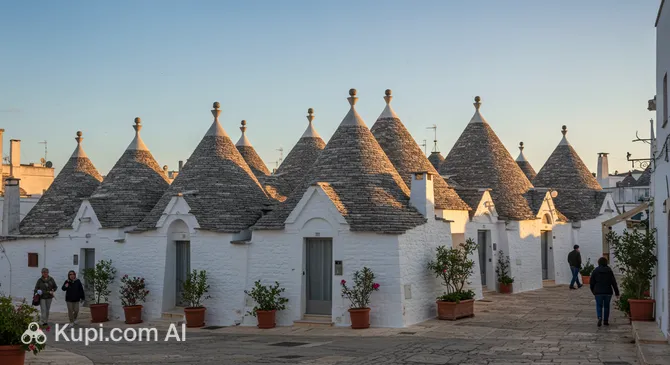
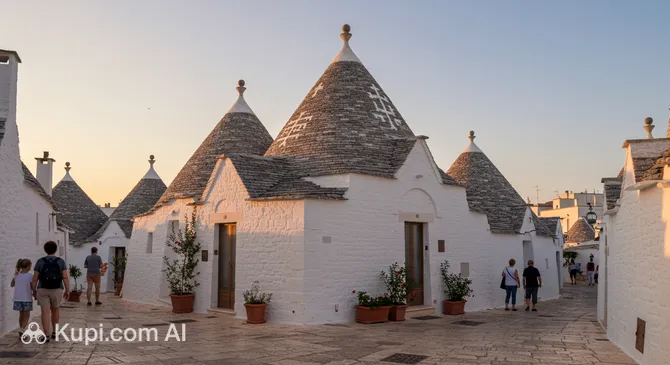
Alberobello is a true architectural masterpiece of southern Italy, nestled in the heart of the Puglia region, about 55 kilometers from Bari. This fairy-tale town, set on gentle hills among olive groves and vineyards, enchants at first sight with its snow-white houses with conical roofs, narrow cobbled streets, and flower-filled balconies, while the air is often filled with the aroma of fresh pastries from local bakeries.

Alberobello. Illustration.
Source: Kupi.com AI

With a population of about 10,725 people, Alberobello is a small but incredibly colorful town administratively belonging to the Province of Bari. Despite its modest size, it has everything needed for an unforgettable journey, harmoniously combining history, tradition, and modern tourist services. The main reason travelers from all over the world flock here is, of course, the unique trulli houses.

Thanks to these original structures, the town is officially recognized as a UNESCO World Heritage site and is considered a prime example of folk architecture. The atmosphere here is truly magical: strolling through the historic quarters of Rione Monti and Aia Piccola, you feel as if you've been transported to another world where time slows down. Alberobello is perfect for leisurely walks, exploring local culture, and making gastronomic discoveries. This town, with its hospitable residents, cozy cafes, artisan shops, and authentic wineries, will surely leave warm memories in your heart and a desire to return again.

You can find more interesting facts on the Alberobello history page.
Weather Overview

Alberobello has a predominantly Mediterranean climate, characterized by hot, dry summers and mild, wetter winters. The summer months, especially July and August, are the warmest, with an average temperature of around 26.6°C (maximum values can exceed 30°C) and minimal precipitation—there is practically none in July. Winters here are quite mild: the average temperature in January is about 9.0°C, and in December and February, it stays at the 9.7-10.5°C level. Although the number of rainy days increases in winter (up to 9-11 days per month), total precipitation remains low, usually about 2 mm per month, except for November, when it can reach 3 mm.

Spring and autumn are transitional seasons with comfortable temperatures. In May, the average temperature already reaches 18.3°C, and in October, it drops to 18.4°C. Precipitation during these periods is also moderate. Overall, expect a warm, sunny summer with rare rain and cool, occasionally rainy winters. For more detailed information, please check the detailed forecast: Alberobello Climate.

Average monthly temperature

Average monthly precipitation

Interesting Facts

Alberobello, a town that looks like it stepped right out of a fairy tale, is known worldwide for its unique trulli houses. But beyond their charming appearance, this place holds many amazing stories and little-known facts:

Trullo Sovrano. Illustration.
Source: Kupi.com AI

Traveler photos:

  • A tax trick of the past: The unique construction of trulli—houses made of limestone slabs stacked using the dry-stone method (without cement mortar)—was not born by chance. According to popular legend, this allowed residents to instantly dismantle their dwellings before the visit of tax collectors from the Kingdom of Naples, as taxes were levied only on permanent structures.

  • A trullo for two with a romantic legend: In Alberobello, there is the so-called \"Trullo Siamese\"—essentially two joined trulli with separate entrances but under one shared roof. It is associated with a romantic and somewhat sad local story about two brothers who fell in love with the same girl. The girl chose one of the brothers, and the house had to be divided in this unusual way.

  • The only two-story trullo museum: Among the more than fifteen hundred trulli in Alberobello, the Trullo Sovrano stands out. It is the city's only two-story trullo, which today functions as a house museum. Visitors can see the original furnishings of the early 20th century and imagine the life of a wealthy family of that time.

  • A living UNESCO monument: Although the entire historic center of Alberobello, which has over 1,500 trulli, has been under UNESCO protection since 1996, it is not just a frozen open-air museum. Many trulli are still residential homes, and city life is full of events, including annual festivals like the Trulli Festival, which fills the ancient streets with music, dancing, and the aromas of local delicacies.

How to Get There

There are several ways to reach the fairy-tale town of Alberobello, famous for its unique trulli houses and designated as a UNESCO World Heritage site in Italy. The main gateways to the region are international airports, from where you can reach Alberobello by car or public transport. It is also possible to travel by train followed by a transfer to local lines.

The primary international airport serving the Alberobello direction is Palese Airport (IATA: BRI). It is located in the city of Bari, approximately 56 km northwest of Alberobello. This is a large and modern airport with significant passenger traffic. A trip from here to Alberobello by car or taxi will take about 1 hour and 45 minutes. It is also possible to reach by public transport: first by bus to Bari Central Station, and then by train or bus to Alberobello.

Another important air hub is Brindisi – Salento Airport (IATA: BDS), located in the city of Brindisi, approximately 61.4 km southeast of Alberobello. This airport also handles international and domestic flights and is a major transport center. The drive to Alberobello by car takes about 1 hour and 50 minutes. Similar to Bari, from Brindisi Airport you can reach the city's railway station and continue by train or bus from there.

For convenience, here is a summary of the main airports through which you can reach Alberobello:

AirportPassenger trafficDistance
Palese Airport6.5 mln56 km
Brindisi - Salento Airport3.0 mln61 km
Gino Lisa60 447160 km
Pontecagnano400 000198 km
Crotone310 000199 km

Traveling by train is also a viable option, although Alberobello itself is served mainly by local Ferrovie del Sud Est railway lines, connecting it with cities like Martina Franca and Lecce. To arrive in the region from more distant parts of Italy or from abroad by train, you will likely need to transfer at one of the major transport hubs. The nearest station from the list provided that is convenient for further travel to Alberobello is Brindisi Railway Station (IATA: BQD). It is located in the city of Brindisi, approximately 61.3 km from Alberobello. From Brindisi station, you can reach Alberobello by bus or a combination of regional trains (a transfer may be required). A taxi ride takes about 1 hour and 50 minutes.

Another major railway hub in the region is Bari Central Station (not shown in the list below, but an important hub). From Bari, there is also regular bus and train service to Alberobello, making it a convenient transfer point, especially if you arrive at Bari Airport.

Below is information about some railway stations in the region that can be used for planning a route to Alberobello:

StationPassenger trafficDistance
Bari Centrale Station14 mln48 km
Brindisi Railway Station2.5 mln61 km
Durres Railway Station2 000195 km
Salerno Railway Station6 mln209 km
Lamezia Terme Centrale Railway Station1 mln224 km

For those who prefer to travel by car, Alberobello is well-connected by road to the main cities of Puglia. Traveling by car gives you flexibility in exploring the region and its many attractions. Main highways leading toward Alberobello include the SS100 from Bari and the SS16, which runs along the coast.

Main Attractions

Alberobello, famous for its unique trulli houses listed as a UNESCO World Heritage site, offers tourists many interesting places to visit. Here are some of the key attractions that should not be missed:

One of the main gems of Alberobello is the Trullo Sovrano. It is the only trullo in the city with two floors, making it a unique example of local architecture. Built in the 18th century, it served as a home for the wealthy family of a priest. Today, the interior houses a museum where visitors can see authentic furnishings and household items of that time, immersing themselves in the history and culture of the region. This place is a must-visit for those who want to understand the essence of the trulli phenomenon.

Trullo Sovrano. Illustration.
Source: Kupi.com AI

Traveler photos:

For a deeper acquaintance with the history and traditions of Alberobello, it is worth visiting the Museo del Territorio \"Casa Pezzolla\". This museum complex consists of fifteen interconnected trulli, representing the largest complex of its kind in the city. The museum's exhibits tell in detail about agricultural traditions, unique trulli construction techniques, and the daily life of the inhabitants of this amazing land throughout the centuries.

Pezzolla House Territory Museum. Illustration.
Source: Kupi.com AI

Traveler photos:

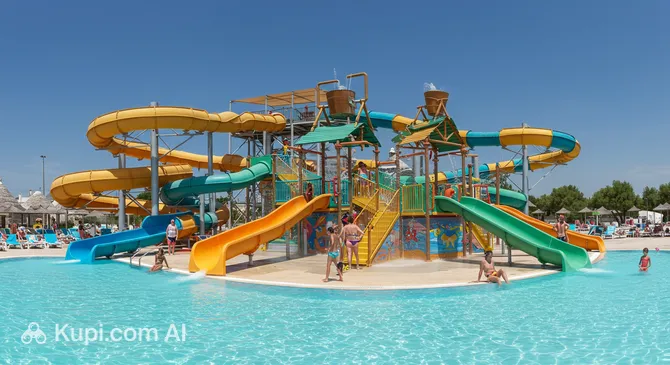
If you are traveling with children or just want to take a break from the cultural program on a hot summer day, Acqua Splash Alberobello is an excellent choice. This water park offers various water slides, pools, and relaxation areas for the whole family, providing a fun and refreshing pastime after exploring the city's historical streets.

Acqua Splash Alberobello. Illustration.
Source: Kupi.com AI

Traveler photos:

Local Cuisine

The cuisine of Alberobello is a true immersion into the flavors of the Puglia region, where simple but incredibly rich dishes made from the freshest local products are highly valued. The town's gastronomic tradition will delight connoisseurs of authentic Italian food, offering vibrant and memorable flavor combinations based on the gifts of the fertile land and the proximity of the sea.

Be sure to try orecchiette—pasta shaped like \"little ears,\" served here with various sauces: the classic version with turnip tops (cime di rapa), a rich tomato sauce, as well as with homemade sausage or local cheeses. The pride of Puglian cheesemakers are the delicate burrata and aromatic caciocavallo, which are often served with extra virgin olive oil and freshly baked bread. On restaurant menus, you will also find many dishes made from seasonal vegetables, legumes, and, of course, fresh fish and seafood delivered from the nearby coast.

Among the local drinks, the region's wines hold a special place, such as the full-bodied red Primitivo and the aromatic Negroamaro. For fans of stronger drinks, it is worth paying attention to local herbal liqueurs. Strolling through the picturesque streets of Alberobello, do not miss the chance to stop by local bakeries and shops selling traditional baked goods: crunchy savory taralli and aromatic focaccia with olives—a great option for an authentic snack.

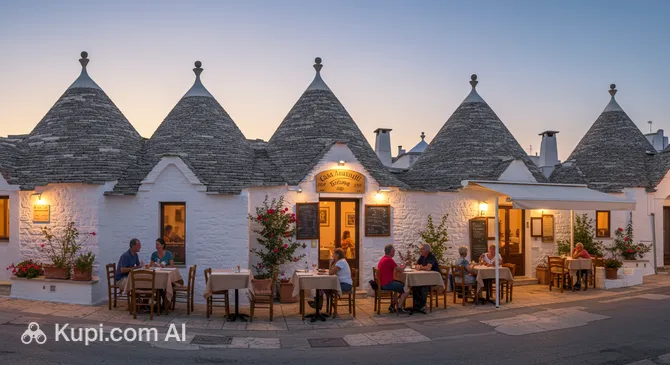
Locals and tourists enjoy their meals in numerous trattorias and restaurants where a cozy and welcoming atmosphere prevails. One such place to experience authentic cuisine is Trattoria Casa Amatulli. For those who want to purchase the freshest products and local delicacies, it is worth visiting farmers' markets. Alberobello is also famous for its gastronomic festivals and fairs dedicated to wine and food, which take place throughout the year, offering a unique opportunity to dive into the region's culinary culture and taste the very best it has to offer.

Casa Amatulli Trattoria. Illustration.
Source: Kupi.com AI

Traveler photos:

Travel Tips

Welcome to Alberobello, the fairy-tale town of trulli! To make your trip to this unique place even more comfortable and memorable, we have prepared some practical tips.

  1. Clothing and Essentials: Alberobello has a Mediterranean climate. In summer (June-August), choose light, breathable clothing, a sun hat, sunglasses, and sunscreen. In spring and autumn, layered clothing will be comfortable; bring a light jacket or sweater. In winter, it can be cool and rainy, so warm clothes and an umbrella will be useful. Be sure to bring comfortable shoes, as you will be walking a lot on cobbled streets. Don't forget an adapter for electrical appliances (in Italy, Type L sockets are used, often compatible with Types C and F). When visiting churches, such as the Basilica of Saints Cosmas and Damian, it is customary to cover shoulders and knees.

  2. Transport: Alberobello itself is small, and its historical districts, Rione Monti and Aia Piccola, are best explored on foot. There is practically no public transport within the town, and it is not needed. To get to Alberobello from other cities, like Bari, you can use the train (Ferrovie del Sud Est company) or a bus. Taxis are available, but if you plan to explore the surrounding Puglia region, renting a car might be a good option. However, keep in mind that parking in the historic center is limited; it is better to look for parking spaces outside the ZTL (Zona a Traffico Limitato) zone.

  3. Finances: The local currency is the Euro (EUR). You can exchange money at banks or exchange offices, but it is often more profitable to withdraw cash from ATMs (Bancomat). Credit and debit cards (Visa, Mastercard) are widely accepted in most hotels, restaurants, and shops. However, small souvenir shops or markets may prefer cash. International cards usually work without problems, but it is recommended to notify your bank about your trip in advance. Tipping in Italy is not strictly mandatory, as \"coperto\" (a cover charge for service or table setting) is often already included in the bill. Nevertheless, it is customary to leave a small amount (a few euros) or round up the bill for excellent service.

  4. Health and Safety: Pharmacies (Farmacia) are easily recognized by a green cross. Information about on-duty pharmacies working 24/7 or on weekends is usually posted on the doors of every pharmacy. To call emergency medical assistance, dial 112. Alberobello is a very safe town. Follow standard precautions against pickpockets, especially in busy tourist spots. There are no particularly \"unsafe\" areas here; you can safely walk around and enjoy the atmosphere.

  5. Communication: The official language is Italian. In the tourist zones of Alberobello, especially in hotels, restaurants, and large shops, staff often speak English. Knowing a few basic phrases in Italian will be very helpful and appreciated by locals: \"Ciao\" (informal \"Hello/Bye\"), \"Buongiorno\" (Good day), \"Buonasera\" (Good evening), \"Grazie\" (Thank you), \"Prego\" (You're welcome/Please), \"Scusi\" (Excuse me), \"Parla inglese?\" (Do you speak English?). A SIM card for mobile internet can be purchased at carrier stores (TIM, Vodafone, WindTre) in larger cities. Wi-Fi is usually available in hotels and many cafes and restaurants.

  6. Local Etiquette: When entering a shop or cafe, it is customary to say hello: \"Buongiorno\" (in the morning and during the day) or \"Buonasera\" (in the evening). \"Ciao\" is used in informal settings or with people you know well. Italians value politeness (don't forget \"per favore\" – please, and \"grazie\" – thank you). Respect \"riposo\"—the traditional afternoon break, usually from 13:00-14:00 to 16:00-17:00, when many shops and institutions may be closed and locals are resting. Don't rush and try to adopt the local, more measured pace of life.

  7. What to Avoid: Do not enter private trulli property without the owners' permission—many of them are residential homes or private shops, even if the door is open. Do not attempt to climb onto the roofs of trulli for photos unless it is a specially equipped observation deck. Also, try not to be noisy or behave provocatively near churches and in residential quarters, especially during the afternoon rest (\"riposo\").

  8. Additional Tip: Be sure to explore both main trulli districts: Rione Monti, which is more touristy with many shops and workshops, and Aia Piccola, which is a more authentic residential quarter and has preserved a peaceful atmosphere. Try local gastronomic specialties like orecchiette pasta, fresh cheeses (like burrata or caciocavallo), and of course, the wines of the Puglia region. To avoid large crowds of tourists, especially in the summer season, plan your visit to Alberobello early in the morning or later in the evening.

We hope these tips help you better prepare for your trip and get the most out of the magical atmosphere of Alberobello. Have a pleasant journey!

Entertainment & Nightlife

Evening Alberobello is enveloped in a special magic when the lights turn on upon the conical roofs of the famous trulli. Nightlife here is far from the noise of large metropolises; instead, it offers a cozy and romantic atmosphere, ideal for leisurely walks, heartfelt dinners, and enjoying local wines. Main evening activity is concentrated in the historical center, especially in the Rione Monti and Aia Piccola districts, where numerous restaurants, cafes, and souvenir shops are located, many of which stay open until late evening.

Instead of loud nightclubs, Alberobello offers charming enotecas (wine bars) where you can taste excellent Puglian wines accompanied by light snacks. Popular places for such relaxation include, for example, Enoteca Tholos, known for its selection of local wines, or the stylish Misvago bar, where you can enjoy a cocktail in a modern setting. Many restaurants also have pleasant terraces or courtyards, creating ideal conditions for dinner under the stars. One such place to enjoy authentic local cuisine in a cozy setting is Trattoria Casa Amatulli. The crowd here is usually mixed—tourists and locals who appreciate a quiet evening. The dress code in most establishments is casual but neat.

The best time for evening walks and visiting establishments is after 20:00, when the daytime heat subsides, and the city transforms under the glow of streetlights. Prices in restaurants and bars are moderate, especially if you choose places slightly away from the busiest tourist paths. Moving around the center of Alberobello at night is most convenient on foot, as distances are small. If you need a taxi, it's better to book it in advance through your hotel or a restaurant, as finding a free car on the street late at night can be difficult.

Alberobello is considered a safe city, and evening strolls through its lit streets will bring you pleasure. Nevertheless, it is always worth following standard precautions. Main tourist areas are well-lit and patrolled.

While the focus of this story is on evening entertainment, Alberobello also offers plenty to do during the day. You can immerse yourself in the region's history by visiting the unique Trullo Sovrano, the only two-story trullo, or explore the exhibits at the Museo del Territorio \"Casa Pezzolla\", which tells about the life and traditions of this area. For family fun in the surrounding area, you can also find amusement parks like Acqua Splash Alberobello, which offers water attractions.

Parks & Museums

Alberobello, the fairy-tale town of trulli in the heart of Puglia, offers its guests not only unique architecture but also the opportunity to immerse themselves in its rich history and culture through fascinating museums. Although the town is not famous for extensive traditional parks, its historical districts are in themselves a kind of open-air museum where every corner breathes history.

Instead of classic parks, Alberobello offers unique walking areas among its famous trulli. The Rione Monti and Aia Piccola districts, with their narrow streets and snow-white houses with conical roofs, create a unique atmosphere for leisurely exploration. The surrounding countryside of the Valle d'Itria region, with its olive groves and vineyards, is also perfect for those seeking connection with nature.

For a deeper acquaintance with the history and lifestyle of Alberobello, it is worth visiting its museums. One of the key ones is the Museo del Territorio \"Casa Pezzolla\". This museum complex, consisting of several interconnected trulli, tells in detail about the history of the region, the unique trulli construction technique, and the traditional way of life of their inhabitants. It is an excellent place to understand the cultural significance of these unusual structures.

Pezzolla House Territory Museum. Illustration.
Source: Kupi.com AI

Traveler photos:

Another important attraction is the Trullo Sovrano. This is the only two-story trullo in the city, recognized as an Italian national monument. Inside, an authentic early 20th-century setting has been recreated, allowing visitors to imagine how wealthy families lived in those times. Visiting Trullo Sovrano gives a unique opportunity to peek inside the largest and one of the oldest trulli.

Trullo Sovrano. Illustration.
Source: Kupi.com AI

Traveler photos:

The historical quarters of Alberobello themselves, listed as a UNESCO World Heritage site, are the main architectural and historical attractions. A walk through the Aia Piccola district, which is less commercialized compared to Rione Monti, will allow you to feel the city's more authentic atmosphere. Look into small artisan shops where local masters create traditional souvenirs to take a piece of this magical place home with you.

Getting Around

Alberobello is a charming town famous for its unique trulli houses. Due to its compact size, the historic city center and its main attractions are most conveniently explored on foot. Public transport here plays the role of a link to neighboring settlements and more distant areas.

The main form of public transport for traveling to and from Alberobello is buses. Local and regional bus routes, often operated by the company Ferrovie del Sud Est (FSE), connect Alberobello with other Puglian towns such as Bari, Martina Franca, and Locorotondo. There is also a railway station in Alberobello, which is part of the same FSE network, offering another way for regional travel. Within the town itself, buses may be used to reach the outskirts, but for tourist purposes, they are less relevant than for local residents.

The payment system for regional buses and trains usually involves buying tickets for a specific destination. Tickets can be purchased at ticket offices at bus or railway stations, in tobacco shops (Tabacchi), newsstands (Edicola), and sometimes directly from the driver (usually with a small surcharge and if available). The cost depends on the distance. There are generally no specialized city transit cards for Alberobello, as internal movement is primarily pedestrian.

Tourists should keep several practical points in mind. It is recommended to buy bus or train tickets in advance, especially if you are planning a trip at a popular time. Be sure to validate your ticket before boarding the train (at the station in special machines) or immediately after entering the bus (in the puncher inside the cabin). An unvalidated ticket is considered invalid, which can result in a fine. Transport schedules, especially for buses, may be less frequent on weekends and holidays, so always check the latest information on carrier websites or at stops.

In addition to public transport, other ways of moving around are available in Alberobello. Taxis can be found at designated stands or ordered by phone, but this is a more expensive option. For exploring the picturesque surroundings, consider renting a bicycle—it is a popular way to enjoy the region's nature. If you plan to travel extensively around Puglia, renting a car can be a convenient solution, although you should keep in mind potential parking difficulties in the historical center of Alberobello.

Accommodation

Alberobello offers tourists unique accommodation opportunities that differ significantly from standard city hotels. The main highlight, of course, is the chance to stay in a real trullo—a traditional stone house with a conical roof. In addition to authentic trulli converted into comfortable apartments or small B&Bs (bed and breakfasts), guesthouses and a few more traditional hotels can be found in the town and its surroundings, though large hotel chains are not common here. The range varies from relatively budget-friendly options to luxurious, designer-decorated trulli.

The most popular areas to stay are the historical quarters of Rione Monti and Aia Piccola, where most of the trulli are concentrated. By choosing accommodation here, you will find yourself in the heart of Alberobello's fairy-tale atmosphere, within walking distance of major attractions such as the Trullo Sovrano or the Museo del Territorio \"Casa Pezzolla\". Staying in these areas allows for total immersion in the unique culture of the Puglia region.

When planning a trip to Alberobello, especially during the peak tourist season (spring, summer, and early autumn), it is strongly recommended to book accommodation in advance. Authentic trulli are in high demand, and the best options are snapped up months ahead. Prices for accommodation can vary: you can find relatively inexpensive rooms in guesthouses as well as more expensive, exclusive trulli with modern amenities. It is convenient to book accommodation through popular online platforms or by contacting the owners of apartments or small hotels directly. Many locals rent out their trulli, offering guests not just a place to sleep, but a piece of Italian hospitality.

Nearby Cities

For those who want to explore the surroundings, Alberobello serves as an excellent starting point for day trips to several interesting nearby places:

CityPopulationDistance
Locorotondo14 1908 km
Noci19 11510 km
Castellana Grotte19 58212 km
Martina Franca48 78612 km
Fasano39 68312 km

These nearby destinations provide an insight into the diverse culture and landscapes of the Puglia region, complementing the impressions left by the unique architecture of Alberobello itself.

Shopping & Souvenirs

Alberobello offers unique shopping opportunities, especially if you are looking for authentic souvenirs and local products. The town is famous for its handmade items, ceramics, and, of course, miniature copies of the famous trulli houses. You won't find huge shopping malls here; shopping in Alberobello is more like a leisurely stroll through charming streets lined with small shops and workshops.

The main commercial life is concentrated in the tourist heart of the town, especially in the Rione Monti district, where the streets are literally dotted with shops offering all sorts of souvenirs, local craft items, and gastronomic delicacies. It is also worth noting the town's main street, Corso Vittorio Emanuele, where you can find clothing stores, jewelry, and other goods.

As already mentioned, there are no large shopping centers in the traditional sense in Alberobello. The charm of local shopping lies precisely in visiting small family shops and craft workshops where you can find truly unique items and talk with their creators.

In Alberobello, as in many Italian towns, a market is held weekly (usually on a weekday, most often in the morning). At such a market, you can find fresh local products, cheeses, sausages, olives, as well as clothing, footwear, and household goods. This is a great place to soak up the local atmosphere and buy something delicious.

From Alberobello, it is worth bringing home, first and foremost, miniature trulli—they come in stone, ceramic, and wood, and will be a wonderful reminder of your trip. Handmade ceramics—plates, vases, and jugs with traditional Puglian patterns—are also popular. Gastronomic souvenir lovers will appreciate local olive oil, wine (such as Primitivo), handmade pasta, sweets, and the famous \"taralli\" breadsticks. Don't forget to look into the shops near attractions such as Trullo Sovrano or the Museo del Territorio \"Casa Pezzolla\", where interesting souvenirs can often be found.

Shops in Alberobello usually operate from the morning, approximately from 9:00-10:00 to 13:00, and then open again after a lunch break (siesta) around 16:00-17:00 and work until 19:30-20:00. During the tourist season, many souvenir shops may work without a long break and later into the evening. Most shops accept both cash and bank cards (Visa, Mastercard). However, in small shops or at the market, it is preferable to have cash on hand.

For tourists from countries outside the European Union, a Tax Free refund system operates in Italy. If you make purchases totaling more than a set threshold (usually over 70 euros in one shop participating in the system, but it is recommended to check the current amount on-site), you can apply for a VAT refund. Look for shops with the \"Tax Free Shopping\" sign, keep your receipts, and ask the seller to fill out a special form. The refund can be obtained at the airport when departing the country.

Reached the end of the page?

That means the route is fully explored