Support

Taranto

About

Taranto is a unique gem of the Apulia region, a city with incredibly powerful energy and a special geographical position that earned it the romantic nickname "The City of Two Seas." Washed by the waters of the Mar Grande and Mar Piccolo, it is located on the inner side of Italy's "heel" and offers travelers more than just a resort holiday, but a deep immersion into the authentic atmosphere of the South. Here, industrial power sits side-by-side with ancient majesty, and the salty sea breeze fills the streets with a special charm.

Geographically, the city occupies a strategically important position on the Ionian coast. The climate here is classic Mediterranean: summers are hot and sunny, perfect for heat-lovers, while winters are mild and comfortable, allowing for sightseeing all year round. With a population of about 198,000 people, Taranto is one of the region's major centers, combining the dynamics of a modern seaport with the measured pace of life in its historical quarters.
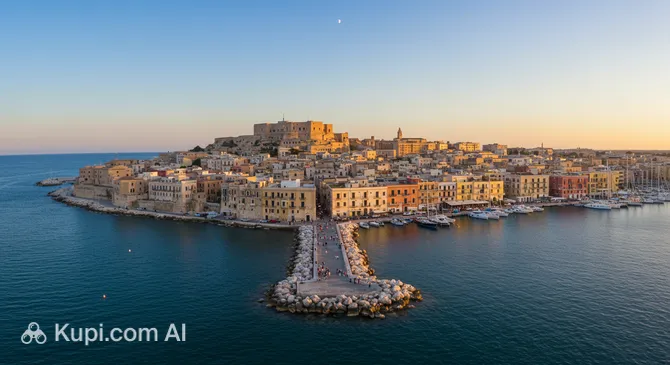
Taranto. Illustration.
Source: Kupi.com AI

The past of this place is as breathtaking as its landscapes. Founded by Spartans in the 8th century BC under the name Taras, it was the only Spartan colony in Magna Graecia and one of the wealthiest poleis of antiquity. The ancient history of Taranto has left an indelible mark on its architecture, traditions, and even the character of its locals, turning the historical center into a veritable open-air museum.

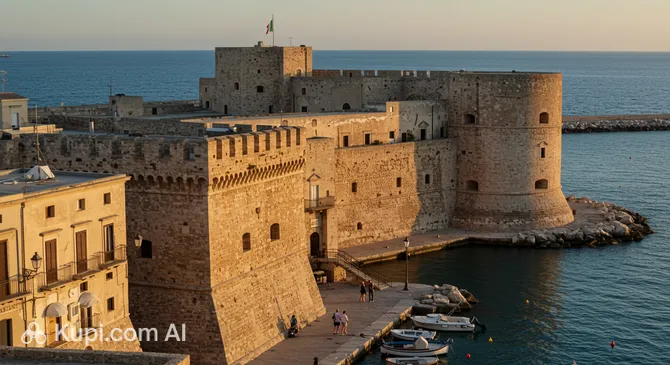
Among the key attractions that cannot be missed is the majestic Aragonese Castle (Castello Aragonese), which seems to grow straight out of the water, guarding the entrance to the canal. Another symbol of the city is the famous Swing Bridge (Ponte Girevole), connecting the old and new parts of Taranto. For lovers of antiquity, the National Archaeological Museum (MArTA) is a must-visit, housing the famous "Gold of Taranto" — a collection of incredibly intricate jewelry.

Taranto is a city of contrasts and discoveries, where you can watch fishermen mending nets against a backdrop of ancient walls and enjoy the freshest mussels the region is famous for. Come here to witness the sunset over two seas simultaneously and discover Italy from a new, unexpected perspective.
Weather Overview

The climate in Taranto can be described as classic Mediterranean, making the city an attractive destination almost all year round. The proximity of two seas softens temperature fluctuations, creating a comfortable atmosphere for relaxation. To choose the perfect time for your trip and see the current forecast, the detailed weather in Taranto will help you, although general trends remain consistent from year to year.

The summer season here is long, hot, and dry. The peak of the heat occurs in July and August, when the average temperature is around 27.5°C, and daytime highs regularly exceed 32°C. Precipitation during this time is very rare: for example, in July, it tends towards zero. This is the ideal time for those who love sun and sea bathing, but it might be a bit too hot for sightseeing tours.

Winter in the city is mild and not at all harsh. In the coldest months, January and February, the average temperature stays around 9.5–10°C, and nightly minimums rarely drop below 6.8°C. Expect a hot, sunny summer with occasional sea breezes and mild but wetter winters, especially in November, when the number of rainy days can reach eleven. The shoulder seasons, particularly May and September, offer pleasant warmth around 19–24°C, which is excellent for walking.

Average monthly temperature

Average monthly precipitation

Interesting Facts

Beyond the main attractions, Taranto holds many fascinating secrets and legends that make its history even more exciting. Here are a few facts that will allow you to look at this southern city from a new perspective:
  • Birthplace of the Tarantella and the spider. The city's name gave rise to the name of the famous spider — the tarantula. According to medieval beliefs, the bite of this local spider caused a madness called "tarantism," which could only be cured by a fast, frantic dance until total exhaustion. Legend has it that this was how the folk dance, the tarantella, was born.

  • The only daughter of Sparta. Taranto is unique in its origins: it was the only colony ever founded by ancient Spartans outside of Greece. The city, which bore the name Taras, became one of the wealthiest poleis of Magna Graecia, and locals are still proud of their "Spartan" roots today.

  • A dolphin sanctuary. The Gulf of Taranto is often called Italy's "dolphin capital." Its waters are home to one of the largest and most stable cetacean populations in the Mediterranean. Research centers operate actively here, and tourists can go on special excursions to observe these animals in the wild.

  • A fortress with a secret. The monumental Aragonese Castle, which looks like a single monolith, actually hides layers of history. During its construction in the 15th century, foundations of older Byzantine and Norman fortifications were used, as well as remnants of Greek temples that can still be seen today.

Aragonese Castle. Illustration.
Source: Kupi.com AI

Traveler photos:

How to Get There

Taranto, located on the Ionian coast, is an important transport hub for the Apulia region. Thanks to the developed infrastructure of southern Italy, you can get here in various ways, combining flights with train or bus trips. To plan the perfect route, we recommend exploring all the options on the how to get to Taranto page.

Taranto itself does not have its own civilian airport, so travelers usually fly into neighboring cities. One of the most convenient options is Bari Karol Wojtyła Airport (IATA: BRI), located in the city of Bari. This is a major international hub receiving many flights from different countries. It is located approximately 86 km from Taranto. The journey from there by taxi, bus, or rental car usually takes just over an hour.

An alternative and often closer option is Brindisi – Salento Airport (IATA: BDS), located in the city of Brindisi. The distance to Taranto is only about 61 km, making the transfer quick — travel time is about an hour. This airport also serves international and domestic flights and is popular with tourists heading to Salento.

For clarity, here is a summary of the main airports you can use to reach the city:

AirportPassenger trafficDistance
Brindisi - Salento Airport3.0 mln61 km
Palese Airport6.5 mln86 km
Crotone310 000163 km
Gino Lisa60 447181 km
Lamezia Terme International Airport2.7 mln194 km

Train travel is another excellent way to reach the region. Although Taranto has its own railway station, many tourists use larger transport hubs nearby for high-speed connections. The most important of these is the Bari Centrale (IATA: BAU) station in the city of Bari. This is one of the key stations in southern Italy with a huge passenger flow. The station is about 80 km from Taranto, and the subsequent transfer by road or regional train will take between 1 and 1.5 hours.

You might also consider Brindisi Railway Station (IATA: BQD) in the city of Brindisi. It is located closer, about 60 km from Taranto, and the trip from there will take about an hour.

Below is information on the nearest major railway hubs:

StationPassenger trafficDistance
Brindisi Railway Station2.5 mln60 km
Bari Centrale Station14 mln80 km
Lamezia Terme Centrale Railway Station1 mln192 km
Durres Railway Station2 000207 km
Salerno Railway Station6 mln213 km

Main Attractions

Taranto is a city with a rich history, and its attractions are a living testament to different eras. From monumental fortresses to priceless archaeological finds, there is something for everyone here.

The main symbol of the city, without a doubt, is the Aragonese Castle (Castello Aragonese). This powerful fortress, built in the 15th century, rises majestically on an island, guarding the entrance to the Small Sea. Today, the castle belongs to the Italian Navy but is open to visitors who can walk along its walls, peek into the courtyards, and enjoy stunning panoramic views of the sea and the city.

Aragonese Castle. Illustration.
Source: Kupi.com AI

Traveler photos:

For those who want to dive deeper into the ancient past, the National Archaeological Museum of Taranto (MArTA) is a must. It is considered one of the most important museums in Italy and houses a unique collection of artifacts from the time of Magna Graecia. Its main crown jewel is the famous "Gold of Taranto", exquisite jewelry that amazes with its fine craftsmanship and age of several millennia.

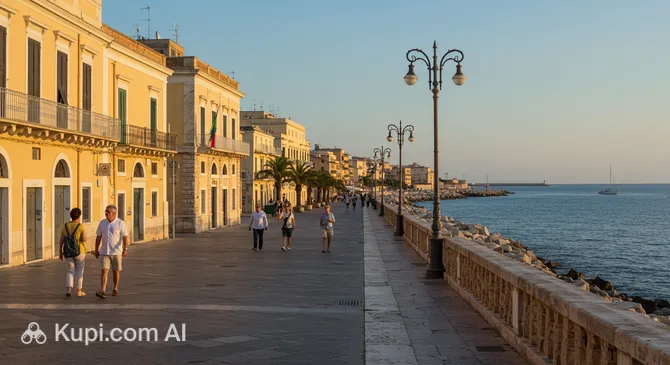
To feel the modern rhythm of the city, head to the Vittorio Emanuele III Promenade (Lungomare). This picturesque walk along the Big Sea is the perfect spot for an evening stroll, or as the Italians say, a passeggiata. From here, you can enjoy magnificent views of ships in the bay, and the promenade itself is decorated with palm trees and beautiful buildings.

To touch the most ancient pages of history, visit the Archaeological Park of the Greek Walls. Here you can see surviving fragments of the defensive structures of the ancient city of Taras, which was the only Spartan colony. Nearby, as a symbol of the city's unbreakable bond with the sea, stands the majestic Sailor's Monument, dedicated to all those who have tied their lives to the sea.

Local Cuisine

Taranto's gastronomy is a true ode to the sea. Thanks to its unique location between the Mar Grande and Mar Piccolo, the city is famous for its seafood, which is considered some of the best in all of Italy. The local cuisine is based on the "zero-kilometer" principle: fish reaches the table literally hours after being caught, and vegetables and olive oil are delivered from nearby Apulian farms.

The undisputed king of the table here is the Taranto mussel (Cozza tarantina). Special salinity conditions and underwater freshwater springs ("citri") give the mollusks a unique sweet taste and tender texture. The most popular dish every tourist must try is Cozze alla tarantina (mussels in tomato sauce with pepper and parsley) or Impepata di cozze (mussels with black pepper). It's also worth ordering "Tubettini with mussels" (Tubettini con le cozze) — a short pasta that perfectly absorbs the aroma of the sea.

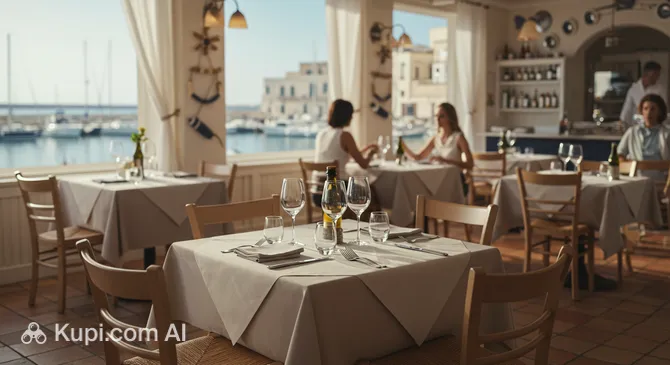
For those who want to enjoy the freshest gifts of the sea in a modern setting, TAGii Restaurant-Bistro Marine Experience is an excellent choice. Here you can try raw seafood (crudo di mare) — a ritual adored by locals, who consider it the best way to experience the true taste of the sea.

TAGii Restaurant Bistrot Sea Experience. Illustration.
Source: Kupi.com AI

Traveler photos:

In addition to fish, Taranto's cuisine is rich in "earthy" flavors. Be sure to try orecchiette (ear-shaped pasta) with turnip tops (cime di rapa) — a classic of the Apulia region. Cheese lovers should visit Fabulà Mozzarella Restaurant, which serves magnificent mozzarella, burrata, and stracciatella produced by local master cheesemakers. This is a great opportunity to get acquainted with the dairy traditions of the South.

Street food in Taranto also deserves attention. The most popular snacks are panzerotti (fried dough pockets filled with mozzarella and tomatoes) and puccia (traditional sandwich bread with various fillings). If you prefer classic pizza, the famous L’Antica Pizzeria Da Michele offers benchmark Neapolitan options that are hugely popular with locals.

As for drinks, meals are traditionally accompanied by local wine. Taranto is in the production zone of the famous red wine Primitivo di Manduria, known for its rich flavor and high alcohol content. For fish, white wines from the Itria Valley are a perfect match. We must also mention the local Raffo beer — a pale lager brewed in Taranto since 1919 and considered the city's unofficial symbol; locals affectionately call it the "beer of the two seas."

Travel Tips

Welcome to the "City of Two Seas"! To ensure your trip to Taranto is as comfortable and safe as possible and leaves only pleasant memories, we have prepared a list of practical recommendations based on the experience of locals and seasoned travelers.

  1. Clothing and Seasonality. Summers in Apulia can be very hot, so bring clothes made of natural, breathable fabrics (linen, cotton) and be sure to wear a hat. In winter, the climate is mild but humid due to winds from two seas, so a windproof jacket and comfortable waterproof shoes will be necessary. When visiting religious sites, such as the Cathedral of San Cataldo, follow the dress code: shoulders and knees must be covered.

  2. Transport. The historical center (Città Vecchia) and the shopping streets of the New Town are best explored on foot. For moving between districts, it's convenient to use city buses from Kyma Mobilità (be sure to validate your ticket upon entry). If you plan trips around Apulia, renting a car will be the best solution, but remember that parking in the center of Taranto can be paid (blue lines) and difficult during peak hours.

  3. Finances. The currency is the Euro (€). Bank cards are accepted almost everywhere, including restaurants and supermarkets. However, for purchases at colorful markets, paying for small souvenirs, or public transport fares, always have some cash in small bills with you. Tipping is not a strict obligation, as a service charge (coperto) is often included in the bill, but leaving 1-2 euros or rounding up the bill is considered a sign of good manners.

  4. Health and Safety. Pharmacies are easily recognized by a green cross sign; information on on-duty pharmacies (open at night) is usually posted on the doors of closed ones. Taranto is a safe city, but in the labyrinths of the Old Town after dark, it is recommended to stick to well-lit streets and tourist routes. Watch your personal belongings in crowded places and on the promenade.

  5. Communication. Locals are very friendly, but the level of English proficiency can vary, especially among the older generation. Learn a few basic Italian phrases: Buongiorno (Good day) and Grazie (Thank you) — these will open many doors. A SIM card for the internet can be bought at operator stores (TIM, Vodafone, WindTre) with your passport; free Wi-Fi is available in many cafes, but its speed is not always stable.

  6. Local Etiquette. It is customary to say hello when entering a shop, cafe, or elevator. Italians communicate expressively and loudly — don't take this for aggression; it's just a display of temperament. In markets, don't touch fruits and vegetables with your bare hands: either wear disposable gloves, which are usually provided nearby, or ask the vendor to pick the items for you.

  7. What to Avoid. Don't plan active shopping or important errands during the "riposo" (siesta) period — roughly from 13:30 to 16:30, most shops and offices are closed. It is also strongly discouraged to buy fresh seafood, especially mussels, from street vendors "by hand" or to swim in prohibited port areas — this can be dangerous to your health.

  8. Extra Tip. Taranto is famous for its mussels, considered some of the tastiest in the world. Don't miss the chance to try them in season (especially in summer), but only do so in certified restaurants. Ask for the dish Cozze gratinate (baked mussels) — it's a real delicacy that will reveal the flavor of local cuisine.

Taranto is a city with a strong character and a warm southern heart. By following these simple tips, you can easily blend into the rhythm of local life, avoid minor misunderstandings, and fully enjoy the unique atmosphere of Apulia!

Entertainment & Nightlife

Taranto's nightlife might not be as boisterous and chaotic as in major metropolises, but it possesses its own unique southern charm and energy. As the sun sets, the city transforms: the heat subsides, and locals head out for the traditional passeggiata — an evening stroll that smoothly transitions into dinner and cocktails. Most activity is concentrated in the "New City" (Borgo Nuovo), especially in the pedestrian zones around Via d'Aquino and the central squares, where life hums until late at night.

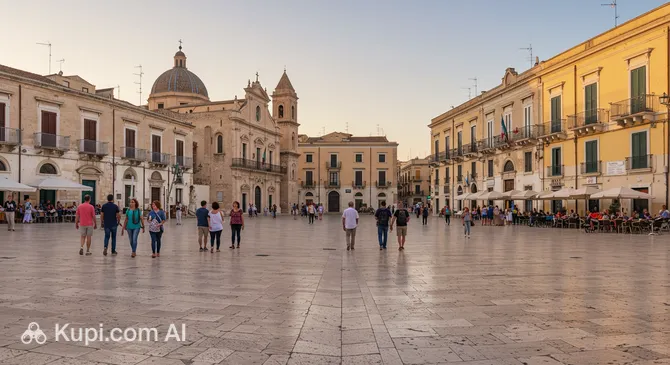
The epicenter of evening meetings is often Piazza della Vittoria. This popular gathering spot for youth and tourists is surrounded by cafes and bars. It’s customary to start the evening here with a classic Italian aperitif — a glass of Spritz or local wine with light snacks. The atmosphere is democratic and relaxed, and the crowd is diverse and friendly. If you want to immerse yourself in the local culture, just grab an outdoor table and watch the lively flow of people.

Piazza della Vittoria. Illustration.
Source: Kupi.com AI

Traveler photos:

For those seeking more active entertainment and music, there are several noteworthy venues in the city. Dance lovers and fans of the club atmosphere should check out Smile – Enrta Solo con un Sorriso. This spot positions itself as a space for fun and carefree relaxation, often hosting themed parties and DJ sets. If you prefer a quieter but stylish evening, Eden Bar – La Pasticceria is an excellent choice. This establishment is famous not only for its desserts but also for its superb cocktail menu, perfect for a long evening in good company.

The gastronomic side of the night is equally important in Taranto. Many restaurants stay open late, turning into cozy lounge areas as the night progresses. For example, Fabulà Mozzarella Restaurant offers an interesting format that combines high-quality cuisine with a relaxed bar atmosphere where you can grab a bite and a glass of wine even after midnight. The dress code in most places is smart casual. Italians love to dress stylishly ("bella figura"), so when heading to a club or a trendy bar, it’s worth paying attention to your appearance. Shorts and beach footwear are inappropriate in the evening.

Regarding safety, the city center and the Borgo Nuovo district are well-lit and safe for nighttime walks. The historical center (Città Vecchia) has become more lively in recent years due to new venues opening, but it is still recommended to stick to the main streets and avoid dark, deserted alleys. Public transport is rare at night, so it's better to use a taxi to return to your hotel. Taxis aren't typically hailed on the street; it's more reliable to call one or find them at designated stands (for example, at the train station or on the main squares).

While Taranto is known primarily for its evening life, there is also plenty to do during the day besides the beaches. Culture buffs can visit local theaters, such as the historic Orfeo Theater, which hosts concerts and plays. Numerous museums and parks are also open during the day, offering a peaceful break before a busy evening.

Parks & Museums

Taranto offers travelers not only impressive sea panoramas but also a rich cultural program, harmoniously complemented by relaxation in picturesque green zones. A city where history literally lies beneath your feet, it also cares for the preservation of natural spots where you can hide from the southern sun and enjoy the silence.

Among the natural attractions, the Villa Peripato gardens hold a special place. This is a true green oasis in the city center, spread across terraces with a magnificent view of the Mar Piccolo. Here, it is pleasant to stroll among lush Mediterranean vegetation, see the remains of ancient structures, and rest in the shade of centuries-old trees. The park serves as a popular meeting place for locals and a venue for open-air cultural events.

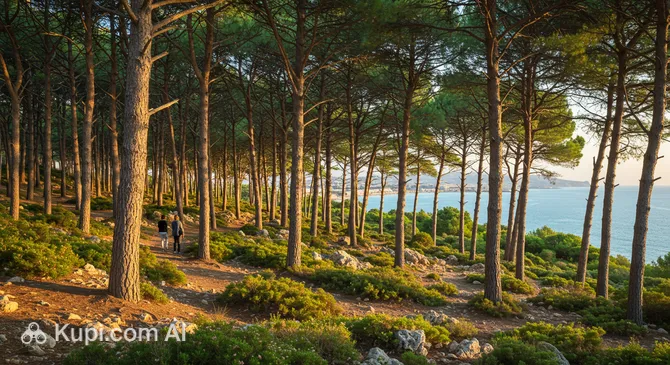
Cimino Pinewood. Illustration.
Source: Kupi.com AI

Traveler photos:

For those seeking communion with nature away from the city bustle, the Cimino Pine Grove is an ideal choice. This vast natural park is located on the shores of the Mar Piccolo and is a favorite spot for picnics, morning jogs, and bird watching. The air here is filled with the scent of pine needles and the sea, and the views of the bay create an atmosphere of complete peace.

The cultural heart of the city beats in its museums, the main one being, undoubtedly, the National Archaeological Museum of Taranto (MArTA). This is one of the world's most significant archaeological museums, housing a unique collection of artifacts from the Magna Graecia era. Visitors come here specifically to see the famous "Gold of Taranto" — exquisite Hellenistic jewelry, tiaras, and rings that amaze with the fine work of ancient masters.

Another unique facet of the city's history is the Underground Museums (Ipogei). Taranto is literally riddled with a network of underground passages, oil mills, and necropolises carved into the rock thousands of years ago. Visiting sites like the Bellacicco Hypogeum (Ipogeo Bellacicco) allows you to descend several levels underground and trace the city's history from its founding by Spartans to the Middle Ages, seeing the layers of different eras in a cross-section.

It is impossible to talk about Taranto's heritage without mentioning its architectural dominant — the Aragonese Castle. This powerful fortress on the water not only serves as a reminder of the region's military past but is also a magnificent example of fortification art, open for free guided tours.

Insider Tip: If you want to see a completely different side of local nature, try to take a boat excursion to the Cheradi Islands (Isole Cheradi). San Pietro Island, once a closed military zone, is now partially open to visitors in the summer. There, you'll find pristine beaches with crystal-clear water and thick pine forests where you can encounter rare birds.

Getting Around

Moving around Taranto is quite convenient, although there is no metro or tram network typical of major metropolises. The main burden of passenger transport is handled by an extensive system of bus routes managed by the local company Kyma Mobilità (formerly known as AMAT). The city is fairly compact, and many tourist locations in the center can be explored on foot, but for trips to the beaches or remote areas, public transport will be indispensable.

The bus network covers almost the entire city, linking the railway station, the historical center (Città Vecchia), the modern Borgo district, and the coastal zones. Buses run from early morning until late evening, but it's worth considering that intervals increase on weekends and holidays. The most popular routes (for example, lines 1/2, 3, and 8) run quite often, but schedules at stops are not always perfectly accurate, so it's better to allow some extra time.

A unique feature of Taranto's transport system is the water buses (Motonavi), also operated by Kyma Mobilità. This is not just a way to get from point A to point B, but also a great opportunity to take a mini-cruise through the two seas. Routes usually connect the shores of Mar Piccolo and Mar Grande, and in the summer season, boats run to San Pietro Island. A trip on such a boat allows you to see the city from the water and enjoy the sea breeze for the price of a regular ticket.

The fare system is unified for buses and water transport. A standard ticket (biglietto ordinario) is valid for 90 minutes from the moment of validation. There are also day tickets (giornaliero) that are beneficial if you plan on making many trips. Tickets can be purchased at newsstands and tobacco shops (look for the sign with the letter "T"), as well as through the official Kyma Mobilità mobile app or partner services like DropTicket. Buying a ticket from the driver is possible, but it will cost more and requires exact change.

Important advice for tourists: always validate your ticket immediately upon entering the vehicle. Special yellow or orange validation machines are installed inside for this purpose. Fines for riding without a ticket or with an unvalidated one are high in Italy, and inspectors check passengers regularly. If you use an electronic ticket in the app, don't forget to activate it before boarding.

As an alternative to public transport, you can use a taxi. Official white cars can be found at special stands (for example, at the train station or on Piazza Garibaldi) or called by phone. Taxi hailing apps do not work as actively here as in the capital, so it is more reliable to use the services of local dispatchers. Electric scooter rentals are also gaining popularity in the city, convenient for short trips along the promenade, but be mindful of parking zones.

Accommodation

Accommodation options in Taranto are as diverse as the city itself, offering travelers a choice ranging from atmospheric Bed & Breakfasts (B&Bs) in historic buildings to modern hotels with a full range of services. Since the city is not yet as overcrowded with tourists as neighboring Bari or Lecce, you can often find excellent housing at very attractive prices, even during the high season.

The main dilemma when choosing a place to stay is the choice between two main districts: the Old Town (Città Vecchia) and the New Town (Borgo Nuovo). The Old Town, located on an island, is suitable for those seeking authenticity and romance. Here, many apartments and mini-hotels are located in restored palazzos overlooking narrow streets or the sea. Staying here means being within walking distance of iconic sites like the Aragonese Castle and literally breathing in history.

On the other hand, the New Town (especially the Borgo Umbertino area) is considered more convenient from a practical point of view. This is where the main business and commercial life is concentrated, and where the best shops and restaurants are located. Hotels in this part of the city generally offer more spacious rooms and modern service. It is an excellent choice for those who value comfort, elevator access, and proximity to transport hubs. Accommodations along the waterfront, offering stunning panoramas, are particularly popular.

Vittorio Emanuele III Seafront. Illustration.
Source: Kupi.com AI

Traveler photos:

The price range in Taranto can be described as moderate.

  • Budget segment: Small B&Bs and guest houses, often run by local families. This is a great way to save money and get insider tips from the hosts.
  • Mid-range: Comfortable 3-4 star hotels, mostly located in the New part of the city. They offer a good balance of price and quality.
  • Luxury and exclusive: While there aren't many five-star giants in the city itself, you can find luxurious masserias (traditional fortified farms converted into hotels) in the surrounding countryside, offering high-class secluded relaxation.

Booking tip: Even though Taranto is not the most expensive resort in Apulia, during peak months (July and August) and during Holy Week (before Easter), when the famous Processione dei Misteri takes place, the demand for housing rises sharply. During these periods, it is strongly recommended to book your stay several months in advance. It’s best to use major online platforms for your search, but sometimes contacting small B&Bs directly can offer more flexible check-in terms.

Nearby Cities

For those who want to explore the surroundings, Taranto serves as an excellent starting point for day trips to several interesting nearby locations. The Apulia region is rich in small but colorful towns, each with its own unique character and history.

Just 16 kilometers from the city lies Grottaglie — a true capital of ceramics. This town is famous for its "Ceramics Quarter," located in the San Giorgio ravine, where local craftsmen have been creating unique clay products for centuries. It's the perfect place to buy authentic souvenirs and learn about an ancient craft.

A little further away, in the picturesque Itria Valley, is Martina Franca. The town is famous for its elegant Baroque architecture, whitewashed houses, and winding, labyrinthine streets. In summer, it hosts a prestigious opera festival that attracts music lovers from all over the world.

Food and history enthusiasts should visit the city of Manduria. This is the heart of production for the famous Primitivo di Manduria red wine. Besides the wineries, the city is interesting for its Archaeological Park of the Messapian Walls, where you can see ancient fortifications and a necropolis.

CityPopulationDistance
San Giorgio Ionico15 10110 km
Pulsano11 50411 km
Statte13 80813 km
Grottaglie31 89016 km
Crispiano13 69316 km

These nearby destinations provide an insight into the diverse culture and landscapes of the region.

Shopping & Souvenirs

Shopping in Taranto is a pleasant adventure that allows you to combine walks through historical sites with the search for fashionable new items and authentic souvenirs. The city does not claim to be a world fashion capital like Milan, but you can find an excellent selection of Italian clothing, footwear, and high-quality local products here. Commercial life is concentrated mainly in the modern part of the city, where boutique windows sit alongside cozy cafes.

The heart of shopping in Taranto is the pedestrian zone in the Borgo Nuovo district. The main shopping arteries are Via d'Aquino and its continuation, Via di Palma. This elegant promenade, paved with stone and decorated with palm trees, is a favorite spot for evening strolls among locals. Stores of famous Italian and international brands, perfume boutiques, jewelry shops, and accessory stores are concentrated here. Walking here, you will not only update your wardrobe but also feel the true rhythm of urban life.

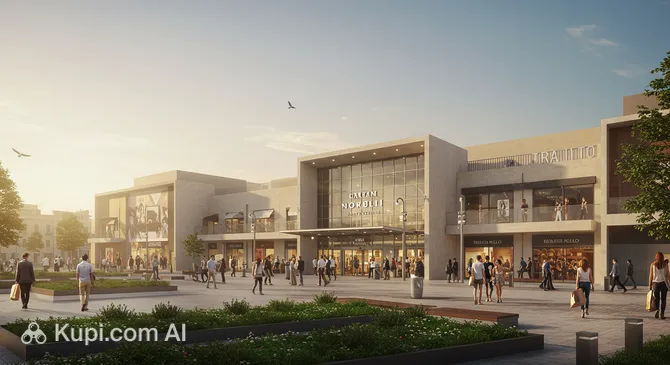
For those who prefer large-scale shopping in one place, the Porte dello Jonio Shopping Center is an ideal choice. It is a large modern complex located slightly away from the city center. Under its roof are dozens of clothing, electronics, and home goods stores, as well as a large hypermarket. It is a great place to hide from the summer heat or winter rain and spend time productively for the whole family.

Porte dello Jonio Shopping Center. Illustration.
Source: Kupi.com AI

Traveler photos:

To experience the true flavor of southern Italy, be sure to visit the local markets. The most famous of them is the Fadini Market (Mercato Fadini). This is a historic indoor market where an indescribable atmosphere reigns: vendors loudly praise their goods, and the stalls are bursting with the freshest vegetables, fruits, cheeses, and seafood. Here you can buy excellent farm products at very pleasant prices and see the non-tourist side of life in Taranto.

As souvenirs from Taranto, tourists most often bring home the gastronomic treasures of Apulia. Look for a bottle of local extra virgin olive oil or Primitivo di Manduria red wine. Traditional handmade orecchiette pasta is also popular. Among non-edible souvenirs, it's worth looking at ceramics: the town of craftsmen Grottaglie is nearby, so Taranto's shops have a large selection of painted plates and the famous "pumo" — ceramic buds symbolizing luck and prosperity.

When planning a shopping trip, keep the traditional working hours in mind. Most small boutiques and shops in the center are open from 9:00 or 10:00 until 13:00, and then close for "riposo" (lunch break) until 16:30 or 17:00. Evening trading continues until 20:00–21:00. Large shopping centers and chain supermarkets usually work without a break (orario continuato) from morning until evening. Payments are accepted in both cash and credit cards, but it is better to have small bills at markets and in small kiosks.

Tourists from non-European Union countries can use the Tax Free system. If you make a purchase in one store for an amount exceeding the legally established minimum (as of 2024, the threshold in Italy is reduced to 70 euros), look for a "Tax Free" or "Global Blue" sticker on the window. Ask the seller to issue a special check (fattura) so you can return part of the paid tax when leaving the country.

Nearby cities

Reached the end of the page?

That means the route is fully explored