Support

Ostuni

About

Ostuni, a true jewel of the Puglia region, is nestled on several hills just a few kilometers from the Adriatic Sea in southern Italy. This city, often called the "White City" (La Città Bianca), rises like a shining beacon over vast olive groves and vineyards, instantly enchanting visitors with its unique atmosphere and picturesque views.
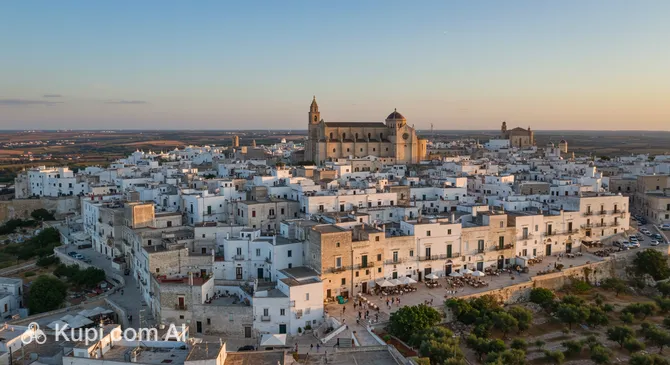
Ostuni. Illustration.
Source: Kupi.com AI

With a population of just over 31,000 people, Ostuni maintains the cozy and intimate feel of an Italian province, where life flows at a measured and leisurely pace. The city is an important tourist and cultural center, attracting travelers from all over the world with its authenticity, rich history, and special charm.

The main attraction of Ostuni is its magnificent historic center. It is a fascinating labyrinth of narrow, winding streets, steep staircases, small squares, and courtyards where every turn reveals new delightful views. The tradition of whitewashing houses with lime originated here in the Middle Ages, and it is this practice that gives the city its famous dazzling white appearance, which looks particularly striking against the blue sky and at sunset, when the walls are painted in warm golden tones. A walk through it will inevitably lead you to panoramic platforms with stunning views of the surrounding area and the Adriatic coast.

Ostuni is an ideal place for those looking not only for beautiful scenery for photos but also for the authentic atmosphere of old Italy. Here you can wander for hours through ancient streets, discovering charming details, peeking into artisan workshops and shops with local products, or simply enjoying the moment while sitting in one of the cozy cafes. We invite you to visit Ostuni and experience its magic and hospitality for yourself!

You can find more interesting facts on the history of the city of Ostuni page.
Weather Overview

The weather in Ostuni is characterized by a Mediterranean climate. Summers here are typically hot and sunny, with average temperatures in July and August around 27.1°C, and peak values can exceed 31°C. Precipitation in the summer months is minimal, especially in July, when the number of rainy days tends toward zero. Winters in Ostuni are mild, with the average temperature in January around 9.7°C and minimum values around 7.1°C. More precipitation falls in winter and during the shoulder seasons (especially in November), but it is usually moderate.

In general, expect a warm, even hot, and mostly dry summer, and a mild and wetter winter. Spring and autumn offer comfortable temperatures for walking and exploring the city. For a more detailed forecast and monthly weather information, you can visit the Climate of Ostuni page.

Average monthly temperature

Average monthly precipitation

Interesting Facts

In addition to its famous snow-white walls, Ostuni, often called the "White City," holds many fascinating secrets and little-known details. These features make it not just a beautiful place, but a true find for the curious traveler. Here are just a few of them:

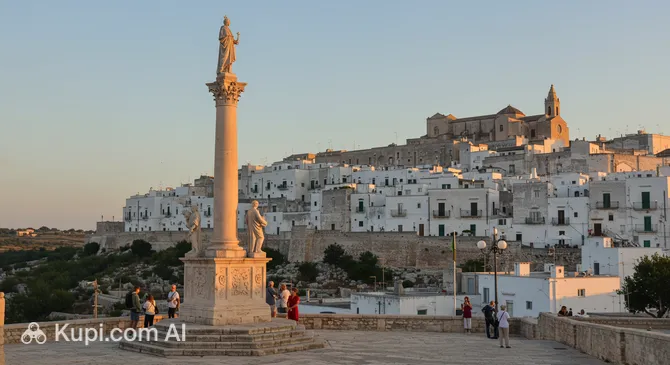
Column of Saint Oronzo. Illustration.
Source: Kupi.com AI

Traveler photos:

  • The nickname "White City" (La Città Bianca) was not given to Ostuni by accident. The tradition of whitewashing houses with lime annually began here as early as the 15th century. This was done not only to create a unique radiant appearance but also for purely practical reasons: the lime reflected the scorching rays of the southern sun, keeping the houses cool, and also served as a natural disinfectant, protecting against insects and diseases. This centuries-old practice is carefully preserved to this day.

  • Due to its unique architecture and authentic atmosphere, Ostuni has repeatedly served as a natural filming location for Italian and foreign films. Its narrow winding streets, ancient buildings, and picturesque views have provided the perfect backdrop for filmmakers seeking to convey the spirit of old Italy.

  • The surroundings of Ostuni hide true natural treasures—the unique Montevicoli karst caves. Traces of prehistoric human settlements were discovered in these ancient grottoes. Today, the caves attract visitors not only for their historical significance but also for their impressive formations—stalactites and stalagmites that create truly fairytale underground landscapes.

How to Get There

Getting to the picturesque city of Ostuni, known as the "White City" of Puglia, is possible in several convenient ways. The main transport hubs for travelers heading to Ostuni are the region's international airports and the railway network.

The closest major airport to Ostuni is Brindisi – Salento Airport (BDS), also known as Papola Casale Airport. It is located in the city of Brindisi, about 32 km from Ostuni. A trip by taxi or rental car from the airport to the city center takes about 35–45 minutes. This international airport receives flights from many European cities. Another popular option is to fly into Palese Airport (BRI) in the city of Bari, which is a larger transport hub. It is located about 82 km north of Ostuni, and the drive from there takes approximately 1 hour 15 minutes to 1 hour 30 minutes.

For convenience, here is a summary of the main airports used to reach Ostuni:

AirportPassenger trafficDistance
Brindisi - Salento Airport3.0 mln32 km
Palese Airport6.5 mln82 km
Gino Lisa60 447189 km
Tirana International Airport10 mln195 km
Crotone310 000197 km

Traveling by train is another option to reach the region where Ostuni is located. The closest significant railway station to Ostuni mentioned in available data is Brindisi Railway Station. It is located in the city of Brindisi, approximately 32 km from the center of Ostuni. From there, you can reach Ostuni by local bus or taxi; the trip takes approximately 40–50 minutes. Although Ostuni itself has a small railway station where regional trains arrive, for routes involving transfers or from more distant cities in Italy, it is often more convenient to use the Brindisi station.

Below is information about some railway stations that can be used to plan a trip to Ostuni:

StationPassenger trafficDistance
Brindisi Railway Station2.5 mln32 km
Bari Centrale Station14 mln74 km
Durres Railway Station2 000171 km
Lamezia Terme Centrale Railway Station1 mln230 km
Salerno Railway Station6 mln237 km

Additionally, upon arrival at one of the major transport hubs, such as Brindisi or Bari airports or the Brindisi railway station, you can rent a car, which will give you more flexibility to explore Ostuni and its picturesque surroundings in Puglia. Local buses also run between cities in the region; it is best to check their information on-site or on the transport companies' websites.

Main Attractions

Ostuni, known as the "White City" due to its dazzling white buildings, offers tourists several interesting places to visit. Among them are historical monuments as well as establishments that convey the spirit of local life and culinary traditions.

One of the iconic landmarks is the Column of Saint Oronzo. This impressive monument was erected in honor of the city's patron saint, Saint Oronzo, who, according to legend, protected Ostuni from the plague. The column, topped with a statue of the saint, stands proudly in Piazza della Libertà, serving as an important historical and religious symbol of the city, as well as a popular spot for photographs.

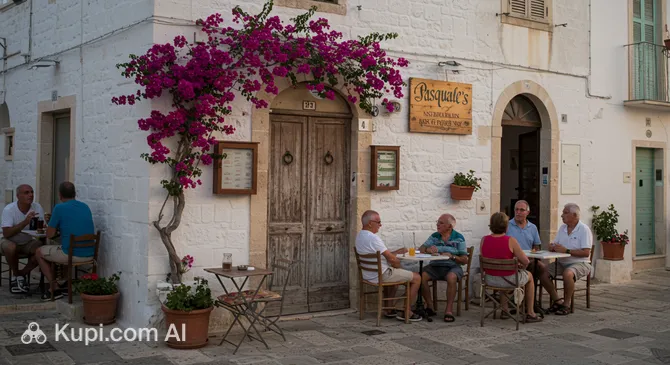
To experience the authentic Italian atmosphere and try traditional Puglian sweets, be sure to stop by Pasquale’s Bar and Pastry Shop. This establishment, popular among locals and tourists alike, is famous for its fresh pastries, aromatic coffee, and hospitality. It’s a great place to relax after a walk through the narrow streets of Ostuni and enjoy the taste of regional delicacies.

Pasquale's Bar and Pastry Shop. Illustration.
Source: Kupi.com AI

Traveler photos:

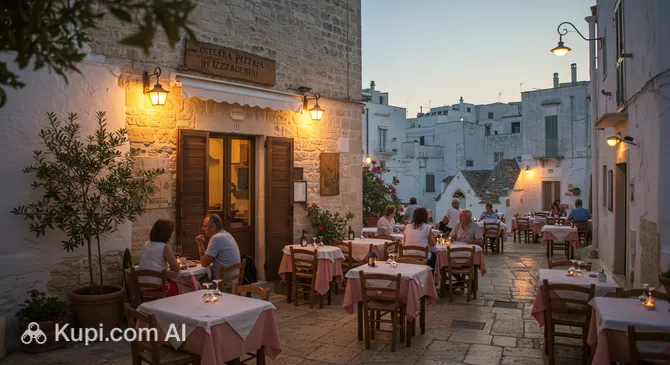
Fans of Italian cuisine should pay attention to Osteria Pizzeria Sant'Oronzo. This restaurant offers a wide selection of traditional dishes, including, of course, excellent pizza prepared according to local recipes. The cozy atmosphere and quality food make it a great choice for lunch or dinner in the heart of the "White City," allowing you to enjoy the gastronomic delights of Puglia.

Osteria Pizzeria Sant'Oronzo. Illustration.
Source: Kupi.com AI

Traveler photos:

Local Cuisine

The cuisine of Ostuni is a true immersion into the gastronomic traditions of the Puglia region, where simplicity, freshness of ingredients, and richness of flavors are valued. Here, every dish tells the story of a land rich in olive groves and fertile fields.

Among the dishes that you should definitely try in Ostuni is focaccia alla ostunese—a local variation of the fluffy Italian bread, generously topped with fresh tomatoes, olives, and aromatic herbs. Another culinary gem is orecchiette—pasta shaped like "little ears," traditionally served with a sauce made from turnip tops or a rich tomato sauce. An integral part of any table is the excellent local olive oil, produced from olives harvested in the ancient groves surrounding the city.

Cheese lovers will appreciate the fresh burrata—a delicate cheese with a creamy filling—and soft ricotta, which are often produced on local farms (masserias). As for drinks, pay attention to local wines—light and fruity, they perfectly complement Puglian dishes, especially pasta and seafood. Refreshing lemonades and other drinks based on local fruits are also popular.

The food culture in Ostuni is diverse. Locals and tourists enjoy meals in traditional trattorias and restaurants, as well as buying street food in the lively alleys or during frequent food festivals. Here you can try fried artichokes, fresh seafood, and a variety of almond sweets and traditional Puglian desserts. To dive deeper into the local culinary atmosphere, you can visit one of the authentic establishments, such as Osteria Pizzeria Sant'Oronzo.

The gastronomic scene of Ostuni is a vibrant combination of century-old recipes, high-quality local products, and sincere hospitality that makes every meal an unforgettable culinary experience.

Travel Tips

Planning a trip to Ostuni, the charming "White City" of Puglia? To ensure your journey goes smoothly and leaves only pleasant impressions, we have prepared some practical tips.

  1. Clothing and Essentials: The climate in Italy, and Ostuni in particular, is Mediterranean. In summer, bring light, breathable clothing made of natural fabrics, a hat, sunglasses, and sunscreen. In spring and autumn, layered clothing will be useful as evenings can be cool. In winter, you will need a warm jacket. A key element of your wardrobe is comfortable shoes, as the historic center of Ostuni is full of cobbled streets, uphills, and downhills. Don't forget an adapter for electrical appliances (Italy uses Type F and L sockets). When visiting churches, such as the Cathedral, it is customary to cover your shoulders and knees.
  2. Getting Around: The historic center of Ostuni, known as "La Città Bianca," is best explored on foot. Its narrow, winding streets are not designed for active car traffic. For trips to neighboring cities or beaches, you can use local STP Brindisi buses. The Ostuni railway station is located several kilometers from the center; buses also run from there to the city. Taxis in Ostuni can be found at designated stands or ordered by phone through local services; popular international ride-sharing apps are less common here, so it is better to get taxi contacts from your hotel or information center. For longer trips, you might consider NCC services (Noleggio Con Conducente—car rental with a driver). Renting a car is convenient for exploring the Puglia region, but note that parking in the center of Ostuni can be problematic and expensive; it is better to look for spots on the outskirts of the old town.
  3. Finances: The official currency is the Euro (EUR). Credit and debit cards (Visa, Mastercard) are accepted in most hotels, restaurants, and shops. However, it is always useful to have some cash on hand for small purchases at markets, small shops, or for paying in some cafes. ATMs (Bancomat) are easy to find. Regarding the daily budget, it can vary greatly. A budget traveler can manage on €50-70 per day (excluding accommodation), focusing on simple cafes and free attractions. A more comfortable trip with restaurant visits and some paid activities will cost €100-150 and up. For an accurate calculation, consider the cost of your accommodation and your plans for meals and excursions. Tips in restaurants are not always included in the bill (look for the line "servizio incluso"); if you liked the service, it is customary to leave 5-10% of the amount or round up the bill. "Coperto" is a cover charge for table setting and bread, not a tip.
  4. Health and Safety: Ostuni is a fairly safe city. Nevertheless, observe standard precautions: keep an eye on your belongings in crowded places and do not leave valuables unattended. Pharmacies (farmacia) are marked with a green cross; there is always a duty pharmacy (farmacia di turno), information about which can be found on the doors of other pharmacies or online. Tap water in Italy is considered safe to drink, but many tourists and locals prefer bottled water. Be sure to get travel medical insurance before your trip. In emergencies, call the single number 112.
  5. Communication: The official language is Italian. In tourist areas, hotels, and restaurants, staff often speak English. However, knowing a few basic phrases in Italian (e.g., "Ciao"—hi/bye, "Grazie"—thank you, "Prego"—you're welcome, "Scusi"—excuse me) will be highly appreciated by locals. A mobile SIM card can be purchased at local operator stores. Wi-Fi is available in most hotels, cafes, and restaurants. There are few specialized mobile apps just for Ostuni, but general travel apps for Italy will be useful: maps (e.g., Google Maps for walking and driving navigation), apps for bus schedules (if available online), or trains (e.g., Trenitalia if planning regional trips), as well as translators.
  6. Local Etiquette: Italians are friendly and sociable. It is customary to say hello ("Buongiorno" in the morning, "Buonasera" in the evening) when entering small shops or cafes. Italians often drink coffee, especially espresso, quickly while standing at the bar counter—this is also cheaper than at a table. Remember that cappuccino is considered a morning drink, and ordering it after lunch or dinner may seem strange to some locals, although tourist areas are more lenient about this. Lunch is usually from 1:00 PM to 3:00 PM, and dinner is quite late, starting from 8:00 PM.
  7. What to Avoid: Don't expect everyone to speak English fluently everywhere, especially away from major tourist routes—be patient and use gestures or a translator. Try not to be overly loud in churches and respect local traditions and religious feelings. Also, don't be surprised by "riposo" (similar to a siesta)—many shops may be closed in the afternoon, usually from 1:00-2:00 PM to 4:00-5:00 PM.
  8. Ostuni Special: Be sure to walk through the city in the evening when the heat subsides and Ostuni is especially beautiful in the rays of the setting sun and evening illumination. This is the time for "la passeggiata," when locals go out for a leisurely stroll. Also, if your visit coincides with a Saturday (usually in the morning), visit the local market—a great place to buy fresh Puglian products, local cheeses, olive oil, and souvenirs.

We hope these tips help you better prepare for your trip and fully enjoy the beauty and unique atmosphere of Ostuni. We wish you an unforgettable journey!

Entertainment & Nightlife

As evening falls, Ostuni, known as the "White City," transforms, offering its guests a cozy and enchanting atmosphere for relaxation. Nightlife here is not characterized by the noise of large nightclubs or specialized concert venues, but rather invites leisurely strolls through the illuminated streets of the historic center, sitting in stylish bars, and enjoying exquisite dinners under the starry Puglian sky.

The main concentration of evening establishments is in the historic center (centro storico). Here, amidst the labyrinth of narrow streets and around the main square, Piazza della Libertà, you will find many wine bars (enotecas) where you can taste local wines, cocktail bars with terraces offering breathtaking views, and restaurants serving traditional cuisine. Some establishments may offer live music during the summer season, creating an even more pleasant environment.

One of the places where you can have a pleasant time is Pasquale’s Bar and Pastry Shop. This place is perfect for both a pre-dinner aperitif and a quiet evening relaxation with a glass of wine or a signature cocktail. The atmosphere here is usually relaxed and friendly, making it a popular spot for both tourists and locals.

If you are looking for a place for dinner, check out Osteria Pizzeria Sant'Oronzo. Here you can enjoy authentic Italian pizza and other local dishes in a traditional setting. Many restaurants in Ostuni stay open until late evening, especially during the tourist season, allowing guests to enjoy their meal without rushing.

The crowd in Ostuni in the evening is quite diverse: from tourists exploring the city to locals enjoying the cool of the evening. The style of the establishments varies from simple and authentic to more refined and trendy. Most bars and restaurants come alive toward the evening, especially after 8:00 PM–9:00 PM, and stay open until midnight or later, particularly in the summer months. There is usually no specific dress code, but smart casual is appropriate for visiting some more elegant places.

The best time to experience Ostuni's nightlife is certainly the summer months, when the city is full of events and open terraces. Prices in bars and restaurants are considered moderate, although they may be slightly higher in establishments with panoramic views. Getting around the historic center is most convenient on foot, as many streets are pedestrianized. For longer distances, you can use taxi services.

Ostuni is considered a fairly safe city, especially its tourist areas. Evening walks through the well-lit historic center generally do not cause concern. Nevertheless, it is always worth observing standard precautions. You can call a taxi through your hotel reception or ask for one at a restaurant or bar.

During the day, Ostuni also offers many interesting activities. You can explore its main landmarks, such as the famous Column of Saint Oronzo, visit small local museums detailing the history and culture of the region, or simply enjoy a walk through the picturesque streets, stopping at artisan shops. Although there are no major amusement parks in Ostuni, its charm and beauty are wonderful entertainment in themselves for those who appreciate history and an authentic atmosphere.

Parks & Museums

Ostuni, Puglia's famous "White City," attracts visitors not only with its unique architecture and historic center but also offers opportunities to explore cultural heritage through museums and enjoy nature in its picturesque surroundings.

While Ostuni itself is primarily an enchanting labyrinth of snow-white streets, there are several interesting places for nature lovers and those seeking quiet relaxation. In the city, you can stroll through the Villa Comunale Sandro Pertini City Garden—a pleasant green space to escape the city bustle. Not far from Ostuni lies the Coastal Dunes Regional Nature Park from Torre Canne to Torre San Leonardo (Parco Naturale Regionale Dune Costiere da Torre Canne a Torre San Leonardo). This park is famous for its sandy beaches, dunes, and rich Mediterranean vegetation, offering excellent conditions for hiking and birdwatching. Another notable site is the Santa Maria di Agnano Archaeological and Natural Park (Parco Archeologico e Naturale di Santa Maria di Agnano), where natural beauty meets ancient history; it was here that the "Donna di Ostuni," the remains of a woman dating back approximately 28,000 years, was discovered.

Cultural life in Ostuni is concentrated in its museums. A key one is the Museum of Pre-Classical Civilizations of the Southern Murgia (Museo di Civiltà Preclassiche della Murgia Meridionale). Located in a former Carmelite monastery, it houses unique archaeological finds, including the skeleton of "Delia" (the Woman of Ostuni), and tells the ancient history of the region. Also worth visiting is the Diocesan Museum (Museo Diocesano), located next to the Cathedral. Its collection features religious art, church utensils, and historical documents that provide a deeper understanding of the city's spiritual heritage.

The entire historic center of Ostuni is an open-air attraction in itself. Among its architectural gems is the Cathedral (Concattedrale di Santa Maria Assunta) with its magnificent Gothic facade and large rose window. In the main square, Piazza della Libertà, stands the Column of Saint Oronzo, a Baroque monument erected in honor of the city's patron saint, who protected Ostuni from the plague.

Column of Saint Oronzo. Illustration.
Source: Kupi.com AI

Traveler photos:

For an authentic experience of Ostuni, don't be afraid to turn off the busy tourist paths. Explore the narrow alleys of the old town, where charming courtyards, unexpected panoramic views of olive groves and the Adriatic Sea, and small craft workshops may be hidden around every corner. End your walk by enjoying a glass of local wine on the terrace of a restaurant, admiring the sunset over the "White City."

Getting Around

Ostuni, known as the "White City," is very conducive to walking due to its size and layout, especially in its charming historic center. However, for traveling longer distances or for trips to the surrounding area, there are several public transport options and alternatives.

The main form of public transport in Ostuni is the bus. Local bus routes connect different parts of the city and also link Ostuni with the railway station (which is located somewhat outside the center) and nearby towns. Buses are an economical way to get around. The cost of a single ticket for a city bus is usually around 1-2 euros. Tickets can typically be purchased at tobacco shops (tabaccheria), newsstands, or sometimes directly from the driver (in which case they may be slightly more expensive). Do not forget to validate your ticket in the special machine when boarding the bus.

Single tickets are most commonly used for travel in Ostuni. For tourists planning frequent trips, it is worth checking locally about the possibility of purchasing day passes or multi-ride tickets, although these are less common in small towns like Ostuni. It is also worth noting that specialized mobile apps for buying tickets or planning routes are generally less common here than in major tourist centers. Bus hours can vary, especially on weekends and holidays, so it is recommended to check the schedule at stops or, if available, on the local transport company's website.

As an alternative to public transport, taxis are available in Ostuni. This is a more expensive but more comfortable way to travel, especially convenient for trips with luggage or at night. Taxi stands are usually located at key points in the city, such as the railway station or central squares. You can also call a taxi by phone.

Given the tourist appeal of the city and its surroundings, you can find scooter or bicycle rental services in Ostuni. This is an excellent option for independently exploring the narrow streets of the historic center (where permitted) and the picturesque countryside. Tourist three-wheeled scooters (Ape Calessino), which offer city tours, are also popular—this is more of an attraction than regular transport, but a very colorful way to get to know Ostuni.

If you plan to travel extensively around the Puglia region, renting a car can be a good solution. However, keep in mind that many streets in the historic center of Ostuni are narrow, and parking can be difficult; additionally, there are Limited Traffic Zones (ZTL). Therefore, if you are staying in the center, it is better to use the car for trips outside the city.

Accommodation

In Ostuni, the charming "White City" of Puglia, travelers will find a variety of accommodation options to suit every taste and budget. The choice ranges from cozy bed and breakfasts (B&Bs) and apartments, ideal for immersing yourself in the local atmosphere, to more traditional hotels and the region's characteristic masserias (ancient manor houses converted into hotels).

The most popular area to stay is undoubtedly the historic center (Centro Storico). Staying here will put you just steps away from major attractions, such as the Column of Saint Oronzo, and allow you to enjoy the unique atmosphere of the narrow streets and whitewashed houses. You can also find options in more modern parts of the city that offer convenient access and potentially parking.

Column of Saint Oronzo. Illustration.
Source: Kupi.com AI

Traveler photos:

Ostuni features small family-run hotels, uniquely designed boutique hotels, and self-catering apartments. Many options are located in restored historical buildings, which adds a special charm to your stay. Outside the historic center, in the countryside, you can find the aforementioned masserias, often with swimming pools and restaurants, offering a more secluded retreat.

When planning your trip, especially during the high season (summer months and major holidays), it is highly recommended to book your accommodation well in advance. Prices can range from relatively budget-friendly guest house options to luxury offers, particularly when it comes to exclusive masserias or apartments with panoramic views. For searching and booking, it is convenient to use popular international online platforms, as well as local agency websites or by contacting hotels and apartment owners directly.

Nearby Cities

For those who want to explore the surrounding area, Ostuni serves as an excellent starting point for day trips to several interesting nearby locations:

CityPopulationDistance
Carovigno17 1208 km
Ceglie Messapica19 83311 km
Cisternino11 55313 km
San Vito dei Normanni19 09513 km
Villa Castelli9 26918 km

These nearby destinations provide a glimpse into the diverse culture and landscapes of the region.

Shopping & Souvenirs

Shopping in Ostuni is, above all, an immersion into the atmosphere of a small Italian town, where small shops and artisan workshops prevail over large shopping centers. The city is famous for its local craftsmanship, especially ceramics, as well as the gastronomic products of the Puglia region.

The main shopping spots are concentrated in the historic center of Ostuni, known as the "White City" (La Città Bianca). Strolling through its narrow winding streets, such as Via Cattedrale and its adjacent alleys, you will find many souvenir shops, clothing and accessory boutiques, and shops offering local delicacies. Here you can buy unique handmade items, from ceramic plates and vases to jewelry and textiles.

There are no large shopping centers in Ostuni itself, which matches its historical character. For larger-scale shopping of this format, you will need to head to the region's bigger cities. However, Ostuni does have supermarkets for daily needs, usually located a bit away from the historic center.

The weekly market, which usually takes place on Saturdays, adds a special charm to shopping in Ostuni. Here you can find fresh local products—fruits, vegetables, cheeses, olives—as well as clothing, shoes, household goods, and souvenirs at attractive prices. This is a great place to feel the local flavor and buy something authentic.

As souvenirs from Ostuni, it is worth bringing back:

  • Ceramics: painted plates, jugs, figurines—a traditional craft of the region. Look for items with the "pumo" symbol—a ceramic bud that brings good luck.
  • Olive Oil: Puglia is famous for its extra-virgin olive oil.
  • Wine: local wines such as Primitivo or Negroamaro.
  • Gastronomic specialties: tarallucci (local crackers), handmade pasta, preserved vegetables.
  • Olive Wood Items: kitchen utensils, souvenirs.

Shops in Ostuni usually operate from the morning (around 9:00–10:00 AM) until lunch (1:00–1:30 PM) and then reopen after the siesta (around 4:30–5:00 PM) until the evening (7:30–8:30 PM). During the tourist season, hours may be extended. Many small shops may be closed on Sundays, except for souvenir shops in the busiest areas. Both cash and bank cards are accepted, especially in tourist zones. However, in small shops or at the market, it is preferable to have cash with you.

For tourists from non-European Union countries, a Tax Free system operates in Italy. This means that when purchasing goods for a certain amount in participating shops, you can apply for a VAT refund. Look for the "Tax Free" sticker in windows or ask the staff about the possibility of processing the documents.

Reached the end of the page?

That means the route is fully explored