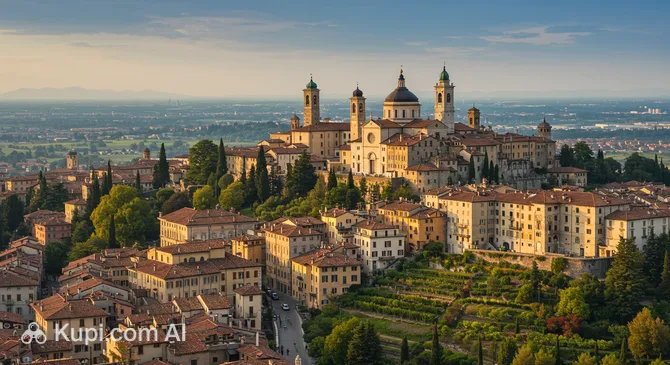
Bergamo is one of the most charming and historically rich cities in Lombardy, nestled comfortably in northern Italy. This city is unique for its division into two parts: the ancient Upper Town (Città Alta), enclosed by Venetian walls, and the modern Lower Town (Città Bassa), which spreads out at its foot.
Located at the foothills of the Alps, Bergamo offers not only a wealth of history but also picturesque landscapes. The city's population is about 120,000 people, creating an atmosphere that is simultaneously lively and cozy. The climate here is temperate continental, with warm summers and cool winters, making it an attractive destination to visit at any time of year.
Bergamo. Illustration.
Source: Kupi.com AI
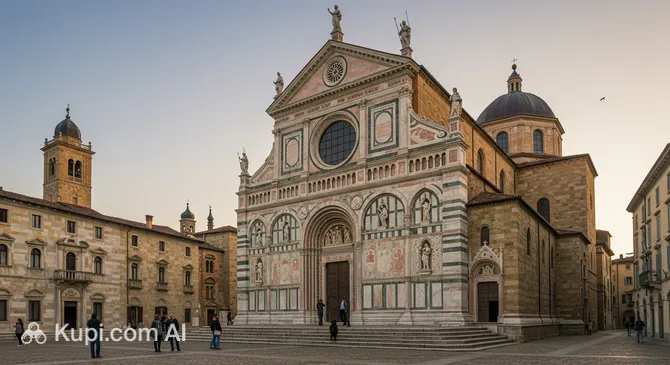
The heart of Bergamo is undoubtedly Città Alta, which can be reached by an ancient funicular. Here, narrow medieval streets, the majestic Piazza Vecchia, the Basilica di Santa Maria Maggiore with its luxurious interior, and the famous Colleoni Chapel (Cappella Colleoni)—a masterpiece of Renaissance architecture—await you. Don't forget the mighty Venetian walls, a UNESCO World Heritage site, which offer stunning views. In the Lower Town, it's worth visiting the Accademia Carrara, one of the oldest art galleries in Italy.
Bergamo is a city that can surprise and make you fall in love at first sight. It is perfect for those seeking a combination of history, art, magnificent architecture, and a unique Italian atmosphere. Come to discover its treasures and enjoy every moment!
The climate in Bergamo is characterized by warm summers and cool winters. The average temperature in the summer months (June-August) hovers around +20°C to +22°C, with maximum values reaching +25°C to +27°C. In winter (December-February), the average temperature is between +3°C and +5°C, with minimum temperatures sometimes dropping below zero. Expect a warm summer with occasional rain (averaging about 16-17 rainy days per month) and cool winters when precipitation is also likely, though it happens less frequently (about 7-8 rainy days per month). May is one of the wettest months in terms of rainfall and rainy days. For a detailed study of weather conditions by month, visit the Bergamo Climate page.
Average monthly temperature
Average monthly precipitation
Interesting Facts
Beyond its famous landmarks, Bergamo hides many curious stories and unique details that make it even more attractive to explorers. Ready to learn some secrets of this Lombard city?
The birthplace of Stracciatella: It was in Bergamo, at the "La Marianna" cafe in the Upper Town, that the famous "stracciatella" gelato was invented in 1961—delicate milk ice cream with shavings of dark chocolate. Don't miss the chance to try it in its hometown!
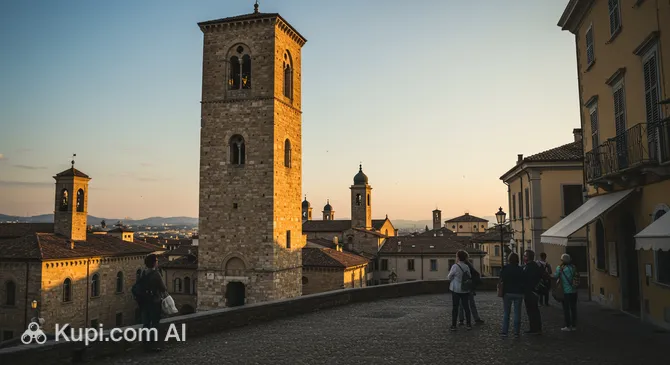
The 100 strikes of the Campanone: Every evening at exactly 10:00 PM, the main bell of the Civic Tower (Campanone) strikes 100 times. This ancient tradition dates back to the times when it signaled to residents that the city gates were closing.
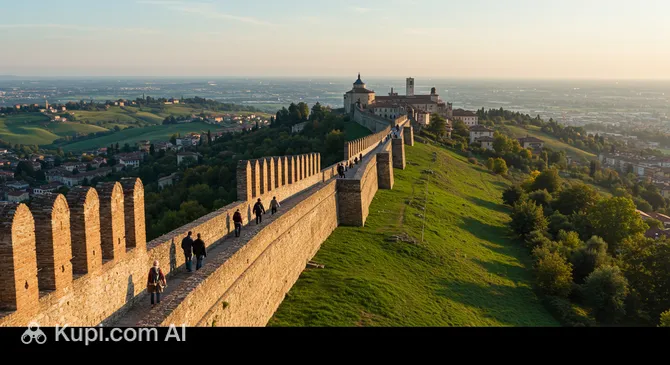
The impregnable Venetian Walls: The massive Venetian Walls of Bergamo, a UNESCO World Heritage site, stretch for more than 5 kilometers. Interestingly, thanks to their impressive defensive power, they were never used in a single direct military conflict throughout their entire history.
City of two funiculars: Bergamo boasts not one, but two historical funiculars. The first and most famous connects the Lower Town (Città Bassa) with the Upper Town (Città Alta), while the second takes passengers from the Upper Town even higher—to San Vigilio hill, which offers breathtaking panoramic views.
The Colleoni Chapel talisman: On the facade of the magnificent Colleoni Chapel, you can see the coat of arms of the famous condottiero Bartolomeo Colleoni, which depicts, among other symbols, three testicles. Local legend has it that touching this part of the crest brings good luck!
Civic Tower (Campanone). Illustration.
Source: Kupi.com AI
Traveler photos:
How to Get There
Getting to charming Bergamo is convenient via several methods, primarily by air and rail. The city and its surroundings are served by several airports, including one in the immediate vicinity, and it has excellent rail connections with major transport hubs in Italy.
The most convenient option for air travel is Orio al Serio Airport (BGY), often called Milan-Bergamo. Although it is formally part of Milan's transport system, this major international airport is located just 3-4 km from the center of Bergamo. A taxi or bus ride to the city takes no more than 15-25 minutes. It is a main hub for many low-cost airlines, serving a significant passenger flow.
Another popular option is Milan Linate Airport (LIN). It is located in Milan, about 40 km west of Bergamo. This is a significant airport serving mainly European and domestic flights. The journey from Linate to Bergamo by car or bus usually takes about 60-80 minutes, depending on traffic.
You can also consider Milan Malpensa Airport (MXP), Milan's largest international airport, located about 75 km from Bergamo. Malpensa handles flights from all over the world. The journey from here to Bergamo takes about 1.5 - 2 hours by car or using a combination of train and bus.
For clarity, here is a summary of the main airports serving the Bergamo area:
Bergamo has its own train station (Stazione di Bergamo), which is well connected to Milan and other cities in Lombardy and Italy. If you arrive at larger railway hubs, such as Milan's stations, it is easy to reach Bergamo by train from there.
One of the region's main railway transport hubs is Milan Centrale (Milan Central Station). It is located in Milan, approximately 43 km from Bergamo. Trains depart regularly from here to Bergamo station, with a journey time of about 50-60 minutes. You can also travel from Milan Centrale to Bergamo by bus or taxi, which takes about 1.5 hours depending on traffic conditions.
Below is information about some major railway stations in the region through which you can reach Bergamo:
Additionally, Bergamo can be reached by car via Italy's extensive motorway network. The city is located near the main A4 motorway, which connects Turin and Trieste.
Main Attractions
Bergamo is a true treasure chest for the curious traveler. The city, divided into the historical Upper Town and the modern Lower Town, holds many wonderful places. Here are just a few of the key attractions that you should definitely include in your itinerary:
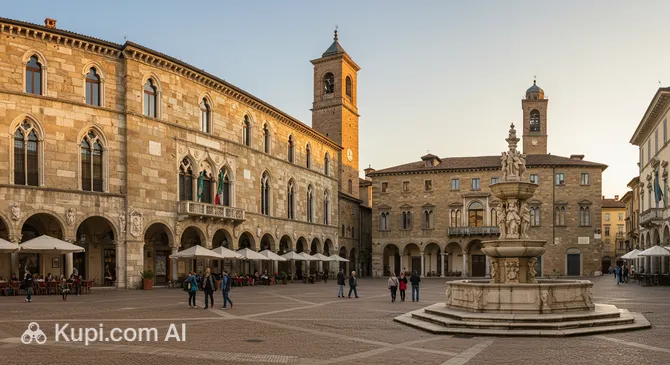
The heart of the Upper Town is undoubtedly Piazza Vecchia. This historical square, surrounded by magnificent buildings such as the Palazzo della Ragione (Palace of Reason), the majestic Civic Tower (Campanone), and the elegant Contarini Fountain, transports visitors back to medieval times. It is the perfect place to enjoy a cup of coffee in one of the cozy cafes, observe city life, and admire the architectural ensemble that the famous architect Le Corbusier called the "perfect square."
Piazza Vecchia. Illustration.
Source: Kupi.com AI
Traveler photos:
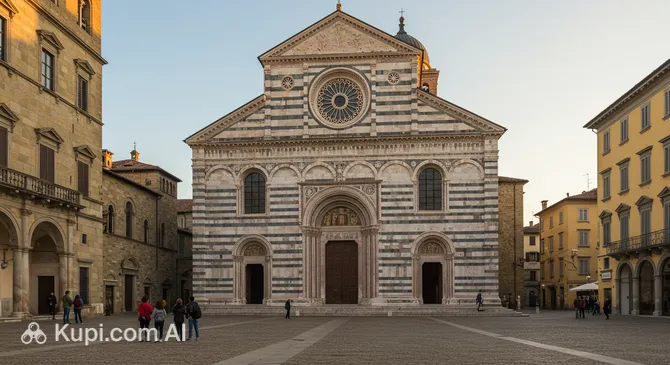
Nearby Piazza Vecchia stands the majestic Basilica di Santa Maria Maggiore. Its construction began in the 12th century as a vow to the Virgin Mary for delivering the city from the plague. While the Romanesque exterior is austere, the interior is strikingly luxurious, featuring priceless tapestries, frescoes by famous masters, exquisite wood carvings, and the renowned intarsia based on designs by Lorenzo Lotto. The tomb of the famous composer Gaetano Donizetti, a native of Bergamo, is also located inside the basilica.
Basilica of Santa Maria Maggiore. Illustration.
Source: Kupi.com AI
Traveler photos:
Adjacent to the Basilica di Santa Maria Maggiore is one of Bergamo's most recognizable and photographed buildings—the Colleoni Chapel. This magnificent mausoleum was built in the 15th century for the famous Venetian condottiero Bartolomeo Colleoni and his beloved daughter Medea. The chapel's facade, richly decorated with multi-colored marble, intricate bas-reliefs, and sculptures, is a jewel of the Lombard Renaissance. Don't forget to find the Colleoni coat of arms on the fence—according to local legend, rubbing a certain part of it brings luck and virility.
Colleoni Chapel. Illustration.
Source: Kupi.com AI
Traveler photos:
One of Bergamo's main "calling cards" is its monumental Venetian Walls. Built in the 16th century by the Republic of Venice to protect its mainland territories, these powerful fortifications, stretching over five kilometers, are perfectly preserved and are now included in the UNESCO World Heritage list. A walk along the walls is an opportunity not only to touch history but also to enjoy breathtaking panoramic views of the Lower Town, the Alpine foothills, and the surrounding plains. The monumental gates, such as Porta San Giacomo or Porta Sant'Agostino, are particularly picturesque.
Venetian Walls of Bergamo. Illustration.
Source: Kupi.com AI
Traveler photos:
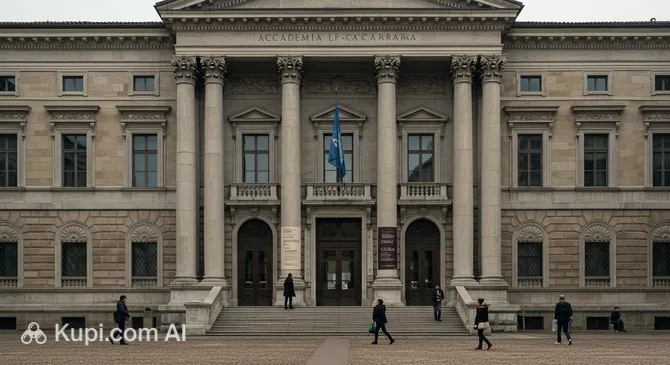
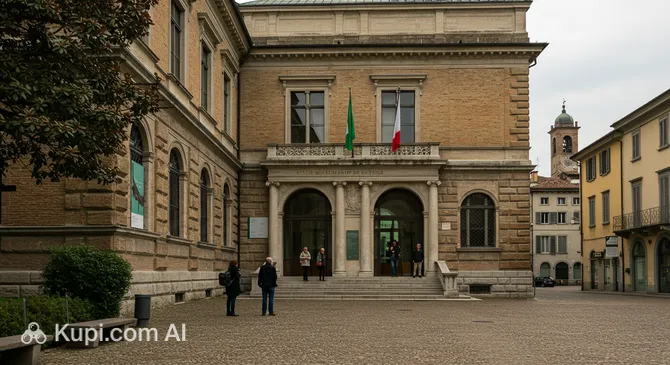
Art lovers should definitely visit the Accademia Carrara Museum, located in an elegant building in the Lower Town. It is one of Italy's oldest and most significant art galleries, founded by Count Giacomo Carrara at the end of the 18th century. Its impressive collection features masterpieces of Italian painting from the 14th to 19th centuries, including works by great masters such as Raphael, Botticelli, Bellini, Mantegna, Titian, and Lotto. Visiting the museum is a true immersion into the world of fine art and an opportunity to trace the development of the Italian painting tradition.
Accademia Carrara Museum. Illustration.
Source: Kupi.com AI
Traveler photos:
Local Cuisine
The cuisine of Bergamo is a true immersion into the gastronomic traditions of Lombardy—hearty, aromatic, and based on centuries-old recipes. One of the main symbols of local cooking is Casoncelli alla bergamasca—special ravioli stuffed with meat, sausage, parmesan, breadcrumbs, and sometimes raisins or amaretti, served with melted butter, sage, and pancetta. Another signature dish is polenta, a cornmeal porridge that is served here in many different variations: as a side dish for stews, with mushrooms, or with local cheeses.
In addition to these star dishes, you should definitely try the famous soft Taleggio cheese with its characteristic aroma and delicate flavor, as well as various types of local sausages (salumi), such as Salame della Bergamasca. And, of course, while in Bergamo, you cannot overlook the desserts. Although the famous stracciatella gelato was invented here, don't forget to taste other local sweets, which are often prepared using chestnuts or honey.
Meals in Bergamo are traditionally accompanied by local wines. Look for Valcalepio DOC wines produced in the hills around the city—both red and white. For a special occasion, the rare and exquisite sweet red wine Moscato di Scanzo DOCG is perfect. In the evening, locals and tourists enjoy the traditional Italian aperitivo—a glass of Spritz or local wine with light snacks. Among non-alcoholic drinks, freshly squeezed juices and, of course, excellent Italian coffee are popular.
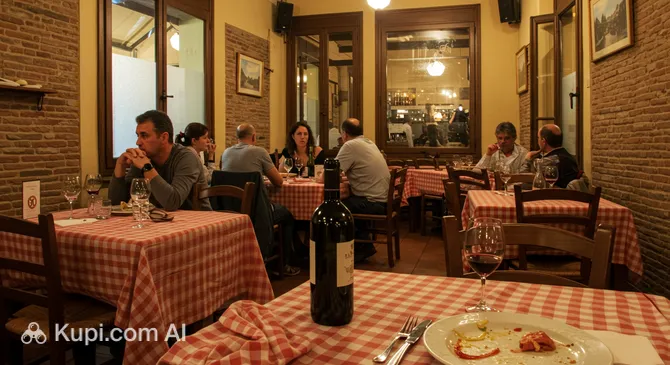
To truly feel the spirit of Bergamasque cuisine, head to the traditional trattorie and osterie, which are particularly numerous in the Upper Town (Città Alta). Here, in a cozy, often family-run atmosphere, you will be offered the most authentic home-cooked dishes. For example, stop by an establishment like Trattoria Taiocchi to taste the region's specialties. More refined restaurants also offer a modern take on local culinary arts. Don't forget the numerous pasticcerie (confectioneries), where you can have coffee with fresh pastries.
Trattoria Taiocchi. Illustration.
Source: Kupi.com AI
Traveler photos:
The Bergamo food scene is an amazing combination of simplicity, quality ingredients, and deep respect for tradition. Each dish tells a story of the region, its products, and its people. Allow yourself this tasty journey and discover Bergamo from its most delicious side!
Travel Tips
Welcome to Bergamo! To make your trip to this charming Lombard city as comfortable and memorable as possible, we have prepared some practical tips. They will help you find your way around and enjoy every moment in Italy.
Clothing and Essentials:
The climate in Bergamo is temperate: summers are warm (sometimes hot), and winters are cool. In summer, bring light clothing, sunscreen, and a hat, but don't forget a light jacket or cardigan for the evenings. In autumn and spring, the weather is changeable, so layering is your best friend. In winter, you will need a warm jacket, hat, scarf, and gloves. Be sure to bring comfortable walking shoes—the cobbled streets of the Upper Town (Città Alta) do not forgive uncomfortable footwear! When visiting churches, such as the Basilica di Santa Maria Maggiore, it is customary to cover your shoulders and knees. Don't forget an adapter for electrical appliances (Italy uses type F and L sockets).
Getting Around the City:
The Upper Town (Città Alta) is best explored on foot. To get there from the Lower Town (Città Bassa), use the historical funicular—it's not only convenient but also very atmospheric. The city has an ATB bus system connecting various districts, including Orio al Serio Airport. Tickets can be purchased at tobacco shops (tabaccheria), newsstands, or vending machines before boarding and must be validated. Taxis are available but can be expensive. Renting a car solely for moving around Bergamo is impractical due to narrow streets and limited parking in the historical center, but it can be useful for exploring the surroundings.
Finance: Currency, Cards, and Tipping:
The official currency in Italy is the Euro (€). You can exchange currency at banks or exchange offices (cambio), but it is more profitable to withdraw cash from an ATM (Bancomat), which are widely available. Credit and debit cards (Visa, Mastercard) are accepted in most hotels, restaurants, and shops. American Express is accepted less frequently. Notify your bank of your trip before traveling. An approximate daily budget per person (excluding accommodation) can be €70-120 for a comfortable holiday. Tipping in restaurants is not mandatory, as a service charge ("coperto") is often included in the bill, but if you really liked the service, you can leave 5-10% of the bill or round it up.
Health and Safety:
Bergamo is generally a safe city. However, as in any tourist destination, follow basic precautions: keep an eye on your personal belongings, especially in crowded places like Piazza Vecchia, markets, or public transport, to avoid pickpockets. Pharmacies (Farmacia) are easy to find by the green cross; there is a system of duty pharmacies operating 24/7 (the schedule is usually posted on the door). For emergency medical assistance, call 112. Having travel medical insurance is highly recommended.
Communication: Language and Internet:
The official language is Italian. В In tourist areas, hotels, and restaurants, many people speak English, but knowing a few basic Italian phrases (e.g., "Buongiorno" – good day, "Grazie" – thank you, "Per favore" – please, "Scusi" – excuse me) will be very helpful and appreciated by the locals. A mobile SIM card with data can be purchased at operator stores (TIM, Vodafone, Wind). Wi-Fi is available in many hotels, cafes, and restaurants, as well as in some public places (look for "Bergamo Wi-Fi" networks or similar).
Local Etiquette and Socializing:
Italians are friendly and sociable people. When entering small shops or cafes, it is customary to say hello ("Buongiorno" or "Buonasera"). "Ciao" is a more informal greeting suitable for friends or young people. Try not to speak too loudly in public places. When visiting churches, maintain silence and respectful behavior. If you want to take a photo of someone, it's better to ask permission.
What to Avoid:
Try not to sit on the steps of historical buildings or fountains to eat; this can be considered disrespectful. Do not expect everyone to speak your language fluently; be patient and use gestures or a translator if necessary. Avoid buying goods from street vendors without a license, especially counterfeits of famous brands.
Special Tip for Bergamo:
Don't limit yourself to walking along the main streets of the Upper Town. Peek into its quiet alleys and discover hidden courtyards. And be sure to take the second funicular from the Upper Town (Città Alta) to San Vigilio hill. From there, truly breathtaking panoramic views of the entire city, its walls, and the surrounding Alpine foothills open up, especially beautiful at sunset. Also, don't miss the chance to hear the 100 strikes of the Campanone tower bell at exactly 10:00 PM—it is an ancient and very atmospheric tradition.
We hope these tips help you plan an unforgettable trip to Bergamo. This city is full of charm and historical treasures, and we are sure it will leave you with the warmest and brightest impressions. Have a pleasant trip and amazing discoveries!
Entertainment & Nightlife
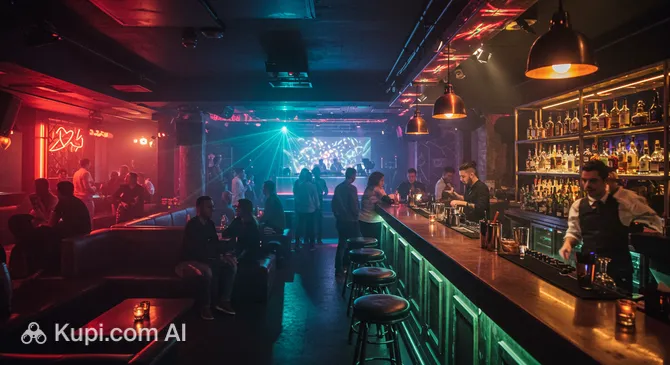
When the sun sets over the picturesque rooftops of Bergamo, the city doesn't go to sleep; instead, it opens its doors to evening entertainment lovers. Although Bergamo is better known for its history and calm atmosphere, there are plenty of options for an interesting evening and night, from cozy bars to energetic clubs.
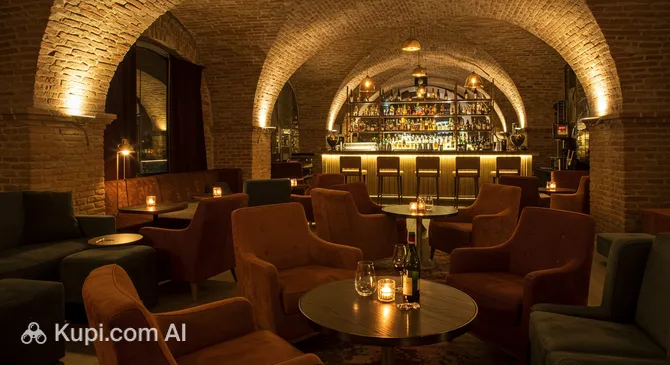
Most of the nightlife is concentrated in the Lower Town (Città Bassa), especially around Via XX Settembre and its adjacent streets. Here you will find many bars, pubs, and several nightclubs. The atmosphere varies from traditional Italian osterias, where you can enjoy local wine, to stylish lounge bars with trendy music and cocktails. In the Upper Town (Città Alta), the nightlife is quieter and more romantic—wine bars (enotecas) and restaurants predominate here, ideal for a late dinner or an aperitivo with a view of the ancient streets. The dress code in most places is quite casual, usually smart casual is sufficient, though some clubs may have stricter requirements.
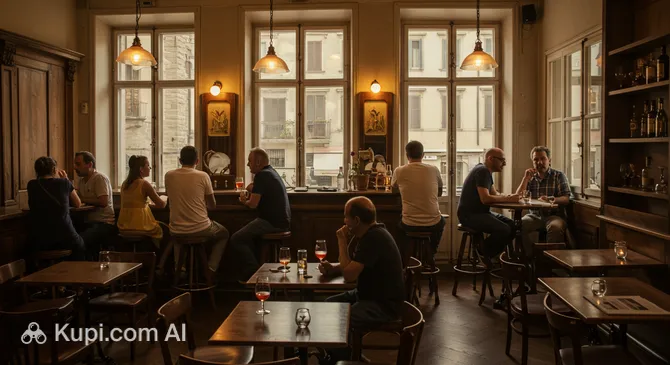
Among the popular places for evening relaxation, several establishments stand out. If you are looking for a modern atmosphere and good music, check out Contest Lounge Bar, known for its parties. Another place that combines a restaurant and lounge bar with the chance to dance is Vox Restaurant and Lounge Bar. For a more traditional Italian experience and a wide selection of drinks, you can stop by Osteria della Dogana, where an authentic atmosphere reigns.
Contest Lounge Bar. Illustration.
Source: Kupi.com AI
Traveler photos:
Vox Restaurant and Lounge Bar. Illustration.
Source: Kupi.com AI
Traveler photos:
Osteria della Dogana. Illustration.
Source: Kupi.com AI
Traveler photos:
When planning an evening out, keep in mind that bars usually come to life during the aperitivo, from about 6:00 PM to 9:00 PM, when free snacks are served with drinks. Nightclubs start filling up closer to midnight and stay open until 3 or 4 AM, especially on weekends. Average drink prices are around €5-€10 for a glass of wine or beer and €8-€15 for a cocktail. At night, public transport runs less frequently, so it's more convenient to use a taxi. You can order a taxi by phone or find one at designated stands.
Bergamo is generally considered a safe city, but as with anywhere, standard precautions should be taken, especially at night. Try to stick to well-lit and busy streets and keep an eye on your belongings. If you are returning late, it is better to use a taxi, especially if you are unfamiliar with the area.
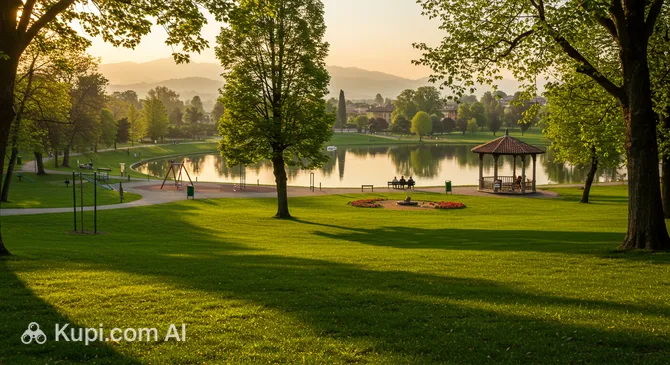
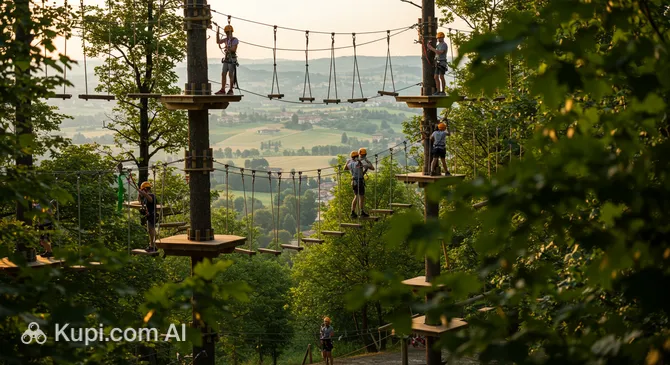
During the day, Bergamo offers many cultural and recreational activities. You can visit the famous Accademia Carrara Museum with its rich collection of paintings, walk through picturesque parks like Parco della Trucca, or if you are traveling with children or looking for active fun, head to Parco Avventura Torre Boldone. The city also has theaters offering a diverse program.
Parco della Trucca. Illustration.
Source: Kupi.com AI
Traveler photos:
Torre Boldone Adventure Park. Illustration.
Source: Kupi.com AI
Traveler photos:
Parks & Museums
Bergamo is a city where history and culture blend harmoniously with natural beauty. In addition to its famous architectural masterpieces, it offers guests cozy green corners for relaxation and educational museums that reveal the region's rich heritage.
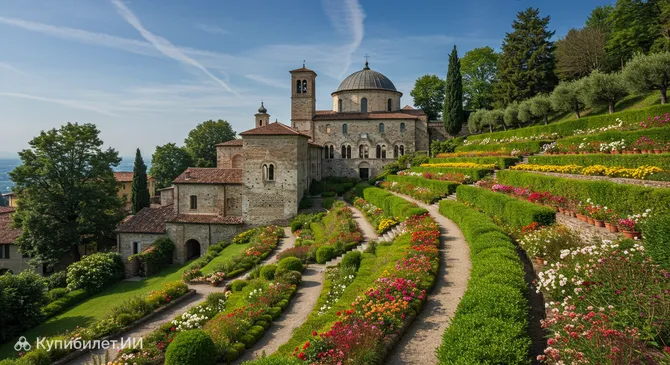
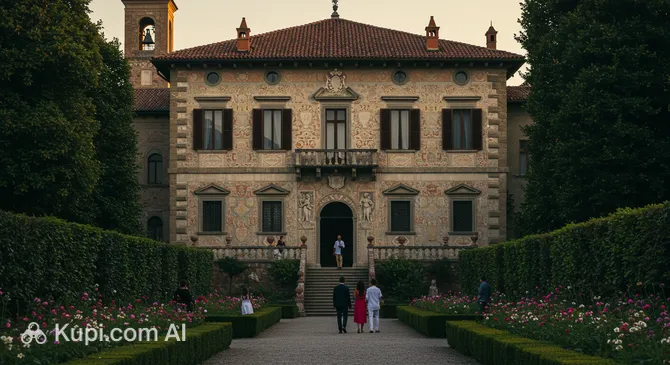
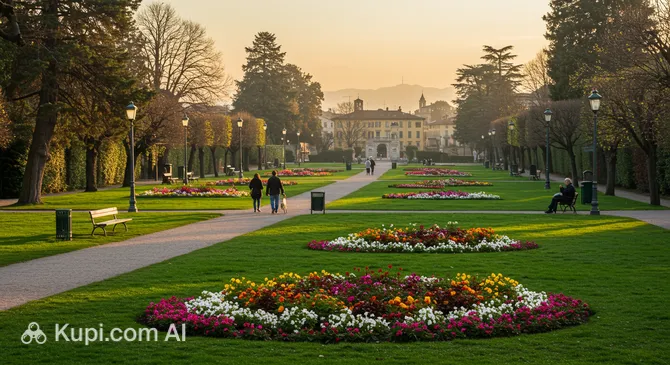
For lovers of nature and quiet walks, Bergamo has prepared several wonderful places. Of particular note is the Botanic Garden of Bergamo, Astino section, located in the picturesque Astino Valley. It is a true oasis of peace where you can explore diverse plant collections and enjoy the silence away from the city noise. Another charming place is the Palazzo and Moroni Gardens in the Upper Town. This 17th-century historical palace is surrounded by magnificent Italian-style terraced gardens, offering breathtaking views of the city and its surroundings. It is a perfect spot for a leisurely stroll and immersion into the atmosphere of the past. Also suitable for outdoor relaxation is Parco Suardi, which offers shaded paths and space for rest.
Palazzo and Moroni Gardens. Illustration.
Source: Kupi.com AI
Traveler photos:
Suardi Park. Illustration.
Source: Kupi.com AI
Traveler photos:
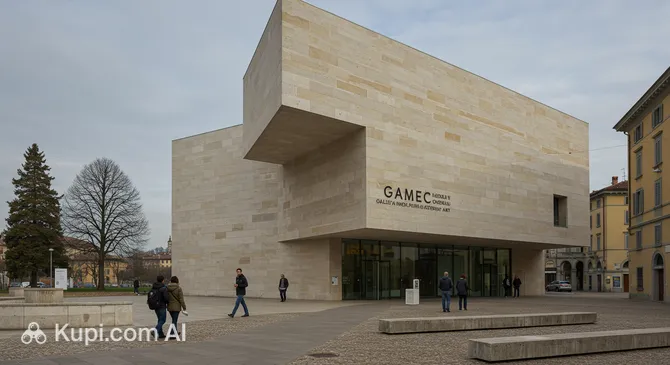
Bergamo's cultural life is equally rich. The city's main artistic treasure is rightfully considered the Accademia Carrara Museum, which houses an impressive collection of Italian painting from the Renaissance to the 19th century, including masterpieces by Raphael, Botticelli, and Bellini. For fans of modern art, a mandatory stop is GAMeC — Gallery of Modern and Contemporary Art of Bergamo. It features works by Italian and international artists of the 20th and 21st centuries, as well as interesting temporary exhibitions. If you are traveling with children or simply interested in nature, stop by the Civic Museum of Natural Sciences of Bergamo, whose exhibits tell the story of the region's geology, flora, and fauna.
GAMeC – Gallery of Modern and Contemporary Art of Bergamo. Illustration.
Source: Kupi.com AI
Traveler photos:
Civic Museum of Natural Sciences of Bergamo. Illustration.
Source: Kupi.com AI
Traveler photos:
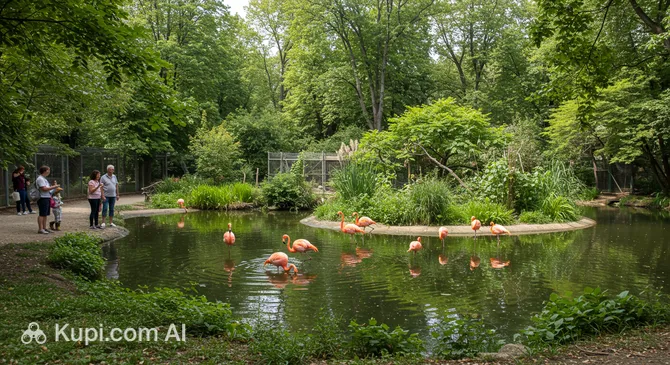
In addition to these iconic spots, the Upper Town (Città Alta) itself, surrounded by the majestic Venetian Walls (a UNESCO World Heritage site), is an open-air museum. Walking through its medieval streets, such as Corsarola, past historical buildings like Porta San Giacomo or the San Vigilio Castle Tower, will provide an unforgettable experience. For family fun outside the historical center, consider a trip to Le Cornelle Zoological Park, home to many animals from around the world.
Le Cornelle Faunistic Park. Illustration.
Source: Kupi.com AI
Traveler photos:
For a more authentic experience, try to find the lesser-known gardens at the monasteries in the Upper Town or visit one of the small art galleries in the Lower Town, where local artists often exhibit. Bergamo is full of surprises, and everyone will find something for the soul here, whether it's contemplating art masterpieces or a peaceful walk amidst the greenery.
Getting Around
Public transport in Bergamo is well-developed and allows for comfortable movement both through the Lower Town (Città Bassa) and up to the historical Upper Town (Città Alta). The main operator is ATB (Azienda Trasporti Bergamo), which manages the bus network and the famous funiculars.
Buses are the primary form of public transport in Bergamo. The route network covers the entire city and its suburbs. The buses are modern and comfortable, running according to schedules that can be found at stops or on the ATB website. Route #1 is especially popular, as it connects the airport, train station, Lower Town, and the funicular station to the Upper Town.
Funiculars are more than just transport; they are a real attraction in Bergamo. There are two in the city: one connects the Lower Town with the Upper Town (Funicolare Città Bassa - Città Alta), and the second goes even higher, from the Upper Town to the San Vigilio Castle (Funicolare Città Alta - San Vigilio). A ride on the funicular is a great way to enjoy panoramic views.
The payment system in Bergamo is quite simple. There are various types of tickets: single tickets (valid for a certain amount of time, usually 75 or 90 minutes, and allow for transfers), day passes, and multi-day tickets. Tickets can be purchased at tobacco shops (Tabaccheria), newsstands, vending machines at major stops and funicular stations, and via the ATB Mobile app. It is extremely important to validate your ticket immediately upon entering the bus or before boarding the funicular at the special validator machines. The cost of a single ticket is usually around 1.50 - 2.00 euros, but prices are subject to change.
Public transport in Bergamo usually operates from early morning (around 6:00 AM) until late evening (around midnight), but it's best to check the schedules for specific routes in advance. On weekends and public holidays, the intervals between services may be longer.
In addition to buses and funiculars, other methods of transportation are available in Bergamo. Taxis can be found at designated stands or called by phone. The city also has a growing bike-sharing system, such as La BiGi, which allows you to explore the city at your own pace, especially its flatter parts. Car-sharing is less common than in major metropolises but is gradually gaining popularity.
Tourists are recommended to purchase the Bergamo Card, which often includes free public transport and discounts on attractions. Always have a valid ticket with you and don't forget to validate it to avoid fines. When planning your trips, especially to the Upper Town, take into account possible queues for the funicular during peak season.
Accommodation
In Bergamo, travelers will find a wide range of accommodation options to suit every taste and budget. The city offers everything from inexpensive hostels and guest houses to comfortable mid-range hotels, as well as elegant boutique hotels and rental apartments. The choice depends on your preferences and the length of your stay.
Districts in close proximity to the main attractions are particularly popular with tourists. For those who want to immerse themselves in the historical atmosphere, staying in the Upper Town (Città Alta) is the ideal choice. Here you can find charming small hotels and apartments in ancient buildings. However, keep in mind that prices here may be higher and car access is limited. The Lower Town (Città Bassa) offers a wider variety of options, including modern hotels, and is convenient in terms of transport accessibility, proximity to the train station, and shops. The areas adjacent to the station are also convenient for those planning trips to the surrounding areas.
The price range for accommodation in Bergamo varies: you can find budget options from 30-50 euros per night in a hostel or simple hotel, as well as more expensive offers in high-end hotels where room rates can start from 100-150 euros and up, especially during peak season. Apartments can be a cost-effective option for families or groups of travelers. It is most convenient to book accommodation through popular online platforms or directly on hotel websites. It is recommended to book in advance, especially if your trip coincides with the tourist season (spring, summer, Christmas holidays), to ensure the best choice and prices.
Nearby Cities
For those who want to explore the surrounding area, Bergamo serves as an excellent starting point for day trips to several interesting nearby locations:
For example, Seriate, located just a few kilometers away, offers a chance to soak in the calm atmosphere of a typical Lombard town and take a break from the tourist bustle. Nature and outdoor activity lovers should check out Albino, situated in the picturesque Seriana Valley and serving as a great starting point for hiking trails through the Alpine foothills. And connoisseurs of sacred art might be interested in Alzano Lombardo with its impressive Basilica di San Martino, known for its rich interior decoration.
City
Population
Distance
Torre Boldone
8 755
4 km
Seriate
25 358
4 km
Stezzano
13 112
5 km
Sorisole
9 042
6 km
Alzano Lombardo
13 637
6 km
These nearby destinations provide an insight into the diverse culture and landscapes of the Italy region.
Shopping & Souvenirs
Bergamo offers its guests a pleasant and diverse shopping experience, combining the charm of traditional Italian shops with the convenience of modern stores. Although the city is not a fashion center like Milan, you will find plenty of opportunities here to purchase quality Italian goods—from clothing and accessories to delicious local delicacies. In Bergamo, everyone will find something to their liking, whether it's well-known brands or unique handmade items.
The main place for shopping in Bergamo is the Lower Town (Città Bassa). The main shopping artery here is the pedestrianized Via XX Settembre, along which many shops of famous Italian and international brands, shoe boutiques, perfumeries, and bookstores are located. A stroll along this lively street and its adjacent alleys, such as Via Sant'Alessandro and Via Torquato Tasso, will be a pleasure for both locals and tourists. In the Upper Town (Città Alta), more atmospheric shops await you, specializing in souvenirs, local products, antiques, and handicrafts, especially on Via Gombito.
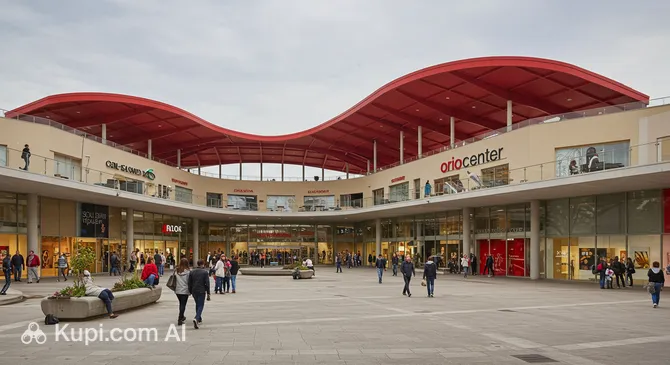
For those who prefer to shop in large complexes, Bergamo offers several excellent options. One of the most famous is Orio Center, located in the immediate vicinity of the airport. It is one of the largest shopping centers in Italy, offering a huge selection of shops, restaurants, and entertainment venues.
Oriocenter. Illustration.
Source: Kupi.com AI
Traveler photos:
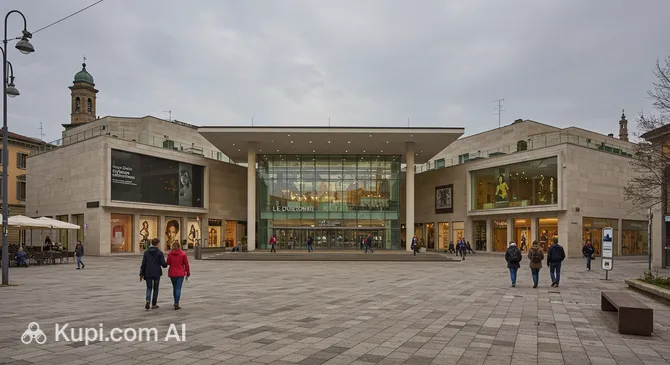
Another popular shopping center is Le Due Torri, which also boasts a wide range of goods and services. Both of these centers are ideal for those who value a variety of brands and the comfort of shopping in any weather.
Le Due Torri. Illustration.
Source: Kupi.com AI
Traveler photos:
Markets are an integral part of Italian culture, and Bergamo is no exception. Although the famous Piazza Mercato delle Scarpe (Shoe Market Square) in the Upper Town is more of a historical landmark today than an active market, various fairs are regularly held in the city. Look out for local weekly markets (mercato settimanale), where you can buy fresh fruits, vegetables, cheeses, deli meats, and other locally produced items. Sometimes, especially on weekends or during city festivals, antique or craft fairs are organized—keep an eye on posters and announcements.
From Bergamo, you should certainly bring back gastronomic souvenirs. Lombardy is famous for its cheeses, such as Taleggio or Strachitunt. Polenta—the cornmeal used to make the dish of the same name—is also popular; in stores, you can find both the flour itself and various accessories for preparing it. Don't forget the local wines of the Valcalepio region. In the pastry shops, look for traditional sweets, such as "polenta e osei"—a cake shaped like polenta with a bird (the sweet version). In the Upper Town, you will find many shops with ceramics, leather goods, and other handcrafted souvenirs.
Most shops in Bergamo usually operate from 9:00-10:00 AM to 12:30-1:00 PM, and then, after a lunch break (pausa pranzo), from 3:00-4:00 PM to 7:00-7:30 PM. On Sundays and public holidays, many small shops may be closed, but large shopping centers and shops in tourist areas often operate without a break and on weekends. Credit and debit cards (Visa, Mastercard) are widely accepted in most shops and restaurants. However, it's always useful to have a small amount of cash on hand, especially for purchases at markets or in small family shops.
Tourists from non-EU countries can take advantage of the VAT refund system (Tax Free Shopping) when making purchases over a certain minimum amount in participating stores (look for the "Tax Free" logo). To do this, you must request a special receipt (fattura) from the store and fill out a Tax Free form. When leaving the EU, these documents must be presented at customs for a stamp, after which you can process the tax refund. We recommend checking the details and the minimum purchase amount directly in the stores.