Support

Fiuggi

About

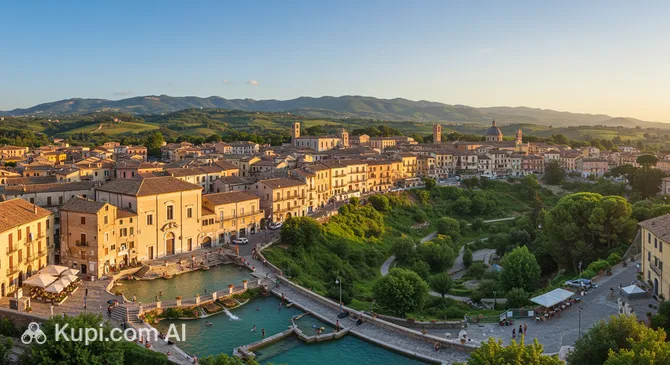
Fiuggi is a cozy and welcoming town nestled among the picturesque foothills of the Apennines. Located in the province of Frosinone, just 70 kilometers south of Rome, it attracts travelers with its peaceful atmosphere and pristine air. For those visiting a country like Italy, this resort becomes an ideal place to recharge, surrounded by dense chestnut forests, olive groves, and vineyards.

Fiuggi. Illustration.
Source: Kupi.com AI

The town's uniqueness lies in its harmonious duality. It is divided into two main areas: the modern Fiuggi Fonte, where social life thrives among elegant spa hotels and boutiques, and the ancient Fiuggi Città. Walking through the winding streets of the upper town, you can feel the spirit of the past: the rich history of Fiuggi is captured in the stone walls of medieval buildings, cozy squares, and ancient churches.

The resort's main pride is its famous mineral springs, which draw guests from all over the world. Beyond wellness, the town offers plenty of leisure opportunities: from leisurely walks by Lake Canterno to active recreation, with ski slopes available nearby in winter and easy access to the Tyrrhenian coast in summer.

With a population of just over 10,000 people, Fiuggi maintains a wonderful sense of intimacy and friendliness. It is definitely a place worth visiting for those seeking a balance between natural beauty, cultural discoveries, and true Italian hospitality.

Weather Overview

The resort's climate is mild and comfortable, allowing for a pleasant stay almost year-round. Summer in Fiuggi is warm and agreeable: in July and August, the average temperature is around 23°C, with daytime highs usually reaching 29°C. This is the driest period, especially mid-summer when the number of rainy days is minimal.

Winters here are cool, with average thermometer readings between 4°C and 6°C, although nighttime temperatures can drop close to zero. When planning a trip in the shoulder seasons, be prepared for precipitation: May and November are considered the wettest months, when the number of rainy days can reach 15–19. To accurately choose your wardrobe for the trip, we recommend checking what the weather in Fiuggi will be like during your visit in advance.

Expect a warm, sunny summer, ideal for walking, and fresh winters that require warm clothing, with occasional rain in the transitional seasons.

Average monthly temperature

Average monthly precipitation

Interesting Facts

In addition to its main attractions, Fiuggi holds many fascinating secrets and legends that give a stay here a special charm. Here are a few facts that will allow you to look at this resort from a new perspective:

  • Star patients of the past. The healing properties of the local water have been known since the Middle Ages. According to historical chronicles, it was the springs of Fiuggi that helped Pope Boniface VIII to recover, and the great Michelangelo called this water a salvation from illness in his letters.

  • The Napoleon connection. In the labyrinth of narrow streets of the old town stands the Palazzo Falconi. Locals pass down a legend that Napoleon Bonaparte himself once stayed in this building, although historians still debate the details of this visit.

  • Unique status. Fiuggi is considered the only urological resort that Italy can offer. No equivalent to the chemical composition of the local water has been found anywhere else in the world, making this place exceptional from a medical point of view.

  • Sports all year round. The town surprisingly combines relaxed rest with active leisure. There are Olympic-sized swimming pools, a racecourse, and a golf club, and just 30 minutes away is a ski slope, allowing you to combine a drinking course with a descent down snowy slopes in winter.

How to Get There

Fiuggi is conveniently located in the central part of the country, making it easily accessible for travelers. Due to its proximity to Rome, tourists can take advantage of the capital's developed transport infrastructure. You can find out more about how to get to Fiuggi on a separate page, and below we will look at the main transport hubs through which the path to the resort lies.

There is no airport in the town of Fiuggi itself, so most tourists arrive via Rome's air harbors. The main gateway is Leonardo da Vinci — Fiumicino Airport (IATA: FCO), located in Rome. This is the country's largest international airport, receiving flights from all over the world. It is located about 81 km from Fiuggi. The journey by taxi or transfer will take about 1 hour and 30 minutes.

An alternative and often closer option is Ciampino — G.B. Pastine International Airport (IATA: CIA), which is also in Rome but only 52 km from the resort. This airport is often used by low-cost carriers and charter flights. Travel time by car from here is about 1 hour.

For clarity, here is a summary of the main airports:

AirportPassenger trafficDistance
Ciampino–G. B. Pastine International Airport3.9 mln52 km
Leonardo da Vinci-Fiumicino Airport40.5 mln81 km
Abruzzo Airport872 701106 km
Naples International Airport12.7 mln135 km
Sant Egidio Airport532 474155 km

Traveling by train is another popular way to reach the region. There is no railway station in Fiuggi itself (the historic narrow-gauge line was closed), but you can reach Rome's major stations, from where there is a bus service to the resort or you can order a taxi.

The main railway hub is Roma Termini Station (IATA: XRJ), located in the center of Rome, approximately 61 km from Fiuggi. High-speed trains from all major cities in Italy arrive here. Buses and regional trains regularly depart from Termini to the nearest station to the resort, Anagni-Fiuggi (Anagni-Fiuggi Terme), from where you can reach the town by local bus in 20-30 minutes.

Another important transport hub is Tiburtina Station (IATA: IRT), also located in Rome (about 59 km from Fiuggi). This is the capital's second most important station, serving many intercity and regional routes.

Below is information about the nearest major railway stations:

StationPassenger trafficDistance
Tiburtina Railway Station51 mln59 km
Roma Termini Station150 mln61 km
Ostiense Railway Station5.8 mln62 km
Napoli Afragola High-Speed Railway Station12 mln134 km
Mergellina Railway Station6.2 mln135 km

Main Attractions

Fiuggi is famous not only for its healing waters but also for amazing sites where history intertwines with natural beauty. A stroll through the town will give you the chance to see architectural masterpieces and enjoy the tranquility of ancient parks.

Terme di Bonifacio VIII is the heart of resort life and the town's most famous landmark. Built in the early 20th century in the elegant Liberty style, this complex is surrounded by thick chestnut groves and gardens. Tourists come here not only to follow a drinking course of the famous water but also to enjoy the grandeur of the architecture while walking under the vaults of historic pavilions. It is an ideal spot for a morning constitutional and quiet relaxation.

Equally impressive is the Old Town (Fiuggi Città), located on a hilltop. This is a true labyrinth of narrow medieval streets, stone houses, and tiny squares that have preserved the spirit of past centuries. Here, you should see the Palazzo Falconi, where legend has it Napoleon once stayed, and simply wander around enjoying panoramic views of the valley. An evening walk here will transport you into the atmosphere of authentic old Italy.

Nature lovers must visit Terme Anticolana, often called the "health park." This vast natural park is abundant with century-old cedars, sequoias, and flower beds. Unlike the more formal Terme di Bonifacio, a more relaxed atmosphere prevails here: there are tennis courts, picnic areas, and an open-air theater. It is a wonderful place for long walks and restoring peace of mind.

Also noteworthy is the ancient Church of San Biagio, dedicated to the town's patron saint. The temple holds a history dating back to the 12th century and attracts pilgrims and lovers of sacred art. Inside, you can see ancient frescoes and feel the serenity characteristic of old Italian shrines.

Local Cuisine

The gastronomic scene in Fiuggi is a harmonious blend of culinary traditions from the Lazio region and the unique local features for which Italy is renowned. Here, food is elevated to a true cult, and many ancient trattorias and restaurants are proudly called "Temples of Taste" by the locals. Travelers can expect an immersion into the world of authentic recipes, carefully passed down from generation to generation.

The foundation of any meal is fresh handmade pasta with thick homemade sauces. However, the true hallmark of local cuisine is chestnuts. This ingredient is used everywhere here: they are added to soups, served as a side dish for game, and, of course, used in the preparation of exquisite desserts. Meat lovers should look out for aromatic game roasts and traditional sausages, which can be found both on restaurant menus and at market stalls.

Among drinks, the town's main asset remains the healing Fiuggi mineral water, which is traditionally served at the table even in the most refined establishments. To complement the taste of your dishes, order a glass of local wine produced from grapes grown on the sunny slopes of the surrounding hills.

The food culture here is diverse: from long dinners in cozy restaurants to quick snacks on the go. While walking through the streets of the old town, be sure to try hot focaccia or fresh pastries from local bakeries. Additionally, the town regularly hosts gastronomic festivals where you can not only taste the region's best products, such as farm cheeses and olive oil, but also attend masterclasses from acclaimed chefs.

Travel Tips

Welcome to Fiuggi! To make your holiday at this famous thermal resort as comfortable and worry-free as possible, we have prepared a list of useful recommendations. These tips will help you avoid minor troubles and focus on the main thing — restoring your health and enjoying the beauty of the region.

  1. Clothing and Essentials: Fiuggi is located in the foothills, so the climate here is fresher than on the coast. Even in summer, evenings can be cool, so be sure to bring a light jacket or a pashmina. Since the town is divided into upper and lower parts, you will need comfortable flat shoes for walking on the cobblestones of the historical center. If you plan to visit churches, remember the dress code: shoulders and knees should be covered.

  2. Transport: A car is practically unnecessary within the town. Local buses run regularly between the modern part (Fiuggi Fonte) and the historical center (Fiuggi Città), and the walk takes about 20–30 minutes. Taxis are available, but hard to catch on the street — it’s better to order one through your hotel reception. Renting a car only makes sense if you plan independent trips around the Frosinone province.

  3. Finances: The official currency is the Euro. Most hotels, restaurants, and supermarkets accept international cards without problems. However, for small purchases, bus tickets, or coffee in small bars, it's better to always have some cash. ATMs are mostly available in the lower part of town. Tipping is not strictly mandatory, but rounding up the bill or giving 1–2 euros to the maid is considered good etiquette.

  4. Health and Safety: Fiuggi is a very quiet and safe town where you can walk safely even in the evening. Pharmacies (Farmacia) are easily identified by a green cross, and a schedule of on-duty pharmacies is usually posted on the door. The main health tip: water from thermal springs should be drunk strictly as prescribed by a doctor. Self-treatment or excessive consumption of mineral water can put an unexpected strain on the body.

  5. Communication: In tourist areas and major hotels, staff often speak English. However, in the old town and small shops, Italian remains the primary language. Learn a few basic phrases ("Buongiorno", "Grazie", "Quanto costa?"), and locals will be much more well-disposed toward you. Wi-Fi is available in almost all hotels and cafes, and for constant connection, you can buy a local SIM card at mobile shops or tobacco kiosks (Tabacchi).

  6. Local Etiquette: Italians are very friendly and value politeness. It is customary to greet everyone present when entering any shop or cafe. Take the siesta time into account: many shops, banks, and even pharmacies close for a lunch break from approximately 13:00 to 16:00. Do not plan active shopping during this time.

  7. What to Avoid: Do not walk around the town in swimwear or bathrobes, even if you are heading to a spa or thermal park — this is considered disrespectful to local traditions and standards of decency. Also, try not to make noise in the relaxation areas near the springs, where people enjoy peace and nature.

  8. Useful Lifehack: If you have come for a drinking course, purchase a special mug with a spout. This is not only a traditional and convenient way to drink water in small sips while walking, but also a great souvenir that will remind you of how cozy Italy can be.

We hope these simple tips help you settle in quickly and get the most out of your stay in Fiuggi. Enjoy the healing air, delicious food, and the unique Italian atmosphere!

Entertainment & Nightlife

The nightlife in Fiuggi has its own special, unique character. Unlike noisy metropolises or beach party resorts, the atmosphere here is one of "dolce vita" — measured, elegant, and peaceful. The focus of evening leisure is shifted toward long dinners, wine tastings, and leisurely strolls, which Italians call "passeggiata." It is an ideal place for those who want to enjoy conversation in pleasant company to the sounds of live music or jazz.

The epicenter of evening activity is the Fiuggi Fonte district, especially the area around the main square — Piazza Spada. This is where most of the trendy cafes, lounge bars, and pastry shops that stay open late are concentrated. As twilight falls, Via Diaz and the surrounding side streets fill with people. The crowd here is respectable: couples, families, and groups of friends who prefer a smart-casual style. The dress code in most establishments is relaxed, but an elegant appearance is always welcomed.

For those seeking a more authentic atmosphere, head to the upper town — Fiuggi Città. In the evening, the medieval streets are bathed in the soft glow of lanterns, creating a romantic mood. You can find cozy wine bars and small pubs where locals discuss the latest news over a glass of Chianti. If you are looking for dancing, note that there are few large nightclubs in the classical sense in town; more often, discos and themed parties are held at major hotels or in seasonal open-air bars during the summer period.

Practical tips for night owls:

  • Opening hours: Bars are usually open until 01:00–02:00. The liveliest time is from 22:00 to midnight.
  • Prices: A cocktail costs on average from 8 to 12 euros, a glass of wine is 5–8 euros.
  • Transport: At night, buses between the upper and lower parts of the town run infrequently. The most reliable way to get to your hotel is by taxi, but it’s better to call one in advance by phone or through an app, as "hailing" a car on the street can be difficult.
  • Safety: Fiuggi is an exceptionally safe town. You can safely walk through the well-lit streets of both districts even late at night.

During the day, the town offers an equally interesting cultural program. Be sure to visit the Municipal Theater (Teatro Comunale), which is a gem of local architecture and regularly hosts touring companies and musical groups. For fans of active recreation, there is one of the oldest golf clubs in the country — Golf Club Fiuggi, founded back in 1928. It is not just a sports ground but a true green oasis where you can spend time enjoying the game and magnificent landscapes.

Parks & Museums

Fiuggi is a true garden city, where nature and architecture exist in an inseparable symbiosis. Green zones occupy a significant part of the territory, turning the resort into a massive park, while cultural heritage is literally inscribed into the landscape of the ancient streets. For tourists visiting a country like Italy, this place is a discovery due to the ability to combine walks among century-old trees with an immersion into living history.

Fonte Anticolana Park is perhaps the most impressive natural area within the town limits. Unlike the more social Bonifacio spring, this park is a vast forest where the main "exhibits" are majestic silver cedars, sequoias, and chestnuts. An atmosphere of peace and solitude reigns here: wide avenues are perfect for Nordic walking or morning runs, while well-kept lawns attract lovers of yoga and meditation. These are the "lungs" of the resort, where the air is saturated with the scents of pine needles and flowers.

Just a few kilometers from town is the picturesque Lake Canterno (Lago di Canterno), often called the "Roman Fjord" because of the surrounding mountains. It is a natural reserve of karst origin that has become home to many species of waterfowl, including herons and cormorants. People come here for picnics on the shore, leisurely walks along equipped trails, and to watch sunsets that paint the water's surface in amazing shades. The lake is surrounded by legends of "disappearing water," which adds a touch of mystery to the place.

When it comes to museums, Fiuggi offers an unconventional approach. There are no huge galleries with long lines, but the Historical Center (Fiuggi Città) itself is perceived as an open-air museum. The town's medieval architecture can be considered the main cultural object. Walking here, you feel as if you've stepped onto the set of a historical film: stone portals, ancient coats of arms on facades, and narrow alleys tell of the past better than any display case. The architecture of Palazzo Falconi and other noble houses that have preserved the aristocratic spirit of past centuries deserves special attention.

Art lovers should visit the Municipal Theater (Teatro Comunale). This Liberty-style (Italian Art Nouveau) building is not only a venue for plays and concerts but also an important architectural monument from the early 20th century. The theater's interiors, with their elegant stucco and decor, reflect the resort's heyday when Fiuggi became a magnet for the European elite. Exhibitions by local artists often take place here, showcasing the region's contemporary creativity.

For those seeking hidden gems, we suggest finding Vicolo Baciadonne. This alley in the old town is so narrow that, according to legend, two passers-by cannot pass each other without touching, which inevitably led to a kiss. This place is rarely marked in official guidebooks, but it provides some of the most vivid and authentic photos from the trip.

Getting Around

Since Fiuggi is a small and cozy town, it lacks a complex public transport system like a metro or trams. The primary means of transport for tourists and locals alike are city buses. They play a key role in connecting the resort's two main parts: the lower resort zone (Fiuggi Fonte) and the upper historical center (Fiuggi Città). Given the noticeable difference in elevation between the districts, the bus is a real lifesaver for those not ready for long uphill climbs on foot.

The ticket system is standard for most regions Italy is known for. It is important to remember the main rule: tickets for intra-city routes generally cannot be bought from the driver. You must purchase them in advance at newsstands or tobacco shops marked with a large white "T" on a blue or black background (Tabacchi). The cost of a single trip is affordable, usually around 1–1.50 euros. Once on board, be sure to validate your ticket in the yellow or orange machine to avoid a fine.

Buses run fairly regularly, usually every 20–30 minutes during the day; however, in the evenings (after 20:00) and on weekends, they run less frequently. Stops are marked with "Fermata" signs. A local quirk is that a bus might drive past if there are no people at the stop or if no one signals with their hand, so don't be afraid to wave when your route approaches.

During the warm season, usually from May to September, a charming tourist train (Trenino Turistico) runs through the town streets. This is not just transport but a popular attraction connecting the center of Fiuggi Fonte with the old town. The ride is slow-paced, allowing you to enjoy the views and architecture. It is an ideal option for families with children or those who want to combine a transfer with a sightseeing tour.

If you prefer individual comfort, you can use taxi services. It is not common here to hail a car with a wave of the hand on the street. Taxis wait for customers at specially equipped ranks (for example, on the main square, Piazza Spada) or come on call via the hotel reception. Global aggregator apps might not be sufficient, so it’s more reliable to have the number of a local dispatch service handy.

For those traveling by rental car, it is important to know the parking rules. Parking spaces outlined with blue lines are paid: you need to buy a ticket from a parking meter and place it under the windshield. White lines indicate free parking, but finding a spot there can be difficult, especially in high season. Yellow lines are intended only for residents or disabled persons; tourists are prohibited from using them.

Accommodation

The choice of accommodation in Fiuggi will pleasantly surprise you with its diversity and adherence to the high resort standards for which Italy is famous. The town is oriented toward wellness tourism, so hotels designed for peaceful and comfortable rest predominate here. The range of offers is wide: from luxurious historic Liberty-style hotels and modern spa resorts to cozy family pensions and budget apartments.

When choosing a place to stay, it is important to consider the geographical division of the town into two zones, each with its own specifics:

  • Fiuggi Fonte — the lower part of town and the most popular area among tourists who come for treatment. This is where most hotels are concentrated. The main advantage of staying in this zone is walking distance to the thermal parks of Bonifacio VIII and Anticolana, as well as to the main promenades, shops, and cafes. It is an ideal choice for those who don't want to spend time traveling to the springs.

  • Fiuggi Città — the upper historical district. There are significantly fewer hotels here, but you can find atmospheric B&Bs (bed and breakfast) and guest houses in ancient buildings. Living here means enjoying silence, panoramic views, and the medieval spirit, though you will have to take a bus or go for long walks to reach the thermal complexes.

Many hotels in Fiuggi, especially those in the 4-star category and above, have their own wellness centers and pools. This allows guests to combine their mineral water drinking course with relaxing treatments without leaving the hotel grounds. The interiors are often decorated in a classical style, reminiscent of the resort's "golden age" at the beginning of the 20th century.

Booking tips and prices:

Fiuggi is a seasonal resort. Peak attendance occurs in the summer months (July-August), when prices reach their maximum and the best rooms are sold out several months in advance. If you plan to travel during this period, we recommend booking accommodation early. During the off-season (spring and autumn), the town becomes quieter and accommodation costs decrease, making this period attractive for budget travel.

The price range varies depending on the category and season. A night in a budget hotel or pension can cost from 40–60 euros, mid-range hotels (3 stars) offer rooms for 70–100 euros, and a stay in prestigious hotels with a full range of spa services will start from 120–150 euros and up. It is most convenient to book through major online platforms, although many hotels also accept direct requests via their websites. Don't forget that upon checkout, a city tourist tax (tassa di soggiorno) is paid additionally, which usually amounts to a few euros per person per night.

Nearby Cities

For those looking to explore the surrounding area, Fiuggi serves as an excellent starting point for day trips to several interesting nearby locations:

Just 13 kilometers from the resort is the ancient city of Alatri, often called the "City of the Cyclops." Its main pride is the perfectly preserved Acropolis, surrounded by massive megalithic walls built in the pre-Roman era. A walk here is a true journey through time, allowing you to appreciate the engineering skills of ancient civilizations.

History and archeology enthusiasts should head to Palestrina. This city is famous for the grand Sanctuary of Fortuna Primigenia — one of the most impressive architectural complexes of antiquity, located on the terraces of a mountain slope. The National Archaeological Museum is also located here, housing the famous Nile Mosaic, which is striking in its detail and beauty.

Also interesting is the administrative center of the province — Frosinone. The city, situated on a hill with a panoramic view of the Sacco Valley, offers a mix of modern rhythm and historical monuments, such as the ruins of a Roman amphitheater and the Cathedral of Santa Maria Assunta. It’s a great place for shopping and discovering local cuisine in regional restaurants.

CityPopulationDistance
Anagni21 4049 km
Ferentino20 99212 km
Alatri28 76313 km
Subiaco8 91617 km
Veroli20 41420 km

These nearby destinations provide insight into the diverse culture and landscapes of the region.

Shopping & Souvenirs

Shopping in the town of Fiuggi is not about racing after global brands but rather a pleasant and relaxed pastime that perfectly complements a wellness holiday. You won't find massive, noisy malls here, but you can enjoy the atmosphere of cozy boutiques, craft shops, and gourmet food stores. For tourists visiting a country like Italy, it’s a great opportunity to purchase authentic goods without the bustle of major cities.

The main retail life is concentrated in the lower part of town — Fiuggi Fonte. The main artery for shopping enthusiasts is Corso Nuova Italia and the area around Piazza Spada. Here you will find elegant clothing, footwear, and accessory stores featuring high-quality Italian brands. A stroll through these streets feels like a social promenade: the shop windows are tastefully decorated, and the service is attentive and polite.

In the historical part of town, Fiuggi Città, shopping takes on a more traditional flavor. Little shops are hidden in the labyrinth of narrow streets, where you can find products by local craftsmen, ceramics, and handmade souvenirs. It’s an ideal place to find unique gifts with "soul" that will remind you of the region's ancient atmosphere.

If your goal is large-scale shopping and discounts, it's worth looking at the surrounding area. There are no large shopping centers in Fiuggi itself, but just 30–40 minutes away is the famous Valmontone Outlet. This is a true city of shops, with more than 180 boutiques of famous brands offering goods with significant discounts year-round. Many tourists set aside a whole day just to visit this outlet.

You can experience the special local trading character at the weekly market, which usually takes place on Thursday mornings. This is a meeting place for locals where literally everything is sold: from the freshest farm vegetables, cheeses, and sausages to clothing and household goods. Visiting the market is not just about buying groceries but immersing yourself in the town's living culture, where you can haggle and taste local delicacies.

As souvenirs from Fiuggi, gastronomic treasures are most commonly brought home. Be sure to buy the famous "Amaretti di Fiuggi" — an almond treat whose recipe is kept secret by local confectioners. Cosmetics based on healing thermal water, local olive oil, and Cesanese wine from neighboring vineyards are also popular.

Shops in Fiuggi operate on a traditional Italian schedule with a mandatory siesta break. Doors are usually open from 09:00 or 09:30 to 13:00, and then from 16:00 or 16:30 to 20:00. Many shops may be closed on Sundays and Monday mornings. Bank cards are accepted almost everywhere, but for purchases at the market or in small souvenir kiosks, it’s better to have some cash Euros on hand.

The Tax Free system is available for tourists from non-EU countries. If you make a purchase in one store for over 154.94 Euros (this amount may change, so check the current threshold at the checkout), look for a "Tax Free" or "Global Blue" sticker on the window. Ask the seller to issue a special check so you can get part of the tax back when you fly out from the airport.
Nearby cities

Reached the end of the page?

That means the route is fully explored