Support

Tivoli

About

Tivoli is a true oasis in the heart of the Lazio region, located just 30 kilometers east of Rome. The city is perched on picturesque limestone hills, overlooking a gorge cut by the Aniene River and surrounded by olive groves. It beckons travelers with its atmosphere of seclusion and tranquility, where every stone breathes history and the views from the terraces offer breathtaking panoramas.

Tivoli. Illustration.
Source: Kupi.com AI

Tivoli is home to approximately 56,500 people. Despite its modest size, the city boasts a rich cultural heritage that has served as a source of inspiration and a favorite holiday destination for noble Romans and aristocrats for centuries. It is one of those amazing places in Italy where history comes to life at every turn.

The main jewels of Tivoli, attracting tourists from all over the world, are its famous villas. Villa d'Este, a UNESCO World Heritage site, captures the imagination with its magnificent gardens and countless fountains, creating a true symphony of water and greenery. No less significant is Hadrian's Villa (Villa Adriana) — a grandiose archaeological complex of ruins that was once the country residence of Emperor Hadrian, reflecting the greatness of the Roman Empire and also included on the UNESCO list. The city's atmosphere is a harmonious blend of ancient heritage and Renaissance splendor.

A visit to Tivoli is an opportunity to immerse yourself in history, enjoy leisurely strolls through ancient streets and magnificent gardens, hear the whisper of the centuries, and feel the charm of a real Italian province where time seems to slow down. This city will undoubtedly leave you with unforgettable impressions.

You can find more interesting facts on the history of Tivoli page.
Weather Overview

The climate in Tivoli is characterized by distinct seasons, offering guests diverse weather conditions throughout the year. Summer, especially in July and August, is hot here: the average air temperature is around 25.3°C, and maximum values can reach 31°C. During this period, rainfall is minimal — only about 1 mm per month, and there are usually no more than 4-8 rainy days. Winters in Tivoli are mild, with an average January temperature of about 6.4°C, while minimum temperatures can drop to 2°C. In the winter months and shoulder seasons, for example, in November, there is more precipitation (up to 5 mm), and the number of rainy days can reach 15. In general, Tivoli offers a hot and predominantly dry summer, as well as a mild and wetter winter. For more detailed trip planning, please see the detailed information about the climate of Tivoli.

Average monthly temperature

Average monthly precipitation

Interesting Facts

Beyond its world-famous villas, Tivoli hides many curious details and stories that make it even more attractive to travelers. This ancient city is full of surprises waiting for the inquisitive explorer.

Villa d'Este. Illustration.
Source: Kupi.com AI

Traveler photos:

  • Tivoli boasts two UNESCO World Heritage sites at once: the grandiose ancient complex of Hadrian's Villa, which stretches over an area of about 120 hectares, and the Renaissance gem — Villa d’Este. Surprisingly, many of the latter's fountains still function without the use of pumps, relying solely on natural elevation changes and the laws of hydraulics.

  • In ancient times, the city, known as Tibur, played a key strategic role on the way to the Sabine Mountains. Its picturesque surroundings and what was believed to be healing air attracted the Roman nobility, including emperors, poets, and philosophers, who built their luxurious country residences here.

  • The charm of Tivoli has inspired prominent figures in the arts for centuries. Among the city's famous guests were Johann Wolfgang von Goethe and Franz Liszt, who found an inexhaustible source of ideas for their works here, admiring the unique landscapes and architectural masterpieces.

  • The city is shrouded in many intriguing legends. One of them says that the water from the fountains of Villa d’Este possesses a special power and can bring good luck to anyone who washes with it. This legend adds another mysterious note to a visit to this magnificent place.

How to Get There

Tivoli, a charming city with a rich history, is located in the Lazio region near Rome, making it easily accessible for tourists. There are several convenient ways to get here, primarily through the transport hubs of the capital of Italy.

How to get to Tivoli by plane:

There is no airport in Tivoli itself, so travelers should fly into Rome's airports. The closest and most convenient are:

Ciampino–G. B. Pastine International Airport (CIA), located in Rome, is one of the most convenient options. It is about 25 km from Tivoli. A trip by taxi or pre-booked transfer to Tivoli will take about 50-60 minutes. This is a fairly large airport serving many European destinations, including low-cost airline flights.

Leonardo da Vinci–Fiumicino Airport (FCO), the main international airport of Rome and all of Italy, is located about 49 km southwest of Tivoli. The journey by car from Fiumicino to Tivoli usually takes about 1 hour and 30 minutes, depending on traffic. This major airport offers a huge number of international and domestic flights.

From both Roman airports, you can reach Rome's central stations (such as Termini or Tiburtina) by express trains or buses, and from there transfer to a regional train or bus to Tivoli.

For clarity, here is a summary of the main airports through which you can reach Tivoli:

AirportPassenger trafficDistance
Ciampino–G. B. Pastine International Airport3.9 mln25 km
Leonardo da Vinci-Fiumicino Airport40.5 mln49 km
Abruzzo Airport872 701126 km
Sant Egidio Airport532 474128 km
Naples International Airport12.7 mln172 km

How to get to Tivoli by train:

Traveling by train is another convenient way to reach Tivoli, especially if you are already in Italy. While Tivoli has its own railway station serving regional lines, the main routes pass through Rome's major stations. From there, trains (line FL2) and COTRAL buses run regularly to Tivoli. The train journey from Rome to Tivoli takes approximately 30 minutes to 1 hour.

Key railway hubs in Rome for reaching Tivoli include:

Tiburtina Station (IRT) in Rome is approximately 23 km from Tivoli. It is the second-largest station in Rome and an important transport hub for high-speed and regional trains. From here, you can easily reach Tivoli by regional train or bus. A taxi ride will take about 50-60 minutes.

Roma Termini Station (XRJ), Rome's main railway station, is located about 26 km from Tivoli. It is Italy's largest station with a huge passenger flow and many destinations. Trains and buses to Tivoli also depart from Termini Station. Travel time by taxi is about an hour.

Main railway stations for reaching Tivoli (with a transfer in Rome to transport to Tivoli):

StationPassenger trafficDistance
Tiburtina Railway Station51 mln23 km
Roma Termini Station150 mln26 km
Ostiense Railway Station5.8 mln28 km
Napoli Afragola High-Speed Railway Station12 mln171 km
Mergellina Railway Station6.2 mln172 km

Additionally, Tivoli can be reached by car. The city is connected to Rome by the A24 motorway. If you are traveling by private or rental car, this can be a convenient option that also allows you to explore the surrounding area.

Main Attractions

Tivoli, a charming city near Rome, is world-famous for its magnificent villas and rich historical heritage. Here, every corner breathes history, and the picturesque landscapes inspire long walks. Here are just a few key attractions that you shouldn't miss.

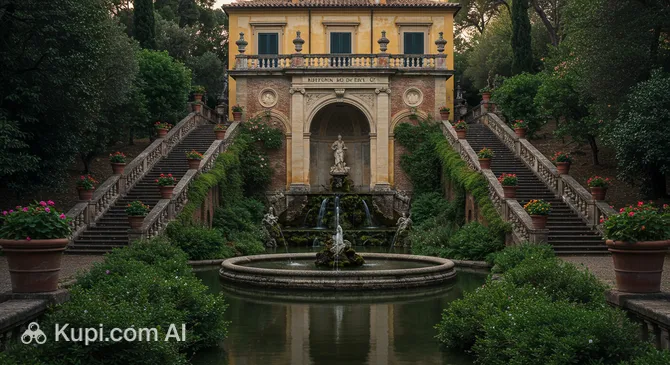
One of the city's main gems is Villa d'Este. This masterpiece of the Italian Renaissance, listed as a UNESCO World Heritage site, is famous for its stunning gardens and countless fountains. Strolling along the terraces, you will be enchanted by the water plays, organ fountains, and cool grottoes, creating an atmosphere of magic and peace. It is a place where art and nature merge into a harmonious whole.

Villa d'Este. Illustration.
Source: Kupi.com AI

Traveler photos:

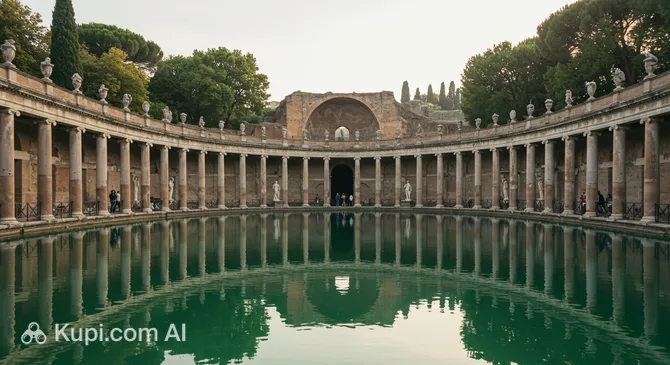
No less significant is Hadrian's Villa — a grandiose archaeological complex and the former country residence of Emperor Hadrian. This vast "city within a city," also a UNESCO World Heritage site, impresses with its scale and variety of buildings: here you can see the ruins of palaces, theaters, baths, libraries, and temples. Hadrian's Villa allows you to touch the greatness of the Roman Empire and feel like a part of ancient history.

Hadrian's Villa. Illustration.
Source: Kupi.com AI

Traveler photos:

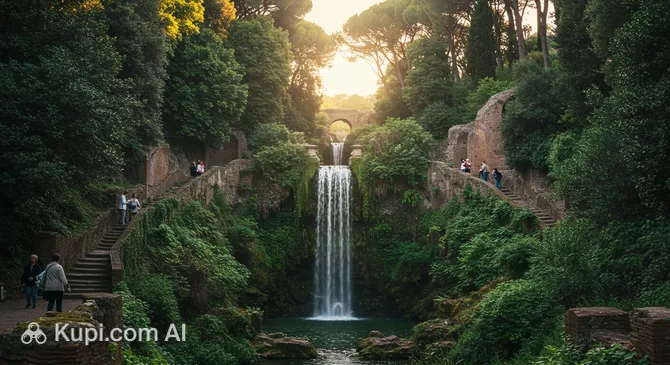
For lovers of natural beauty and romantic landscapes, Villa Gregoriana is a must-see. This park, created in the 19th century by order of Pope Gregory XVI, is a picturesque gorge with waterfalls, grottoes, and winding paths. The main attraction is the Great Cascade of the Aniene River, a powerful stream of water plunging from the cliffs. A walk through the park will provide unforgettable impressions and magnificent views.

Villa Gregoriana. Illustration.
Source: Kupi.com AI

Traveler photos:

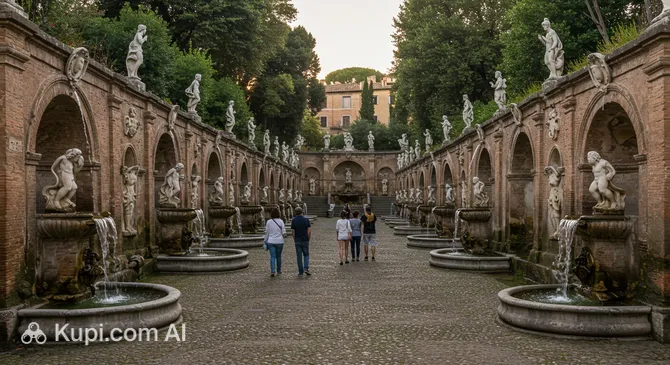
Inside Villa d'Este is another iconic spot often highlighted as a separate attraction — the Avenue of the Hundred Fountains. This impressive water extravaganza stretches along one of the garden terraces. Hundreds of jets spouting from masks and small basins create a unique living corridor that is especially beautiful on a sunny day. It is one of the most photographed and memorable places in Tivoli.

Avenue of the Hundred Fountains. Illustration.
Source: Kupi.com AI

Traveler photos:

Local Cuisine

The cuisine of Tivoli is an exciting journey into the gastronomic traditions of the Lazio region, enriched with unique local recipes. Every gourmet will find dishes to their liking here, prepared from the freshest vegetables and dairy products for which the city's surroundings are so famous.

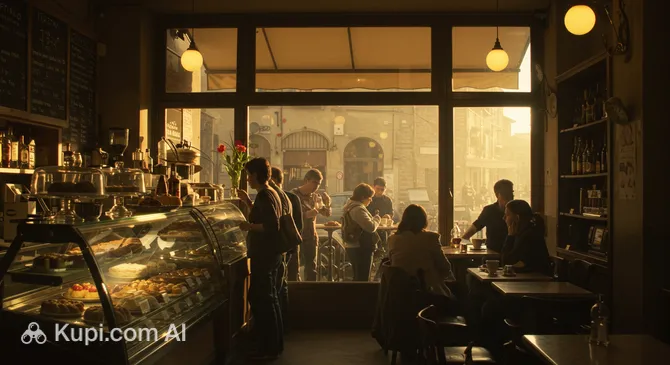
Among the dishes that are definitely worth trying is the famous pasta with artichokes and homemade cheese, which has become a true hallmark of local culinary arts. No less worthy of attention are the lamb and rabbit dishes, masterfully cooked over charcoal with aromatic herbs. A special place in Tivoli's gastronomy is held by fresh ricotta cheese. It can be sampled in its classic form or as part of exquisite sweet desserts, for instance, in one of the local pastry shops like Pasticceria La Celestiale. For a quick and tasty snack while walking through the city, small pastries filled with spinach and ricotta are ideal.

La Celestiale Pastry Shop. Illustration.
Source: Kupi.com AI

Traveler photos:

The meal is perfectly complemented by local wines, reflecting the sunny character of Italy. Among non-alcoholic drinks, freshly squeezed juices and, of course, aromatic Italian coffee are popular. The food culture in Tivoli is diverse: locals and tourists alike love to dine in traditional restaurants and cozy trattorias. Be sure to visit the street markets and fairs, where you can buy fresh bread, aromatic extra virgin olive oil, seasonal fruits, and other local delicacies.

Tivoli's gastronomic scene attracts with its diversity and authenticity. Visiting the city is not only about exploring ancient sites but also an opportunity to plunge into the world of real Italian flavors, where respect for tradition is combined with a love for high-quality, fresh products. Don't miss the chance to visit local food festivals if your trip coincides with them — it's a great opportunity to dive deeper into the region's culinary traditions in the company of the city's welcoming residents.

Travel Tips

Welcome to Tivoli, a charming city with a rich history and stunning villas! To make your trip to this corner of Italy as comfortable and memorable as possible, we've prepared some practical tips.

  1. Clothing and Essentials: Tivoli has a Mediterranean climate, so in summer (June-August), bring light clothing made of natural fabrics, a hat, sunglasses, and sunscreen. In spring and autumn, the weather is changeable, so layered clothing and a light jacket or sweater will be useful. Winters can be cool, so don't forget warm clothes and an umbrella. A key element of your wardrobe is comfortable shoes, as you will be walking a lot on cobblestones and exploring the vast territories of the villas. Don't forget a Type L power adapter. When visiting churches, it is customary to cover your shoulders and knees.
  2. Transport in and around the city: Tivoli itself is quite compact, and many attractions, such as Villa d'Este, can be reached on foot. To get around the city and for trips to Rome (about 30 km), it's convenient to use Trenitalia regional trains (Tivoli station) or COTRAL buses. Renting a car can be useful if you plan to explore the surrounding Lazio region, but keep in mind that parking in Tivoli's historical center can be difficult. Taxis are available in the city but are less common than in large metropolises.
  3. Finances: All About Money: The official currency in Italy is the Euro (EUR). You can exchange money at banks or exchange offices (cambio), but it's more profitable to withdraw cash from ATMs (Bancomat), which are widely available. Credit and debit cards (Visa, Mastercard) are accepted in most hotels, restaurants, and shops. We recommend always carrying some cash for small purchases. Tips in restaurants are often included in the bill as "coperto" (table charge) or "servizio" (service). If they are not included, it is customary to leave 5-10% of the bill for good service.
  4. Health and Safety: Tivoli is a fairly safe city. However, as elsewhere, follow basic precautions: keep an eye on your belongings in crowded places, especially at stations and in tourist zones. Pharmacies (Farmacia) are marked with a green cross; check the schedule for duty pharmacies (farmacia di turno) for nighttime needs. EU citizens are recommended to carry a European Health Insurance Card (EHIC). Tourists from other countries are strongly advised to take out medical insurance before the trip. The emergency number is 112.
  5. Language and Communication: The official language is Italian. In tourist areas (hotels, restaurants, popular attractions), staff often speak English, but knowing a few basic phrases in Italian will be very helpful and appreciated by locals: "Buongiorno/Buonasera" (Good morning/Good evening), "Grazie" (Thank you), "Prego" (You're welcome), "Scusi" (Excuse me). Mobile communication and internet are of good quality; a local operator's SIM card can be bought at specialized stores. Wi-Fi is available in many hotels, cafes, and public places.
  6. Local Etiquette and Traditions: Italians are open and friendly people. It is customary to say hello when entering a shop or cafe. Don't hesitate to ask for help, but do so politely. When visiting churches and religious sites, remain quiet and dress modestly (shoulders and knees covered). It is important to remember that the lunch break (riposo or siesta), especially in small towns, can last for several hours in the afternoon, when many shops and establishments are closed.
  7. What to Avoid: Try not to discuss controversial topics such as politics or religion loudly, especially with strangers. Also, do not sit on the steps of historical monuments or fountains unless allowed — this can be seen as disrespectful and may even lead to a fine. Avoid buying goods from unlicensed street vendors, especially fakes of well-known brands.
  8. Special Tip for Tivoli: Tivoli's main treasures are undoubtedly Villa d'Este with its magnificent fountains and Villa Gregoriana with its picturesque grottoes and waterfalls. To avoid long queues, especially in high season, buy your tickets online in advance. Also check the villas' opening hours, as they may change depending on the time of year. And don't forget Hadrian's Villa, located nearby — it is a vast complex of ancient Roman ruins belonging to Emperor Hadrian, which also deserves your attention.

We hope these tips help you plan an unforgettable trip to Tivoli and enjoy every moment in this amazing Italian city. Have a pleasant trip!

Entertainment & Nightlife

As the sun sets over the hills of Italy, Tivoli transforms, offering its guests a cozy and relaxed atmosphere for evening relaxation. Although the city is better known for its historic villas, you can find pleasant places here to spend the evening and enjoy a nightlife that is characterized more by the charm of a small Italian town than the noise of a metropolis.

The nightlife in Tivoli is mainly concentrated in its historical center. Here you won't find large night clubs with loud music; instead, you'll find cozy bars, enotecas (wine bars), and restaurants where you can enjoy a glass of local wine or a traditional Italian dinner. The atmosphere is usually calm and conducive to conversation. One such place to enjoy your time is Pasticceria La Celestiale, known for its pastries by day and turning into a pleasant bar in the evening.

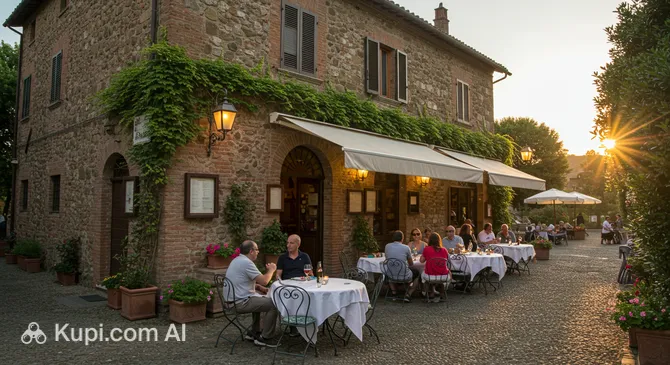
For dinner in a romantic or simply pleasant setting, Tivoli offers several wonderful restaurants. For example, Ristorante Sibilla is famous not only for its cuisine but also for its stunning views, making it an ideal choice for a special evening. Another interesting place to soak up the ancient atmosphere and try local dishes is Taverna di Dracula. Many restaurants offer outdoor seating, which is especially pleasant during the warmer months.

Sibilla Restaurant. Illustration.
Source: Kupi.com AI

Traveler photos:

Evening venues in Tivoli usually start to come alive around aperitivo time (about 18:00-19:00) and continue to operate until late in the evening, especially on weekends. The crowd here is mixed — from locals to tourists enjoying a quiet break. The dress code in most places is casual, but for dinner in more refined restaurants, an elegant outfit is recommended. Prices vary but generally correspond to the average level for tourist cities in Italy. Getting around the city center at night is easy on foot. If you are staying on the outskirts, it is better to take a taxi.

Tivoli is a fairly safe city, and walking along its lit central streets in the evening usually doesn't cause any concern. However, as elsewhere, it is worth observing basic precautions. If you need a taxi, it's best to order one by phone or ask for one at a restaurant or bar.

During the day, Tivoli offers a rich cultural program. Be sure to visit world-famous attractions such as the magnificent Villa d'Este with its famous fountains, the grandiose Hadrian's Villa, the former residence of a Roman emperor, and the picturesque Villa Gregoriana with its park and waterfalls. These places will amaze you with their beauty and history, creating a wonderful contrast to the peaceful evenings in the city.

Thus, Tivoli offers a harmonious combination of daytime discoveries and evening relaxation. It is a place where you can enjoy both a rich cultural heritage and a pleasant, leisurely nightlife in true Italian style.

Parks & Museums

Tivoli is a city where history and nature merge into one, offering travelers a unique combination of magnificent park ensembles and a rich cultural heritage. The city's main jewels are its world-famous villas, each of which is a true open-air museum.

Among the green oases of Tivoli, three villas stand out, each with its own unique character. Villa d’Este is a masterpiece of the Italian Renaissance, famous for its luxurious gardens, impressive fountains, cascades, and water plays. A stroll through its shaded alleys, including the famous Avenue of the Hundred Fountains, will provide unforgettable impressions and a sense of immersion in the Renaissance era. This place is ideal for those who appreciate exquisite landscape architecture and the cool spray of water jets on a hot day.

Villa d'Este. Illustration.
Source: Kupi.com AI

Traveler photos:

Villa Gregoriana offers a completely different atmosphere. This park, created in the 19th century, impresses with its wild, romantic beauty. Here, steep cliffs, grottoes, lush vegetation, and, of course, the impressive Great Cascade of the Aniene River await you. It is an ideal place for nature lovers, hikers, and those seeking breathtaking landscapes.

Villa Gregoriana. Illustration.
Source: Kupi.com AI

Traveler photos:

The third iconic attraction is Hadrian's Villa — a grandiose archaeological complex and the former country residence of Emperor Hadrian. It is a whole city in miniature, spread over a vast territory, where you can spend hours exploring the ruins of palaces, theaters, baths, and temples, surrounded by olive groves and pine trees. Hadrian's Villa allows you to touch the greatness of Ancient Rome and feel like an explorer of ancient civilizations.

Hadrian's Villa. Illustration.
Source: Kupi.com AI

Traveler photos:

While Tivoli does not have traditional museums with extensive indoor collections, the villas themselves, especially Villa d’Este and Hadrian's Villa (both UNESCO World Heritage sites), are living museums of history, architecture, and landscape art. They preserve the spirit of their eras and tell stories about the lives and tastes of their creators. Exploring these complexes is a deep dive into Italian culture and history.

In addition to the famous villas, don't miss the chance to walk through the narrow streets of Tivoli's historical center. Here you will find charming medieval houses, small churches, and cozy trattorias where you can taste local cuisine while enjoying the authentic atmosphere of an old Italian town.

Getting Around

Getting around Tivoli and its surroundings is quite convenient thanks to the public transport system, although the historical city center is best explored on foot. The main modes of transport for tourists are buses and trains, especially for trips to Rome and attractions located outside the center.

Buses are the primary way to move directly within Tivoli and to connect with nearby towns. Local bus routes connect different parts of the city, including the railway station and main tourist sites. The cost of a city bus ticket is usually around 1-1.5 euros. Regional buses (such as the Cotral company) provide connections to Rome and other cities in Lazio; a trip to Rome on such a bus can cost around 2-4 euros. Schedules can be found at stops or on transport company websites.

Trains are a popular and efficient way to get from Tivoli to Rome. The Tivoli railway station is served by Trenitalia regional trains, which run regularly to Rome's stations, such as Roma Tiburtina and Roma Termini. The journey usually takes about an hour, and the ticket price for a regional train to Rome typically ranges from 2.5 to 5 euros one way, making Tivoli a convenient base for exploring the capital.

The fare payment system in Tivoli, as in most Italian cities, requires purchasing tickets in advance. Bus tickets (the price guides mentioned above refer to single trips) can be bought at tobacco shops (tabaccherie, marked with a "T"), newsstands (edicole), or sometimes in bars near the stops. Train tickets are sold at station ticket offices, self-service machines, or online. It is crucial to remember to validate your ticket before boarding the train or immediately after entering the bus. Special yellow or green machines on the platforms or inside the bus are used for this. There are various types of tickets: single trip, and sometimes daily or multi-day passes, which can be beneficial if you plan frequent trips to Rome and around the region.

Practical tips for tourists: try to buy tickets in advance, especially if you plan to travel during peak hours. Buses and trains usually run on schedule, but minor delays are possible. Public transport generally operates from early morning until late evening, but the frequency of trips may decrease on weekends and public holidays. You can use online maps or transport company apps to plan your routes.

As an alternative to public transport, especially for short distances in the center of Tivoli, walking is perfect. The city is quite compact, and many attractions are within walking distance of each other. Taxis are also available and can be found at ranks or called by phone, but this will be a more expensive option. Bicycle rental may be less common, but it's worth checking on-site if you are interested in this mode of travel.

Accommodation

In Tivoli, travelers will find a variety of accommodation options to suit different preferences and budgets. The city offers cozy bed and breakfasts (B&Bs), guest houses, small family-run hotels, as well as apartments and holiday homes for short-term rent. There are fewer luxury resorts here; the focus is on a more authentic and intimate stay.

For tourists, areas located near the main attractions are particularly attractive. The historical center of Tivoli is a great place to stay if you want to be within walking distance of famous sites like Villa d’Este or Villa Gregoriana. Staying here will allow you to easily immerse yourself in the atmosphere of the ancient city. You might also consider options in the surrounding area if you plan to visit Hadrian's Villa, which is located a bit away from the city center.

Regarding the price range, you can find both budget options and mid-range accommodation in Tivoli. Luxury offerings are less common. It is recommended to book accommodation in advance, especially if your trip falls during the peak tourist season (spring, summer, and early autumn) or on weekends and holidays. This will help ensure the best selection and more favorable prices.

You can book accommodation in Tivoli through popular online booking platforms, which feature a wide range of hotels, apartments, and B&Bs. Some guest houses and small hotels also offer the possibility of direct booking through their own websites or by phone, which can sometimes be more cost-effective or offer more flexible terms.

Nearby Cities

For those who want to explore the surrounding area, Tivoli serves as an excellent starting point for day trips to several interesting nearby locations:

CityPopulationDistance
Palombara Sabina13 20013 km
Zagarolo17 93314 km
San Cesareo15 55215 km
Palestrina21 87216 km
Mentana23 12616 km

These nearby destinations offer a glimpse into the diverse culture and landscapes of the region. Each trip promises new experiences and discoveries, complementing your journey to Tivoli.

Shopping & Souvenirs

Tivoli, known for its magnificent villas and ancient history, offers tourists charming local shopping rather than a riot of large shopping centers. You won't find huge malls here like in Italy as a whole, but you can purchase unique souvenirs, products from local craftsmen, and traditional Italian foods.

Main shopping opportunities are concentrated in the historical center of the city. Strolling through its cozy streets, such as Via del Trevio or Via Palatina, you will find small shops, souvenir stalls, boutiques with clothing and accessories, as well as gastronomic shops offering local delicacies. The atmosphere here is perfect for a leisurely search for something special.

There are no large modern shopping centers directly in Tivoli. Shopping here is more traditional, focusing on small family shops and boutiques. If you need a wider selection of brands, you might have to head to nearby Rome.

As in many Italian towns, a weekly market (mercato settimanale) may be held in Tivoli. Usually, such markets offer fresh fruits, vegetables, local cheeses, sausages, as well as clothing, shoes, and household goods. This is a great place to experience the local flavor and buy fresh products. It is best to check the market days and location on-site.

As for souvenirs, it is worth bringing back something from Tivoli that reminds you of its rich heritage. Popular items include:

  • Items related to the famous villas, such as Villa d’Este or Hadrian's Villa: these can be miniatures, magnets, postcards, books, or reproductions.
  • Handmade ceramic items with local motifs.
  • Local gastronomic products: extra virgin olive oil, wine from the Lazio region, traditional sweets (such as amaretti or other types of cookies found in local pastry shops like Pasticceria La Celestiale), and honey.
  • Small leather or textile products.

Villa d'Este. Illustration.
Source: Kupi.com AI

Traveler photos:

Shop opening hours in Tivoli generally follow standard Italian hours. Most are open from around 9:00-10:00 to 13:00 and then after a lunch break (riposo) from 15:30-16:00 to 19:30-20:00. Many small shops may be closed on Sundays and public holidays. Payment is accepted in both cash (especially in small shops and at markets) and by bank cards (Visa, Mastercard) in most stores.

For tourists from non-EU countries, the Tax Free system is available. If you make purchases over a certain amount in shops participating in this system (look for the corresponding sign), you can arrange a VAT refund. To do this, you must keep your receipts and fill out a special form to be presented at customs upon leaving the European Union.

Reached the end of the page?

That means the route is fully explored