Support

Ciampino

About

Ciampino is a cozy town located in the heart of the Lazio region, just 15 kilometers southeast of Rome. Thanks to its strategic location, it is often called the "gateway to the Eternal City": it is home to one of the capital region's important airports, turning the city into a bustling crossroads for travelers arriving in Italy.

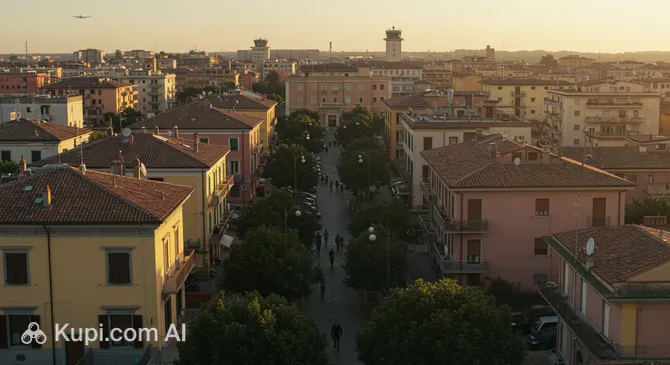
Ciampino. Illustration.
Source: Kupi.com AI

The town is spread across picturesque hills surrounded by green parks and vineyards that transition into the famous Castelli Romani area—the birthplace of magnificent wines and rich gastronomic traditions. With a population of about 38,645 people, Ciampino successfully combines an atmosphere of provincial tranquility with the dynamics of a modern suburb.

Although this settlement may seem young, as its administrative independence was only formalized in the 20th century, the history of Ciampino is filled with its own unique character. Here, the slow-paced rhythm of a small Italian town and the energy of a major transport hub are wonderfully intertwined.

Ciampino is an ideal place for those who want to see the authentic life of the country away from the tourist bustle. Take a stroll through the shaded streets, stop by the local farmers' market, or spend an evening in a family-run trattoria. This town is excellent for both a short stop before a trip to Rome and for a leisurely independent exploration of local culture.

Weather Overview

The climate in this region is mild, characteristic of the central part of the Apennine Peninsula. Summer here is truly hot and sunny: in July and August, the average temperature is about 26°C, and during daytime hours, the air often warms up to 31.5°C. This is the driest time of year when rain is a rarity, occurring only 3–6 days a month.

Winter passes without severe frosts, remaining comfortable enough for walking. In the coldest months, January and February, average figures stay at 8–9°C, although at night the temperature can drop to 4°C. If you are interested in detailed weather in Ciampino for planning your wardrobe, keep in mind that the winter period can be quite wet.

Spring and autumn delight with pleasant warmth but can also bring surprises in the form of precipitation. For example, November and May are some of the rainiest months of the year (up to 14–15 days with precipitation). Overall, expect a hot summer with clear skies and cool but wet winters, so an umbrella will be an indispensable travel companion during the off-season.

Average monthly temperature

Average monthly precipitation

Interesting Facts

In addition to its role as an important transport hub, Ciampino holds many fascinating secrets and historical features that often go unnoticed by travelers.

  • The city is rightfully proud of the medieval tower Torre dell’Acqua Sottoterra, built in the 13th–14th centuries from characteristic gray volcanic tuff. Originally, this structure served as an observation post and a reliable defense for local barons, which today adds a special historical flavor to the city's architectural appearance.

  • Ciampino is known as the "gateway to the air" for Rome: it is home to one of the oldest airports in Italy. It played a significant role in the development of the country's civil aviation and remains a key point for tourists heading to the capital.

  • Despite the city becoming an independent municipality relatively recently, it possesses a rich cultural life. The picturesque Casale dei Monaci complex has become a center of attraction for art lovers, housing a center for applied arts, while the local library contains more than 13,000 volumes.

  • The peaceful suburban atmosphere and proximity to the Eternal City attract musicians and artists here. The city often becomes a venue for exhibitions and cultural events that bring together locals and guests of the region.

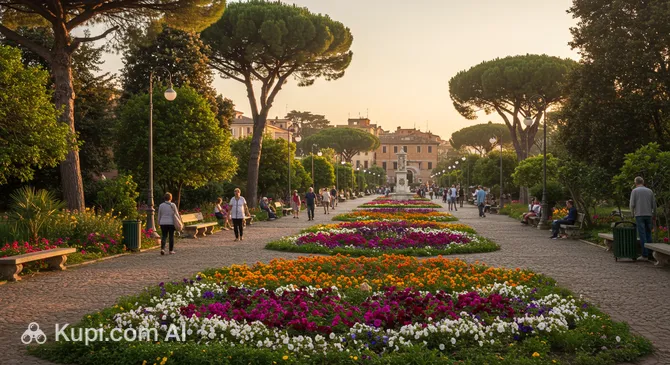
Park of Peace. Illustration.
Source: Kupi.com AI

Traveler photos:

How to Get There

Due to its location, Ciampino is one of the most accessible cities in the Lazio region. It is a major transport hub, so travelers have many route options. You can find out more about how to get to Ciampino on a dedicated page, but here we will look at the main ways to arrive.

The most convenient option for air travelers is Ciampino–G. B. Pastine International Airport (IATA: CIA). Although it formally belongs to the Rome airport system, it is located directly on the border with the city of Ciampino, just 0.7 km from the center. This is a regional hub that hosts many low-cost carriers. The journey to a hotel by taxi will take literally a few minutes.

For intercontinental and major international flights, Leonardo da Vinci–Fiumicino Airport (IATA: FCO) is more frequently used. This is the country's main airport, located in a suburb of Rome, approximately 29 km from Ciampino. The journey from here by taxi or transfer will take about 65 minutes, depending on traffic. You can also consider arriving at Naples International Airport, but it is much further away—174 km, in the city of Naples.

For clarity, here is a summary of the main airports:

AirportPassenger trafficDistance
Ciampino–G. B. Pastine International Airport3.9 mln1 km
Leonardo da Vinci-Fiumicino Airport40.5 mln29 km
Sant Egidio Airport532 474144 km
Abruzzo Airport872 701149 km
Naples International Airport12.7 mln174 km

If you prefer rail transport, you should focus on the capital's main stations, as mostly regional trains stop in Ciampino itself. The largest transport hub is Roma Termini Station, located in Rome, about 13.6 km from Ciampino. High-speed trains from all over Italy arrive here. A taxi ride from the station to Ciampino will take about 40 minutes.

An alternative is Tiburtina Station, also located in Rome (about 13.4 km from the destination). This is the capital's second most important station, handling many long-distance trains. The travel time by car from here is approximately the same—about 40 minutes.

Below is information about the nearest major railway hubs:

StationPassenger trafficDistance
Ostiense Railway Station5.8 mln13 km
Tiburtina Railway Station51 mln13 km
Roma Termini Station150 mln14 km
Mergellina Railway Station6.2 mln174 km
Napoli Afragola High-Speed Railway Station12 mln174 km

Main Attractions

Достопримечательности:

While many travelers perceive this city solely as a transport hub, there are places here where you can enjoy your time while waiting for a flight or relax after a long journey. Ciampino offers guests cozy green zones, entertainment for the whole family, and, of course, establishments with excellent Italian cuisine.

One of the main spots for a quiet outdoor break is Parco della Pace (Park of Peace). This is a true green oasis amidst the urban development where locals love to walk. Spacious alleys, well-kept lawns, and shady trees create the perfect atmosphere for a picnic or a morning jog. Here, you can escape the airport bustle and enjoy the silence of the Italian province.

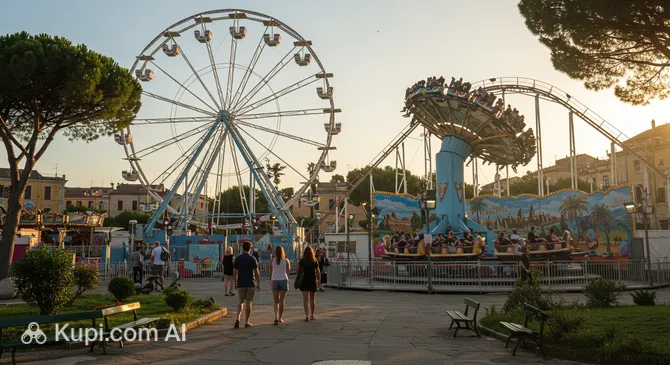
Joky Park. Illustration.
Source: Kupi.com AI

Traveler photos:

If you are traveling with children or simply want to add some bright emotions to your trip, it is worth stopping by Gioki Park. This entertainment complex offers various rides and play areas that will keep young tourists busy. It is a great place to stretch your legs and have fun with the whole family before continuing your journey through Italy.

For fans of mysteries and thrills, the Escape Room Casa del Male (House of Evil) operates in the city. This is a popular activity for groups of friends where you must use your wits and logic to escape from a themed space. Such quests are becoming increasingly popular among tourists looking for an alternative to classic sightseeing tours.

Getting to know the city would be incomplete without diving into the region's gastronomic traditions. The restaurant Locanda Baffolona is a wonderful example of where to try authentic dishes. They serve delicious pasta, meat delicacies, and, of course, the famous mozzarella di bufala. The cozy atmosphere and the hospitality of the staff will allow you to feel the real taste of the "dolce vita."

Local Cuisine

Ciampino's cuisine is a true paradise for foodies who appreciate the sincere and rich flavors of the Lazio region. They don't chase complex presentations here, preferring quality ingredients and age-old recipes. Be sure to try classic pasta: hearty carbonara or spicy amatriciana. However, the true queen of the local table is considered to be porchetta—a roast pork roll with aromatic herbs, prepared here with special love following the traditions of the neighboring towns of Castelli Romani.

A gastronomic journey would be incomplete without getting to know the local wines. The vineyards surrounding the city give the world the famous white wine Frascati—light, with fruity notes, it is perfectly refreshing on a hot day. In the evening, locals like to gather in bars such as Officine Ibba or the atmospheric pub King Arthur to have a glass of wine or craft beer with friends.

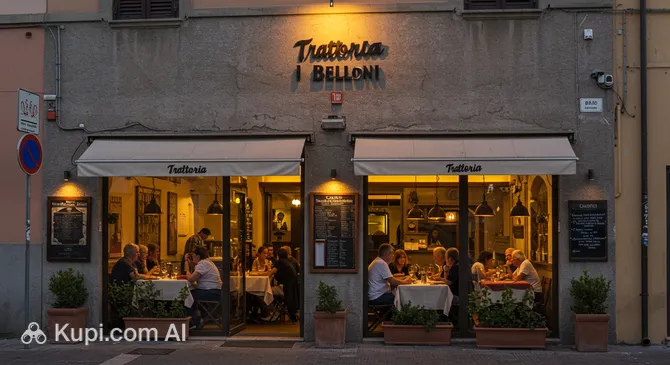
Trattoria I Belloni. Illustration.
Source: Kupi.com AI

Traveler photos:

The food culture in Ciampino is democratic and diverse. For a quick snack, numerous pizzerias serving pizza on thin crispy dough and panini kiosks are perfect. Fresh produce lovers will appreciate the city markets: here you can buy farm cheeses, seasonal fruits, and freshly baked bread for a picnic in one of the parks.

If you want to enjoy a full meal in a cozy setting, it is worth checking out family restaurants, for example, Trattoria I Belloni. Such places have a warm home atmosphere, and the menu often changes depending on the season, offering guests the best dishes made from fresh vegetables and local products. This is a great way to feel the real taste of Italian life away from the overcrowded tourist routes of Rome.

Travel Tips

Ciampino is a friendly city, but as with any trip, knowing the local nuances will make your journey much more pleasant. We have gathered practical recommendations to help you easily navigate the area, save time, and feel like a local in this part of the country.

  1. Clothing and Seasonality. In the summer, the Lazio region can be very hot and humid, so prefer clothing made of natural fabrics (linen, cotton) and be sure to wear a hat. For winter trips, a waterproof jacket and an umbrella will come in handy. Since there are many cobblestones in Ciampino and the surrounding areas, choose the most comfortable shoes with flat soles. To visit churches, shoulders and knees must be covered. Don't forget a power adapter for sockets (type L or F), although universal outlets are often found in modern hotels.
  2. Transport Logistics. To get around the city itself, it is convenient to walk or use ATRAL buses. For a trip to Rome, it is best to use regional trains—it's faster and cheaper than a taxi. Train tickets must be validated in special green machines on the platform before boarding, otherwise you risk a large fine. Uber apps work specifically here (often as a luxury transfer), so it's better to use FreeNow or official taxi stands.
  3. Finances and Payment. The official currency is the Euro (€). Cards are accepted in most restaurants and supermarkets, but always carry small denomination cash (5–20 euros) for small purchases (coffee, bus tickets, souvenirs). It is safer to use ATMs located inside bank branches. Tipping in Italy is not a strict obligation, but leaving 1–2 euros on the table or rounding up the bill is considered good manners.
  4. Health and Safety. Ciampino is a quiet city, but in the station and airport areas, you should keep a close eye on your bags and pockets. Pharmacies are marked with a green cross sign (Farmacia); on-call ones work 24/7. Water from street fountains (nasoni) is safe to drink—it's clean, cool, and free, which helps save money in the heat.
  5. Communication and Language. The main language is Italian. In the airport area, staff speak English, but in the city, locals may have limited proficiency, so download an offline translator or learn a few phrases. It is most convenient to buy a SIM card (TIM, Vodafone, WindTre) immediately upon arrival at airport kiosks or in communication stores in the city center (a passport is required). Wi-Fi is available in many cafes, but sometimes an Italian phone number is required to connect.
  6. Local Etiquette. Italians highly value politeness. When entering any store or cafe, be sure to say hello ("Buongiorno" during the day, "Buonasera" in the evening) and goodbye ("Arrivederci"). Remember the unspoken coffee rule: cappuccino is only drunk for breakfast. Ordering this drink after a hearty lunch or dinner will cause surprise among locals, as it is believed that milk interferes with digestion.
  7. What to Avoid. Never use the services of illegal taxi drivers who pushily offer rides right at the airport terminal exit—prices will be several times higher. Also, do not try to ride "fare-free" on public transport: inspectors appear frequently and suddenly, and explanations in a foreign language will not exempt you from a fine.
  8. Operating Hours Specifics. Consider the traditional siesta (pausa pranzo). Many small shops, stalls, and even some pharmacies close for a break from approximately 13:00 to 16:00. Plan your shopping for the morning or evening, and dedicate the middle of the day to a leisurely lunch, as the Italians themselves do.

We hope these tips help you feel confident and comfortable in Ciampino, whether you've come for a few days or are just waiting for a connection. Enjoy Italian hospitality, delicious food, and a smooth journey!

Entertainment & Nightlife

Although Ciampino is often seen as a transit point, as evening falls, the city changes its business-like appearance to a more relaxed and cozy one. The nightlife here is devoid of the pretension and bustle characteristic of central Rome, but that is exactly where its charm lies. It is a place for those who appreciate heartfelt conversations, craft beer, and the authentic atmosphere of the Italian province where everyone knows each other.

The epicenter of evening activity is the area around Via di Morena and the central square, Piazza della Pace. This is where most of the establishments are concentrated, where locals gather after work for a traditional aperitivo. The crowd here is diverse: from boisterous groups of Italian youth to pilots and flight attendants relaxing between flights. The dress code in most places is democratic—casual style is appropriate everywhere.

Lovers of quality drinks and an informal atmosphere should check out the bar Officine Ibba. This establishment is famous for its stylish industrial interior and an excellent selection of cocktails. Live music or DJ sets often play here, creating the perfect backdrop to start the evening. The kitchen stays open late, so you can always order great burgers or snacks to go with your drinks.

If you prefer the atmosphere of a classic pub, head to King Arthur. This is a place with a British accent and Italian hospitality, offering a wide range of draft beers and hearty dishes. It can get crowded in the evenings, especially during football match broadcasts when fans' emotions run high. The average check in Ciampino's bars will be a pleasant surprise: a glass of beer or wine will cost 5–8 euros, which is noticeably cheaper than in the capital.

For those looking for an alternative to bars and restaurants, there are other types of evening leisure in the city. For example, you can test your nerves and wits by visiting the Escape Room Casa del Male. This is a great option for a group of friends wanting to spice up their gastronomic impressions with a dose of adrenaline. Games usually require advance booking, especially on weekends.

As for daytime entertainment, Ciampino offers a peaceful retreat. There are no major world-class museums here (for those, you'll need to go to Rome, which takes only 15–20 minutes by train), but there are cozy squares and small galleries. During the day, you can stroll through the shops on the main streets or visit local churches, which are examples of the restrained architecture of the Lazio region.

Safety and transport at night: Ciampino is a quiet city, and walking through the center (Via di Morena, Viale del Lavoro) is safe even late at night. However, the train station area and the immediate vicinity of the airport can be deserted at night, so it is better not to walk there alone. Public transport (buses) stops operating around 22:00–23:00. If you stay out late, it is better to call a taxi through official apps or ask the venue staff to call one for you, as "hailing" a car on the street is not common here.

Parks & Museums

Ciampino may seem to a traveler like a modern city grown up around an airport, but it carefully preserves islands of nature and history. The urban environment here is intertwined with landscapes that remember the times of the Roman Empire, turning a walk in the surroundings into a small journey through time.

The main natural and historical landmark is undoubtedly the famous Appia Antica Regional Park. Its territory, which also includes lands in Ciampino, is a unique open-air museum. Here, far from the noisy terminals, you can walk along the ancient cobblestones of the Appian Way—the "Queen of Roads"—while contemplating landscapes that have inspired artists for centuries. This is an ideal place for trekking and cycling, where the ruins of ancient tombs and aqueducts sit alongside pastoral fields.

Archeology enthusiasts should pay special attention to the heritage of the imperial era—the Villa of Quintus Voconius Pollio. The remains of this grand 2nd-century AD country estate were discovered right on the territory of Ciampino. Although many artifacts found here, including magnificent mosaics, are now in Rome's museums, the very existence of such a villa emphasizes the high status of this area in antiquity. It is a reminder that long before airplanes appeared, luxury residences of the Roman nobility were located here.

In the city itself, the role of the main public space is played by Parco della Pace (Park of Peace). In addition to its recreational function mentioned earlier, this park is important as a social center: local festivals and open-air concerts are often held here, bringing the city's residents together. For families with children, an alternative is Gioki Park, where the focus is on active games and entertainment.

As for cultural institutions, Ciampino does not try to compete with the capital's museums but offers a more intimate format. The city's cultural life is centered around the Casale dei Monaci complex. The value of this place lies not only in the exhibitions held there but also in the architecture itself: the building is a beautiful example of historical rural development in the Lazio region, miraculously preserved amidst modern urbanization.

It is also worth visiting the Church of the Sacred Heart of Jesus (Chiesa del Sacro Cuore di Gesù). This temple is interesting as an example of modern sacred architecture reflecting the spirit of the 20th-century city. Inside, you can see expressive stained glass windows and works by contemporary masters that create a special atmosphere of peace amidst the dynamic rhythm of the transport hub.

Getting Around

Ciampino's public transport system is closely integrated with the capital region's logistics network, making travel around the city and its surroundings convenient and inexpensive. Given the compact size of the city itself, many distances are easily covered on foot; however, for trips to the station, the airport, or neighboring areas, transport is essential.

The main transport artery is the railway. Ciampino Station (Stazione di Ciampino) is a key hub connecting the city with Rome and the picturesque towns of Castelli Romani. Regional trains run frequently (every 15–20 minutes), and the journey to Termini central station takes only a quarter of an hour. This is the fastest and most reliable way to reach the capital, bypassing traffic jams.

There is no metro in the city itself, but there is an excellent bus connection to the terminus of Rome's Line A—"Anagnina." You can reach it via ATRAL buses or regional blue Cotral buses. The trip takes about 10–15 minutes, after which you enter the Rome metro system. Buses also run between the city, the railway station, and the airport, ensuring a convenient connection between different modes of transport.

The payment system has its nuances. For Trenitalia regional trains, tickets are purchased separately: at red machines at the station, at ticket offices, or online via the app. For ATRAL and Cotral buses, tickets are usually sold at newsstands and tobacco shops (look for a sign with a white letter "T" on a blue or black background). Important to remember: a single Rome ticket does not always work on local routes within Ciampino, so it is better to clarify the type of pass needed when buying.

A critical rule for all tourists: mandatory validation. Before boarding a train, the ticket must be stamped in green or yellow validators on the platform. On buses, this is done inside the vehicle immediately after entering. An unvalidated ticket is equivalent to having no ticket and risks a substantial fine, which must be paid on the spot.

As an alternative to public transport, taxis are popular. Official cars are painted white and have a meter. It is difficult to hail a car on the street; it is better to look for them at special stands (for example, at the station or airport) or call them via apps like FreeNow. Car-sharing services are less developed here than in major cities, but there are many classic car rental offices in town, thanks to the proximity of the airport.

Tourists should consider transport schedules. Buses and trains start running early in the morning (around 05:30) but finish work quite early—around 22:30–23:00. There are practically no night routes within Ciampino itself, so plan a budget for a taxi for late returns.

Accommodation

Accommodation in Ciampino has its own specifics, shaped by the city's status as a major transport hub. Here you won't find huge resort complexes or pompous five-star hotels from world chains. The main housing stock for tourists consists of cozy Bed & Breakfasts (B&Bs), guesthouses, and small family hotels. This makes the city an excellent option for those looking for a budget alternative to staying in expensive Rome, or for travelers who need a comfortable place to sleep before an early flight.

When choosing an area, you should focus on the goals of your trip. If you plan to travel to the capital frequently for sightseeing, it is best to stay in the central part of the city, within walking distance of the railway station. This is where the main life is concentrated: shops, cafes, and restaurants. From here, you can reach Rome in 15 minutes by regional train. Another popular option is the zone in the immediate vicinity of the airport. Transit passengers often choose accommodation here; many properties in this area offer free or inexpensive transfers to the terminal, which is very convenient for night flights.

The price range in Ciampino can be described as budget and mid-range. The cost of a room here is generally 30–40% lower than in the historical center of Rome for a comparable level of comfort. However, you should consider seasonality: demand increases sharply during the summer months and Catholic holiday periods.

The main booking tip is to arrange your accommodation in advance. Despite the abundance of guesthouses, the best options with a good price-quality ratio are snapped up quickly due to high airport passenger traffic. When booking through online platforms, be sure to check for soundproofing (proximity to the runway can be noisy) and confirm the possibility of late check-in if your flight arrives at night.

Nearby Cities

For those who want to explore the surroundings, Ciampino serves as an excellent starting point for day trips to several interesting nearby places. Thanks to its good location and developed transport links, you can quickly reach the most iconic sights of the Lazio region from here.

The absolute center of attraction is Rome, located just 14 kilometers away. A trip to the Eternal City by regional train takes no more than 15 minutes, making it easy to plan visits to the Colosseum, Vatican, and Spanish Steps while returning in the evening to a quieter suburb. This is an ideal option for those who want to combine a rich excursion program with budget accommodation.

Very close by, literally 6 kilometers away, is the picturesque town of Marino. It is part of the famous "Roman Castles" (Castelli Romani) and is renowned for its winemaking traditions. It is especially interesting here in the fall during the Grape Festival, when the city is immersed in a festive atmosphere. Marino is worth visiting for its beautiful views, cool air, and authentic restaurants with local cuisine.

Also of interest is Velletri—an ancient city with a rich history dating back to the era of the Etruscans and Volsci. Here you can walk through the historical center, visit museums, and enjoy architecture unspoiled by mass tourism.

CityPopulationDistance
Grottaferrata20 4606 km
Marino44 4726 km
Frascati22 4506 km
Castel Gandolfo8 9227 km
Paese21 9928 km

These nearby destinations provide a glimpse into the diverse culture and landscapes of the region, offering travelers a choice between the grandeur of the capital and the coziness of provincial towns.

Shopping & Souvenirs

Shopping in Ciampino is more of a pleasant addition to a trip than its primary goal. Unlike neighboring Rome with its high-fashion boutiques, this city offers a more grounded and practical shopping experience. Small family-run stores predominate here, where owners know their regular customers by name, alongside cozy shops selling high-quality local goods. This is a great place to buy travel essentials, update your wardrobe at reasonable prices, or find authentic gastronomic souvenirs without tourist markups.

The heart of the city's commercial life is Via di Morena. This busy artery runs through the center of Ciampino and is literally dotted with storefronts. You can find Italian clothing and shoe stores (both famous mass-market brands and local labels), perfumes, bookstores, and electronics shops. A walk along this street allows you to combine shopping with observing the daily life of the residents. It is also worth checking out Viale del Lavoro, which houses home goods stores and several interesting accessory boutiques.

There are no large shopping malls directly within the compact boundaries of Ciampino; the retail format here is more traditional street-based. However, thanks to its proximity to Rome, lovers of large-scale shopping can easily reach malls on the capital's outskirts. Just a 10–15 minute drive away are Centro Commerciale Anagnina and the huge La Romanina complex. They feature a wide choice of international brands, hypermarkets, and food courts, making them convenient for stocking up before a flight.

The special flavor of provincial Italy can be felt at the weekly city market (Mercato Settimanale), which usually takes place on Wednesdays in the Via Milano area. This is a noisy and colorful place where everything is sold: from the freshest farm products, cheeses, and sausages to inexpensive clothing, bags, and textiles. It is customary to haggle here, sample products before buying, and chat with the vendors. For tourists, this is the best way to see the real, unpolished life of the region.

For souvenirs from Ciampino, it is best to take home gastronomy. The city lies at the foot of the Castelli Romani region, famous for its wines and delicacies. Look for a bottle of Frascati DOC white wine, locally pressed olive oil, or traditional porchetta (roasted pork with herbs) in vacuum packaging. Additionally, local pastry shops (pasticceria) sell sets of dry biscuits that travel very well.

Store hours in Ciampino are traditional for the country. Most retail outlets are open from 09:00 or 09:30 until 13:00, after which they close for siesta (pausa pranzo) until 16:00 or 16:30. In the evening, trading continues until 19:30–20:00. Large supermarkets and shopping centers in the vicinity usually work through lunch and close later. Sunday is often a day off for small private shops.

Regarding payment, bank cards (Visa, Mastercard) are accepted almost everywhere, including supermarkets and boutiques. However, for purchases at the market, in kiosks, or small bars, it is better to have cash euros, preferably in small bills. The Tax Free system is available for tourists from non-EU countries. Note that the tax refund threshold has been lowered: now you can apply for it with a single purchase of 70 euros or more in stores marked with a special sign. Don't forget to ask for the form at the checkout and present your passport.
Reached the end of the page?

That means the route is fully explored