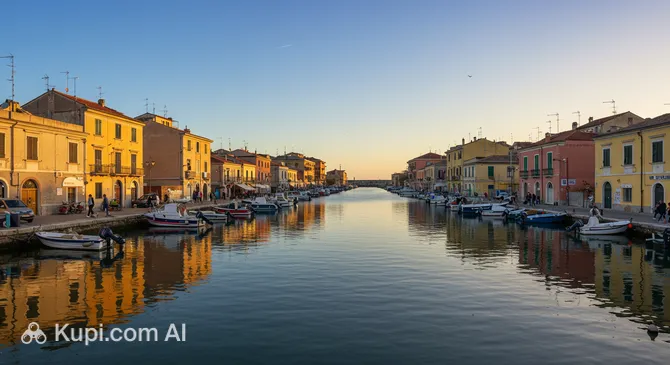
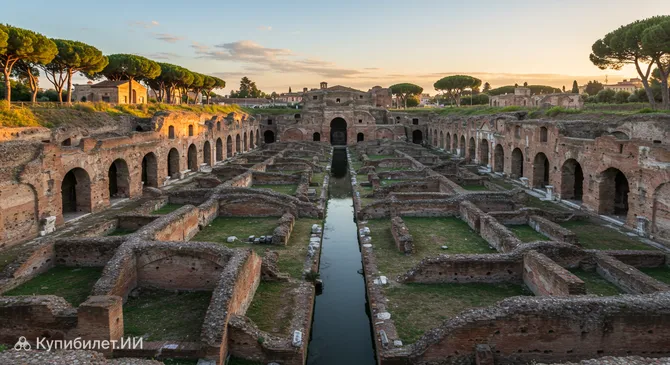
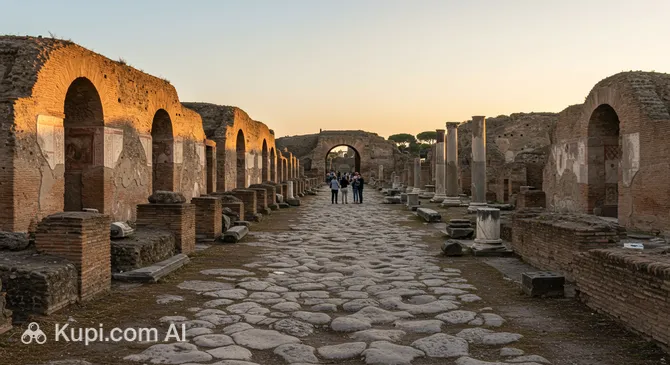
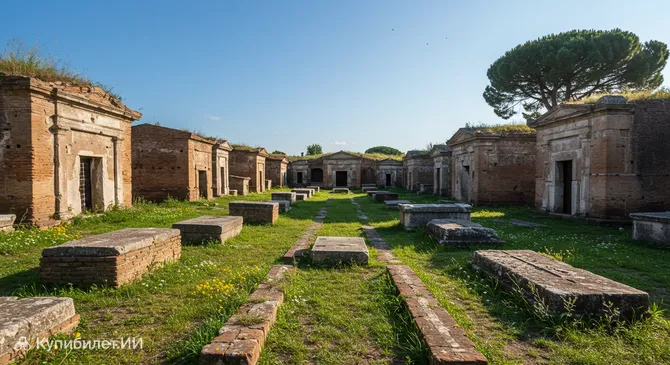
Fiumicino is not just the name of Rome's largest airport, but also a vibrant coastal city that often serves as the first or last gateway for travelers arriving in Italy. Located on the Tyrrhenian coast in the Metropolitan City of Rome, Fiumicino offers much more than just a convenient transit hub.
Fiumicino. Illustration.
Source: Kupi.com AI
With a population of approximately 79,630 people, the city lives a busy life closely tied to the sea and aviation. Its climate is typically Mediterranean, with mild winters and hot, sunny summers, making it attractive to visit at any time of year. Fiumicino is a modern city that has managed to preserve the charm of an old fishing port.
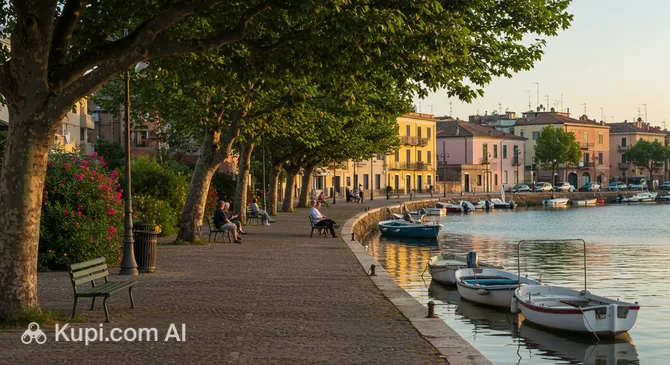
The main and most famous "attraction" of Fiumicino is undoubtedly Leonardo da Vinci International Airport (FCO), one of Europe's busiest and most important aviation hubs. However, beyond the airport, the city boasts a charming promenade and an old fishing port (Darsena di Fiumicino), where you can stroll while enjoying views of boats and yachts, and taste the freshest seafood in numerous trattorias and restaurants. For those interested in history, the impressive Ostia Antica archaeological park, the ancient port of Rome, as well as the Isola Sacra necropolis, are located nearby.
Whether you are planning a short stopover or want to spend a few days here, Fiumicino offers a pleasant experience, combining convenience with an authentic Italian atmosphere. It is a great place to catch your breath before further travel or to enjoy your final moments on Italian soil.
The climate of Fiumicino can be characterized as typical Mediterranean, making the city attractive to visit almost year-round. Summer here is hot and sunny: in **August**, the average temperature is **26.0°C**, and maximums often reach **29.2°C**. During this time, rainfall is minimal—for example, in **July**, only about **2 rainy days** are recorded, so you are unlikely to need an umbrella.
Winter is mild and not at all frosty, but more humid. In **January**, the average temperature stays around **9.6°C**, and even at night, the air rarely cools below **7.0°C**. When planning a trip in the low season, be sure to check the forecast, as the weather in Fiumicino can be changeable: in **November** and December, the number of days with precipitation varies from **13 to 15**.
Expect hot, dry summers and mild but rather rainy winters. Spring and early autumn are the ideal time for long walks, when May's **17.8°C** or September's **22.3°C** create the most comfortable conditions for exploring the region.
Average monthly temperature
Average monthly precipitation
Interesting Facts
Beyond its worldwide fame due to the international airport, Fiumicino hides many curious details and historical layers that not all travelers know about. This city is much more than just a transit point.
A Name with History: The name "Fiumicino" literally translates to "little river" or "rivulet." This refers to the Fossa Traiana canal, an artificial waterway dug during Emperor Trajan's time to improve access to the port. This canal remains an important part of the urban landscape today.
Heir to a Great Port: Modern Fiumicino stands on the site of ancient Portus – the main seaport of Imperial Rome, which eventually surpassed the famous Ostia in importance. The ruins of this grandiose structure, including the Archaeological Zone of the Ports of Claudius and Trajan, still impress with their scale and stand as a testament to Roman engineering genius.
Island of the Dead Among the Living: Between the old bed of the Tiber and Trajan's canal lies a territory known since antiquity as "Isola Sacra" (Sacred Island). Notably, one of the most significant and well-preserved Roman necropolises is located here – the Necropolis of Porto. This unique site holds the tombs and stories of people whose lives were linked to the ancient port.
Young but Ancient: Despite its deep historical connection to Ancient Rome, Fiumicino is relatively young as an administrative unit. The city only gained the status of a separate commune (municipality) in 1992, after separating from Rome. Before that, it was part of the capital's municipality.
How to Get There
Reaching Fiumicino is possible through several convenient methods, primarily due to its proximity to major transport hubs in Italy, especially Rome.
The main air hub serving Fiumicino is the Leonardo da Vinci — Fiumicino Airport (FCO). According to the data provided, it is located in Rome but is only 2.5 km from the center of Fiumicino itself, making it the most convenient arrival option. This is a major international hub, and a trip from here to the center of Fiumicino by taxi or local transport takes about 20-25 minutes.
Another option is Ciampino International Airport "G. B. Pastine" (CIA), also located in Rome, approximately 29.7 km from Fiumicino. This airport primarily serves budget airlines and has a medium passenger flow. The journey to Fiumicino from here takes about 1 hour to 1 hour 15 minutes by car or a combination of public transport.
For clarity, here is a summary of the main airports serving the Fiumicino direction:
While Fiumicino itself does not have its own major railway stations, the city is easily accessible via Rome's railway hubs. The main station for this is Roma Termini Station, located in Rome, about 26 km from Fiumicino. This is a major transport hub from which you can easily reach Fiumicino by train (for example, the Leonardo Express takes you to Fiumicino Airport, which is a stone's throw from the city) or by taxi/bus in about 45-60 minutes (not including train waiting times).
You can also use Ostiense Station, which is located in Rome at a distance of about 23.1 km from Fiumicino. This is also a significant station from which you can find transport to Fiumicino; the journey takes approximately 40-55 minutes.
For convenience, below is a table with information on the main railway stations through which you can reach Fiumicino:
Additionally, Fiumicino is easily accessible by car, as the city is well-connected to the main network of Italian motorways. Upon arrival in the region, it is also worth considering local buses and taxis for moving around the city and its surroundings.
Main Attractions
Fiumicino and its immediate surroundings offer much more than just airport convenience. This region is rich in historical monuments and picturesque spots that will certainly interest the curious traveler wishing to delve deeper into the heritage of Italy.
One of the main gems is Ostia Antica – an impressive archaeological park consisting of the ruins of Rome's ancient port city. Visitors can wander for hours through ancient streets, exploring the remains of temples, baths, an amphitheater, apartment buildings (insulae), and warehouses decorated with amazing mosaics. This is a unique opportunity to literally touch the daily life of a thriving Roman city.
Ostia Antica. Illustration.
Source: Kupi.com AI
Traveler photos:
No less significant is the Archaeological Zone of the Ports of Claudius and Trajan. These grandiose structures, including the famous hexagonal Trajan's basin, demonstrate the engineering genius of the ancient Romans and speak of the scale of maritime trade that fed the vast empire. A walk here allows you to imagine how one of the most important ports of antiquity functioned.
The Necropolis of Porto, located on the so-called "Sacred Island" (Isola Sacra), is definitely worth a visit. This is an extensive and well-preserved ancient Roman cemetery with many tombs, ranging from simple ones to richly decorated mausoleums with frescoes and reliefs. The necropolis provides a unique insight into the funerary traditions and social structure of the population of ancient Portus.
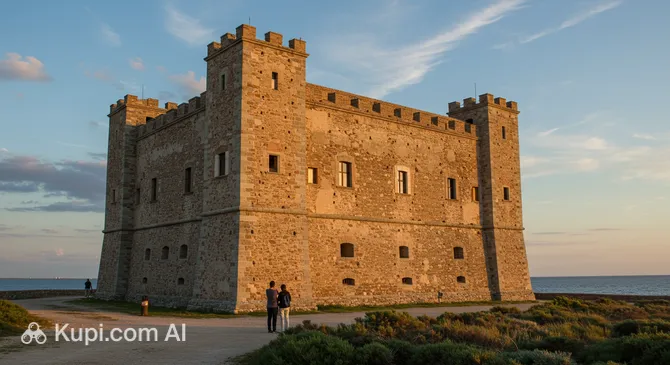
For fans of medieval architecture, the Castle of Julius II in Ostia is of interest. This imposing Renaissance fortress was built to protect the mouth of the Tiber. Today, visitors can explore its powerful bastions and courtyards, learn about its rich history associated with the papacy and coastal defense, and enjoy views of the surrounding area.
Castle of Julius II. Illustration.
Source: Kupi.com AI
Traveler photos:
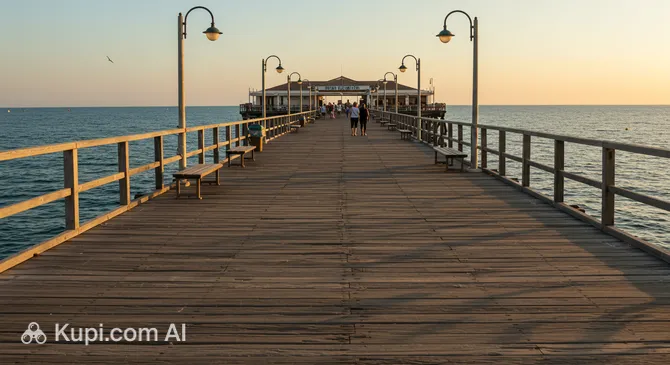
If you want to relax by the sea and enjoy the coastal atmosphere, head to the Ostia Pier. It is a popular spot for walks, offering beautiful views of the Tyrrhenian Sea, especially at sunset. Numerous cafes and restaurants surround the pier, where you can spend a pleasant time watching the life of the seaside town.
Ostia Pier. Illustration.
Source: Kupi.com AI
Traveler photos:
Local Cuisine
The cuisine of Fiumicino is a true feast for seafood lovers. Thanks to its location on the Tyrrhenian coast and the presence of an active fishing port, the city is famous for fish and seafood dishes that reach the table literally straight from the boats. The gastronomic scene here combines the simplicity of traditional recipes with the high quality of local ingredients, offering an authentic taste of Italy with a maritime accent.
Be sure to try spaghetti alle vongole – a classic Italian pasta with tender clams, garlic, olive oil, and parsley. Another iconic dish is fritto misto di mare, an assortment of deep-fried seafood and small fish, crispy and fragrant. Don't miss the chance to enjoy fresh-caught fish, prepared on the grill (pesce alla griglia) or baked in salt, which preserves its natural flavor and juiciness. Many dishes reflect the proximity to Rome, so you can also find variations of the capital's classics with maritime touches.
Local white wines of the Lazio region, such as Frascati or Est! Est!! Est!!! di Montefiascone, perfectly accompany a meal and pair wonderfully with seafood. On a hot day, a glass of cold beer or a light aperitif like an Aperol Spritz will refresh you. For non-alcoholic drinks, you should certainly enjoy a cup of aromatic Italian espresso after a meal or a cappuccino in the morning. Limoncello, a sweet lemon liqueur, is often offered as a digestif.
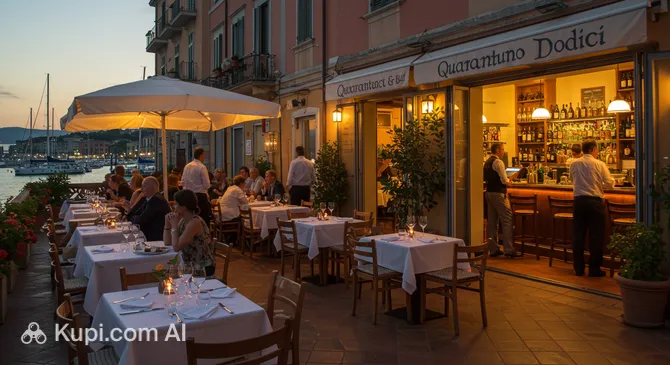
The food culture in Fiumicino is closely tied to the sea and the leisurely pace of coastal life. Locals and tourists prefer dining in trattorias and restaurants located along the promenade and in the old fishing port (Darsena) area. This is where you can find establishments offering the freshest catch of the day. The atmosphere in most places is casual and welcoming. One such place where you can enjoy both exquisite dishes and drinks in a pleasant setting is QuarantunoDodici Restaurant and Bar. Although street food in the traditional sense is not as common here as in major metropolises, many cafes and bars offer delicious snacks and paninis.
QuarantunoDodici Restaurant & Bar. Illustration.
Source: Kupi.com AI
Traveler photos:
Fiumicino's gastronomic scene attracts tourists with its authenticity and emphasis on the freshest seafood. The main highlights are the chance to try fish that was swimming in the sea just that morning and to enjoy simple yet incredibly delicious dishes prepared with love according to traditional recipes. Dining in one of the restaurants by the port with a view of the fishing boats is an unforgettable experience in itself, complemented by the taste of superb food and local wine.
Travel Tips
Planning a trip to Fiumicino? Wonderful! To ensure your journey through this charming coastal city in Italy is as comfortable as possible and leaves only warm memories, we have prepared a few practical tips for you.
Clothing and Essentials: The climate in Fiumicino is Mediterranean. In summer (June-August), pack light, breathable clothing, a hat, sunglasses, and SPF cream. In spring and autumn, a light jacket or sweater will be useful, and in winter (December-February), a warmer jacket, scarf, and possibly an umbrella. Comfortable shoes are an absolute necessity, especially if you plan to walk along the promenade or visit archaeological zones like Ostia Antica. Don't forget a universal adapter for electrical appliances (Italy uses Type C, F, and L sockets). If you plan to visit churches in Rome or other cities, remember to cover your shoulders and knees.
Getting Around the City: Fiumicino is a relatively small city, and its central part, especially along the promenade, is pleasant to explore on foot. For longer trips, such as to the airport or neighboring districts, you can use local buses (COTRAL). Taxis are available, especially at the airport and hotels; you can also use taxi-hailing apps. Renting a car can be useful if you plan to explore the surroundings, but for Fiumicino itself and trips to Rome (with its ZTL limited traffic zones), it is not always practical.
Financial Matters: The official currency of Italy is the Euro (€). You can exchange currency at banks or exchange offices ("cambio"); avoid exchanging at the airport, where the rate is usually less favorable. Credit and debit cards (Visa, Mastercard) are widely accepted in hotels, restaurants, and most shops. However, it is always useful to have some cash with you for small expenses, markets, or small cafes. ATMs (Bancomat) are easy to find. Regarding tips ("mancia"), they are not strictly mandatory as a service charge ("coperto" or "servizio incluso") is often included in the bill. Nevertheless, it is customary to leave a small amount (5-10% or rounding up the bill) for good service.
Health and Safety: Fiumicino is generally a safe city. Follow standard precautions: watch your belongings in crowded places, especially around the airport and on transport. Pharmacies ("farmacia") are marked with a green cross; check the schedule for duty pharmacies if you need medication after hours. For emergency medical assistance, call 112. Tourists from EU countries are advised to have a European Health Insurance Card (EHIC), others should take out travel insurance.
Language and Communication: The official language is Italian. In tourist areas, hotels, and restaurants, many people speak English, but knowing a few basic phrases in Italian (e.g., "Ciao" – hello/goodbye, "Buongiorno" – good day, "Grazie" – thank you, "Prego" – you're welcome/please, "Scusi" – excuse me) will be very warmly received by locals. A mobile SIM card with internet access can be purchased at the airport or at mobile phone shops in the city. Wi-Fi is available in most hotels, cafes, and restaurants.
Local Etiquette and Customs: Italians are friendly and sociable. When entering a shop or cafe, it is customary to say hello ("Buongiorno" in the morning and afternoon, "Buonasera" in the evening). Don't be surprised by the expressiveness of the locals. Show respect for local traditions. During the "riposo" (afternoon break, approximately from 1:00 PM to 4:00-5:00 PM), many small shops may be closed.
Things to Avoid: Try not to be excessively noisy in residential neighborhoods, especially in the evening. Don't expect everyone everywhere to speak English; show patience. Avoid buying goods from street vendors without a license, especially counterfeits of famous brands.
Special Tip for Fiumicino: Be sure to take advantage of the city's unique location! Take a walk along the promenade (Lungomare della Salute) and drop into one of the many fish restaurants in the old port area (Darsena). Ordering a dish of the freshest seafood, caught that same morning, is a true gastronomic pleasure and the best way to feel the spirit of Fiumicino.
We hope these tips help you plan your trip better and enjoy every moment of your stay in sunny Fiumicino. Have a great journey!
Entertainment & Nightlife
While Fiumicino is primarily known as the gateway to Rome, the city transforms as evening falls, offering guests and residents various options for relaxation and entertainment. The nightlife here might not be as boisterous as in major metropolises, but it possesses its own coastal charm and cozy atmosphere, especially during the warm season.
Main centers of evening and night activity are concentrated along the Lungomare della Salute promenade, in the Darsena old fishing port area, and in beach-adjacent zones like Focene. Here you will find many bars, restaurants, and a few clubs where you can enjoy your time after sunset.
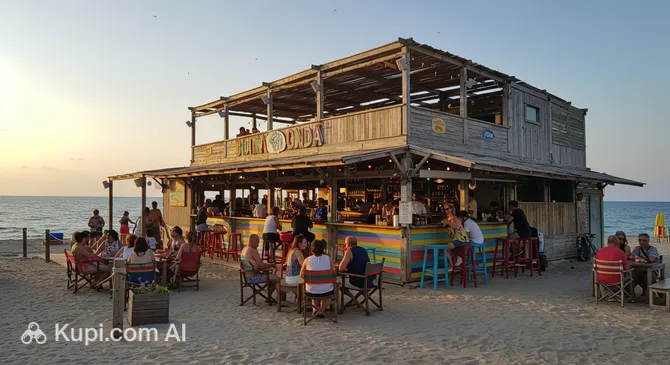
An evening in Fiumicino often begins with a traditional Italian aperitivo. Numerous bars offer cocktails and snacks in a relaxed setting. One such place, particularly popular in summer due to its seaside location, is Buena Onda Focene, where you can enjoy a drink to the sound of the waves. The atmosphere in bars is usually laid-back, with a mixed crowd of locals and tourists. Many establishments stay open late, especially on weekends.
Buena Onda Focene. Illustration.
Source: Kupi.com AI
Traveler photos:
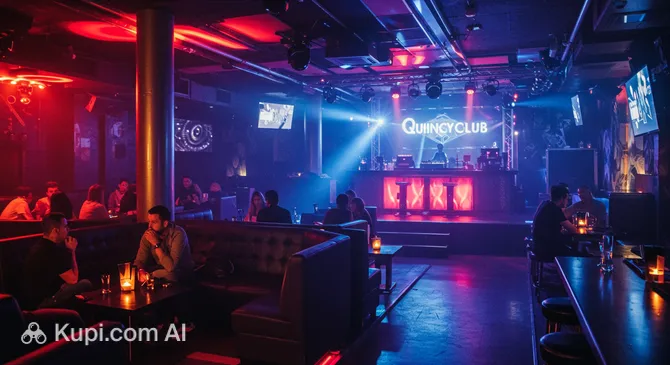
For those seeking more active entertainment and dancing, Fiumicino has several nightclubs. They offer a variety of music, from popular hits to electronic. One well-known establishment is Quincy Club, which attracts a younger crowd and lovers of the club atmosphere. The dress code in most clubs is usually smart casual, and peak activity occurs after midnight. It is wise to check the schedule and opening hours in advance, as they may change depending on the season.
Quincy Club. Illustration.
Source: Kupi.com AI
Traveler photos:
Evening restaurants in Fiumicino are primarily an opportunity to enjoy the freshest seafood in a romantic or simply pleasant setting. Many restaurants, such as Miranda Restaurant, offer dinner until late in the evening, allowing for a slow enjoyment of local cuisine. It is especially pleasant to dine on open terraces overlooking the sea or the port.
The best time to experience Fiumicino's nightlife is Friday and Saturday evenings, when venues are most lively. Aperitivo usually starts around 6:00-7:00 PM, while clubs fill up closer to midnight and operate until 3:00-4:00 AM. Drink prices vary: a cocktail can cost from 8 to 15 euros, and club entry may have a fee or require a minimum drink order. Public transport is rare at night, so taxis or private cars are the primary means of transport.
Fiumicino is generally considered a safe city for night walks, especially in the busy tourist zones along the promenade. Nevertheless, it is always wise to take standard precautions: keep your valuables close and avoid poorly lit or deserted areas. To call a taxi, it is better to use official services or apps to avoid inflated fares.
By day, Fiumicino and its surroundings also offer plenty of interest. In addition to beach relaxation, you can visit historical sites like the ruins of the ancient Theater of Ostia, which is still sometimes used for performances, or explore local museums like the Museum of Color. For shopping enthusiasts, there are shopping centers such as the Da Vinci Shopping Park.
Thus, Fiumicino offers enough options for a pleasant evening and night leisure, combining the relaxed atmosphere of a seaside town with Italian hospitality. It is a great place to end the day after sightseeing or simply to enjoy a holiday by the sea.
Parks & Museums
In addition to its role as an important transport hub, Fiumicino offers guests the chance to relax in nature and touch a rich cultural heritage. The city and its surroundings feature both picturesque green zones and interesting museums and historical sites capable of engaging the curious traveler.
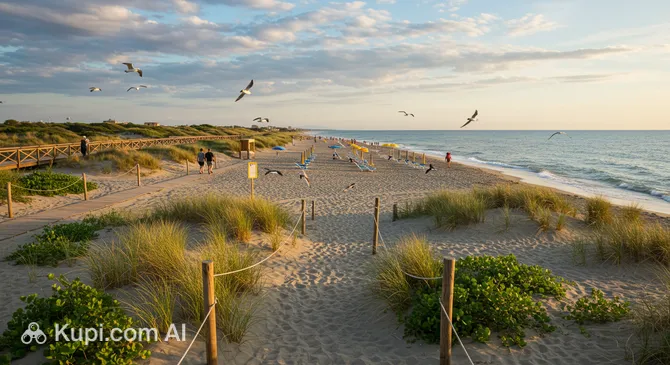
For those seeking unity with nature, the State Natural Reserve of the Roman Coast is an excellent choice. This vast protected territory stretches along the coast and includes unique ecosystems: from sandy dunes and Mediterranean maquis to pine forests and wetlands. The reserve is an ideal place for hiking, bird watching, and getting to know the region's flora and fauna.
Roman Coast State Nature Reserve. Illustration.
Source: Kupi.com AI
Traveler photos:
Another pleasant green area is the Canale dello Stagno Park, offering a quiet place for relaxation and walks by the water. Of course, one cannot forget the numerous beaches of Fiumicino, which are themselves wonderful natural zones for relaxation and enjoying the sea air.
Canal Park of the Stagno. Illustration.
Source: Kupi.com AI
Traveler photos:
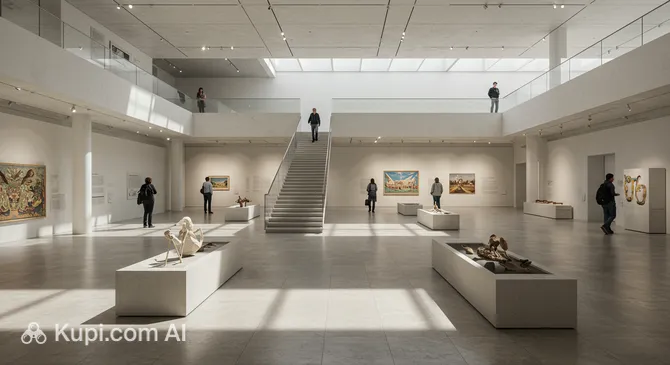
Cultural life in Fiumicino is not limited only to ancient ruins. One interesting modern space is the Museum of Color. This unique place offers visitors an interactive journey into the world of color, its perception, and its influence on our lives, which will be educational for both adults and children. For fans of unusual exhibitions, the LEGO Bricks Exhibition might be interesting, offering a look at famous objects and works of art recreated from the famous building blocks. These sites add modern touches to the city's rich history, demonstrating its versatility.
Color Museum. Illustration.
Source: Kupi.com AI
Traveler photos:
Speaking of cultural heritage, it is impossible not to mention the great monuments of antiquity located in the immediate vicinity, which are essentially open-air museums. This includes, above all, the grandiose Ostia Antica with its ancient streets and buildings, including the impressive Theater of Ostia, where performances are still occasionally held. Also worth noting are the Archaeological Zone of the Ports of Claudius and Trajan and the Necropolis of Porto, which hold the secrets of ancient Roman civilization. From later eras, the Castle of Julius II in Ostia stands out, a medieval fortress with a rich history also deserving of attention.
To feel the atmosphere of Fiumicino more deeply, don't limit yourself only to the famous attractions. Stroll along the canal embankment in the old fishing port area (Darsena), observe the life of local fishermen – this is a cultural experience in itself. Also take note of the small local churches, such as the Parish of Santa Maria Regina Pacis, which can tell about the daily spiritual life of the citizens and are often quiet corners with interesting architecture.
Getting Around
Public transport in Fiumicino is oriented toward both the needs of local residents and the service of the vast flow of tourists arriving via the international airport. The system allows for fairly convenient movement around the city and its surroundings, as well as quick access to Rome.
The primary mode of public transport within Fiumicino and for connections to nearby settlements are buses run by the COTRAL company. They link various districts of the city, the airport, and neighboring towns, including Ostia. Routes and schedules can be found at stops and on the official COTRAL website. Local municipal bus lines serving shorter distances may also operate within the city.
For trips to Rome, the most convenient and fastest option is the railway connection from the Fiumicino Aeroporto station, located directly in the airport. From here, first, the Leonardo Express departs – a high-speed non-stop train to Rome's central station, Termini (Roma Termini), with a travel time of about 32 minutes. Second, FL1 regional trains are available, which go to other important Rome stations such as Trastevere, Ostiense, and Tiburtina, making several stops; this is a more economical but slightly longer option.
Regarding the payment system and tickets, tickets for COTRAL buses and Trenitalia trains (including Leonardo Express and FL1) are purchased separately. COTRAL bus tickets can be bought at tobacco shops (Tabaccheria, marked with a "T"), newsstands (Edicola), some bars, and through the COTRAL app or on board from the driver, usually with a small surcharge and if available. The cost depends on the distance. Train tickets are sold at ticket offices and machines at the Fiumicino Aeroporto railway station, as well as online on the Trenitalia website or through their app. The price for the Leonardo Express is fixed, while for regional trains, it depends on the fare. It is important to remember: any paper ticket, whether for a bus or a train, must be stamped (validated) before boarding or immediately upon entering the vehicle in special yellow or green machines. An unvalidated ticket is considered invalid and can result in a fine. It is worth noting that Rome has its own integrated ticket system (Metrebus), covering the city's metro, buses, and trams, but it does not apply to trains to Fiumicino (except for FL1 sections inside the Rome city limits under special conditions) or COTRAL buses outside Rome.
Here are some practical tips for tourists. Try to buy tickets in advance, especially if you plan to travel during peak hours; tobacco and newsstands are the most common points of sale. Do not forget to validate your ticket – this is very important in Italy! Public transport usually runs from early morning to late evening, and while night routes exist, they are fewer. The Leonardo Express runs approximately every 15-30 minutes throughout the day. It is better to check schedules in advance, especially for COTRAL buses on weekends and holidays. To plan routes, use the official Trenitalia and COTRAL websites or popular map applications.
Among alternative types of transport in Fiumicino, one can highlight taxis, car sharing, car rentals, and bike rentals. Official white taxis with identification marks are available at the airport terminal exits and in the city; fares to Rome and other points are usually fixed from the airport (verify before the trip). Many car rental companies are represented at Fiumicino airport. Car-sharing services may also be available, but their operating zone might be limited. In some coastal areas of Fiumicino and Ostia, you can find bike rental points, which is a great way to explore the promenade.
A feature of the Fiumicino transport system is its close integration with the airport, which serves as the main hub for most routes. Understanding how to get from the airport to the city and further to Rome is the key to a comfortable start to your journey.
Accommodation
In Fiumicino, travelers will find a wide range of accommodation options capable of satisfying various needs and budgets. The selection varies from convenient hotels aimed at airport transit passengers and budget guest houses (B&Bs) to comfortable apartments for those who prefer more independence, and small family-run inns.
Hotels located in the immediate vicinity of Leonardo da Vinci International Airport (FCO) are the most popular. They are an ideal choice for those with early departures, late arrivals, or short layovers. Many of these hotels offer airport shuttle services. For tourists wishing to spend more time in Fiumicino and enjoy its coastal atmosphere, it is worth considering accommodation in the city itself, especially near the promenade or close to the old fishing port (Darsena). Here, you can find cozy B&Bs, small hotels, and apartments offering a more authentic experience.
The price range for housing in Fiumicino is quite diverse: from budget options to mid-range and high-class hotels, particularly regarding the hotels of famous international chains near the airport. To ensure the best selection and prices, it is recommended to book accommodation in advance, especially if your trip falls during the peak tourist season (summer months) or during major events in Rome when the demand for accommodation in the capital's surroundings increases.
You can book accommodation in Fiumicino in several ways. The most common are online booking platforms (e.g., Booking.com, Expedia, Agoda), which offer a large selection of hotels and apartments with reviews and photos. Many hotels also offer the possibility of direct booking through their official websites, which can sometimes be more advantageous or include extra services. For small guest houses and B&Bs, booking by phone or email is also common.
Nearby Cities
For those who wish to explore the surrounding area, Fiumicino serves as an excellent starting point for day trips to several interesting nearby locations:
These nearby destinations provide an insight into the diverse culture and landscapes of the Italy region. Each of these cities offers its unique attractions: from the world-famous monuments of Rome to the charm of smaller coastal or historic towns like Ladispoli or Marino. A trip to any of them will enrich your journey with new experiences.
Shopping & Souvenirs
Fiumicino, while primarily known for its international airport, may not be the main shopping capital of Italy, but it certainly offers tourists good shopping opportunities. Here you can find both essential items and charming souvenirs, as well as make larger purchases in modern shopping centers. Don't forget the Duty Free shops in the airport itself, which are convenient for pre-flight shopping.
The main shopping spots in the city of Fiumicino itself are concentrated along the central streets, such as Via Giorgio Giorgis or Via della Torre Clementina, as well as in the promenade area. Here you will find small local shops, clothing and shoe boutiques, souvenir stalls, and shops offering everyday goods. A stroll through these streets allows you not only to shop but also to feel the atmosphere of a seaside city.
For more substantial shopping, it is worth paying attention to the large shopping complexes located in the surroundings of Fiumicino. One of the most popular is the Da Vinci Shopping Park. This is a large outlet center and retail park where shops of famous Italian and international brands of clothing, shoes, accessories, home goods, and electronics are represented, often with substantial discounts.
Da Vinci Shopping Park. Illustration.
Source: Kupi.com AI
Traveler photos:
Another shopping complex worth noting is the Parco Leonardo Shopping Center, offering a wide range of goods, from clothing and cosmetics to food products and services. Visiting such centers can be a great option for those who want to dedicate a few hours to shopping and find everything they need in one place.
Although Fiumicino is not famous for huge traditional markets like some other Italian cities, you can find local weekly markets (mercato settimanale) here, where fresh fruits, vegetables, cheeses, meat delicacies, as well as clothing, shoes, and home goods are sold at affordable prices. Visiting such a market is a great opportunity to dive into local life and purchase fresh products.
As souvenirs from Fiumicino and the Lazio region, it is worth bringing back gastronomic delicacies: extra virgin olive oil, local wines (e.g., Frascati), handmade pasta, cheeses, Limoncello, or Amaro liqueur. Ceramic products and small art objects related to maritime themes or reminiscent of the proximity to Rome are also popular. In souvenir shops, you can also find standard magnets, postcards, and T-shirts.
Shops in Fiumicino usually work from the morning, around 9:00-10:00 AM until 1:00 PM, followed by a lunch break (siesta) until 4:00-5:00 PM. In the evening, shops are open until 7:30-8:00 PM. Large shopping centers generally operate without a break throughout the day, often even on Sundays. Credit and debit cards (Visa, Mastercard) are universally accepted, however, for small purchases at markets or in small shops, it is better to have some cash euros with you.
Tourists from countries outside the European Union can use the Tax Free system when making purchases in Italy. To do this, you must make a purchase of a certain minimum amount in one store (usually from 154.94 euros, but the amount may change) and ask the seller for a special Tax Free check. When leaving the country, by presenting the checks, purchases, and passport at customs, you can receive a VAT refund. Check the details and availability of such a service directly in the stores.