Support

Exhibition Made of LEGO Bricks

About

Imagine a space where fantasy and engineering genius come to life: the LEGO Bricks Exhibition in the city of Fiumicino is the largest exposition of its kind in Europe. Across an area of more than 1,500 square meters, entire worlds created from millions of plastic bricks—which have captured the hearts of people in many countries, including the wonderful Italy—spring to life.
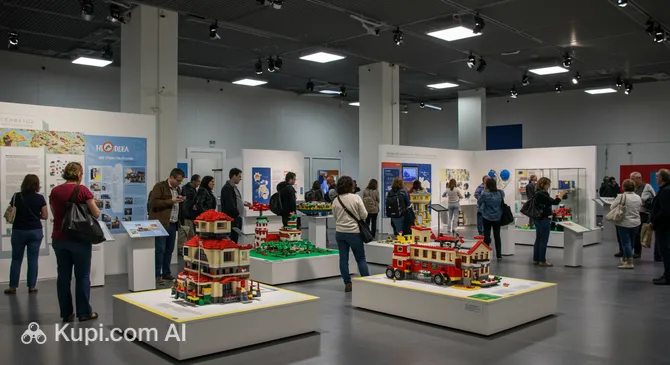
LEGO Brick Exhibition
LEGO Brick Exhibition. Иллюстрация. Источник: Kupi.com AI

The exhibition, titled Made of LEGO Bricks (Mostra Mattoncini), features over 100 detailed dioramas. Here you can see everything from precise replicas of famous architectural monuments to fantastic space stations and bustling metropolises. Each model impresses with its precision and the creative approach of its creators, turning an ordinary construction set into a piece of fine art.

This venue is perfect for family leisure, combining educational elements with the pure joy of play. Although the exhibition may be temporarily closed at the moment, it remains one of the most popular attractions in the region, with a high rating among tourists confirming its uniqueness and scale.

Contacts

To inquire about visiting, booking tickets for large groups, or resolving organizational issues, you can use the official communication channels. Please note that separate contact numbers are provided for group visits.

How to contactContact
AddressViale Donato Bramante, 31/65, 00054 Fiumicino RM, Italy
Phone+39 351 380 7857
Websitemostramattoncini.it

What to Do

The main activity here is carefully studying the details. You can spend hours looking at Lego City or miniature replicas of Roman forums, finding hidden secrets and funny scenes inside the dioramas. Taking photos of the exhibits is not only allowed but highly encouraged: the models are lit to ensure your shots look as impressive as possible.

For young visitors, there are interactive zones where they can express their own imagination and build something unique. The exhibition is divided into themed halls: there are areas dedicated to space, movie history, and wildlife. Pay attention to the educational displays that explain how complex architectural forms are created from simple geometric shapes.

If you are traveling with toddlers, keep in mind a pleasant bonus: entry for children under 95 cm tall is usually free. For those who want the maximum experience, there are VIP wristbands that allow for re-entry during the day. Plan your visit so you have enough time to quietly discuss what you've seen and get inspired for your own LEGO masterpieces at home.

Getting There

Getting to this realm of construction is quite easy, as the venue is located in the city of Fiumicino, in close proximity to the major international airport. If you are heading here from the center of Rome by car or taxi, the trip will take approximately 30–40 minutes depending on traffic.

For those who prefer public transport, a convenient option is the Leonardo Express train to Fiumicino Airport, or regional trains to the station of the same name. From the station or airport terminals, you can use local bus routes or take a taxi to Viale Donato Bramante, 31/65. Parking spaces are available near the exhibition pavilion for visitors traveling by private vehicle.

Ближайший город: Fiumicino

History & Facts

The history of this amazing exposition is inextricably linked to the legacy of the LEGO brand, which originated back in 1932. The company's founder, Dane Ole Kirk Christiansen, started as an ordinary carpenter, but during the economic crisis, he switched to creating high-quality toys. The famous plastic bricks as we know them today appeared later—in 1949—and the fundamental patent for their interlocking system was obtained in 1958.

The exhibition in Fiumicino vividly demonstrates the "System of Play" concept introduced in the 1960s. It was this system that allowed parts from different sets to be combined into single, large-scale worlds. The exposition is part of the extensive European Mostra Mattoncini project, which aims to popularize creativity and engineering thinking through the use of millions of colorful pieces.

Interestingly, such exhibitions are often hosted in significant or historical buildings throughout Italy, turning into traveling cultural centers. The Fiumicino exhibition has incorporated the experience of the largest Roman installations, offering guests a chance to see the evolution of a simple child's pastime into true high art modeling.

Time Needed

To fully appreciate all the details of the massive dioramas and impressive models without rushing, an average visitor will need about 2–3 hours. The exposition is very dense and packed with small elements, so it's worth taking your time—new funny scenes and complex engineering solutions are hidden around every corner.

If you are planning a visit with the whole family, especially with children, it's better to set aside up to 4 hours. Interactive zones and the opportunity to take hundreds of unique photos with your favorite characters or world landmarks can keep little (and big) construction enthusiasts engaged for a long time.

Working Hours

Currently, the exhibition has the status of temporarily closed (CLOSED_TEMPORARILY). During active periods, it is usually open to guests daily, including Saturdays and Sundays, welcoming visitors from 10:00 AM to 5:30 PM, with the last entry 45 minutes before closing.

As operating hours may change depending on the season or special events, we strongly recommend checking the latest information on the official website before planning your trip.

Nearby

A visit to the world of LEGO bricks can be perfectly combined with exploring other interesting places in the vicinity. Fiumicino and neighboring Ostia are rich in both ancient archaeological sites and modern entertainment centers for the whole family.

NameDistance
Color Museum0 km
Da Vinci Shopping Park1.1 km
Castle of Julius II4.3 km
Necropolis of Porto4.3 km
Archaeological Area of the Ports of Claudius and Trajan4.5 km
Ostia Antica4.7 km
Theatre of Ostia4.8 km

Reached the end of the page?

That means the route is fully explored