Support

Castello di Giulio II

About

In a picturesque corner of the city of Fiumicino, near the famous ancient ruins, stands the majestic Castle of Julius II. This architectural monument is a brilliant example of Renaissance fortification art. Built at the end of the 15th century, it served not only as a powerful fortress protecting the approaches to Rome but also as an important customs post on the Tiber River.
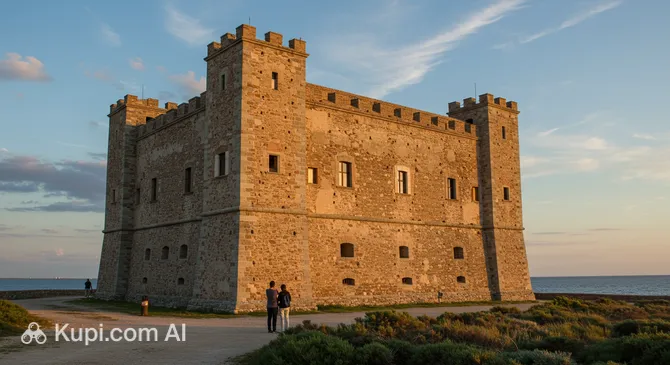
Castle of Julius II
Castle of Julius II. Иллюстрация. Источник: Kupi.com AI

Located in sunny Italy, this unique landmark is also known as Rocca di Ostia. The castle was built according to the design of architect Baccio Pontelli and named after Cardinal Giuliano della Rovere, the future Pope Julius II. The complex impresses with its sophisticated defense system, featuring massive walls, a deep moat, and three strategic towers, one of which literally absorbed an older structure from the time of Pope Martin V.

Today, the castle is an integral part of the cultural landscape of Borgo di Ostia Antica—a medieval settlement that has preserved its authentic spirit. Inside the citadel, visitors can see not only the austere military casemates but also exquisite interiors: a monumental staircase decorated with frescoes from the school of Baldassarre Peruzzi, depicting the Labors of Hercules. This is a place where the rugged power of military architecture meets the refinement of the Italian Renaissance.

Contacts

To get the latest information about special events or group visits, you can contact the castle administration directly. Below are the main contact details.

How to contactContact
AddressPiazza della Rocca, 13, 00119 Ostia Antica RM, Italy
Phone+39 06 5635 8013
Websitewww.ostiaantica.beniculturali.it

What to Do

A visit to the fortress offers guests a unique chance to walk through every level of a Renaissance fortification. You can explore the deep casemates designed for defensive fire and stroll along the massive walls. Be sure to climb the castle towers: they offer a breathtaking panorama of the medieval settlement, the archaeological excavations, and the winding surroundings; on particularly clear days, you can even spot the dome of St. Peter's Basilica in Rome.

Inside the building itself, the papal apartments are well worth your attention. The main treasure of the interior is the grand staircase, whose walls are adorned with frescoes depicting the Labors of Hercules—a rare example of secular art within a military structure. For a deeper dive into history, plan your visit for a Thursday or Sunday: on these days (usually from 11:00 AM to 12:00 PM), interesting tours led by volunteer guides are held here.

The best way to round off your visit is with a stroll through the Borgo di Ostia Antica itself. This is a tiny residential quarter with narrow streets and 15th-century terraced houses that are still inhabited today. Here, you can take magnificent photos against the backdrop of the Basilica of Santa Aurea and experience the atmosphere of "history coming to life," far from the noisy tourist thoroughfares.

Getting There

Getting to this historic site from Rome is quick and easy. The most popular way is to take the Roma-Lido train (departing from Roma Ostiense or Piramide stations) and get off at the Ostia Antica stop. The journey takes about 30–40 minutes, followed by a short 5-minute walk following the signs to the Borgo.

If you prefer to drive, head out of central Rome via Via del Mare (SS 296) or the ring road (GRA) to the Ostia Antica exit. The distance is approximately 30 km, and the trip takes between 30 and 50 minutes depending on traffic. Free parking is available near the entrance to the archaeological park.

For travelers arriving from Fiumicino Airport, the most convenient option is a taxi—the ride to the fortress takes about 15–20 minutes. There are also regular bus routes between the airport and the Ostia district, making the castle accessible even for those on a short layover.

Ближайший город: Fiumicino

History & Facts

The history of this site dates back to the 9th century, when Pope Gregory IV established the fortified settlement of Gregoriopolis to protect residents from raids. Later, in the 15th century, Pope Martin V recognized the location's strategic importance and built a massive circular tower, which eventually became the core of the future castle. Major construction began in 1483 at the initiative of Cardinal Giuliano della Rovere, who would later ascend the papal throne as Julius II.

The castle was designed not only as a luxurious residence but also as a powerful military installation. It served as a papal customs office, where taxes were collected from merchant ships traveling up the Tiber toward Rome. However, a catastrophic flood in 1557 literally changed the course of history—the Tiber River bed shifted, stripping the fortress of its primary strategic and economic significance. Over time, the surrounding lands became marshy, and the area began to decline.

In the 19th century, the building's fate took a dramatic turn when the majestic fortress was converted into a prison for convicts. Their labor was used during the first large-scale archaeological excavations of neighboring Ostia Antica under the orders of Popes Pius VII and Pius IX. It was only in the 20th century, after several stages of painstaking restoration, that the monument regained its current appearance, finally opening its doors to tourists as a museum in 2003.

Time Needed

To leisurely explore the Castle of Julius II and stroll through the charming streets of the surrounding Borgo, you will need about 1–2 hours. This is plenty of time to climb the towers, explore the casemates, and admire the frescoes in the papal apartments.

However, most tourists prefer to combine a visit to the castle with an exploration of the vast Ostia Antica archaeological park. In this case, it’s worth setting aside at least half a day (about 4–5 hours) to fully immerse yourself in the atmosphere of the ancient Roman city without feeling rushed when touring the fortress itself.

Working Hours

The castle is open to the public daily, making it easy to fit into your travel itinerary. The opening hours are consistent throughout the week:

  • Monday — Sunday: 10:30 AM – 7:30 PM

Please note that during the low season, hours may vary slightly, and special themed tours are typically held on Thursdays and Sundays in the morning. It is recommended to arrive at least an hour before closing to have enough time to explore all levels of the fortress.

10:30 – 19:30

Nearby

A visit to the castle is just one part of a grand journey into the past. Nearby, you'll find ancient ruins and interesting spots for family leisure that will make your trip even more diverse and fulfilling.

NameDistance
Ostia Antica0.7 km
Theatre of Ostia0.9 km
Necropolis of Porto3.3 km
Parish of Saint Mary Queen of Peace3.5 km
Canal Park of the Stagno3.6 km
Mit Bistrot3.8 km
QuarantunoDodici Restaurant & Bar3.9 km

Reached the end of the page?

That means the route is fully explored