Support

Baluardo San Martino

About

Imagine a massive defensive structure that has transformed over centuries into a cozy green oasis. Bastion San Martino is one of the key elements of the famous city walls that Lucca is so proud of. Built in the 17th century, these fortifications are considered one of the most remarkable and well-preserved examples of Renaissance fortification in all of Europe.

Today, this historical site in Italy has lost its military purpose, becoming part of a grand pedestrian promenade over four kilometers long. Bastion San Martino stands out for its power: once home to artillery crews and gunpowder magazines, it is now an ideal observation deck offering breathtaking views of the red-tiled roofs, church domes, and majestic towers of the city.
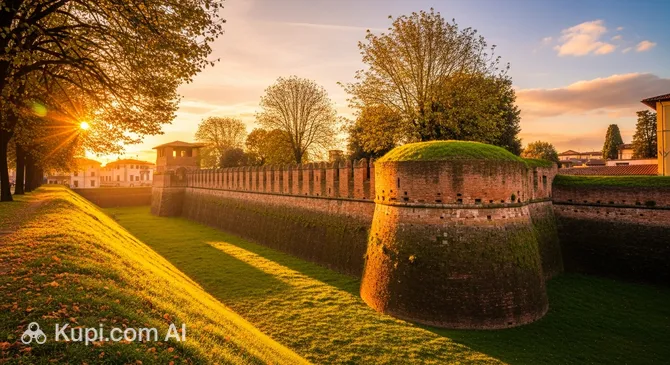
San Martino Bastion
San Martino Bastion. Иллюстрация. Источник: Kupi.com AI

What makes this place special is its amazing atmosphere. Unlike many other ancient monuments, the bastion "lives" alongside the city: locals stroll here, ancient trees grow, and the wide platforms where cannons once stood now serve as relaxation areas. It is a true open-air museum, allowing you to touch the military engineering of the past without losing touch with the serene present of Tuscany.

Contacts

For those planning a visit to this historic site, the following current address information will be useful:

How to contactContact
AddressViale delle Mura Urbane, 55100 Lucca LU, Италия

What to Do

The main pleasure of visiting this place is undoubtedly leisurely walks or bike rides. The width of the walls in the bastion area reaches an impressive 30 meters, turning them into a full-fledged elevated park. You can rent a bike at one of the many rental points near the city gates and ride around the entire perimeter of the fortifications, enjoying the fresh air and views of the Tuscan hills.

For photography enthusiasts, Bastion San Martino is a real find. It offers magnificent angles of the San Martino Cathedral (Duomo) and historical towers. The place looks especially magical at sunset when the soft light paints the old brick in golden tones. If you are traveling with family, you can head down to the base of the walls to feed the ducks in the preserved moat or have a small picnic right on the grass of the bastion.

During the summer season, the bastion often becomes a hub of cultural life. Open-air concerts, festivals, or art exhibitions may take place here. Don't forget to check out the preserved interior spaces of the fort—sometimes access is open to the ancient casemates and passages, which allow for a better understanding of how the city's defenses were organized hundreds of years ago.

Getting There

Finding your way to this attraction is easy, as it is located on the famous circular promenade, Viale delle Mura Urbane. If you are already walking in the city center, simply head west from Piazza San Martino along Via Fillungo towards the Porta Santa Maria gate—the walk will take no more than 10 minutes. Those who prefer public transport can use the LAM Rosso or Blu bus lines, which stop at Piazzale Verdi, just a 5-minute walk from the bastion.

Travelers from other cities can conveniently arrive by train. From Pisa, the journey takes about 20–30 minutes, and from Florence, one to one and a half hours. From Lucca railway station, you can reach the walls on foot in 20 minutes or by taking city bus No. 1. For drivers, parking is available near the fortress walls, for example, at Piazzale del Curtatone, though remember that traffic is limited within the historic walls.

One of the most authentic ways to get to Bastion San Martino is by bicycle. Rental shops are located near almost every city gate, including San Donato and Santa Maria. Rental costs about 5–10 euros per hour, allowing you to comfortably reach your destination and continue your ride around the entire perimeter of the fortifications.

Ближайший город: Lucca

History & Facts

The history of this place is inextricably linked to the grand construction of the city walls, which took place between 1544 and 1648. The fortifications, including Bastion San Martino, were designed by prominent architects from the Rossi dynasty. This was the third generation of city walls: the ancient Roman and harsh medieval structures were replaced by powerful Renaissance defenses capable of withstanding the fire of the latest artillery of the time.

The bastion was named after Saint Martin of Tours, who is considered the patron saint of the city. Surprisingly, these massive walls—up to 12 meters high and 30 meters wide—never saw actual combat. It is thanks to the absence of sieges that Lucca has preserved its fortifications in their original form, while in many other Italian cities, old walls were demolished to widen the streets.

In the 19th century, the site's military significance finally faded into the past. At the initiative of Queen Margherita of Savoy in 1888, trees began to be planted on top of the bastions and curtain walls. Thanks to this decision, the stern military structure was transformed into an elegant public park, which is today recognized as a UNESCO World Heritage site as part of the city's unique historic center.

Time Needed

For a thoughtful tour of the bastion itself and the adjacent section of the walls, 45 minutes to 1 hour is usually sufficient. This time is enough to study the architectural details of the fortification, take beautiful panoramic photos, and relax a bit in the shade of centuries-old plane trees.

If you plan to walk the full circle around the city walls, allow at least 1.5–2 hours on foot. Cycling enthusiasts can complete this route much faster—in about 30–40 minutes, including short stops at the most interesting viewpoints.

Working Hours

One of the main advantages of visiting this site is its accessibility. Bastion San Martino and the entire promenade area of Lucca's city walls are open 24/7. You can come here at dawn for a jog or late in the evening to admire the city lights.

Since the walls are a public park, access to them is free and open at any time. However, to check for information about possible temporary exhibitions or events inside the bastion's premises, it is recommended to consult the city's official tourism portal.

Круглосуточно

Nearby

Thanks to the compactness of the historic center, a visit to the bastion is easily combined with other iconic sites. A walk from the fortress walls into the heart of the city will reveal cozy squares and majestic towers that preserve the spirit of old Tuscany.

NameDistance
Church of San Francesco0.4 km
Piazza dell'Anfiteatro0.5 km
Royal College of Lucca0.5 km
Sottosotto0.5 km
L'Angolo Tondo0.5 km
Guinigi Tower0.6 km
Torre delle Ore0.7 km

Reached the end of the page?

That means the route is fully explored