Support

Duomo di San Martino

About

It is impossible to fully immerse yourself in the atmosphere of medieval Italy without visiting a site as monumental as Lucca Cathedral. Officially known as the Cathedral of Saint Martin (Cattedrale di San Martino), this majestic temple is the spiritual heart of Lucca and an outstanding example of Tuscan architecture.
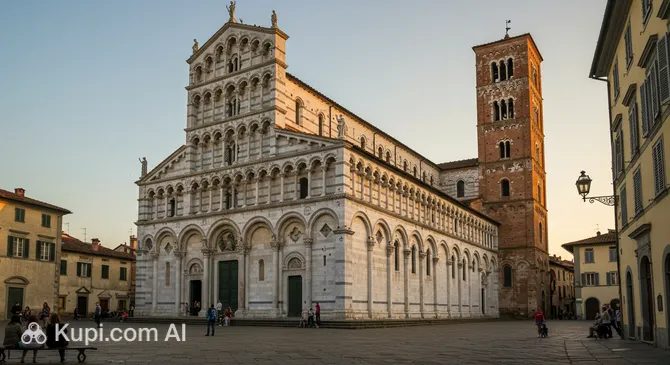
Lucca Cathedral
Lucca Cathedral. Иллюстрация. Источник: Kupi.com AI

Located in Italy, this primary Catholic church serves as the seat of the Archbishop and is considered one of the most significant religious buildings in the region. The cathedral is harmoniously integrated into the ensemble of Piazza San Martino, standing alongside the ancient church of Santi Giovanni e Reparata to create a unique historical landscape.

The main feature of the cathedral is its unique artistic wealth. It is not just a place of worship, but a true treasure house, home to works by great Renaissance masters and rare historical relics. The cathedral's facade, with its delicate arches and exquisite carvings, catches the eye of every passerby, promising an unforgettable encounter with the art of the past.

Contacts

For more information about visiting, special events, or access to the historical archives, you can use the cathedral's official contact details.

How to contactContact
AddressPiazza Antelminelli, 55100 Lucca LU, Italy
Phone+39 0583 490530
Websitewww.museocattedralelucca.it

What to Do

Start your visit by admiring the cathedral's exterior. Note the Romanesque facade: its deliberate asymmetry arose because the construction had to accommodate the pre-existing tall bell tower. In the portico, be sure to find the sculpture group "Saint Martin Dividing His Cloak with a Beggar"—it is a copy of a 1233 work, the original of which is carefully preserved inside.

Inside the cathedral, you will encounter world-class masterpieces. Here you can see works by such geniuses as Tintoretto, Domenico Ghirlandaio, and Fra Bartolomeo. One of the most mysterious artifacts is the representation of a labyrinth on one of the pillars—an ancient symbol referring to the myth of Daedalus and Theseus, which still captures the imagination of researchers today.

For those who appreciate deep history, access is open to the cathedral archives, which house priceless documents and relics telling the story of city life over many centuries. A walk beneath the high vaults of the nave allows you to fully feel the grandeur of medieval faith and the talent of the great masters of the past.

Getting There

This magnificent temple is located in the heart of the historic center on Piazza San Martino. Thanks to its central location, the cathedral is in a pedestrian zone and is very easy to reach while strolling through the city's picturesque streets.

If you are arriving from other regions, it is most convenient to take a train or bus from Florence or Pisa. The walk from Lucca's railway station to the cathedral takes only 10–15 minutes at a leisurely pace. Taxi services are also available and can take you to the edge of the pedestrian zone.

Travelers arriving by car should remember that entry into the old town is restricted by the ZTL (Zona a Traffico Limitato). It is recommended to leave your car in one of the city parking lots outside the fortress walls and continue on foot, following the many signs to the center.

Ближайший город: Lucca

History & Facts

The history of this site dates back to antiquity: the first church was established here as early as the 6th century. However, the majestic appearance we see today began to take shape in 1063 under the initiative of Bishop Anselm da Baggio, who went down in history as Pope Alexander II.

The cathedral was consecrated in 1070, but it continued to evolve over the centuries. In the 13th century, the building underwent a large-scale reconstruction, which saw the addition of the famous bell tower with Lombard features and the very same unusual asymmetrical facade that has become the temple's trademark.

Master Guido Bigarelli from Como, who began work on the facade in 1204, adorned it with a deep portico featuring three grand arches. The cathedral's interior was also transformed: in the 14th and 15th centuries, it was reconstructed in the Gothic style, adding solemnity and light to the space.

Today, St. Martin's Cathedral is recognized as one of the most important monuments of medieval and Renaissance architecture in Tuscany, preserving the spirit of many eras of Italian history within its walls.

Time Needed

To leisurely admire the architectural details of the facade and explore the interior of the cathedral, most tourists need about 1–1.5 hours. This is enough time to see the main masterpieces and soak in the atmosphere of the place.

If you plan to visit the cathedral archives or study the collection of artworks in the adjacent museum in detail, we recommend allowing at least 2 hours for your visit. This will allow you to immerse yourself in the history and artistic heritage of the temple without rushing.

Working Hours

The doors of Lucca Cathedral are open to visitors throughout the week. Please note that the Sunday schedule differs from weekdays due to religious services.

Opening Hours:
• Monday – Saturday: 9:30 AM – 6:00 PM
• Sunday: 12:00 PM – 6:00 PM

Note: Opening hours may change slightly depending on religious holidays and special events, so it is worth checking the official website before your visit.

DayWorking hours
Понедельник9:30 – 18:00
Вторник9:30 – 18:00
Среда9:30 – 18:00
Четверг9:30 – 18:00
Пятница9:30 – 18:00
Суббота9:30 – 18:00
Воскресенье12:00 – 18:00

Nearby

A stroll around the cathedral is a great opportunity to see other iconic spots in the city. Lucca's historic center is compact, so many points of interest are just a few minutes' walk away.

Exploring the surrounding area will allow you to better feel the medieval atmosphere, climb ancient towers, or visit cozy squares that were once centers of ancient life.

NameDistance
Guinigi Tower0.3 km
Torre delle Ore0.3 km
Piazza Napoleone0.3 km
Porta San Pietro0.3 km
Ducal Palace of Lucca0.3 km
Puccini Museum0.4 km
Walls of Lucca0.4 km

Reached the end of the page?

That means the route is fully explored