Support

Baluardo Santa Croce

About

Rising above the historic quarters, the Santa Croce Bastion is an essential part of the grand defensive system for which Lucca is renowned. It is one of eleven bastions forming a continuous ring of Renaissance walls, recognized as among the best-preserved in Europe. Looking at its mighty white limestone walls and characteristic brickwork, one can clearly see how military architecture in Italy evolved over the centuries.
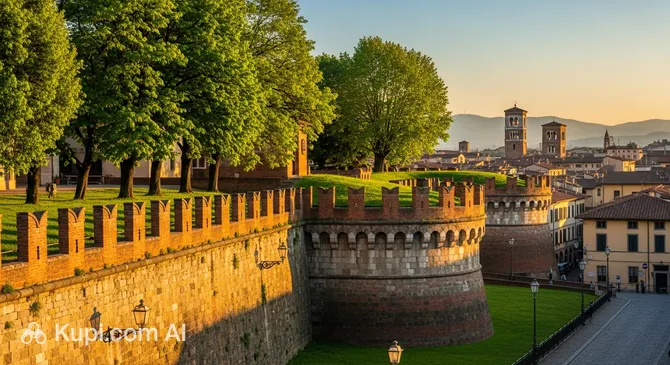
Santa Croce Bastion
Santa Croce Bastion. Иллюстрация. Источник: Kupi.com AI

Today, it is not just a fortification but a unique historical monument and a popular place for walks. The bastion combines the rugged power of a military site with the elegance of Renaissance landscape design. It serves as a link between the city's past and present, offering guests a chance to immerse themselves in the atmosphere of old Tuscany.

Visitors are drawn here by the opportunity to see the complex system of two-tier casemates and underground passages that once served to house artillery and store ammunition. This site is a must-visit for anyone who values historical authenticity and wants to see the "city of a hundred towers" from the height of its ancient fortifications.

Contacts

For detailed information on current events and guided tours, it is recommended to contact the city municipality or visit the official tourist information center.

How to contactContact
AddressViale delle Mura Urbane, 55100 Lucca LU, Италия

What to Do

The main pleasure here is a stroll along the wide panoramic promenade laid out directly on top of the walls. The path is lined with century-old field maples, providing pleasant shade even on a hot afternoon. From here, breathtaking views open up over the tiled rooftops and the picturesque Tuscan hills on the horizon.

Be sure to head down into the atmospheric underground galleries of the bastion. These cool, vaulted halls often host the "Ri-conoscere le Mura" exhibition, where archival documents and multimedia technologies tell the secrets of the city's fortification construction. It is a great opportunity to see the inner workings of the fortress: soldiers' barracks and artillery depots.

For active lifestyle enthusiasts, this is an ideal spot for a bike ride. You can rent a bicycle at one of the many rental points below and ride around the entire ring of walls, stopping at ancient gates and other bastions. If you prefer a more relaxed break, the numerous benches on the wall are a perfect spot for a small picnic with a view of the city.

Getting There

Finding this historical site is easy, as it is located on Viale delle Mura Urbane, which encircles the entire old city. Access to the defensive structures is available through any of the six city gates. The closest to the site is Porta San Donato, which also houses a tourist information point with maps and helpful materials.

If you are arriving in the city by train, the walls are about a 15–20 minute walk from the railway station, or you can take a local taxi. Within the historic center itself, car traffic is restricted, so a walking tour or renting a bicycle are the most convenient ways to get around.

Ближайший город: Lucca

History & Facts

The history of this site began in the 16th century, when the Santa Croce Bastion was constructed on the foundation of an old medieval tower. Its expansion was a response to the rapid development of artillery, which required more powerful and modern fortifications. It was named in honor of the Holy Cross (Santa Croce) — the city's deeply revered Volto Santo relic, housed in the cathedral.

Interestingly, despite their impressive strength, the city walls and the bastion itself were never used in actual combat. In 1799, Austrian troops removed over a hundred large-caliber cannons from here, effectively disarming the fortress, which by then had already begun to lose its military significance.

A new life for the fortifications began in the 19th century under the patronage of Maria Luisa of Bourbon. By her decree, the military site was transformed into a public space for recreation. Architect Lorenzo Nottolini designed elegant alleys here, planting thousands of trees and turning the austere casemates into the shaded park we see today.

Time Needed

To leisurely explore the bastion itself and take a look into its underground galleries, visitors usually need about 1–2 hours. This is enough time to enjoy the panoramas and examine the architectural details of the brickwork.

However, if you plan to complete the entire route along the famous city walls (which are 4.2 kilometers long), it is worth setting aside 2 to 3 hours. Such a walk will allow you to fully experience the atmosphere of the ancient city and take plenty of great photographs.

Working Hours

The Santa Croce Bastion itself and the promenade area on the city walls are open to visitors 24 hours a day, daily. You can come here early in the morning for a jog or late in the evening to admire the city lights.

Please note that the museum displays and the exhibition in the underground galleries have their own operating hours, which may change depending on the season. It is recommended to check the current schedule on Lucca's official tourism portal before your visit.

Круглосуточно

Nearby

The bastion's location makes it easy to combine a visit here with other iconic city landmarks. A walk along the fortress wall turns into an exciting journey, where every turn reveals a new view of medieval towers and cozy squares.

NameDistance
National Museum of Palazzo Mansi0.3 km
Franklin 33 Bar0.4 km
Royal College of Lucca0.5 km
Puccini Museum0.5 km
Domus Romana of Lucca0.5 km
Church of San Michele in Foro0.5 km
Torre delle Ore0.6 km

Reached the end of the page?

That means the route is fully explored