Support

Palazzo Ducale di Lucca

About

The Ducal Palace of Lucca (Palazzo Ducale) is a majestic architectural complex located in the heart of Lucca. Occupying an impressive area on the site of an ancient medieval fortress, the building serves as a vivid example of how austere defensive architecture evolved into an exquisite specimen of Renaissance and Neoclassical style.
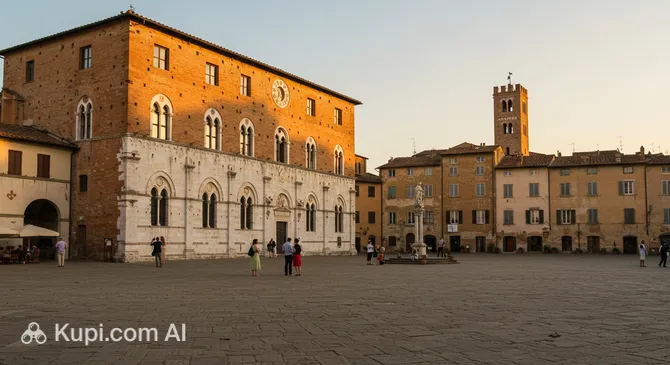
Ducal Palace of Lucca
Ducal Palace of Lucca. Иллюстрация. Источник: Kupi.com AI

This palace in Italy is famous for its harmonious facades and luxurious interiors, crafted over time by prominent masters such as Bartolomeo Ammannati and Lorenzo Nottolini. Inside, visitors will find grand state rooms adorned with frescoes, marble sculptures from the famous Carrara quarries, and unique porticos framing the inner courtyards.

Today, the palace is more than just a historical monument; it is a living center of culture and power. Its walls house the provincial administration, scientific academies, and the National Gallery of Lucca, which holds a valuable collection of Flemish paintings. This is a must-visit destination for those who want to experience the aristocratic spirit of Tuscany and witness the evolution of Italian art over the centuries.

Contacts

To clarify current information regarding events and potential changes to the schedule, you can contact the administration using the details provided below.

How to contactContact
AddressCortile Carrara, 1, 55100 Lucca LU, Италия
Phone+39 0583 4171
Websitewww.palazzoducale.lucca.it

What to Do

A visit to Palazzo Ducale offers guests a rich cultural experience. A highlight is often the ascent up the monumental staircase by Lorenzo Nottolini, which leads to a suite of grand state rooms. It is worth spending time in the Throne Room, which captivates the imagination with its gilding and Neoclassical decor, as well as the Hall of the Great Council, where the walls are decorated with magnificent frescoes and Flemish canvases.

The more intimate rooms are equally fascinating, such as the Servants' Hall with its exquisite stucco work or the Ammannati Loggia, whose walls are painted with whimsical grotesques. Art lovers should certainly stop by the National Gallery, where the collection allows one to trace the development of painting and sculpture in the region.

The palace's inner courtyards lend it a special charm. Walking through Cortile Carrara with its elegant arcades or Cortile degli Svizzeri, you can appreciate the grand scale of the architects' vision and find quiet corners for striking photographs. The palace regularly serves as a venue for temporary art exhibitions and formal events, making every visit a unique experience.

Getting There

The Ducal Palace of Lucca is located in the very heart of the historical center at Cortile Carrara, 1. Thanks to the compact nature of the old town, it is easily reachable on foot from almost anywhere within the city walls. For example, a walk from the Piazza dell'Anfiteatro or the famous city walls will take no more than 5–10 minutes.

If you are arriving from other regions of Italy, the train is the most convenient option. The nearest airport is in Pisa (about 25 km away), from where regular trains run to the Lucca station (the journey takes 20–30 minutes). From Florence, the train ride takes about an hour and a half. From Lucca railway station, you can reach the palace on foot in 10 minutes or by taxi in 5 minutes.

For those traveling by car, it is important to remember that the center of Lucca is a restricted traffic zone (ZTL). It is recommended to leave your car in one of the parking lots near the city walls, such as Piazza Santa Maria, and enjoy a short walk to the palace complex. Bicycle rentals are also popular in the city, offering a fantastic way to navigate the picturesque streets.

Ближайший город: Lucca

History & Facts

The history of this site began long before the current architectural ensemble was built. In the 14th century, the Augusta Fortress stood here—a formidable stronghold of the condottiero Castruccio Castracani. Legend has it that the great Giotto himself may have been involved in the design of this fortification. However, in 1370, angry citizens destroyed the fortress, seeing it as a symbol of tyranny.

Later, during the rule of the Guinigi family, a new residence was constructed on the site, which became the Palazzo Pubblico after the fall of Paolo Guinigi in 1429. The true architectural transformation began during the Renaissance, when architect Bartolomeo Ammannati started a large-scale reconstruction in 1578, creating elegant courtyards and a monumental staircase.

A special chapter in the palace's history was written by Elisa Bonaparte Baciocchi, Napoleon's sister, who became the ruler of Lucca in 1805. It was at her initiative that the interiors acquired their sophisticated Neoclassical look, reflecting the imperial ambitions of the time. Later, under the Bourbons of Parma, the luxurious Throne Room and other ceremonial halls preserved today were added.

After the unification of Italy in 1861, the building became the property of the Province of Lucca. Today, Palazzo Ducale continues to play a vital role in the city's life, serving as both an administrative center and a rich cultural space open to researchers and art enthusiasts.

Time Needed

To explore the Ducal Palace of Lucca at a leisurely pace, the average tourist will need about 1.5–2 hours. This is sufficient time to appreciate the architectural details and soak in the atmosphere of the historic residence.

About 45 minutes should be allocated to visiting the state rooms and the National Gallery, and another half hour for a walk through the courtyards (Cortile Carrara and Cortile degli Svizzeri) and the monumental Ammannati staircase. If you plan to study the temporary exhibitions in detail or take many photographs in the Neoclassical interiors, your visit may take a little longer.

Working Hours

The Ducal Palace of Lucca is typically open to visitors daily from 10:30 AM to 7:00 PM. This schedule makes it easy to plan a visit in either the morning or afternoon without worrying about siesta breaks.

However, as the building houses administrative offices and hosts official functions, access to certain rooms may vary. It is recommended to check the current schedule on the palace's official website before your visit.

10:30–19:00

Nearby

Exploring the surroundings of Palazzo Ducale allows you to dive deeper into the medieval and Renaissance atmosphere that permeates every street of this wonderful city. Just a few steps from the palace, you will find majestic towers and charming squares.

Below is a list of the most interesting sites located within walking distance that are worth including in your Lucca itinerary:

NameDistance
Piazza Napoleone0.1 km
Puccini Museum0.2 km
Church of San Michele in Foro0.2 km
Torre delle Ore0.3 km
National Museum of Palazzo Mansi0.3 km
Lucca Cathedral0.3 km
Porta San Pietro0.3 km

Reached the end of the page?

That means the route is fully explored