Support

Reggio Emilia Cathedral

About

The majestic Cathedral occupies a central place in the architectural landscape of the ancient city of Reggio Emilia. Located on the picturesque Piazza Camillo Prampolini, this temple is not just the main religious center, but a true monument of art. The building was constructed on the foundations of an ancient Roman structure, highlighting the deep historical value of this site in the very heart of Italy.
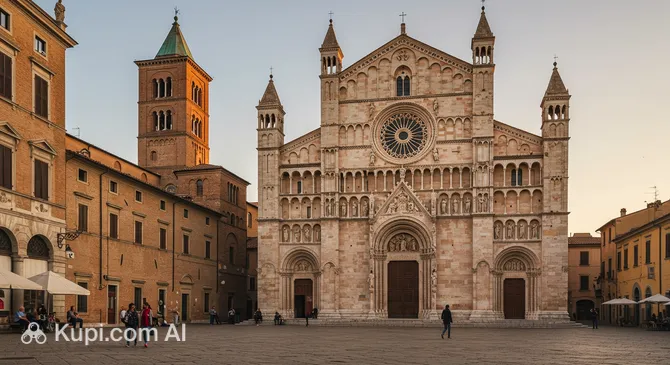
Reggio Emilia Cathedral
Reggio Emilia Cathedral. Иллюстрация. Источник: Kupi.com AI

The cathedral is an outstanding example of Romanesque architecture with Renaissance elements. The facade is adorned with sculptures by famous masters, while the interior houses significant Baroque and Renaissance artworks. This blend of styles from different eras makes the cathedral one of the most important cultural landmarks in the Emilia-Romagna region.

One of the structure's most recognizable features is the elegant octagonal lantern crowning the roof. It is topped with a gilded bronze statue of the Madonna and Child, dating back to 1522. Shining in the sun, this symbol of the city is visible from afar, inviting tourists to touch the region's centuries-old history.

Contacts

For more information about visiting the Reggio Emilia Cathedral, you can use the official contact details. The temple is located in the very heart of the city, making it easily accessible for most travelers.

How to contactContact
AddressPiazza Camillo Prampolini, 42121 Reggio nell'Emilia RE, Италия
Phone+39 0522 17579

What to Do

Inside the cathedral, visitors can discover unique architectural and artistic elements. Special attention should be paid to the main portal, topped by statues of Adam and Eve by master Prospero Sogari. The interior also features the tomb of Orazio Malaguzzi, decorated by the same prominent sculptor, and large-scale fresco cycles that create a special atmosphere of solemnity.

Be sure to descend into the 12th–13th century crypt. This impressive space is supported by forty-two columns with 15th-century capitals, preserving the spirit of the early Middle Ages. The building itself is designed in the shape of a Latin cross with three naves and a massive dome over the crossing, allowing visitors to fully appreciate the scale and harmony of the church's architecture.

In addition to exploring the main hall, guests are encouraged to visit the adjacent Bishop's Palace. Its complex houses the 11th-century Baptistery of St. John the Baptist, which is an important addition to the square's architectural ensemble and allows for a deeper acquaintance with the region's religious heritage.

Getting There

The cathedral holds a place of honor on Piazza Camillo Prampolini, which serves as the geographic and administrative center of the city. The easiest way to get here is on foot if you are already in the historic district. A walk through the narrow streets of Reggio Emilia is an aesthetic pleasure in itself and allows you to see the City Hall and the Bordello Tower located nearby.

For those arriving from more distant neighborhoods or the railway station, public transport is a convenient option. City bus routes heading to the center will drop you off just a few minutes' walk from the square. Alternatively, you can always take a taxi, which will bring you as close as possible to the edge of the pedestrian zone.

Ближайший город: Reggio Emilia

History & Facts

The history of the city's main church began in 875. The original Romanesque building was erected over the ruins of an ancient Roman structure, emphasizing the continuity of cultures in this land. Over the centuries, the cathedral's appearance changed, reflecting shifting architectural tastes and the ambitions of local rulers.

A significant turning point in the church's annals was the year 1228, when the original bell tower collapsed. Decades later, in 1268, the characteristic octagonal lantern was built in its place, becoming a recognizable element of the city skyline. At the end of the 15th century, the cathedral underwent a major renovation, during which its Romanesque austerity was complemented by elegant Renaissance features.

The building's facade also has its own unique history. Its second tier dates back to 1275 and was once decorated with vibrant frescoes. Today, these authentic fragments of medieval painting are carefully preserved in the Diocesan Museum. In 1544, master Prospero Sogari began creating a new look for the facade; however, this ambitious project was never fully completed, leaving an eclectic blend of styles for future generations.

The interior decoration seen by modern visitors finally took shape in the 16th–17th centuries. Most of the artworks adorning the interior were created by talented masters of the Bolognese school, whose works are renowned for their emotionality and technical perfection.

Time Needed

To leisurely explore the architectural details, visit the crypt, and appreciate the craftsmanship of Italian painters, most travelers will need about 1–2 hours. This is the optimal amount of time to immerse yourself in the atmosphere of the site without rushing.

If you plan to study the facade sculptures in detail or visit the adjacent Bishop's Palace, you should set aside a bit more time. The cathedral is located in a pedestrian zone, so its visit can be conveniently combined with lunch at one of the neighboring cafes or a stroll through the central squares.

Working Hours

The doors of the Cathedral are open to worshippers and tourists daily. From Monday to Saturday, you can visit the church from 07:30 to 19:30. On Sundays, the schedule is slightly different: the cathedral is open in the morning from 09:00 to 13:00 and in the evening from 15:00 to 19:30.

Please note that during church services, tourist sightseeing of the internal chapels and artworks may be limited. For the most up-to-date information on potential schedule changes, it is recommended to check the diocese's official website before your visit.

DayWorking hours
понедельник07:30–19:30
вторник07:30–19:30
среда07:30–19:30
четверг07:30–19:30
пятница07:30–19:30
суббота07:30–19:30
воскресенье09:00–13:00, 15:00–19:30

Nearby

Exploring the surroundings of the cathedral can significantly enrich your trip to the region. Piazza Prampolini is the heart of the city, surrounded by buildings that have played a key role in its public life for centuries. Within a few minutes' walk, you will find unique historic halls, ancient monastic courtyards, and cozy squares.

NameDistance
Camillo Prampolini Square0 km
Museum of the Tricolour0.1 km
Taberu Fusion Experience0.1 km
Reggio Emilia Historic Center0.2 km
Terme del Colesterolo0.2 km
Antonio Fontanesi Square0.3 km
Piazza dei Martiri del 7 Luglio 1960 (formerly Piazza della Vittoria)0.3 km

Reached the end of the page?

That means the route is fully explored