Support

Palazzo Magnani - sede espositiva

About

In the heart of the historic center of Reggio Emilia lies Palazzo Magnani—a magnificent example of neoclassical architecture and a major cultural landmark that Italy takes pride in. This majestic palace, spanning approximately 3,000 square meters, impresses with its elegant facade and rich interiors, reflecting the evolution of artistic styles over the centuries.
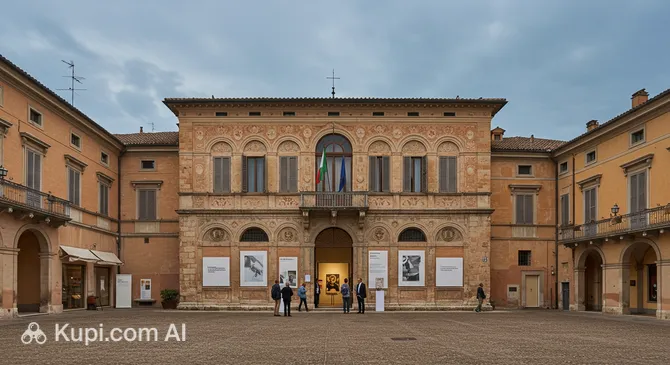
Palazzo Magnani Exhibition Venue
Palazzo Magnani Exhibition Venue. Иллюстрация. Источник: Kupi.com AI

The building is notable for its scale and unique details. One of its most recognizable features is the corner marble herm of the two-faced Janus, created in 1576 by sculptor Prospero Sogari. Inside, visitors are greeted by a luxurious late 19th-century grand staircase and rooms decorated with exquisite stucco and frescoes, including a dining room ceiling depicting the god Bacchus.

Today, Palazzo Magnani is more than just a historical monument; it is a dynamic exhibition hall. It serves as the headquarters for the foundation of the same name, which organizes large-scale exhibitions of modern and classical art, turning these ancient walls into a space for cultural dialogue and creative inspiration.

Contacts

To find out more about current exhibitions or to plan your visit, you can use the following contact details:

How to contactContact
AddressCorso Giuseppe Garibaldi, 29, 42121 Reggio Emilia RE, Italy
Phone+39 0522 454437
Websitewww.palazzomagnani.it

What to Do

Visiting Palazzo Magnani is, above all, an opportunity to experience fine art within the interiors of an ancient palace. The main draw for tourists is the temporary exhibitions, which rotate regularly and cover a wide range—from classical painting to avant-garde installations. As you wander through the grand rooms of the main floor, be sure to look up to admire the ancient frescoes and intricate stucco work that preserve the spirit of an aristocratic past.

Architecture enthusiasts will enjoy exploring the inner courtyards and former stables, now harmoniously integrated into the museum space. Pay special attention to the details: the Cioffi family coat of arms in the vestibule and the masterfully crafted bas-reliefs on the facade. Don't forget to stop by the famous sculpture of the two-faced Janus on the corner of the building—it is one of the city's most photographed spots.

A visit to the exhibition hall can be paired with attending lectures or creative meetups often hosted by the Foundation. The surrounding atmosphere of Corso Garibaldi, with its stately buildings and proximity to the Basilica of Madonna della Ghiara, makes the palace a perfect part of a cultural itinerary through Reggio Emilia.

Getting There

Palazzo Magnani is located in the heart of the historic center on one of its most elegant streets—Corso Giuseppe Garibaldi, 29. If you are already exploring the city, the palace is just a 5–10 minute leisurely walk from the main square, Piazza Prampolini, or the famous Basilica of Madonna della Ghiara.

For those arriving by train, the Reggio Emilia Centrale main station is approximately 1.5 km from the attraction. This distance can be covered on foot in 20 minutes, or you can take a city bus (SETA lines) or a taxi in just 5 minutes. If you are coming from nearby Bologna or Parma, regional trains will bring you to the city in about an hour.

Travelers arriving by car should note that the building is within a limited traffic zone (ZTL). It is best to look for parking in nearby paid lots, such as Parking Duomo or Muralto, both of which are about a 10-minute walk from the palace. Alternatively, you can use the city's bike-sharing service.

Ближайший город: Reggio Emilia

History & Facts

The history of this grand building dates back to the second half of the 16th century when the Counts Becchi decided to build their urban residence on the strategically important Via della Ghiara. The first documented mentions of the palace date to 1608. The original layout around the central courtyard and the famous marble Janus from 1576, which adorns the corner of the building, have survived from that era.

In the 18th century, the Cioffi family became the owners. Under their stewardship, the palace acquired its refined features: in 1841, the facade and vestibule were reconstructed in the then-fashionable neoclassical style. Even today, the family coat of arms and the initials of Giuseppe Cioffi can be seen on the wrought-iron gates and in the interior halls, highlighting the continuity of eras.

A new chapter in the palace's history began in 1917 when it was purchased by Giuseppe Magnani. His son, Luigi Magnani, was an eminent collector and musicologist who transformed the house into a true temple of art. After his death in 1984, the building became the property of the Province of Reggio Emilia. A major restoration led by Ivan Sacchetti was completed in 1997, turning the historical monument into a modern exhibition center.

Time Needed

To fully appreciate the architecture of Palazzo Magnani and carefully explore the exhibits, visitors typically need 1.5 to 2.5 hours. This is usually enough time to leisurely tour the state rooms, admire the frescoes, and peek into the inner courtyards.

If you plan to view a temporary exhibition with an audio guide or participate in a cultural event, consider setting aside a bit more time. Remember that the palace's inspiring atmosphere invites long contemplation of details, so don't rush—allow yourself to enjoy the moment.

Working Hours

Currently, Palazzo Magnani may be temporarily closed to the public or operating on a special schedule during the preparation of new exhibitions. Typically, the exhibition hall is open from Tuesday to Sunday, 10:00 AM to 7:00 PM; however, these hours may vary depending on the specific exhibition.

Before your visit, we highly recommend checking the Foundation's official website for the latest schedule and ticket prices, as the cultural center's operations are directly linked to the current exhibition program.

Nearby

Exploring the area around Palazzo Magnani will allow you to immerse yourself deeper in the atmosphere of old Italy and discover many architectural treasures. A walking tour of central Reggio Emilia is the best way to see how history intertwines with modernity.

Below is a list of interesting sites located within walking distance:

NameDistance
Museum of the Tricolour0.2 km
Basilica of the Blessed Virgin of Ghiara0.2 km
Camillo Prampolini Square0.3 km
Taberu Fusion Experience0.3 km
Reggio Emilia Cathedral0.3 km
Reggio Emilia Historic Center0.4 km
Antonio Fontanesi Square0.4 km

Reached the end of the page?

That means the route is fully explored