Support

Temple of the Blessed Virgin of Ghiara

About

The Basilica of Our Lady of Ghiara (Basilica della Madonna della Ghiara) is a magnificent monument of early Baroque architecture and one of the most revered churches in the Emilia-Romagna region. Located in the picturesque city of Reggio Emilia, it is more than just a religious building; it is a true symbol of the city, founded on the site of a miraculous healing. The name "Ghiara" (gravel) recalls the time when a riverbed ran nearby, leaving behind stony deposits.
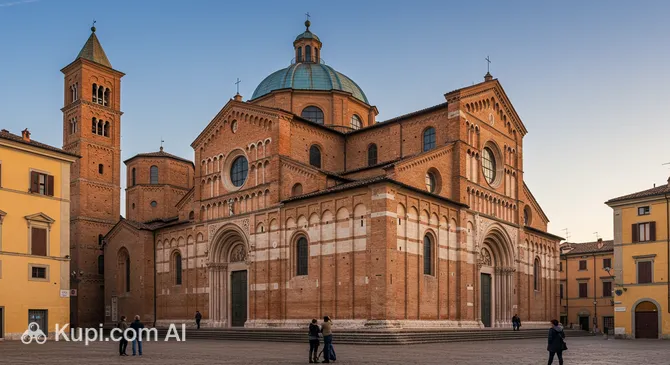
Basilica of the Blessed Virgin of Ghiara
Basilica of the Blessed Virgin of Ghiara. Иллюстрация. Источник: Kupi.com AI

The church's layout is a classic Greek cross, topped by a majestic dome. Inside, visitors are met with a dazzling interior: the walls and vaults are adorned with rich gilding, exquisite stucco work, and large-scale cycles of 17th-century frescoes. The basilica's main treasure is the miraculous icon of the Madonna and Child, which has attracted pilgrims from all over Italy for centuries.

Beyond its spiritual significance, the basilica is recognized as an outstanding open-air museum. It houses masterpieces by prominent artists such as Sigismondo Tiarini and Luca Ferrari. The combination of its austere exterior architecture and opulent interior decoration makes this a must-visit for all lovers of art and history.

Contacts

For information regarding special events, religious services, or visiting the museum, you can contact the church administration. As the church is an active religious center, visitors are encouraged to maintain silence and show respect to worshippers during their visit.

Below are the main contact details for communication and navigation:

How to contactContact
AddressCorso Giuseppe Garibaldi, 44, 42121 Reggio Emilia RE, Italy
Phone+39 0522 439707
Websitewww.basilicaghiara.it

What to Do

The main reason to step beneath the basilica's vaults is the chance to see the stunning 17th-century frescoes. Be sure to look up to admire the dome paintings by Sigismondo Tiarini, and appreciate the craftsmanship of Luca Ferrari in the decoration of the entrance spans. The interior impresses with its wealth of detail, from the elegant stuccos by Francesco Pacchioni to the ceremonial gilding, which looks particularly striking under evening lighting.

In the north wing of the church lies the heart of the pilgrimage—the miraculous icon of the Madonna della Ghiara. You can join the faithful in quiet prayer or simply observe the atmosphere of reverence that prevails at the altar. History buffs should head up to the Sanctuary Museum, which displays an impressive collection of "ex-voto" (offerings given in gratitude for miracles) and a precious crown presented by the city in the 17th century.

After exploring the church, it is pleasant to stroll along the elegant Corso Garibaldi, where the basilica is located. On feast days, you might catch solemn processions that recreate ancient traditions, while at other times, you can enjoy the quiet rhythm of the city, which feels especially cozy in the shadow of the sanctuary's majestic dome.

Getting There

Reaching this architectural masterpiece is easy, as the church is located in the heart of the historic center at Corso Giuseppe Garibaldi, 44. If you are already in the city center, a walk from the main squares, such as Piazza Prampolini, takes only a few minutes. The basilica's dome serves as an excellent landmark that can be seen from afar.

For those arriving at the Reggio Emilia Centrale railway station, the distance is about 1.5 km. You can cover this distance on foot in about 20 minutes or use public transport—bus lines No. 1, 4, and 5 will take you to the Garibaldi stop. You can also take a taxi from the station or any point in the center, which is a quick and comfortable trip, usually taking no more than 5–10 minutes.

Travelers from nearby Bologna or Parma can easily reach the city by train (travel time is between 10 and 30 minutes). If you prefer to drive, follow the A1/E45 motorway, looking for parking lots near the center, such as the one at Piazza del Popolo. For cyclists, the city offers a network of convenient paths leading straight to the church.

Ближайший город: Reggio Emilia

History & Facts

The history of the sanctuary began in 1313 when monks of the Servite Order arrived in the city. However, the true rise of this site is linked to the miraculous image of the Madonna and Child. In 1573, a local artist named Giovanni de' Bianchi restored a fresco on an outdoor wall, adding the Latin inscription "Quem genuit adoravit" ("She worshipped Him whom she bore"). It was before this very image in April 1596 that an event occurred that changed the city's destiny: a 17-year-old deaf-mute youth named Marchino miraculously regained his speech and hearing.

News of the miracle spread instantly throughout the region, and the flow of pilgrims became so great that the construction of a grand temple became necessary. Official recognition of the cult by Pope Clement VIII accelerated the process, and in 1597, the first stone was laid. The project was led by architect Alessandro Balbi from Ferrara, while Francesco Pacchioni was responsible for the magnificent dome. Construction continued for several decades, interrupted only once—by the plague epidemic in 1630.

The consecration of the basilica in 1619 was a major event for all of Italy: the transfer of the icon was accompanied by a lavish procession with triumphal chariots. In the following years, the interior continued to be decorated by the best masters of the era, turning the church into a true treasury of Baroque art. Today, the basilica remains not only an architectural monument but also a living testament to the faith and history of Emilia.

Time Needed

To leisurely explore the church interiors, admire the dome, and spend some time by the altar with the miraculous icon, most visitors need about 45–60 minutes. If you also plan to visit the Sanctuary Museum, which houses unique relics and pilgrims' gifts, you should set aside at least 1.5–2 hours for your visit.

A visit to the basilica can be seamlessly integrated into a walking tour of the city center. An additional 30–40 minutes will allow you to enjoy the atmosphere of the adjacent Corso Garibaldi, browse local shops, or relax in one of the nearby cafes while discussing the artistic treasures you've seen.

Working Hours

The basilica welcomes visitors daily, though there is a break during the day. From Monday to Saturday, the church doors are open from 07:15 AM to 12:00 PM and from 4:30 PM to 7:15 PM. This time is ideal for both a morning tour and an evening visit in the light of the setting sun.

On Sunday, the schedule is slightly expanded for the convenience of parishioners and tourists: the basilica is open in the morning from 07:15 AM to 12:30 PM, and evening hours are extended until 9:15 PM. Please note that sightseeing may be limited during Mass, so plan your visit in advance to avoid disturbing the services.

DayWorking hours
Понедельник7:15 – 12:00, 4:30 – 19:15
Вторник7:15 – 12:00, 4:30 – 19:15
Среда7:15 – 12:00, 4:30 – 19:15
Четверг7:15 – 12:00, 4:30 – 19:15
Пятница7:15 – 12:00, 4:30 – 19:15
Суббота7:15 – 12:00, 4:30 – 19:15
Воскресенье7:15 – 12:30, 4:30 – 21:15

Nearby

The basilica's location in the historic core of the city allows tourists to easily combine a spiritual visit with a tour of other iconic sites. A stroll through the surrounding streets will reveal the charm of ancient architecture and cozy squares, where life flows at a traditional Italian pace.

In the immediate vicinity of the church are important cultural and administrative sites that help visitors better understand the history of the region:

NameDistance
Palazzo Magnani Exhibition Venue0.2 km
Camillo Prampolini Square0.3 km
Piazza dei Martiri del 7 Luglio 1960 (formerly Piazza della Vittoria)0.4 km
Museum of the Tricolour0.4 km
Reggio Emilia Cathedral0.4 km
Reggio Emilia Historic Center0.5 km
Terme del Colesterolo0.5 km

Reached the end of the page?

That means the route is fully explored