Support

Real Collegio di Lucca

About

The Real Collegio di Lucca is a majestic architectural complex located in the heart of the ancient city of Lucca in beautiful Italy. This site represents a unique blend of the region's religious and educational history, having evolved from an ancient monastery into a prestigious educational institution.
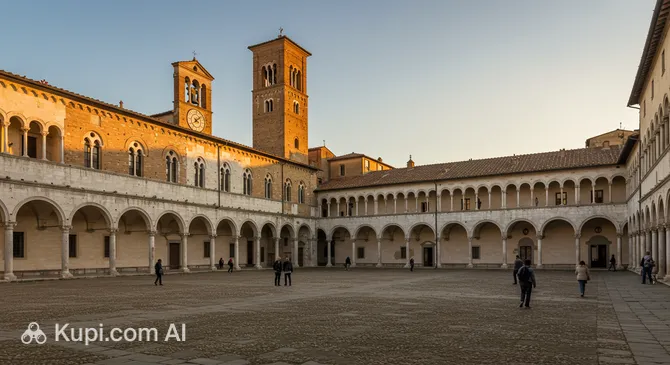
Royal College of Lucca
Royal College of Lucca. Иллюстрация. Источник: Kupi.com AI

The building is one of Tuscany's most prominent historical landmarks, with roots dating back to the 16th century. Throughout various eras, it has housed a public library, a theological school, and the University of Lucca, making the complex a true symbol of enlightenment and culture.

Today, the Real Collegio di Lucca serves as a prestigious venue for exhibitions, festivals, and conferences. Despite its modern use, the atmosphere of past centuries is carefully preserved within its walls, attracting history buffs and lovers of exquisite architecture from around the world.

Contacts

To check availability for visits or to book halls, you can use the official communication channels. Below are the current contact details for planning your visit. For more detailed information about current exhibitions or tour schedules, it is recommended to visit the official website.

How to contactContact
AddressPiazza del Collegio, 13, 55100 Lucca LU, Italy
Phone+39 0583 494543
Websitewww.realcollegiolucca.it

What to Do

A visit to the complex allows you to touch the intellectual heritage of Tuscany while exploring the exquisite interiors that once hosted students and scholars. Here, you can see traces of the ancient theological school and admire the harmonious blend of monastic architecture and the structured lines of an educational institution.

The building frequently hosts temporary art exhibitions, festivals, and concerts, so it is worth checking the current event calendar before your visit. The inner halls and courtyards have preserved the spirit of the time, making them a wonderful backdrop for atmospheric photos.

You can also stroll through the adjacent Piazza del Collegio and admire the monumental facade, which recalls the days when prominent poets and scientists studied here. A visit to the Real Collegio is easily combined with a walk along the historic walls and a visit to the neighboring basilicas.

Getting There

The complex is located in the historic part of the city of Lucca, making it easily accessible for walking. From the Porta Santa Maria or Porta San Donato gates, the walk through the charming cobbled streets takes no more than 10–15 minutes.

If you are arriving by train, the Lucca Centrale station is located approximately one and a half kilometers away. You can reach the college on foot in about 20 minutes or take a taxi to reach your destination faster. Direct trains run regularly from nearby cities such as Pisa and Florence.

For those traveling by car, it is best to leave your vehicle at the Parcheggio Carducci parking lot outside the city walls, as traffic within the center is strictly limited. From the parking lot, you can take a small city bus or enjoy a leisurely walk toward the center, using the famous towers as your guide.

Ближайший город: Lucca

History & Facts

The history of this site in Lucca dates back to the distant past—the first buildings on the site of the modern complex appeared as early as the 6th century next to the Basilica of San Frediano. In the 16th century, the monastery became an important intellectual center in Italy, where progressive theological ideas were developed and a famous school operated.

The building gained particular significance during the Napoleonic era when, in 1805, Prince Felice Bacciocchi, husband of Napoleon's sister Elisa Bonaparte, reorganized it into a secular educational institution called the Collegio Felice. A subsequent restoration in 1818 finally established its status as the Real Collegio (Royal College), housing a university, a library, and a boarding gymnasium.

Over the centuries, the college walls have seen many prominent figures in science, literature, and politics. Despite the changing eras and the educational reforms of the 20th century, the building has maintained its role as a "moral institution," remaining an important link in the city's cultural chain and safeguarding the traditions of enlightenment.

Time Needed

To get to know the architecture and atmosphere of this historic site in Lucca usually takes between 1 and 2 hours. This is ample time to explore the accessible interior spaces, appreciate the facades, and take beautiful photos in the ancient courtyards.

If you plan to attend a specific cultural event, exhibition, or conference held in the college halls, your stay may be longer depending on the event's program. For a simple visit as part of a stroll through the city center, one hour will be quite sufficient.

Working Hours

When planning your visit to this iconic landmark in Lucca, please note that access to the interior is usually limited to a short period in the morning. It is recommended to arrive at the opening to ensure you have time to explore the accessible rooms before the break.

Standard operating hours: Monday to Saturday from 10:00 AM to 12:00 PM. The complex is closed to the public on Sundays; however, during special exhibitions or festivals, hours may be extended in accordance with the event schedule.

DayWorking hours
Понедельник10:00 – 12:00
Вторник10:00 – 12:00
Среда10:00 – 12:00
Четверг10:00 – 12:00
Пятница10:00 – 12:00
Суббота10:00 – 12:00
ВоскресеньеЗакрыто

Nearby

Exploring the area around the college will allow you to immerse yourself deeper in the city's unique atmosphere and see many other historical monuments. Nearby squares, towers, and parks will harmoniously complement your visit to the northern part of the old town.

Below are the sites located within walking distance:

NameDistance
Piazza dell'Anfiteatro0.2 km
Franklin 33 Bar0.2 km
Domus Romana of Lucca0.2 km
Sottosotto0.2 km
L'Angolo Tondo0.2 km
Torre delle Ore0.3 km
Guinigi Tower0.4 km

Reached the end of the page?

That means the route is fully explored