Support

National Archaeological Museum of Umbria

About

Housed within the majestic walls of the former Dominican monastery of San Domenico, this museum is the primary guardian of the ancient heritage of the Umbria region. In the city of Perugia, it is considered a must-visit for anyone wishing to understand the origins of Italian civilization. Here, in one of the city's largest architectural complexes, priceless evidence of human life from prehistoric times to the fall of the Roman Empire has been gathered.
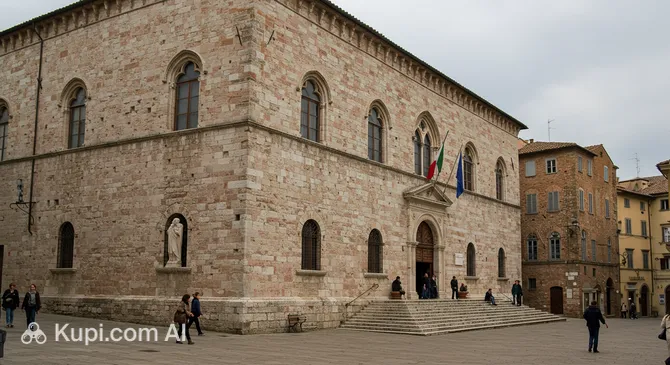
National Archaeological Museum of Umbria
National Archaeological Museum of Umbria. Иллюстрация. Источник: Kupi.com AI

The pride of the collection is the extensive assembly of Etruscan artifacts found in local necropolises. In the museum halls, you can find unique sarcophagi, elegant ceramics, and the famous Cippo di Perugia—one of the longest and most significant inscriptions in the Etruscan language to have survived to this day. The museum is divided into logical sections, allowing guests to take a chronological journey through time.

When traveling through this part of Italy, it is impossible to miss the lapidary located in the loggias of the cloister. Here, among ancient columns, marble slabs and urns are displayed, creating a unique atmosphere of contact with eternity. The view of the church's tall bell tower from the monastery courtyard completes the experience of visiting this cultural center.

Contacts

To inquire about special exhibitions or group tours, you can use the official communication channels. The museum is open to visitors and provides detailed information on its web resource.

How to contactContact
AddressPiazza Giordano Bruno, 10, 06121 Perugia PG, Italy
Phone+39 075 572 7141
Websitewww.musei.umbria.beniculturali.it

What to Do

A visit to the museum is an opportunity to see the world through the eyes of the ancient Etruscans and Romans. It is worth starting your tour on the ground floor, where prehistoric relics are presented, including Paleolithic tools and Bronze Age finds. Pay special attention to the Etruscan urns: their decoration is often based on Greek mythology, allowing you to trace the cultural connections between ancient peoples.

In the basement, a truly captivating sight awaits you—the reconstructed Cai-Cutu tomb, dating back to the 3rd–1st centuries BC. Here you can see original funerary objects exactly as they were discovered by archaeologists. Also, don't miss the famous Sperandio sarcophagus, made of travertine, and archaic bronze works, including elements of ancient chariots.

Be sure to walk through the loggias of the monastery cloister, which house the lapidary. It features an impressive collection of stelae, mosaics, and slabs with Latin inscriptions. Fans of unusual exhibits will enjoy the Bellucci collection of amulets and the ethnographic finds of Orazio Antinori, which reveal the mystical side of the daily lives of ancient Umbrians.

Getting There

The museum is located at Piazza Giordano Bruno, 10, in the southern part of the historic center. You can reach it on foot from the central Piazza IV Novembre or the Fontana Maggiore in just 10–15 minutes, walking along the picturesque Corso Cavour.

If you prefer public transport, use the buses going to the Piazza Italia or Piazza Partigiani stops. From either, it's about a 5–10 minute walk to the museum entrance. For those arriving by train, the walk from Perugia Fontana station takes about 15–20 minutes, or a few minutes by local bus.

Drivers should look for parking at Piazza Partigiani or Via dei Priori, as many parts of the historic center are closed to private vehicles. From Perugia "San Francesco d'Assisi" Airport, located 15 km away, it is most convenient to take a taxi (a 20–30 minute trip) or a dedicated shuttle to the railway station.

Ближайший город: Perugia

History & Facts

The history of the museum's collection dates back to 1790, when the Perugian patrician Francesco Filippo Friggeri donated his private collection of antiquities to the city. Throughout the 19th and 20th centuries, the museum's holdings grew steadily through the painstaking work of researchers and archaeologists, and in 1921, the collection was enriched with unique prehistoric finds from Professor Giuseppe Bellucci.

The building housing the exhibition is a landmark in its own right. It is the monumental San Domenico complex, founded by Dominicans in the 13th century. Over the centuries, the monastery walls have witnessed much history: during the Napoleonic era, it housed military services, and later the premises were used as barracks. It was only after 1945 that the complex was returned to the city for cultural purposes.

The museum officially opened in its current status in 1948, becoming the primary repository for the Etruscan-Roman heritage of the region. The exhibition was designed to clearly demonstrate the evolution of life in Umbria—from the first Stone Age settlements to the height of the Roman Empire, highlighting Perugia's special role as one of the twelve cities of the Etruscan confederation.

Time Needed

To leisurely explore the exhibitions across all three floors, enjoy the architecture of the cloister, and visit the lapidary, a typical visitor will need about 2–3 hours. The museum's collections are quite extensive, and rushing through the halls might prevent you from fully appreciating the fine craftsmanship of ancient jewelers or the complexity of Etruscan inscriptions.

If you are a true archaeology or ancient history enthusiast, we recommend setting aside up to 4 hours for your visit. This will allow enough time to study the Bellucci collection of amulets in detail, read the descriptions in the numismatic section, and thoughtfully examine the reconstructed funerary complexes, which are considered some of the best in the country.

Working Hours

When planning your visit to the National Archaeological Museum of Umbria, please take note of its opening hours. The museum welcomes visitors from Tuesday to Sunday, providing ample time to explore the exhibition throughout the day.

Opening Hours:
Monday: Closed;
Tuesday — Sunday: 8:30 AM – 7:30 PM.

DayWorking hours
ПонедельникЗакрыто
Вторник8:30 – 19:30
Среда8:30 – 19:30
Четверг8:30 – 19:30
Пятница8:30 – 19:30
Суббота8:30 – 19:30
Воскресенье8:30 – 19:30

Nearby

Exploring the surroundings of the National Archaeological Museum will help you complete your picture of the region's historical heritage. The museum is located in an area with a high concentration of architectural monuments, many of which are within walking distance.

A stroll through the old streets of Perugia after touring the exhibition is an excellent way to process what you've seen and soak in the atmosphere of the medieval city.

NameDistance
San Domenico Convent0 km
Palazzo della Penna Civic Museum0.2 km
Rocca Paolina0.3 km
Trattoria Oberdan Perugia0.3 km
Carducci Gardens0.3 km
Piazza IV Novembre0.6 km
Fontana Maggiore0.6 km

Reached the end of the page?

That means the route is fully explored