Support

Porta Sole

About

Imagine a majestic structure that for centuries served as the guardian of one of the most beautiful cities in the Umbria region. Porta Sole (or the Sun Gate) is an outstanding monument of medieval architecture located in the city of Perugia. As part of a massive fortress wall, these gates once protected the residents and symbolized the city's impregnability.
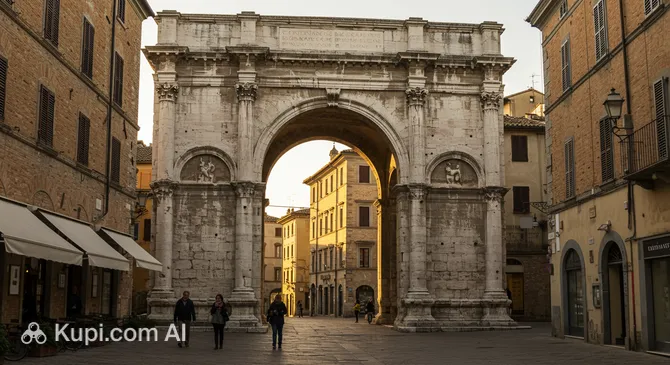
Porta Sole
Porta Sole. Иллюстрация. Источник: Kupi.com AI

This landmark represents an important fragment of the second city wall, which reached a total length of nine kilometers during its heyday. Unlike the more ancient Etruscan structures for which Italy is famous, these gates embody the spirit of the Middle Ages, when the city was expanding its borders and strengthening its defenses. Today, this site is deservedly popular among travelers who appreciate its unique historical character.

Located on Piazza Gio. Battista Rossi Scotti, Porta Sole serves not only as an architectural object but also as a magnificent observation deck. From here, breathtaking panoramic views open up over the city's rooftops and the picturesque surrounding hills, making the gate a must-visit for photography enthusiasts and lovers of beautiful landscapes.

Contacts

No prior booking or tickets are required to visit the historic gate, as it is part of the public city space. However, it may be helpful for tourists to know the exact address of the site for navigation.

How to contactContact
AddressPiazza Gio. Battista Rossi Scotti, 10, 06122 Perugia PG, Italy

What to Do

The main reason to visit Porta Sole is the opportunity to literally touch history. A walk along the ancient walls allows you to feel the scale of the medieval fortifications and enjoy a peaceful atmosphere away from the busiest part of the center. Visitors can study the architectural features of the gate in detail and see how the old masonry is integrated into the modern urban landscape.

Be sure to linger at the viewpoint. This spot offers one of the best views of the Borgo Sant'Angelo district and the valley. Photographers will find endless inspiration here, especially during the "golden hour," when the setting sun paints the ancient stone in warm hues. It is an ideal place to pause and simply watch the unhurried life of the local community.

A visit to the gate fits easily into a larger walking itinerary. You can start your walk from Porta Sole and head toward the famous Rocca Paolina fortress, exploring hidden courtyards and narrow stairs of Perugia along the way. In summer, it is especially pleasant to hide in the shade of the stone vaults and enjoy the coolness provided by the ancient walls.

Getting There

Finding Porta Sole is quite easy, as the landmark is located in the very heart of the historical center. If you are already walking through the main squares, the walk from the famous Piazza IV Novembre will take only about 10–20 minutes. This is a great way to discover the cozy streets and authentic atmosphere of the city.

For those arriving at the main station (Stazione Centrale), it is most convenient to use public transport. Buses, such as line E007, run to the Piazza Rossi Scotti area. You can also take a taxi from the center or use the city's escalator system, which significantly simplifies the ascent to the upper part of the city from the parking lots.

If you are traveling by car, it is recommended to leave it in one of the paid parking lots at the bottom of the hill. Afterward, you can take the elevator or escalator up to the Rocca Paolina fortress and continue to the gate on foot, enjoying the unfolding views.

Ближайший город: Perugia

History & Facts

The history of Porta Sole is inextricably linked to the development of the city's defensive structures. These gates are part of the second city wall, erected during the Middle Ages. While the ancient Etruscan wall of the 4th–3rd centuries BC protected the core of the settlement, the medieval expansion allowed it to cover an area spanning about 9 kilometers.

Interestingly, Perugia has managed to preserve a significant part of its heritage: six of the seven Etruscan gates have survived to this day, and medieval portals like the Sun Gate organically complement this ensemble. They serve as a living reminder of the times when the city was a powerful fortress and an important political center of the region.

In the 16th century, after the defeat in the Salt War, the city underwent major architectural changes. Pope Paul III ordered the construction of the massive Rocca Paolina fortress, which was intended to symbolize papal authority. Although many medieval buildings were destroyed or absorbed by the fortress, Porta Sole remained untouched, preserving its historical appearance for future generations.

Today, this site is considered one of the city's most significant architectural monuments. It demonstrates the continuity of eras—from the Etruscan past to the medieval heyday. A careful observer will notice details in the masonry of the gates and adjacent walls characteristic of different construction periods.

Time Needed

A simple inspection of the gate and a visit to the viewpoint usually takes about 30–45 minutes. This is plenty of time to take beautiful panoramic photos and appreciate the scale of the medieval masonry.

If you plan to combine the visit with a leisurely walk along the surviving fragments of the city wall or an exploration of the neighboring streets of the Borgo Sant'Angelo district, you should set aside about 1–1.5 hours for this route. A relaxed pace will allow you to better feel the spirit of old Italy.

Working Hours

Since Porta Sole is part of a public city space and serves as an active city gate, it is open to visitors 24/7 and free of charge. You can come here early in the morning to watch the sunrise or late in the evening when the city is lit up.

The site has no administrative working hours; however, to get up-to-date information about possible cultural events or temporary restrictions in the area, it is recommended to check the city's official tourism portal.

Nearby

The location in the historical center makes this gate an ideal starting point for further exploration of the city. Within just a few minutes' walk, the region's main architectural treasures are concentrated, allowing you to dive deeper into history and art.

NameDistance
Ristorante Il Giurista0 km
Etruscan Arch0.1 km
Etruscan Well0.1 km
Cathedral of San Lorenzo0.1 km
Medieval Aqueduct of Perugia0.1 km
Underground Perugia0.1 km
Piazza IV Novembre0.2 km

Reached the end of the page?

That means the route is fully explored