Support

National Gallery

About

Located in the heart of the ancient city of Perugia, it is impossible to miss the magnificent Palazzo dei Priori, home to the National Gallery of Umbria. It is the primary art collection of the region and one of the most important museums representing Italy in the context of Medieval and Renaissance art. The gallery covers a vast area—about 4,000 square meters—inviting visitors to take a chronological journey through the centuries.
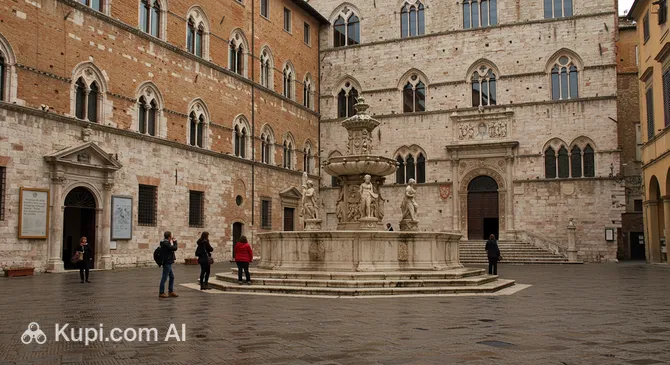
National Gallery of Umbria
National Gallery of Umbria. Иллюстрация. Источник: Kupi.com AI

The museum's exhibition is famous for its unique collection of works from the Umbrian school, dating from the 13th century to the works of later masters. Here you will find not only exquisite canvases and frescoes but also expressive sculptures and wooden panels that adorned the city's churches and public buildings for centuries. The collection is recognized by experts as a benchmark for understanding the development of the Italian Renaissance outside of Florence.

The rooms dedicated to the work of Perugino (Pietro Vannucci), whose talent had a huge influence on his contemporaries, are of particular value. Beyond the paintings, the interior of the medieval palace on Corso Pietro Vannucci itself impresses with its monumentality and preserved architectural details. The museum's high rating and thousands of positive reviews confirm that this place is a must-visit for every lover of beauty.

Contacts

To plan your visit to this treasure trove of art, it is helpful to have up-to-date contact information at hand. The museum is located in the very heart of the city, making it easily accessible for all travelers strolling along the main streets. You can find information about current exhibitions by phone or on the gallery's official website.

How to contactContact
AddressCorso Pietro Vannucci, 19, 06123 Perugia PG, Italy
Phone+39 075 572 1009
Websitegallerianazionaledellumbria.it

What to Do

In the halls of the National Gallery of Umbria, visitors can enjoy a fascinating immersion into the evolution of painting. The route is arranged chronologically, allowing you to see firsthand how the austere Byzantine canons of the 13th century were gradually replaced by the softness and realism of the Renaissance. Among the main treasures are works by Perugino, whose harmonious compositions are considered the pinnacle of Umbrian art, as well as rare panels by Duccio di Buoninsegna and Vigoroso da Siena.

Special attention should be paid not only to the paintings but also to the unique sculptural elements. The museum houses the original bronze lions by Arnolfo di Cambio, which once adorned the famous Fontana Maggiore. Architecture enthusiasts will appreciate the atmosphere of the medieval Palazzo dei Priori itself: a stroll through its majestic halls with restored 16th-century vaults allows you to feel the scale of the former greatness of the city-state.

Don't forget to look into the room with frescoes from the Monastery of Saint Juliana—these large-scale 14th-century works are striking for their preserved color and detail. Additionally, the museum windows offer some of the best views of the historic center of Perugia, providing an opportunity to take magnificent photographs that harmoniously combine the art inside with the architectural beauty outside.

Getting There

The National Gallery of Umbria is located in the heart of the historic center at Corso Pietro Vannucci, 19. You can reach it on foot from the Perugia Porta Nuova railway station in about 20–30 minutes, although you should keep the city's hilly terrain in mind. A more comfortable option is to take bus line C, which will take you to the Piazza Italia stop, from where the museum is just a 5-minute leisurely walk away.

For those arriving from Perugia or Rome airports, it is most convenient to take a train to the Perugia Fontivegge station or an intercity bus to the center. From there, the path to the Palazzo dei Priori leads through a picturesque pedestrian zone. If you prefer to get around the city by public transport, tickets can be purchased at kiosks or via the Umbria Mobilità app.

Travelers by car should remember that the center of Perugia is a Limited Traffic Zone (ZTL). It is best to leave your car in the Piazza Partigiani underground garage (a 10-minute walk away) or at the Via dei Priori parking lot. A short walk from the San Lorenzo Cathedral takes no more than 5 minutes, making it easy to combine a visit to the gallery with other key landmarks in the city.

Ближайший город: Perugia

History & Facts

The history of the museum is closely intertwined with the Perugia Academy of Fine Arts, founded in the mid-16th century. Initially, the collection was formed at the Montemorcino monastery, but after the country's unification in the 19th century, it received a new status. On June 4, 1863, the collection officially separated from the academy and became a public gallery, named after the great painter Pietro Vannucci, better known as Perugino.

The building housing the exhibition—Palazzo dei Priori—is a historical artifact in itself. Its construction took place in several stages, beginning at the end of the 13th century. For instance, the famous bronze lions by Arnolfo di Cambio were moved here as early as 1301. In the museum's halls, you can still see traces of reconstructions from different eras: from frescoes dating to 1378 to restored vaults from 1513, which had to be rebuilt after a devastating fire.

A significant part of the collection was formed from nationalized monastic treasures. In the 1860s, the museum received frescoes from the Monastery of Saint Juliana and numerous altar panels from suppressed churches. In 1918, the gallery passed into state ownership, receiving the status of "Royal Gallery," and the modern exhibition route, meeting all international standards, was opened to the public in 2006.

Time Needed

To explore the museum's rich collection without rushing, we recommend setting aside 2 to 3 hours. The exhibition spans an impressive area of about 4,000 square meters over two floors, and every room deserves attention. About half of this time will be spent viewing the main chronological line, while the remaining hour will allow you to study the Renaissance masterpieces in detail.

If you are an art lover and plan to read the information plaques carefully or take photos (in permitted areas), it is worth allocating a bit more time. Don't forget to also leave a few minutes to simply admire the views of the terracotta roofs of the historic center, which can be seen from the palace's massive windows.

Working Hours

The museum maintains a consistent operating schedule, which is very convenient for tourists planning their route in advance. The gallery's doors are open daily from early morning until evening, allowing you to choose the most comfortable time for your visit.

Official visiting hours are from 8:30 AM to 6:30 PM, Monday through Sunday. However, before visiting on public holidays or during special exhibitions, it is recommended to check the official website, as seasonal changes to the schedule are possible.

8:30 – 18:30

Nearby

The National Gallery of Umbria is at the epicenter of the city's historic life, so leaving the museum is just the beginning of a new stage of your journey. The surrounding streets are literally steeped in the spirit of the Middle Ages, and many iconic sites are located just a few steps away.

Exploring the surrounding area will help you better understand the context of the artworks you have just seen in the palace halls. Here is a list of nearby attractions to include in your itinerary:

NameDistance
Palazzo dei Priori0 km
Piazza IV Novembre0.1 km
Fontana Maggiore0.1 km
Etruscan Well0.1 km
Caffè dal Perugino0.1 km
Cathedral of San Lorenzo0.1 km
Underground Perugia0.1 km

Reached the end of the page?

That means the route is fully explored