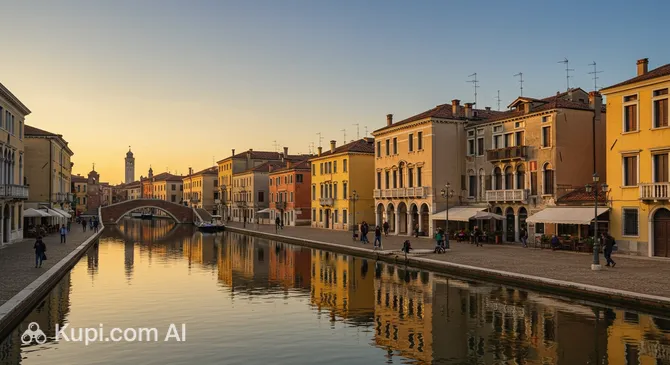
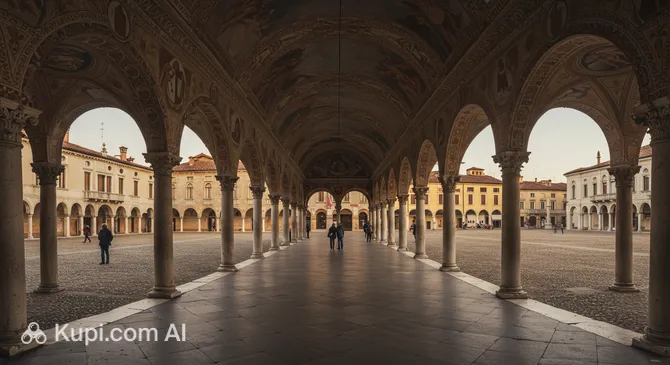
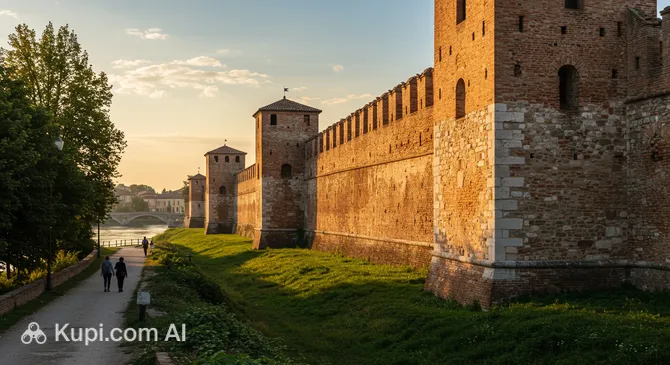
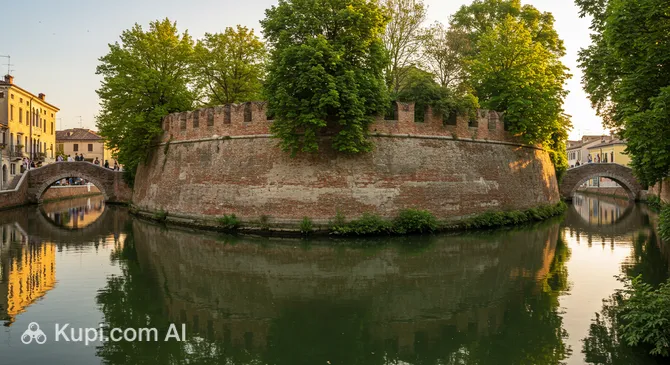
Treviso is a charming city in the Veneto region, located in northern Italy, just a few dozen kilometers from the famous Venice. Thanks to its picturesque location between the Sile River and green hills, this place attracts nature lovers and those seeking a peaceful vacation. With a population of about 85,000, it maintains a cozy atmosphere where you can easily feel the spirit of traditional regional life while remaining an important administrative and cultural center.
Treviso. Illustration.
Source: Kupi.com AI
Strolling through its streets, travelers are transported back in time: ancient squares, narrow alleys, and numerous canals create a unique charm, which is why the city is often called "Venice in miniature." The ancient history of Treviso can be read in every stone of its architectural ensemble, inviting guests to explore its rich heritage without the hustle and noise of overcrowded tourist routes.
The city is famous not only for its views but also for its vibrant cultural life and magnificent cuisine, which is definitely worth experiencing in the local trattorias. Treviso is an excellent starting point for traveling around the region and an ideal destination for those who want to see the authentic beauty of the country and enjoy a leisurely pace of life.
Weather Overview
Treviso's climate is characterized by distinct seasonality, allowing travelers to enjoy different atmospheres in the city throughout the year. Summers are truly warm: in July and August, the average temperature is around 24°C, and during the day, the air often warms up to 29°C. Despite the sunny days, an umbrella might come in handy even in the height of the holiday season, as between 10 to 12 rainy days per month are recorded in summer.
Winters in the region are cool and fairly dry. The coldest month is January, with an average temperature of 4.1°C and nighttime lows reaching 0.3°C. Spring arrives gradually, bringing not only warmth but also rain: May is traditionally considered the wettest month, when the number of days with precipitation can reach eighteen. Autumn, meanwhile, delights with a mild transition—in September, a comfortable temperature of around 19°C still holds.
In general, expect a warm summer with occasional rain and cool winters with less precipitation. To pack your suitcase correctly and choose the best dates for your visit, we recommend studying the detailed weather in Treviso before planning your trip.
Average monthly temperature
Average monthly precipitation
Interesting Facts
Beyond its main landmarks, Treviso holds many fascinating secrets and urban legends that reveal themselves only to curious travelers. This city is often called "Venice in miniature" not just for its canals, but also for its rich historical heritage.
Loggia dei Cavalieri. Illustration.
Source: Kupi.com AI
Traveler photos:
The unique Loggia dei Cavalieri, built in the 13th century, has a remarkable history. Originally a meeting place for the city's nobility for games and conversation, the building was used in unexpected ways throughout different eras: it stored firewood and barrels, and even served as a temporary cemetery until the monument was restored as a symbol of the city.
One of the most picturesque and authentic spots is the Isola della Pescheria (Fish Market Island). This river island has served as the center of the fish trade for centuries. The market still operates today, preserving the atmosphere of an old trading town where life revolves around the water.
In the city, you can find an unusual historical monument—the Fontana delle Tette. In the past, during major festivals and the election of new mayors, wine flowed freely from it for three days: red from one side and white from the other, much to the delight of all residents.
Many sources cite Treviso as the birthplace of the world-famous tiramisu. It is believed that this sweet masterpiece was first prepared right here, at the Le Beccherie restaurant, making the city a true mecca for those with a sweet tooth.
How to Get There
Getting to this picturesque corner of the Veneto region is quite easy thanks to Northern Italy's well-developed transport network. You can choose a direct flight, a train journey, or a car trip. To plan your perfect route and learn all the logistical nuances, we recommend reading more about how to get to Treviso, where all available options are gathered.
The most convenient way to reach the city by air is via the local aviation hub. Treviso Airport (IATA: TSF), often called "Venice-Treviso," handles many low-cost flights. It is located very close—just 4.3 km from the center. A taxi or bus ride will take you literally 15–20 minutes. This is an excellent option for budget travelers who want to be at their destination immediately.
If you can't find a direct flight, Venice Marco Polo Airport (IATA: VCE) is a great alternative. This is a major international airport located in Venice, about 19.6 km from Treviso. Major global airlines fly here. A transfer by taxi or express bus to Treviso takes about 50 minutes, making this a very popular route for tourists.
For your convenience, here is a summary of the region's main airports:
Rail travel in Italy is excellently developed, so many tourists arrive here by train from other regions. A major transport hub is the Venezia Mestre Railway Station. Please note that this station is not in Treviso itself, but in Venice (mainland), about 20.6 km away. From there, you can quickly reach Treviso by regional train or taxi in about 30–40 minutes.
Another option for transit is the Padua Centrale station. It is located in the city of Padua, approximately 39.7 km from Treviso. This is a major hub served by high-speed trains from all over the country. The trip from Padua to Treviso by car or bus takes about an hour.
Below are the nearest major railway hubs you can use when planning your route:
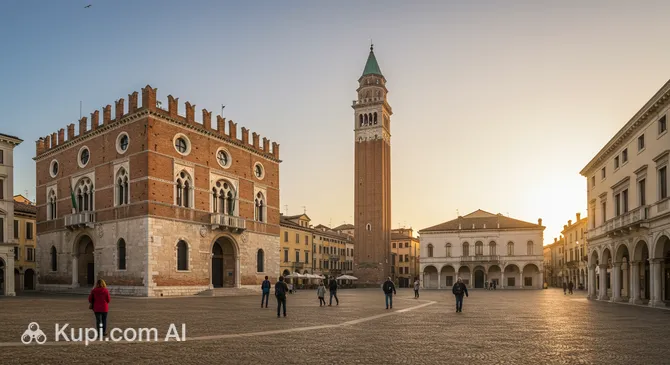
Treviso is often called a city of water and art, and to feel its true soul, it is worth starting your walk from the heart of the historical center. The main meeting point for locals and tourists remains Piazza dei Signori. This elegant square is surrounded by majestic palaces, most notably the Palazzo dei Trecento. It’s a lovely place to just sit in a cafe with a cup of coffee or a glass of prosecco, watching the city’s steady pace of life and enjoying the architectural harmony.
Piazza dei Signori. Illustration.
Source: Kupi.com AI
Traveler photos:
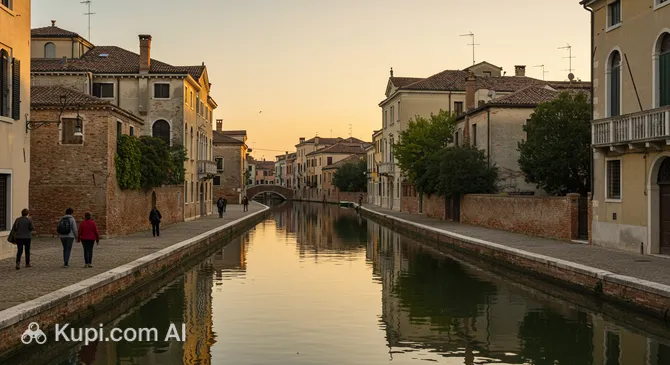
If you are looking for the most picturesque views for photos, head to the water. One of the most romantic corners of the city is the Buranelli Canal. A walk along its banks, adorned with weeping willows and ancient houses reflected in the calm water, gives a sense of complete serenity. This place perfectly captures the atmosphere of the "Venice in miniature" that travelers love so much about Treviso.
For history buffs and lovers of sacred architecture, the majestic Church of San Nicolò is a must-visit. This is the largest church in the city, built in the Gothic style by the Dominicans. Inside, a special atmosphere is created by high vaults and unique frescoes, including works by the famous master Tommaso da Modena. The temple impresses with its scale and austere beauty, contrasting with the cozy narrow streets of the center.
Buranelli Canal. Illustration.
Source: Kupi.com AI
Traveler photos:
To see the city from a different perspective, take a walk along the old defensive fortifications. The ancient Treviso City Walls, which encircle the historical center, have been transformed today into a beautiful green zone. This is a popular spot for jogging and leisurely promenades, offering views of the canals and monumental city gates. Here, history merges with nature, creating ideal conditions for outdoor relaxation after a busy sightseeing program.
Local Cuisine
Treviso's cuisine is a true feast for those who appreciate authentic Italian flavors. The city's gastronomic scene is closely linked to the traditions of the Veneto region, where seasonality and high product quality are paramount. The main symbol of local culinary art is certainly Radicchio di Treviso—a noble red chicory with a characteristic bitterness. It is prepared here in hundreds of ways: added to salads, grilled, but the most famous dish remains the delicate and fragrant radicchio risotto, which every guest must try.
One cannot speak of food in Treviso without mentioning desserts. The city proudly bears the title of the birthplace of tiramisu. It was here that this world-famous dessert took its classic form, and local pastry shops compete in the mastery of its preparation. Additionally, restaurant menus often feature hearty polenta dishes served with mushrooms, cheeses, or local sausages, which are perfect for cool evenings.
Hostaria dai Naneti. Illustration.
Source: Kupi.com AI
Traveler photos:
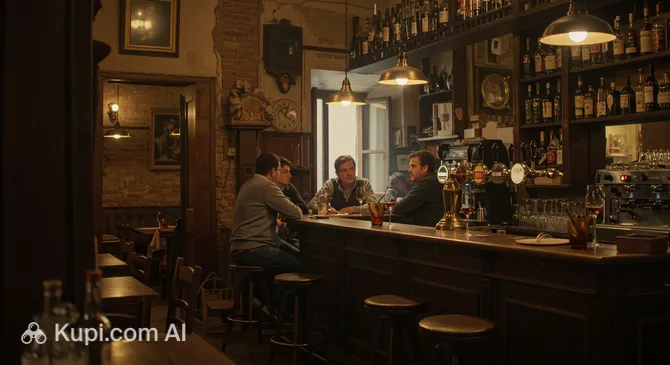
The drinking culture here is inextricably linked to the production of sparkling wines, as the famous hills where prosecco is born are very close by. A glass of cold bubbly is the perfect accompaniment to light snacks or dinner. Locals prefer to start their evening in traditional osterias, where a noisy and friendly atmosphere prevails. One such iconic place is Ostaria dai Naneti. Here you can immerse yourself in the old city life by ordering a glass of wine and a platter of fresh mortadella or prosciutto right at the counter.
For a more substantial lunch or dinner, the city offers many establishments, from cozy family trattorias to elegant spots like Il Cantiere Restaurant. Street food lovers won't be disappointed either: at the markets and in small cafes in the center, you can always grab a crunchy focaccia, bruschettas with various toppings, or traditional sweets while enjoying the vibrant rhythm of Italian life.
Travel Tips
Welcome to Treviso! To make your trip through this cozy Italian city as comfortable and hassle-free as possible, we have prepared a list of useful recommendations to help you feel confident from the moment you arrive.
Clothing and Seasonality. The weather in the region can be changeable. Even in summer, evenings can be cool due to the proximity of rivers and canals, so a light scarf or windbreaker won't go amiss. In winter, waterproof shoes are a must as humidity levels rise. For walks in the cobblestone historical center, choose the most comfortable flat-soled shoes possible. If you plan to visit churches, remember the dress code: shoulders and knees should be covered.
Transport. Treviso's historical center is very compact, and it's best to explore it on foot. For trips to the outskirts or the station, it's convenient to use MOM buses (buy tickets in advance at Tabaccheria shops or via the app, as they are more expensive from the driver). Renting a car inside the city is not recommended due to limited traffic zones (ZTL) and parking difficulties; a car is only useful for trips to the countryside or the "Prosecco Road."
Finance. The official currency is the euro (€). Bank cards are accepted almost everywhere, but always carry some cash (small bills and coins) for payments at markets, in small bars, or souvenir shops. Tipping is not mandatory in Italy, as a service charge (coperto) is often already included in the bill, but rounding up the bill or leaving 1–2 euros on the table is considered a polite gesture.
Health and Safety. Treviso is a safe city, but as with anywhere, you should keep an eye on your belongings in crowded places. Pharmacies are easily recognized by a sign with a green neon cross; the schedule of on-duty pharmacies is usually posted on the door of each one. You can safely drink water from the street fountains—it is clean and of high quality. The emergency number is 112.
Communication. The primary language is Italian. In the tourist center, many people understand English, but it might not be as useful in small family shops. Download an offline translator and learn a few basic phrases: Buongiorno (Good day) and Grazie (Thank you)—these will open many doors for you. A SIM card can be purchased at mobile stores (TIM, Vodafone, WindTre) with a passport; free Wi-Fi is often available in the main squares and cafes.
Local Etiquette. Italians highly value greetings: when entering a shop or cafe, be sure to say hello. In bars, there is an unspoken price rule: coffee drunk standing at the counter (al banco) costs less than the same coffee served at a table. In markets, do not touch fruits and vegetables with your bare hands—ask the vendor for help or use disposable gloves if provided.
What to Avoid. Never order a cappuccino during lunch or dinner (especially with pasta or pizza)—for Italians, this is exclusively a morning drink, and such an order may cause genuine bewilderment. It is also strictly forbidden to swim in the city canals, no matter how picturesque they may seem.
Important Note: Siesta. Take into account the traditional break in the working hours of shops and some institutions. Many places close for lunch from approximately 12:30 to 15:30. Plan your shopping for the morning or late evening, and dedicate the middle of the day to a leisurely Italian lunch, as the locals do.
We hope these tips help you avoid awkward situations and allow you to focus on the main thing—enjoying the atmosphere of Treviso. This city loves those who respect its traditions and are in no hurry!
Entertainment & Nightlife
Nightlife in Treviso is strikingly different from that of noisy metropolises. You won't find massive nightclubs with thumping music until dawn here; instead, you'll immerse yourself in an atmosphere of refined hedonism and lively conversation. An evening in the city traditionally begins with the aperitivo ritual: locals take to the streets around 6:00–7:00 PM to enjoy a glass of prosecco or spritz with friends. The epicenter of evening activity is the historical center, especially the area around Piazza dei Signori and the Buranelli Canal.
The main form of entertainment is "bar hopping," tasting cicchetti snacks, and having long conversations on the terraces. The liveliest atmosphere is on Friday and Saturday. The crowd here is relaxed but dignified; the dress code is generally "smart casual"—Italians love to dress stylishly even for a simple meet-up with friends.
Malvasia. Illustration.
Source: Kupi.com AI
Traveler photos:
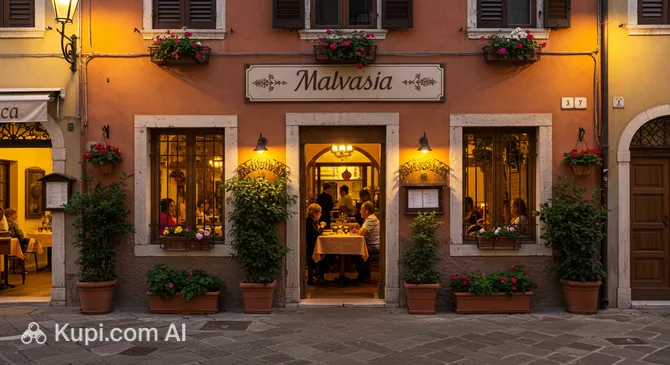
If you are looking for a place with a pleasant setting for dinner that transitions smoothly into evening socializing, consider Malvasia. This is a great example of a location where you can feel the true taste of local life. For those who want to combine delicious food with a laid-back bar atmosphere, Unico Restaurant Pizzeria is a good choice. Groups often gather here to spend time over excellent pizza and drinks.
Practical tips for night owls:
Opening hours: Most bars in the center close by 1:00 AM or 2:00 AM. If you want to continue the fun, you'll need to look for venues outside the old city walls.
Prices: The cost of a glass of wine or a cocktail varies from 3 to 7 euros, which is very affordable compared to neighboring Venice.
Safety: Treviso is a very safe city. Walking through the night center is secure, and the streets are well-lit. However, to get to your hotel late at night, it’s better to call a taxi via an app or by phone, as public transport stops running quite early.
During the day, the city offers more relaxed cultural activities. Art and history enthusiasts should visit the Civic Museums of Treviso – Santa Caterina Complex, which houses unique archaeological finds and frescoes. If you’re traveling with friends and want to challenge your mind, Treviso Escape Room is a great option, offering exciting scenarios for team play.
Parks & Museums
Treviso harmoniously combines architectural elegance and natural beauty, offering guests not only walks along the canals but also relaxation in well-kept green zones and a deep dive into art. The city's parks serve as an extension of the historical landscape, while museums hold treasures that tell the story of the Veneto region's rich past.
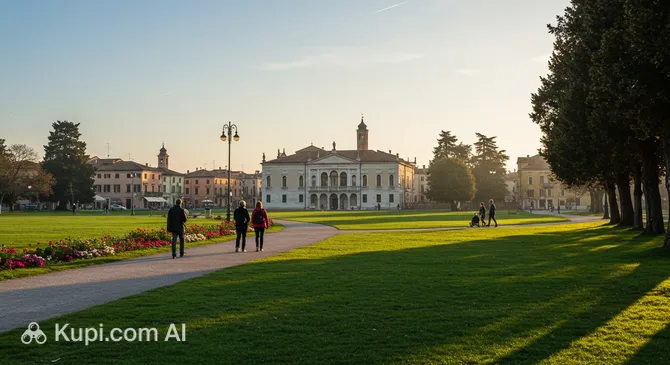
For those seeking solitude amidst the greenery, Parco Moreri is an excellent choice. This cozy space, beloved by locals for its peaceful atmosphere and well-maintained paths, is ideal for family relaxation or reading a book in the shade of the trees. Another important natural area is the territory along the Sile River—the embankment known as "La Restera" attracts runners and long-walk enthusiasts with its picturesque views of the water and weeping willows.
Moreri Park. Illustration.
Source: Kupi.com AI
Traveler photos:
A unique example of how history becomes part of nature is the Treviso City Walls. The former ramparts encircling the old city have been transformed today into a wide green promenade. Strolling here, you can enjoy the panorama of rooftops and canals, feeling the breath of past centuries surrounded by ancient trees.
The city's cultural life is centered in its museums, which will interest even seasoned travelers. The main gem is the Civic Museums of Treviso – Santa Caterina Complex. Housed in a former monastery, this museum is famous for its archaeological collection and the stunning "Legend of Saint Ursula" fresco cycle by Tommaso da Modena. This place allows you to touch the city's medieval heritage in an authentic atmosphere.
Luigi Bailo Museum. Illustration.
Source: Kupi.com AI
Traveler photos:
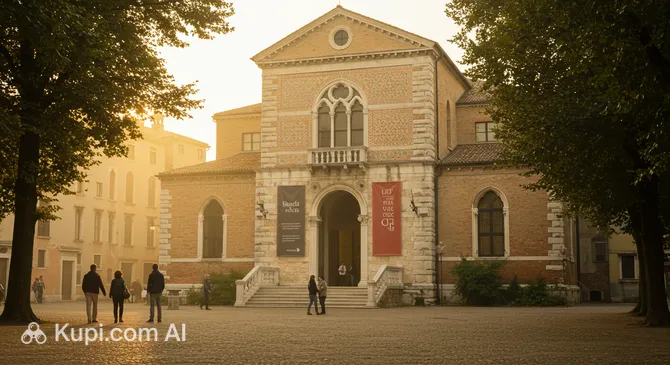
Art lovers of the 19th and 20th centuries should visit the Luigi Bailo Museum. After a major renovation, this gallery has become a modern space where special attention is paid to the work of local masters, such as the sculptor Arturo Martini and the painter Gino Rossi. Bright halls and a well-curated exhibition make a visit here a true aesthetic pleasure.
As an insider tip: don't miss the small temporary exhibitions often held in historical palazzos, such as Ca' dei Carraresi. And if you're walking through the center, take note of the Fontana delle Tette—while not a museum, this monument is a living testament to the generous urban traditions of the past.
Getting Around
The public transport system in Treviso is simple and efficient, although many tourists prefer to explore the compact historical center on foot. The primary and almost only form of municipal transport is the bus, operated by the local company MOM (Mobilità di Marca). There are no metro or tram lines in the city, but a dense network of bus routes reliably connects the station, residential neighborhoods, and suburbs with the center.
To pay for travel, it is most economical to purchase tickets in advance. This can be done at tobacco shops (Tabaccheria), newsstands, or at the ticket offices at the bus station. A modern and convenient alternative is the official MOMUP mobile app, which allows you to buy electronic tickets directly from your smartphone without searching for sales points. Buying a ticket from the driver is possible, but it will always be more expensive than purchasing one beforehand.
An important detail that visitors often forget: any paper ticket must be validated immediately upon entering the bus using the special devices in the cabin. Electronic tickets in the app also need to be activated just before boarding. The validity period of a standard city ticket is usually 75–100 minutes, allowing for transfers within that timeframe. Ignoring the validation rules can lead to significant fines if checked by inspectors.
The connection to the airport deserves special mention. Since the airfield is only a few kilometers from the city, a regular city bus (Line 6) runs there, making the transfer very affordable. Treviso Centrale Railway Station is also a popular hub for those who want to quickly reach Venice or other parts of the region.
Among alternative ways to get around, the bicycle leads the way. Treviso is a very "bike-friendly" city with flat terrain and a developed network of paths, so renting a bike is a great way to feel like a local. Taxis are usually ordered by phone or through an app (such as AppTaxi), or taken from specially equipped stands; it is not customary to hail a car with a wave of the hand on the street. Car sharing and rentals are convenient for trips around the province, but entry into the historical center is strictly limited by ZTL zones (restricted traffic zones), where access is granted only to residents.
Accommodation
Treviso offers travelers a wide range of accommodation options, which often turn out to be more affordable and peaceful compared to neighboring, overcrowded Venice. The city's hotel industry ranges from cozy family-run guesthouses (B&Bs) and apartments to elegant boutique hotels located in restored historical buildings. Large resort complexes are hard to find here, but intimate places where you can feel true Italian hospitality are in abundance.
For those who want to be in the heart of the action and enjoy evening walks along the canals, staying within the historical center (centro storico) is the ideal solution. This area is bounded by ancient defensive structures, such as the Treviso City Walls. By choosing a hotel within these walls, you will be within walking distance of the main attractions, the best restaurants, and the railway station, which is incredibly convenient for day trips around the region.
Walls of Treviso. Illustration.
Source: Kupi.com AI
Traveler photos:
If you are traveling by car or looking for more budget-friendly options, consider areas just outside the city walls or near the airport. Modern hotels with private parking are more common there, which is a rarity for the historical core with its narrow streets and limited traffic zones.
Booking tip: Although Treviso is often seen as a transit point, the demand for accommodation remains consistently high year-round. This is due to the popularity of the local airport and its proximity to Venice. We strongly recommend booking your accommodation in advance, especially if your trip coincides with the Venice Carnival (February) or the peak summer season, when prices can rise significantly.
In general, the price range in the city can be described as mid-range. You can find decent lodging for reasonable money, and the quality of service and cleanliness are usually at a very high level. Booking is most convenient through popular international online platforms, but many small osterias with rooms also accept bookings directly through their websites, sometimes offering better terms or included breakfast.
Nearby Cities
For those who want to explore the surrounding area, Treviso serves as an excellent starting point for travels across northern Italy. The city's location in the heart of the Veneto region allows for quick trips to charming communes where you can enjoy ancient architecture and a peaceful rhythm of life.
One of the most attractive destinations is Mogliano Veneto. This city historically served as a holiday retreat for Venetian nobility, so many magnificent old villas have been preserved here and in its surroundings along the famous Terraglio road. It is an ideal place for leisurely strolls and discovering the aristocratic past of the region.
Very close by is Villorba, a commune bordering Treviso. It is interesting for its combination of rural landscapes and cultural sites. Here you can see farmhouses typical of this area and majestic estates surrounded by greenery, allowing tourists to see the authentic, non-touristy side of the country just a few minutes' drive from the center.
Nature and history lovers might also enjoy Scorzè. This town is known for its water mills on the Dese River and its rich agricultural traditions. Gastronomic festivals dedicated to local products are often held here, and the surrounding scenery is perfect for bike rides.
City
Population
Distance
Carbonera
11 183
4 km
Silea
10 163
4 km
Casier
11 412
5 km
Quinto di Treviso
9 912
6 km
Preganziol
16 957
7 km
These nearby destinations provide an insight into the diverse culture and landscapes of the region, perfectly complementing the experience of visiting Treviso itself.
Shopping & Souvenirs
Shopping in Treviso is an elegant and leisurely activity that differs strikingly from the bustle of major tourist metropolises. The city is often called the "drawing room" of the Veneto region, and this definition perfectly suits its shopping atmosphere: there are many high-fashion boutiques, cozy artisan shops, and gourmet stores located in beautiful historical buildings. Since Treviso is the birthplace of several world-famous clothing brands (such as Benetton), locals possess impeccable taste, and shop windows are always arranged with particular grace.
The main shopping artery of the historical center is Via Calmaggiore. It connects two key points of the city—Piazza dei Signori and the Cathedral Square. Walking here is comfortable in any weather thanks to the ancient porticos that provide shelter from the sun and rain. Boutiques of famous Italian and international brands, jewelry salons, and shoe stores are concentrated on this street and in the adjacent alleys. It is also worth checking out Corso del Popolo, where you can find more affordable brands and interesting accessories.
If you are interested in large-scale shopping in one place or mass-market brands, it is worth heading outside the city walls. One popular spot is the Canova Shopping Park. This is a large complex offering a wide selection of clothing, electronics, and household goods. Such centers are convenient because of their large parking lots and the fact they stay open through the lunch break, allowing you to spend as much time shopping as you need.
However, the true spirit of Treviso lives in its markets. The most colorful and must-visit place is Isola della Pescheria. This is a historical fish market located on a small island in the middle of a canal. Even if you don't intend to buy fresh seafood, it's worth coming here for the atmosphere and photos. Nearby, in Piazza San Parisio, a fruit and vegetable market unfolds in the mornings, where farmers sell high-quality seasonal produce.
Pescheria Island. Illustration.
Source: Kupi.com AI
Traveler photos:
When choosing souvenirs, look for gastronomic specialties. The main symbol of the city is Radicchio di Treviso (red chicory), which can be bought fresh in season or as sauces and pâtés year-round. Since the region is famous for winemaking, a bottle of quality Prosecco DOCG from the Valdobbiadene hills makes an excellent gift. Local ceramics and textiles, reflecting the region's artisanal traditions, are also highly valued.
When planning a shopping trip, it's important to remember the traditional schedule. Most small boutiques and shops in the center are open from 09:30 to 12:30 and from 15:30 to 19:30. The afternoon break (siesta) is quite strictly observed, especially in family-run shops. On Monday mornings, many retail outlets may be closed. Bank cards are accepted almost everywhere, but for market purchases or small souvenirs, it's better to carry some cash in euros.
Tourists from countries outside the European Union can use the Tax Free system. As of February 2024, the rules have become more favorable for travelers: the minimum purchase amount for a VAT refund in Italy is 70 euros. Be sure to look for the "Tax Free Shopping" sticker in the window and ask for a special receipt (fattura) when paying for your goods to present it at customs upon departure.