Support

Mestre

About

Mestre is the lively and dynamic heart of Venice's mainland, a city that serves as a convenient gateway to the famous canals and palaces. It offers a unique blend of modern comfort and proximity to one of the world's most romantic cities. Located just a few kilometers from the historic center of Venice, Mestre is an important transportation hub and a popular choice for travelers.

The city is nestled on the mainland shore, at the western end of the Venetian Lagoon, in the Veneto region of Italy. Mestre has a population of about 89,000, which allows it to maintain the atmosphere of an authentic Italian city while providing all the necessary infrastructure. Administratively, Mestre is the largest district of the municipality of Venice and plays a key role in managing tourist flows.
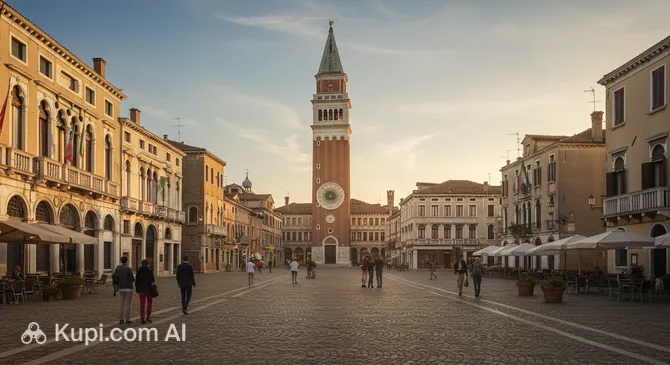
Mestre. Illustration.
Source: Kupi.com AI

The main features attracting tourists to Mestre are its strategic location and excellent transport accessibility. From here, the historic center of Venice can be reached in just 10-15 minutes by train or bus, which run very frequently. There is even a bicycle path leading to Venice across the Liberty Bridge (Ponte della Libertà). Furthermore, Mestre itself offers a pleasant atmosphere: there is less tourist hustle and bustle than on the islands, more green areas like San Giuliano Park overlooking the lagoon, and opportunities to get a glimpse into the everyday life of Italians. The central Piazza Ferretto, with its fountain, shops, and cafes, is a popular spot for strolling and relaxation.

Mestre is an excellent choice for those seeking a more affordable and quiet place to stay without giving up easy access to all the wonders of Venice. The city offers a wide selection of hotels, restaurants, and shops, making it a comfortable and practical base for exploring the entire region. Visit Mestre to experience its hospitality and discover the convenient side of a Venetian journey!

You can find more interesting facts on the Mestre city history page.
Weather Overview

The weather in Mestre usually delights with warm summers and features cool winters. At the peak of the summer season, in July and August, the average air temperature stays around 25°C, with maximums reaching up to 29.5°C. In winter, for example, in January, the average temperature is approximately 4.6°C, with night temperatures dropping to an average of 0.9°C.

Precipitation in Mestre occurs throughout the year, however, the highest number of rainy days is observed in May (about 15 days) and November (about 11 days), while the total amount of precipitation remains low. Overall, expect a warm summer with occasional rain and cool, relatively dry winters. For more detailed information about the city's climate features, visit the Mestre Climate page.

Average monthly temperature

Average monthly precipitation

Interesting Facts

Mestre is not just "mainland Venice," as it is often called. This city hides many interesting details and stories that will surprise even the experienced traveler and reveal it from a new perspective.

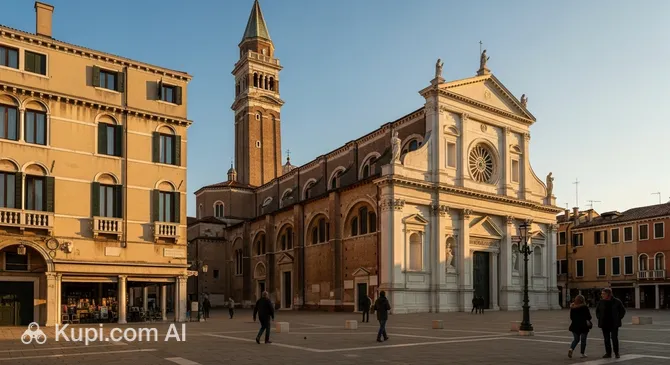
Cathedral of Saint Lawrence. Illustration.
Source: Kupi.com AI

Traveler photos:

  • Historic Gateway to Venice: For a long time, Mestre was not just a suburb, but an independent city and a vital strategic point, acting as the "gateway" to the Venetian Republic. For centuries, it was through Mestre that the connection between the islands of the Venetian Lagoon and mainland Italy was maintained. Traces of this rich past remain today in the form of old squares, fragments of fortress walls, and churches like the Cathedral of St. Lawrence or the Archpriestly Church of Saints Gervasius and Protasius.

  • A Major Transport Hub: Mestre is home to one of mainland Venice's most significant railway stations — Venezia Mestre. Millions of passengers pass through it every year, making it more than just a station; it's a key transport hub connecting island Venice with the rest of Italy and Europe.

  • Cyclists' Paradise: The city and its surroundings are famous for an extensive network of cycling routes. Active travelers can enjoy fascinating rides on specially equipped paths that connect Mestre with picturesque suburbs and even lead to large green areas like San Giuliano Park, which offers views of the Venetian Lagoon.

  • "Italy in Miniature": Mestre is often referred to as "Little Italy in miniature" thanks to its pronounced multicultural atmosphere. Representatives of many nationalities live here, enriching city life and culinary traditions, and creating a unique sense of cultural diversity.

How to Get There

Mestre is a key transportation hub in the Veneto region, making it very easy to reach. Due to its strategic location on the mainland, the city welcomes travelers arriving by both air and rail. You can find all the ways to get to the city on a dedicated page, and below we will look at the main air and rail gateways.

The closest and most convenient option for arrival is Venice Marco Polo Airport (IATA: VCE). Although it administratively belongs to the city of Venice, the terminal is located just 7.5 km from the center of Mestre. This is a major international aviation hub receiving flights from all over the world. A trip from here by bus or taxi will take about 30-35 minutes. Another popular option, especially for those flying with low-cost carriers, is Treviso Airport (IATA: TSF). It is also often referred to as "Venice," but it is a bit further away — about 17.7 km from Mestre. The journey by ground transport will take you about 45-50 minutes. If you arrive at Verona Villafranca Airport (IATA: VRN), located in the city of Verona (about 107 km from Mestre), be prepared to spend about 3 hours on the transfer.

For convenience, here is a summary of the main airports serving this destination:

AirportPassenger trafficDistance
Venice Marco Polo Airport11.6 mln8 km
Treviso Airport3 mln18 km
Trieste Airport1.3 mln103 km
Verona Villafranca Airport3.7 mln107 km
Portoroz29 000107 km

Traveling by train is one of the most comfortable ways to reach the city. The main station — Venezia-Mestre Railway Station (IATA: XVY) — is located right within the city limits, just 1.6 km from the very center, making it an ideal arrival point. It is one of Italy's largest stations with a huge passenger flow, serving both regional and high-speed trains. It is also worth mentioning the Venezia Santa Lucia station (IATA: XVQ). It is located in the city of Venice (on the island), approximately 8.2 km from Mestre. If your train arrives there, you can quickly reach Mestre by regional train or bus in about 30-35 minutes.

Below is a table with the nearest railway stations to help plan your route:

StationPassenger trafficDistance
Venezia Mestre Railway Station31 mln2 km
Venezia Santa Lucia Station30 mln8 km
Padova Centrale Station18.5 mln30 km
Verona Porta Nuova Station25 mln99 km
Trieste Centrale Station120 km

Main Attractions

Mestre, the mainland part of Venice, offers its guests several interesting places worth visiting. While many tourists use Mestre as a base for exploring island Venice, the city itself also possesses its own charm and attractions.

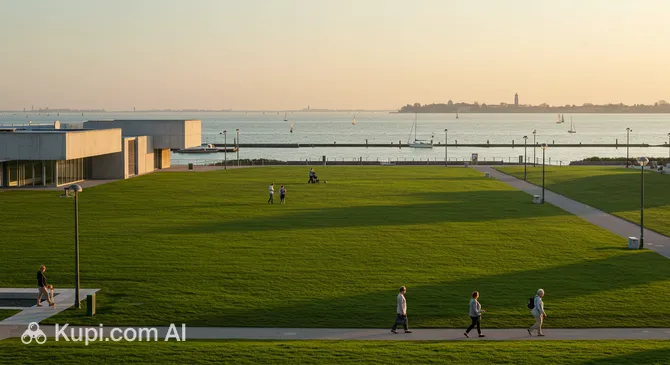
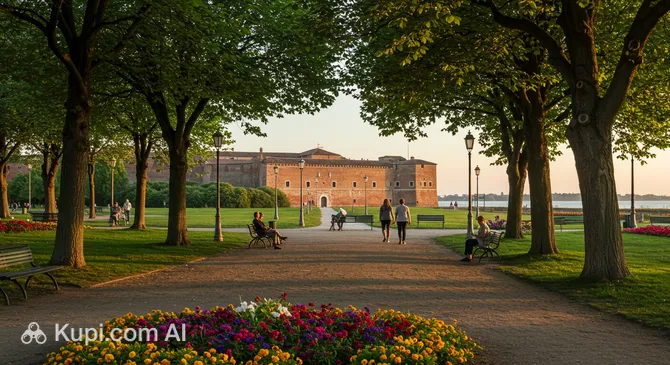
One of the city's main green lungs is San Giuliano Park. This is a vast park located on the shores of the Venetian Lagoon, offering magnificent views of Venice. The park is ideal for walks, picnics, sports, and simply relaxing in nature. Concerts and events are often held here, making it a popular spot for both locals and tourists seeking tranquility away from the city's hustle and bustle.

San Giuliano Park. Illustration.
Source: Kupi.com AI

Traveler photos:

In the historic center of Mestre, the Cathedral of St. Lawrence (Duomo di San Lorenzo) stands out. This church, built at the end of the 18th century on the site of a more ancient temple, is the city's main religious building. Its neoclassical facade and interior decoration, featuring valuable works of art, are of interest to lovers of church architecture and history. The cathedral is located on the main square, Piazza Ferretto, making it easily accessible.

Cathedral of Saint Lawrence. Illustration.
Source: Kupi.com AI

Traveler photos:

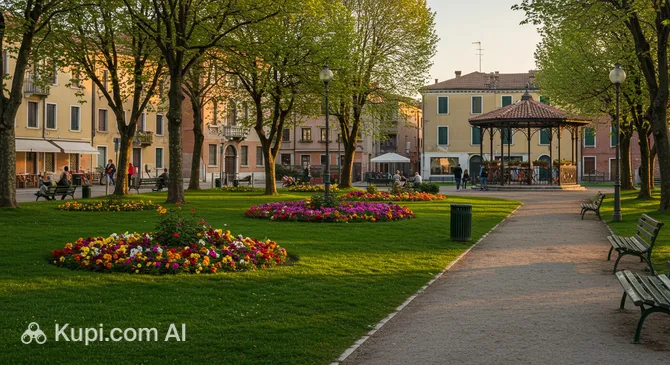
Another popular spot for outdoor recreation is Alfredo Albanese Park, also known as Parco Bissuola. This large urban park offers many opportunities for active recreation, including sports fields, bicycle paths, a lake, and children's play areas. It is a wonderful place for family outings and for those who want to enjoy nature without leaving the city limits.

Alfredo Albanese Park. Illustration.
Source: Kupi.com AI

Traveler photos:

For those interested in sacred architecture, the Archpriestly Church of Saints Gervasius and Protasius (Chiesa arcipretale dei Santi Gervasio e Protasio) is also worth a visit. This is one of the oldest churches in Mestre, with roots dating back to the Middle Ages, although the current building is the result of later reconstructions. The church preserves the city's historical memory and contains interesting artifacts.

Local Cuisine

The gastronomy of Mestre is closely intertwined with the culinary traditions of famous Italy, particularly the Veneto region and, of course, neighboring Venice. Here, an authentic taste awaits you, based on fresh local products and age-old recipes. Mestre's cuisine will delight both connoisseurs of fine dining and lovers of simple but incredibly delicious food.

Be sure to try the iconic dishes of the region. Among them, the seafood risotto (risotto ai frutti di mare), fragrant with the gifts of the Adriatic, and squid ink pasta (pasta al nero di seppia), which has a rich marine flavor, stand out. Don't miss the chance to taste baccalà mantecato – a delicate creamed dried cod paste, or cod prepared in other traditional ways. Of course, you should also try polenta, which is often served with fish, meat, or mushrooms, especially in the colder months.

It is customary to accompany a meal in Mestre with local drinks. The Veneto region is famous for its wines, so be sure to taste a glass of refreshing Prosecco or a light white wine. From red wines, varieties from the surrounding areas are popular. Before dinner, locals and tourists love to enjoy an aperitif, such as the famous Aperol Spritz. For those who prefer non-alcoholic beverages, fresh juices, mineral water, and, of course, excellent Italian coffee in all its variations are always available.

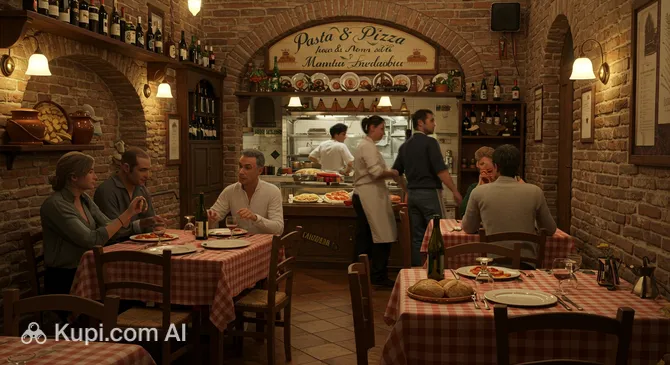
The food culture in Mestre is diverse. Locals often choose cozy trattorias and osterias, where home-cooked dishes based on family recipes are served. This is a great way to immerse yourself in an authentic atmosphere. Tourists will also find many restaurants for every taste and budget, from elegant establishments to simpler pizzerias. For instance, check out Pasta & Pizza e non solo to enjoy classic Italian dishes. You shouldn't overlook street food either: here you can grab a quick snack of a slice of fragrant pizza (pizza al taglio), a fresh panino, or try the famous Venetian cicchetti – small snacks that go perfectly with a glass of wine. Local markets are also a source of the freshest products and gastronomic experiences.

Pasta & Pizza e Non Solo. Illustration.
Source: Kupi.com AI

Traveler photos:

Mestre's gastronomic scene attracts with its authenticity and diversity. Based on fresh gifts from the sea and the land, it offers unforgettable taste experiences. Whether it's an exquisite risotto, traditional baccalà, or simple but satisfying cicchetti, every dish tells a story of the region. Visiting local trattorias and markets and participating in tastings will allow you to truly feel the soul of Mestre through its cuisine.

Travel Tips

Welcome to Mestre! This city is not just the "mainland part of Venice," but an interesting destination in its own right with convenient access to the famous canals and islands. To ensure your trip to this corner of Italy goes smoothly and leaves only pleasant impressions, we have prepared some practical tips for you.

  1. Seasonal clothing and essentials:

    The climate in Mestre is similar to that of Venice: hot and humid summers, cool winters, and pleasant but sometimes rainy springs and autumns. In summer, bring light clothing, a hat, and sunscreen. In the shoulder seasons, layering and an umbrella will come in handy. In winter, a warm jacket, hat, and gloves are necessary. Comfortable shoes are critical, as you will be walking a lot, especially if you plan frequent trips to Venice. Don't forget a power adapter (type L). When visiting churches in both Mestre and Venice, it is customary to cover your shoulders and knees.

  2. Transportation:

    Getting around Mestre and reaching Venice is very convenient using public transport. The main options are ACTV buses and trams. Tickets can be bought at tobacco shops (Tabacchi), newsstands, or machines at stops. Taxis are available but can be more expensive. Renting a car is not necessary if your focus is on Mestre and Venice, as parking in Venice is limited and expensive, and Mestre can also have challenges with free parking. For trips around the Veneto region, a car can be useful.

  3. Financial matters:

    The local currency is the Euro (EUR). You can exchange money at banks or exchange offices, but it is more cost-effective to withdraw cash from ATMs, which are widely available. Credit and debit cards (Visa, Mastercard) are accepted in most hotels, restaurants, and shops. It is recommended to notify your bank about your trip. Tipping in Italy is not strictly mandatory but is always appreciated for good service (usually 5-10% of the bill or rounding up). In restaurants, "coperto" (a service/bread charge) is often included in the bill; this is not a tip.

  4. Health and safety:

    Pharmacies (Farmacia) are easy to find by the green cross; some operate 24/7 on a rotation schedule. EU citizens can use the European Health Insurance Card (EHIC). Tourists from other countries are strongly recommended to have travel insurance. In emergencies, call 112. Mestre is generally a safe city. Follow standard precautions: keep an eye on your personal belongings, especially in crowded places and on public transport, and avoid poorly lit or deserted areas late at night.

  5. Language and communication:

    The official language is Italian. In tourist areas, hotels, and restaurants, many people speak English, especially the youth. Learn a few basic phrases in Italian: "Ciao" (Hello/Goodbye), "Grazie" (Thank you), "Prego" (You're welcome), "Buongiorno" (Good day), "Buonasera" (Good evening), "Scusi" (Excuse me). SIM cards can be bought at mobile phone stores. Wi-Fi is available in most hotels, many cafes, and public areas.

  6. Local etiquette:

    Italians are open and friendly people. When entering a shop or cafe, it's customary to say hello ("Buongiorno" or "Buonasera"). Avoid speaking loudly in public places, especially on transport. When visiting churches, maintain silence and follow the dress code. Showing respect for local traditions is always valued.

  7. What to avoid:

    Do not buy goods from unlicensed street vendors, especially counterfeits of famous brands. If you are heading to Venice, remember that it is forbidden to sit on the steps of monuments and bridges, swim in the canals, or feed the pigeons in St. Mark's Square – these actions carry fines. In Mestre, try not to make noise late at night in residential areas.

  8. Additional tip – Mestre as a base:

    Use Mestre as a strategically convenient and often more budget-friendly base for exploring Venice. Trains and buses to the island part run very frequently and quickly (10-15 minutes). Additionally, Mestre itself has interesting spots, such as Piazza Ferretto, San Giuliano Park with its lagoon view, or local markets where you can experience an authentic atmosphere.

We hope these tips help you better plan your trip and get the most out of your stay in Mestre and its famous neighbor. We wish you an unforgettable journey!

Entertainment & Nightlife

Mestre, the mainland part of Venice, offers its guests a variety of opportunities for evening and nighttime leisure. Although the city may seem quieter compared to its famous island neighbor, it has its own cozy and lively nightlife that attracts both locals and tourists looking for an authentic Italian experience.

The main hub for evening entertainment in Mestre is Piazza Ferretto and its surrounding streets. As twilight falls, this pedestrian zone comes to life as locals and tourists gather for an aperitif, dinner, or a pleasant stroll. Here you can find numerous bars, cafes, and restaurants with outdoor terraces, creating a relaxed and friendly atmosphere.

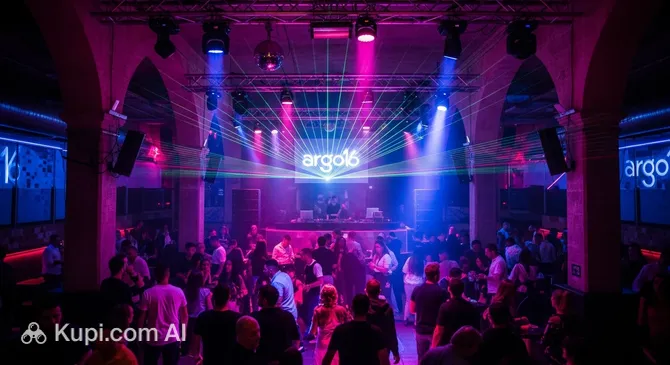
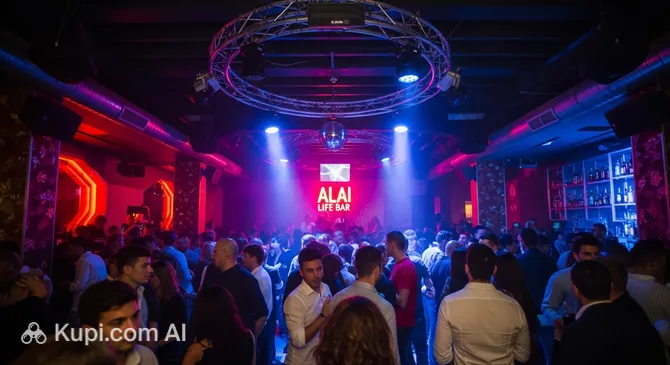
The choice of venues in Mestre is quite broad. For fans of a relaxed atmosphere and good drinks, there are numerous bars where you can try local wines and cocktails. If you are looking for something more energetic, it is worth checking out the nightclubs. For example, Argo16 is known as a cultural space and club that often hosts live performances and themed parties. Another popular spot is Alai Life Bar, offering modern music and a lively atmosphere for those who want to dance until morning.

Argo16. Illustration.
Source: Kupi.com AI

Traveler photos:

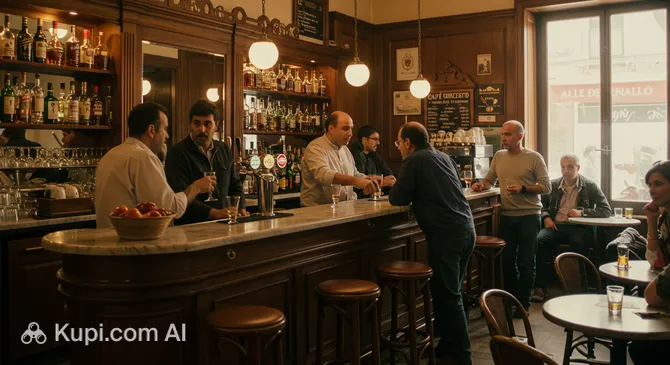
Many bars in Mestre, such as Caffè Concerto, offer a cozy setting for evening gatherings. The crowd in Mestre's establishments is usually mixed, ranging from young people to middle-aged adults. The style of the venues varies from traditional Italian bars to modern lounges and clubs. Most bars open in the late afternoon and stay open until late evening or midnight, while clubs start later and close towards dawn, especially on weekends. The dress code in most places is quite casual, but some clubs may prefer a smart casual style.

Alai Life Bar. Illustration.
Source: Kupi.com AI

Traveler photos:

The best time to visit bars is early evening when the aperitif hour begins (usually from 6:00 PM to 9:00 PM). Clubs come alive closer to midnight. Prices in Mestre are generally more affordable than in island Venice. Getting to popular spots in the evening is usually easy on foot if you are staying in the center. At night, a taxi is the most convenient way to get around the city or return to your hotel.

Caffè Concerto. Illustration.
Source: Kupi.com AI

Traveler photos:

In terms of safety, the central areas of Mestre, where the nightlife is concentrated, are considered safe for walking. However, it is always wise to take standard precautions, especially late at night. Taxis can be called by phone or found at designated taxi stands. Public transport runs on a schedule, which you should check in advance if you plan to use it at night.

While the focus here is on nightlife, Mestre also offers daytime entertainment. Guests can visit local museums, stroll through picturesque parks like San Giuliano Park or Alfredo Albanese Park, or explore historical sites such as the Cathedral of St. Lawrence. The city also has theaters where you can catch performances and a variety of shops for shopping enthusiasts.

Parks & Museums

Mestre, an important transport hub and residential center on the mainland of Venice, offers its guests not only a convenient location for exploring the famous city on the water but also its own green oases and interesting cultural sites. Here you can take a break from the tourist bustle, enjoy nature, and learn about local history.

For lovers of nature and quiet walks, Mestre has several wonderful parks. One of the largest and most popular is San Giuliano Park. This massive green space offers views of the Venetian Lagoon and the Liberty Bridge, making it ideal for picnics, sports, and simply relaxing in the fresh air. Concerts and events are often held here, making it a hub for locals and tourists alike.

Another beautiful place for recreation is Alfredo Albanese Park. This well-maintained park with shaded alleys, playgrounds, and sports facilities is popular with locals and tourists with children. It offers a peaceful atmosphere for leisurely strolls and family leisure, serving as a true green heart for one of the city's districts.

Also worth mentioning is Parco di Catene, which offers another chance to enjoy nature. This park may be less known to tourists but is valued by locals for its tranquility, bike paths, and waterfront relaxation areas, making it an excellent choice for a peaceful time away.

Catene Park. Illustration.
Source: Kupi.com AI

Traveler photos:

While Mestre may not boast the same abundance of world-famous museums as Venice itself, the city carefully preserves its cultural heritage. Mestre's historic center is focused around Piazza Ferretto, where you can see ancient buildings and feel the city's atmosphere. The main religious and architectural landmark is the Cathedral of St. Lawrence (Duomo di Mestre). This impressive neoclassical cathedral houses interesting works of art and is an important spiritual center for the city.

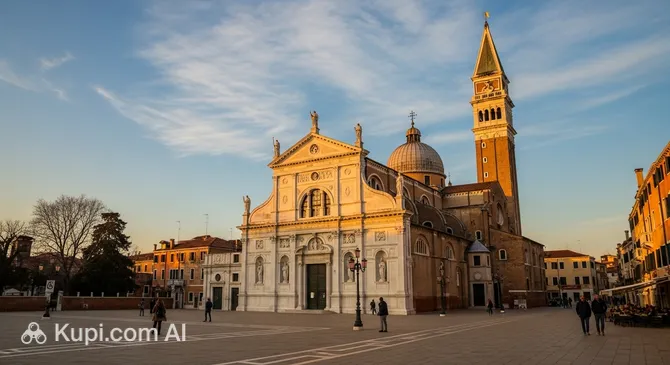
Near the cathedral is the Archpriestly Church of Saints Gervasius and Protasius, another significant historical and religious structure worth seeing. These churches allow you to touch upon the history and spiritual life of Mestre. To learn about fine art collections or specialized museums, it is worth checking with local tourist centers or official city websites, as exhibitions and opening hours may change.

Archpriest Church of Saints Gervasius and Protasius. Illustration.
Source: Kupi.com AI

Traveler photos:

To feel the authentic spirit of Mestre, take a stroll through the narrow streets branching off Piazza Ferretto, visit the local market (if it's open during your visit), or have a coffee in one of the small cafes where locals gather. This will allow you to see the city through the eyes of its residents and perhaps discover something unexpected and interesting away from the main tourist routes.

Getting Around

Public transport in Mestre is well-developed, allowing for easy travel both within the city and to the historic center of Venice. The core of the transport system consists of buses and trams operated by the ACTV company, which connect various districts of Mestre and provide regular service to Piazzale Roma in Venice.

Main modes of transport in Mestre:

Buses: An extensive network of bus routes covers the entire city and its surroundings. ACTV buses run frequently, especially on popular routes, including those to Venice. This is the most common way to get around Mestre.

Trams: The modern tram system includes two lines. Line T1 is particularly important for tourists as it connects Mestre center (Mestre Centro) with Favaro Veneto and Piazzale Roma in Venice. Line T2 mainly serves areas within Mestre itself. Trams offer a comfortable and fast way to travel.

Trains: Venezia Mestre Railway Station is a major transport hub. From here, you can quickly reach Venezia Santa Lucia station, located right in the historic part of Venice, by train. Trains also connect Mestre with other cities in Italy.

The fare system for ground transport (ACTV) in Mestre and Venice is unified.

You can purchase:

Single tickets: A standard bus or tram ticket is usually valid for 75 minutes after the first validation and costs about 1.50 euros. There are also tickets that include bus travel to/from Marco Polo Airport.

Travel Cards: ACTV offers passes for 24, 48, 72 hours, or 7 days. These cards entitle you to unlimited trips on buses and trams in Mestre and on routes to Venice (Piazzale Roma), as well as on vaporettos (water buses) in Venice itself (except for some special routes). This is a very cost-effective option for active tourists.

Venezia Unica Card: A personalized card that can be topped up and used for fares, as well as for access to museums and other services. Anonymous versions onto which tourist rates can be loaded are available for visitors.

Practical tips for tourists:

Where to buy tickets: Tickets can be purchased at ACTV ticket offices (for example, at Piazzale Roma in Venice or at Mestre station), at tobacco shops (Tabacchi, marked with a "T"), newsstands, ticket machines at stops, and through the official AVM Venezia app.

Validating tickets: It is extremely important to validate your ticket every time you board a bus or tram. To do this, hold your ticket against the special yellow or gray reader located near the entrance. An unvalidated ticket is equivalent to traveling without a ticket, which incurs a fine.

Operating hours: Public transport starts operating early in the morning (around 5:00-6:00 AM) and finishes late at night (until midnight or 1:00 AM). There are also night routes, but they run less frequently.

Route planning: To plan your trips, it is convenient to use the official AVM Venezia app, Google Maps, or other popular transport apps that show schedules and routes in real-time.

Alternative ways to get around Mestre:

Taxis: Available but are a more expensive option compared to public transport. Taxi stands are located at the station, in the city center, and near major hotels.

Bike rentals: Mestre has bicycle rental services, including bike-sharing systems. This is a good way to explore the city at your own pace, especially its park areas and less congested streets.

Walking: The central part of Mestre is quite compact and pleasant for walking, allowing you to better get to know the city's atmosphere.

A feature of Mestre's transport system is its close integration with the transport system of Venice, making trips between the mainland and the islands very simple and convenient. Most tourists use Mestre as a base for visiting the famous city on the water, and transport accessibility plays a key role in this.

Accommodation

Mestre offers tourists a variety of accommodation options to suit any budget and preference. Here you can find everything from economical hostels and cozy bed and breakfasts (B&Bs) to comfortable mid-range hotels and modern short-term rental apartments. This variety makes Mestre an attractive alternative for those who want to explore Venice but prefer a quieter and often more affordable base.

Many travelers choose to stay in areas located near the Mestre Railway Station. This is very convenient, as you can easily and quickly reach the historic center of Venice from here – a train or bus ride takes only 10-15 minutes. The area around Piazza Ferretto, Mestre's main square, is also popular, known for its lively atmosphere, numerous shops, cafes, and restaurants. Staying in these parts of the city allows you to successfully combine excursions to Venice with Mestre's more relaxed pace of life. Landmarks such as the Cathedral of St. Lawrence can also be found near the central districts.

Mestre features a wide selection of hotels across various categories. While specific examples of well-known hotels were not provided, tourists will easily find both large hotel chains offering standard services and predictable comfort levels, as well as small family-run hotels with a more personalized approach to each guest.

When planning a trip, especially during high tourist season (spring, summer, and during major events such as the Venice Carnival or the Film Festival), it is strongly recommended to book accommodation in advance. Early booking not only increases the chances of finding a suitable option but also often allows you to take advantage of better price offers.

The price range for accommodation in Mestre varies from budget options to mid-range and higher-end offers, though in general, prices here tend to be lower than in Venice itself. The most common ways to book accommodation are through popular international online platforms (such as Booking.com, Expedia, Airbnb), as well as direct booking through the official websites of hotels or apartments.

Nearby Cities

For those looking to explore the surrounding area, Mestre serves as an excellent starting point for day trips to several interesting nearby locations. Here are a couple of ideas for short journeys:

Undoubtedly, the main magnet is Venice, located just 8 km from Mestre. This world-famous city on the water attracts tourists with its picturesque canals, gliding gondolas, magnificent architecture of palaces and churches, and its unique romantic atmosphere. A trip to Venice from Mestre is very simple and takes minimal time, making it an ideal option for a day visit.

Another interesting destination is Mira (12 km). This town is known primarily for its location on the Riviera del Brenta, where luxurious Venetian villas built by noble families in the 17th and 18th centuries line the river. It is a wonderful place for a peaceful walk and to get acquainted with the rural architecture of the Venetian nobility, offering a contrast to the bustling Venice.

A more complete list of some cities near Mestre, including population and distance, is presented in the table below:

CityPopulationDistance
Spinea27 9097 km
Mogliano Veneto27 8527 km
Marcon17 4478 km
Venice261 3218 km
Martellago21 5029 km

These nearby destinations allow you to delve deeper into the diverse culture and picturesque landscapes of the Veneto region and all of Italy, significantly enriching the experience of your stay in Mestre.

Shopping & Souvenirs

Shopping in Mestre offers a pleasant and often more affordable experience compared to neighboring Venice. The city is not famous for unique goods, but you will find a good selection of Italian clothing, shoes, accessories, as well as local products. Shopping in Mestre is more of an opportunity to purchase quality everyday items and immerse yourself in the atmosphere of a typical Italian city.

The main shopping heart of Mestre is Piazza Ferretto – an elegant pedestrian square surrounded by numerous shops. Here and on the adjacent streets, such as Via Palazzo and Via Piave, you'll find boutiques of well-known Italian and international brands, shoe stores, accessory shops, cosmetics, and perfumes, as well as small independent boutiques. A walk in this area is a pleasure in itself, allowing you to combine shopping with a break in one of the many cafes.

One of the main shopping centers in Mestre is Centro Le Barche, located near Piazza Ferretto. This is a multi-story complex where shops for clothing, electronics, home goods, and a supermarket are all under one roof. It is a convenient place for one-stop shopping, especially if the weather isn't suitable for long walks through the streets.

For those who prefer a more authentic experience, local markets are worth a visit. In Mestre, open-air markets operate regularly, for example, in the Piazza Barche area and surrounding streets. Here you can find fresh fruits, vegetables, cheeses, deli meats, as well as clothing, shoes, and home goods at attractive prices. It is a great place to observe the daily life of the townspeople and buy something delicious or useful.

As souvenirs from Mestre, you can bring home traditional Italian products: high-quality olive oil, balsamic vinegar, handmade pasta, and local wines from the Veneto region. Leather goods (bags, belts, wallets) and fashion accessories like silk scarves or ties are also popular. Although Mestre is not the production center for Venetian masks or Murano glass, you can find small souvenir shops with such items, but it's better to focus on more practical and authentic Italian goods.

Shops in Mestre, as in Italy in general, usually operate from 9:00-10:00 AM to 1:00 PM and then after a lunch break (riposo) from 3:30-4:00 PM to 7:30-8:00 PM. Large shopping centers and some stores in central districts may work without a break. Many small shops are closed on Sunday, although this practice is gradually changing. Most outlets accept both cash and bank cards (Visa, Mastercard). At markets, it is preferable to have cash on hand.

Tourists from non-European Union countries can use the Tax Free system to refund VAT (in Italy this is IVA) on purchases exceeding a set limit (usually around 155 euros, but it is best to check current information). To do this, you must ask the store for a special Tax Free check at the time of purchase and present it along with the goods at customs upon leaving the EU to receive a stamp.

Nearby cities

Reached the end of the page?

That means the route is fully explored