Support

Udine

About

Udine is a cozy and picturesque city in northeastern Italy, located in the heart of the Friuli-Venezia Giulia region. The city lies at the foot of the Alps, surrounded by green hills and vineyards, where fresh mountain air meets a mild Mediterranean climate. Thanks to its convenient location, just 40 kilometers from the Slovenian border, Udine serves as an excellent starting point for trips to both ski resorts and the Adriatic coast.

With a population of about 99,500, the city maintains an intimate atmosphere while remaining an important administrative and cultural center. The history of Udine dates back to the 10th century, and the spirit of old Europe is felt everywhere: from its cobbled streets to its majestic squares. The city's architectural appearance harmoniously combines Venetian elegance with aristocratic restraint, creating a unique charm that captivates at first sight.

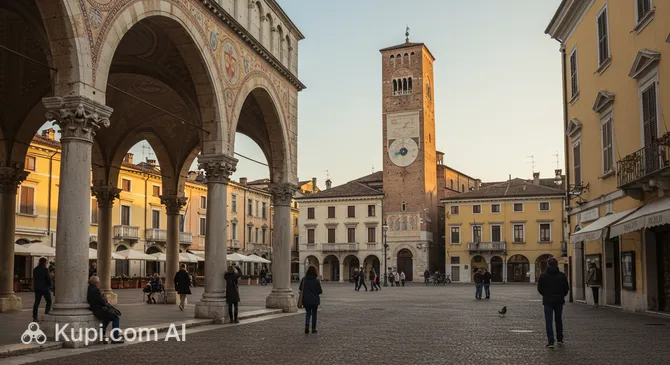
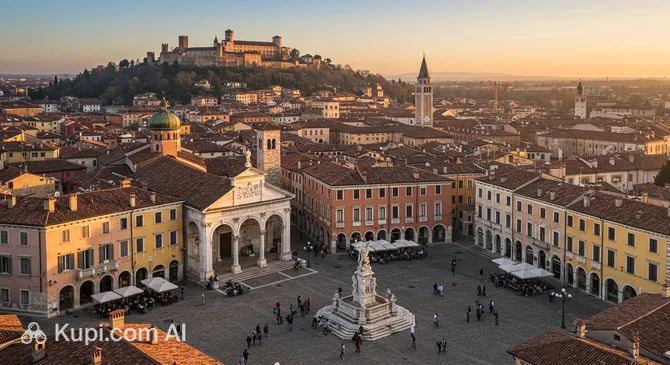
Udine. Illustration.
Source: Kupi.com AI

Udine is often called the "City of Tiepolo" because of the many masterpieces by the famous 18th-century painter that adorn local palaces and cathedrals. One of the main points of attraction is Piazza della Libertà, which is rightfully considered the most beautiful Venetian square on the mainland. No less impressive is Udine Castle, rising above the historic center, offering panoramic views of the city and the surrounding mountains.

This city is perfect for those seeking authentic experiences away from the noisy tourist crowds. Here, it is customary to stroll leisurely, enjoy art, and taste magnificent local wines in traditional taverns. Udine doesn't strive to make a loud statement about itself, but its sincere hospitality and cozy beauty make it a must-visit in the region.

Weather Overview

The weather in Udine has a pronounced seasonality, which makes the city attractive to visit at different times of the year, though it requires some wardrobe preparation. The climate here is mild but with characteristic precipitation. Summer is usually warm without exhausting heat: in July and August, the average temperature is about 22°C, with maximums reaching a comfortable 27°C. This is a great time for walking, though it's worth remembering that an umbrella might come in handy even in summer—June and July see between 16 and 17 rainy days.

Winter brings coolness, but severe frosts are rare. The coldest month is January, with an average temperature of 2.4°C and nighttime drops to -1.5°C. Spring arrives steadily, but May can surprise with frequent rainfall—statistics show up to 21 rainy days in this month, despite a pleasant warming to 18°C. In autumn, the temperature gradually decreases from 17°C in September to 7°C in November.

When planning your trip, expect a warm summer with periodic rain and cool winters. To get your wardrobe just right and choose the best dates for your visit, we recommend checking the detailed monthly weather in Udine in advance.

Average monthly temperature

Average monthly precipitation

Interesting Facts

Beyond its main attractions, Udine holds many fascinating secrets and legends that reveal themselves only to the curious traveler. Here are a few facts that will help you see this city from a new perspective:
  • Udine is often called the "most Venetian city on the mainland" due to its striking architectural similarity to Venice. The heart of this style is Piazza della Libertà, which many experts consider the most beautiful Venetian-style square located on solid ground rather than water.

  • An ancient legend about the Hun leader Attila is associated with the city's highest point. Tradition says that the hill where Udine Castle now stands was manually built by his warriors: each brought a helmet filled with earth to create a mound from which Attila could watch the burning of Aquileia.

  • The city is rightfully proud of the legacy of Giovanni Battista Tiepolo, the famous 18th-century fresco master. Udine became a kind of gallery for his work: the artist's best pieces decorate the interiors of palaces and churches, including the Udine Cathedral.

  • Despite its traditional Italian lifestyle, Udine annually transforms into the European capital of Asian cinema. The prestigious Far East Film Festival is held here, gathering film fans from all over the world and giving the city a unique international atmosphere.

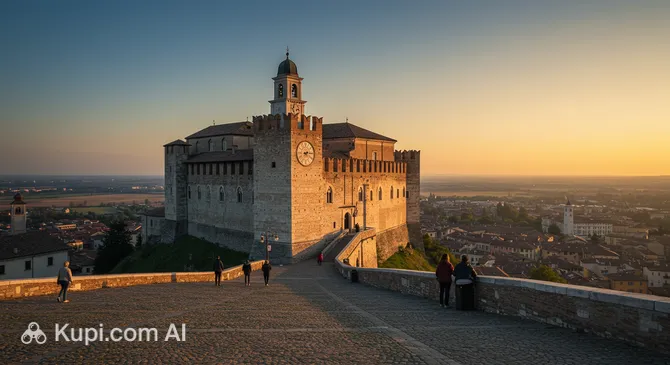
Udine Castle. Illustration.
Source: Kupi.com AI

Traveler photos:

How to Get There

Udine is located at a busy crossroads between Italy, Austria, and Slovenia, making it easily accessible for travelers. Although the city does not have its own civil airport, the region's well-developed transport network allows you to reach it easily from major international hubs. You can find out more about how to get to Udine by exploring all available routes, and below we look at the most popular and convenient options.

The nearest airport is Trieste Airport (IATA: TRS). It is located just 33 km from the center of Udine, making it a strategically convenient arrival point. This regional hub receives flights from several European cities. The journey from here by taxi, bus, or train (the station is right at the airport) takes less than an hour (usually around 40–50 minutes), which is the fastest way to get there.

If you are looking for more direct flight options, consider Venice Marco Polo Airport (IATA: VCE). This is a major international hub located approximately 93.5 km from Udine. Many flights from around the world arrive here. The trip from this airport to Udine by ground transport (direct bus or a bus+train combo) takes roughly 1.5–2 hours.

For clarity, here is summary information on the main airports within reach:

AirportPassenger trafficDistance
Trieste Airport1.3 mln33 km
Portoroz29 00072 km
Treviso Airport3 mln93 km
Venice Marco Polo Airport11.6 mln93 km
Ljubljana Jože Pučnik Airport1.4 mln96 km

Traveling by rail is another scenic and comfortable way to reach the region. An important transport hub is Venezia Mestre Railway Station (IATA: XVY). The station is located on the mainland part of Venice, about 101.5 km from Udine. High-speed trains from all over Italy arrive here. From here, you can continue your journey to Udine on a regional train; the trip takes from 1.5 to 2 hours depending on the type of train.

Another convenient option is the Trieste Centrale station (IATA: TXB). It is closer, approximately 61.5 km from Udine. The rail connection between these cities is excellent: a trip on a regional train usually takes about 1 hour, allowing you to quickly reach your final destination.

Below is a table with the nearest major railway stations:

StationPassenger trafficDistance
Trieste Centrale Station61 km
Villach Central Station4.4 mln77 km
Ljubljana Railway Station5 mln99 km
Venezia Santa Lucia Station30 mln99 km
Venezia Mestre Railway Station31 mln101 km

Main Attractions

Notable Landmarks:

Udine is a true open-air museum, where every corner breathes history and elegance. A walk through the city feels like a journey through time: from medieval streets to majestic Renaissance palazzos. There is none of the hustle and bustle of major metropolises here, allowing you to peacefully enjoy the architectural masterpieces and the region's cultural heritage.

The main symbol of the city is undoubtedly Udine Castle, which stands majestically on a hill in the historic center. It is not just a fortification but a complete cultural complex housing the Civic Museums, including a gallery of ancient art and a photography museum. Visitors who climb up here get a double treat: browsing the rich collections and enjoying a breathtaking panorama of the city against the backdrop of snow-capped Alpine peaks.

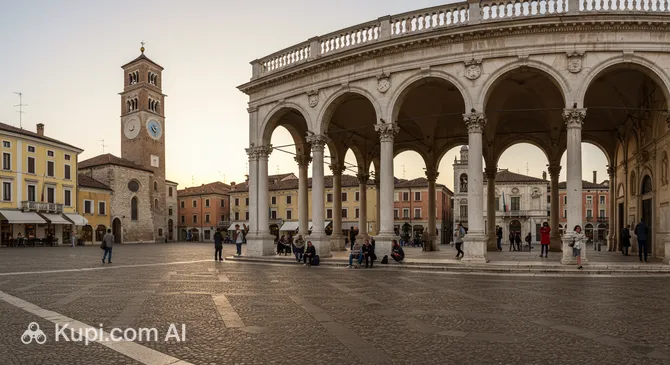
Descending from the castle hill, you will find yourself at Piazza della Libertà. This spot is often called the most beautiful Venetian square on the mainland, and it's hard to disagree. The architectural ensemble here is flawless: the elegant Loggia del Lionello with its white and pink stone harmonizes with the clock tower, reminiscent of the famous tower in Venice's St. Mark's Square. It is the perfect location for photos and quiet contemplation.

Piazza della Libertà. Illustration.
Source: Kupi.com AI

Traveler photos:

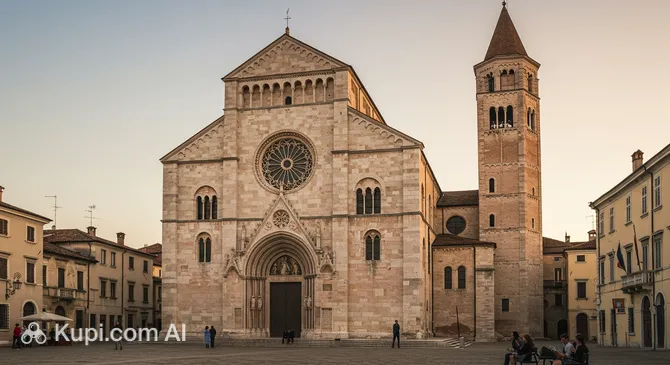
Fans of sacred architecture and painting should visit the Udine Cathedral (Duomo). From the outside, it may seem quite austere, but the interior is striking with its Baroque splendor. The cathedral's primary treasures are the works of the great Giovanni Battista Tiepolo, which decorate the chapels. Near the cathedral is the Oratorio della Purità, which also preserves stunning frescoes by this master, creating an effect of incredible depth and light.

To feel the living rhythm of the city, head to Piazza Giacomo Matteotti (or San Giacomo, as the locals call it). This is the heart of Udine's social life, surrounded by colorful old houses. Morning markets are often held here, and in the evening, the café terraces fill with people enjoying an aperitif. In the center of the square is an old fountain and a column with a statue of the Madonna, and the cozy atmosphere makes this place a favorite for both locals and tourists alike.

Local Cuisine

Udine's cuisine is a gastronomic mirror of the Friuli region, where Austrian heartiness, Slavic motifs, and Italian refinement intertwine. People here don't chase complex recipes, preferring the perfect quality of local products. The primary pride of the table remains the famous Friulian prosciutto (Prosciutto di San Daniele). This delicate, mild-tasting ham is produced in the nearby town of San Daniele, and in Udine, it is served almost everywhere as the perfect appetizer.

If you want to try something truly authentic, be sure to order frico. This is a hearty pancake made of melted Montasio cheese, often with added potatoes and onions, which can be soft or fried until crispy. This dish is considered true comfort food by the locals. Polenta is often served as a side dish, and meat lovers will appreciate the game dishes. To experience traditional cuisine, Hostaria Alla Tavernetta is an excellent choice, as they carefully preserve the region's ancient recipes.

Wine culture in Udine is not just an accompaniment to food, but a way of life. The city is surrounded by the Collio vineyards, producing some of Italy's best white wines. Be sure to take part in the local "tajut" (taj) ritual—this is what they call a glass of wine drunk with friends in a bar or osteria before lunch or dinner. Local cheeses, which can be found in restaurants and at farmers' markets, pair perfectly with the wine.

Dinner here is a leisurely affair, enjoyed in the atmosphere of old halls or cozy outdoor terraces. In addition to classic trattorias, places with history like Aquila Nera Restaurant are popular. And if you want to take a short break from the rich Friulian cuisine and have a high-quality Italian pizza, you can stop by the popular Pizzeria Da Mario. The city's gastronomic calendar is also packed with events: wine and prosciutto festivals take place regularly, turning the streets into one large tasting room.

Travel Tips

A trip to Udine promises to be peaceful and atmospheric, but even in such a cozy city, it’s useful to know the local nuances. We have gathered practical recommendations to help you avoid minor difficulties, feel confident, and focus on your vacation in the heart of the Friuli region.

  1. Clothing and Weather: The climate here is changeable due to the proximity of the Alps, so the principle of layering is relevant in any season. Be sure to bring an umbrella or a high-quality raincoat—rain in Udine is not uncommon, especially in spring and autumn. For walking on the cobblestones of the historic center, choose comfortable shoes with flat soles. When visiting cathedrals, remember the strict dress code: shoulders and knees must be covered.
  2. Transport: Udine's historic center is very compact and is best explored on foot—the main attractions are within walking distance. For trips to distant areas, it is convenient to use city buses (tickets must be bought in advance at newsstands or Tabaccheria tobacco shops; they are more expensive or unavailable from the driver). Car rental only makes sense for trips out of town; inside the center, there are Limited Traffic Zones (ZTL) where tourist entry is prohibited.
  3. Finances: The currency is the Euro. Bank cards are accepted almost everywhere, but for paying for an espresso, newspapers, or a glass of wine in small family bars, it's always better to have cash (small bills and coins). Tipping in Italy is not mandatory, as a service charge ("coperto") is often already included in the bill, but leaving 1-2 euros or rounding up the bill is considered good etiquette.
  4. Health and Safety: Udine is a quiet and safe city where you can walk without worry in the evening. Nevertheless, in crowded places (at markets and the station), keep an eye on your personal belongings. Pharmacies are easily recognized by a sign with a green cross; the schedule of on-duty pharmacies is usually posted on the door of any closed location. The emergency number is 112.
  5. Communication: The main language is Italian, though locals often communicate among themselves in the Friulian language. In city center hotels and restaurants, staff usually speak English, but a couple of phrases in Italian, such as "Buongiorno" (Good day) and "Grazie" (Thank you), will instantly win over your interlocutor. Free city Wi-Fi is available in the main squares, but for stable connectivity, it's better to buy a local SIM card (TIM, Vodafone, WindTre).
  6. Local Etiquette: Politeness plays a huge role here: always say hello when entering a shop, café, or elevator. Keep in mind the tradition of the afternoon break: many shops, museums, and even churches close for a long break (roughly from 12:30 PM to 3:30 PM). Plan your shopping for the morning or evening to avoid finding closed doors.
  7. What to Avoid: Don't try to have dinner too early—most restaurants only open their kitchens for dinner after 7:00 PM or 7:30 PM. Also, avoid ordering a cappuccino during or after a meal: for Italians, this is exclusively a morning drink. If you want coffee after lunch, order a classic espresso (un caffè).
  8. The "Tajut" Ritual: To feel like a true resident of Udine, take part in the tajut tradition. This is the ritual of drinking a glass of wine (taj) in the company of friends before a meal. Go into any osteria, order a glass of local white (Tocai friulano), and enjoy a moment of lively conversation, which the locals value so much.

Udine knows how to make you fall in love with its steady pace and sincere hospitality. Follow these simple tips, respect local traditions, and your journey will go smoothly, leaving only warm memories and a desire to return to this elegant corner of Europe.

Entertainment & Nightlife

Entertainment:

Nightlife in Udine is unlike the rowdy parties of big cities; it possesses a special charm steeped in elegance and tradition. It is not common to dance until dawn to deafening music, but the culture of socializing over a glass of wine is elevated to an art form. A local's evening invariably begins with the "aperitivo" ritual around 6:00 PM – 7:00 PM, when city bars and osterias fill with people of all ages discussing the day's news in a relaxed setting.

The epicenter of evening activity is Piazza Giacomo Matteotti and its surrounding streets, such as Via Sarpi and Via Mercatovecchio. This is where the concentration of establishments per square meter is at its highest. The atmosphere in the square is always lively and friendly: people often stand with their glasses right on the street, moving from one bar to another. The crowd here is stylish yet casual—smart casual is the norm. The dress code in most places is relaxed, though you might want to dress up a bit for cocktail bars or the theater.

Piazza Giacomo Matteotti. Illustration.
Source: Kupi.com AI

Traveler photos:

If you are looking for entertainment beyond gastronomy, the city offers interesting options for an active evening. For example, the No Exit Escape Room Udine is a popular spot to sharpen your mind and have fun with friends before dinner. For lovers of more classical cultural leisure, check the schedule at the Teatro Nuovo Giovanni da Udine, which regularly hosts concerts, opera productions, and plays, attracting a sophisticated audience from across the region.

Regarding safety, Udine is one of the quietest cities in Italy. Walking through the historic center at night is perfectly safe; the streets are well-lit and patrolled. However, public transport is infrequent at night. If you stay out late or your hotel is on the outskirts, it is better to use a taxi. Taxis are typically called by phone (Radio Taxi) or found at designated stands, as hailing a car on the street is not common here.

During the day, the city offers plenty of activities. Art enthusiasts should definitely visit the Casa Cavazzini Museum of Modern and Contemporary Art. Located in a restored historic building, it is famous for its impressive collection of 20th-century Italian art. There are also many green zones for peaceful relaxation, such as cozy park alleys where you can shelter from the midday sun.

Parks & Museums

Udine harmoniously combines Venetian architecture with cozy green oases, offering tourists a rest not only for the mind but also for the soul. The city and its surroundings are rich in places to hide from the summer heat, and local museums house collections that can surprise even seasoned art connoisseurs—from ancient archaeology to bold modernism.

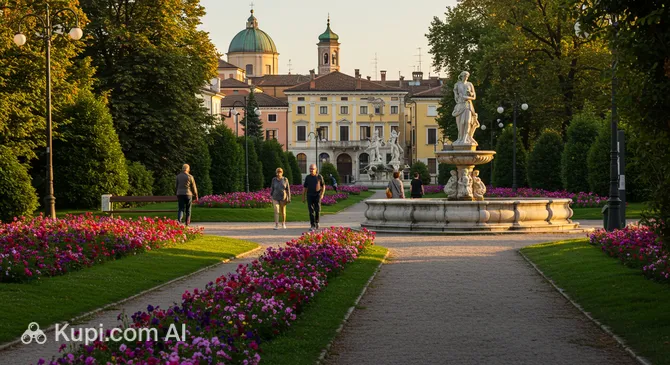
Among the city's green zones, Parco Moretti holds a special place. This historic park, located near the center, has long been a favorite resting spot for locals. It's pleasant to stroll along the shady alleys, have a picnic, or simply read a book on a bench. For tourists, this is a great opportunity to see the non-touristy side of Udine, where residents walk with their children and play sports.

Moretti Park. Illustration.
Source: Kupi.com AI

Traveler photos:

If you crave more space and connection with nature, head to Parco del Cormor, located on the northwestern outskirts of the city. This is a vast green area of over 30 hectares with jogging paths, forest trails, and relaxation zones. The park is ideal for morning runs or long walks in the fresh air, and in summer, it often hosts open-air music festivals and fairs.

A cultural program in Udine is unthinkable without visiting the museum complex housed within the walls of Udine Castle. Climbing the hill, you will find not only panoramic views but also the Civic Museums (Civici Musei). They include the Archaeological Museum with rare finds from the Friuli region, the Gallery of Ancient Art, and the Museum of the Risorgimento. This site allows you to cover a huge swath of history—from Roman times to the unification of Italy—in a single visit.

Fans of 20th-century art and contemporary trends must visit the Casa Cavazzini Museum of Modern and Contemporary Art. The museum building itself is an exhibit: during the renovation of the old palace, 14th-century frescoes were discovered, which now sit alongside avant-garde works. The collection includes masterpieces by Italian masters like the Basaldella brothers and Renato Guttuso, as well as world-class temporary exhibitions.

For those who want to dive deeper into the work of the area's main genius, we recommend a visit to the Diocesan Museum and Tiepolo Gallery (Museo Diocesano). It houses perhaps the most impressive collection of frescoes by Giovanni Battista Tiepolo. Visitors can see his early works and the famous "Guest Gallery," painted with the incredible skill and lightness characteristic of this artist.

Insider Tip: If you are looking for peace and solitude, seek out the Udine Botanical Garden (Orto Botanico Friulano). It is a hidden gem where rare plant species characteristic of the region are collected. The garden is not open every day and often goes unnoticed by tourists, making it the perfect place for quiet contemplation of nature in the heart of the urban area.

Getting Around

Udine is a fairly compact city, and its charming historic center is best explored on foot. However, if you need to reach outlying areas, the station, or large shopping centers, the public transport system is here to help. It is represented exclusively by buses. There are no metro, trams, or trolleybuses in the city, but the dense and efficient network of bus routes fully meets travelers' needs.

The main transport operator is the regional company TPL FVG. City buses are generally modern and comfortable, running from early morning (around 6:00 AM) until evening (approximately 8:30 PM – 9:00 PM). It is important to remember that during late hours and on Sundays, the number of trips is reduced, and intervals increase. To plan your trips, it is very convenient to use the official TPL FVG mobile app, which helps build routes and check schedules in real time.

The fare payment system is traditional for Italian cities. The most economical way is to purchase a ticket in advance. This can be done at newsstands, tobacco shops (look for the sign with a large "T"), vending machines at the bus station, or via the aforementioned mobile app. A standard single-trip ticket is usually valid for 60 minutes from activation and allows for transfers. Buying a ticket from the driver is possible, but it will be more expensive, and you often need the exact amount in cash.

A key point that tourists often forget: any paper ticket must be validated immediately upon boarding. Validators, usually yellow or green, are located near the doors. If you use an electronic ticket in the app, don't forget to activate it before boarding. Inspectors work regularly on the lines, and failure to validate is equated to fare evasion, which carries a substantial fine.

As an alternative to buses, bicycles are very popular in Udine. The city is flat, there are many bike lanes, and two-wheeled transport is a favorite means of travel for locals. You can use the UdineBike city rental system, with stations located at key points around the city. This is not only convenient but also allows you to experience the city's atmosphere from within.

If you need a taxi, keep in mind that in Udine it is not customary to hail a car on the street. You should look for a taxi at designated stands (for example, at the railway station or Piazza della Repubblica) or call by phone via the Radio Taxi service. Taxi apps also work here, but the classic phone call remains the most reliable method, especially at night when buses are no longer running.

Accommodation

Where to Stay:

Udine offers travelers a balanced selection of accommodation, which compares favorably to tourist-heavy Venice with more affordable prices and a peaceful atmosphere. The typical range of accommodation here varies from elegant four-star hotels in historic buildings to cozy family-run B&Bs (bed & breakfasts) and modern apartments. For budget travelers, small guesthouses and hostels are available, though their selection is not as large as in major metropolises.

The most attractive area to stay is the Historic Center (Centro Storico). Staying here puts you within walking distance of the main attractions, such as Piazza della Libertà and the museums. Living in the center allows you to enjoy morning coffee with a view of old streets and take evening strolls without needing to use transport. It is the ideal choice for those who want to fully immerse themselves in the city's atmosphere.

Udine Cathedral. Illustration.
Source: Kupi.com AI

Traveler photos:

If logistics and the ability to quickly travel to other cities in the region are important to you, consider accommodation options near the railway station. This area is only a 10–15 minute walk from the center, but prices here are often lower. This is convenient for those planning day trips to Venice, Trieste, or the mountains. You can also find modern hotels with ample parking on the outskirts of the city, which is a great solution for those traveling by car.

Booking Tip: Udine is not the most crowded tourist city, but during major events like the Far East Film Festival (usually in April) or the Friuli Doc food festival (in September), demand for accommodation spikes. For these dates, it is highly recommended to book rooms several months in advance to get the best value for money.

The price range in the city can be described as moderate. You can find a comfortable double room at a reasonable price, significantly lower than the cost of similar accommodation in Italy's popular tourist centers. Booking is most convenient through popular international online platforms, where most local properties are listed, or directly on hotel websites, which sometimes allows you to get a small bonus or discount.

Nearby Cities

For those looking to explore the surroundings, Udine serves as an excellent starting point for day trips to several interesting nearby locations. The city's location in the center of the Friuli-Venezia Giulia region allows for quick access to both historical gems and picturesque natural spots.

One of the most attractive destinations is Gorizia, located right on the border with Slovenia. This city enchants with its "borderline" atmosphere, where Italian, Slavic, and Austrian cultures blend. It is worth climbing up to the medieval castle for a view over two countries and strolling through elegant streets reminiscent of the Habsburg era.

If you enjoy the romance of canals and ancient architecture, head to Portogruaro. It is often called "little Venice on the mainland." The city's historic center, with its Gothic palaces overhanging the waters of the Lemene River and ancient mills, creates an incredibly cozy atmosphere for leisurely walks.

Also worth visiting is Codroipo, near which lies the famous Villa Manin—the majestic residence of the last Doge of Venice. This is a grand palace and park ensemble where you can touch the history of the Venetian Republic and enjoy its large-scale architecture.

Below is a table with key data on the nearest cities that are convenient to visit from Udine:

CityPopulationDistance
Pasian di Prato9 3634 km
Tavagnacco14 9817 km
Cividale del Friuli11 17615 km
Tarcento8 96417 km
Codroipo16 16523 km

These nearby destinations offer a glimpse into the diverse culture and landscapes of the region, making your trip even more fulfilling and memorable.

Shopping & Souvenirs

Shopping in Udine is a pleasant and relaxed activity, devoid of the bustle of huge metropolises but full of Italian style and elegance. The city doesn't claim to be a world fashion capital, yet it offers an excellent balance between famous brand boutiques, historic craft shops, and modern shopping centers. A feature of local shopping is its compactness: most interesting shops are concentrated in the pedestrian zone of the historic center, where storefronts hide under picturesque old arcades that provide shade in summer and shelter from rain in autumn.

The heart of the city's commercial life consists of the streets branching out from the central squares. The main artery for shopping enthusiasts is Via Mercatovecchio and the adjacent Via Rialto. Here you will find clothing boutiques, jewelry salons, and accessory shops. Strolling through these streets, you will encounter both luxury labels and high-quality mid-range Italian brands. It's also worth checking out Via Paolo Sarpi and Via Canciani, where the concentration of fashionable spots is particularly high.

If you are looking for large shopping complexes where you can find everything from electronics to mass-market fashion, Udine offers several worthy options. In the northern part of the city lies the popular Terminal Nord retail park. It is a convenient spot with a large parking lot and many international chain stores, perfect for large-scale purchases. For those who prefer shopping in a historical setting, the elegant Galleria Bardelli is located in the center—a small but very atmospheric passage connecting several streets and offering a more intimate shopping experience.

Special attention should be paid to the city markets, which are part of the culture in Italy. The most colorful of them takes place in Piazza Giacomo Matteotti. In the mornings, you can buy the freshest local produce, flowers, and seasonal fruits here. It is the perfect place to feel the city's living pulse. Antique markets are also regularly held in Udine (usually on the first Sunday of the month), where collectors can find old books, furniture, and vintage jewelry.

As for souvenirs, people primarily bring home gastronomic treasures from the Friuli region. At the top of the list is the famous Prosciutto di San Daniele, which rivals Parma ham in taste and quality. Be sure to look for local Montasio cheese of various aging levels. Alcohol connoisseurs should pick up a bottle of white wine from the Collio zone or traditional grappa, for which this region is famous (e.g., the Nonino brand). For non-edible souvenirs, "scarpets"—traditional handmade velvet slippers with embroidery—are popular.

When planning your shopping trip, remember the business hours. Most small boutiques and shops in the center close for a lunch break (siesta) roughly from 12:30 PM to 3:30 PM. On Sundays and Monday mornings, many shops may be closed, except for large shopping centers. Card payments (Visa, Mastercard) are accepted almost everywhere, but it's better to have some cash in Euros for markets or small souvenir purchases.

Tourists residing outside the European Union can take advantage of the Tax Free system. If your purchase in a single store exceeds the legal minimum (we recommend checking the current threshold at the checkout, as it was recently lowered in Italy to 70 euros), ask for a special invoice (fattura) for a VAT refund when leaving the country. Look for "Global Blue" or "Tax Free Shopping" stickers in shop windows.
Reached the end of the page?

That means the route is fully explored