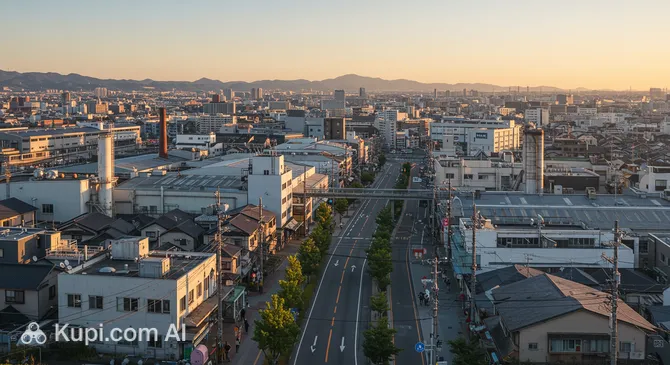
Higashiosaka is a dynamic and industrious city located in Osaka Prefecture on the island of Honshu, in the very heart of Japan. As the eastern neighbor of the Osaka metropolis, it possesses a unique atmosphere as a "city of craftsmen," where modern industry harmoniously coexists with cozy residential neighborhoods. With a population of over 500,000 people, Higashiosaka is an important industrial center that has nonetheless preserved the spirit of traditional Japanese hospitality.
Higashi Osaka. Illustration.
Source: Kupi.com AI
The city is famous for its contribution to technological development and manufacturing, which is why it is often called the "capital of small-scale engineering." Despite its industrial status, Higashiosaka attracts travelers who want to get acquainted with the authentic history of the development of Japanese manufacturing and see the daily life of ordinary citizens away from the noisy tourist traps.
Among the city's key features are its famous shrines and unique museums, which reveal the cultural depth of the region. Its geographical position on a plain, surrounded by other major cities of the metropolitan area, makes Higashiosaka a convenient starting point for exploring the Kansai region. We invite you to discover this "city of factories," where cozy parks and rich traditions are hidden behind the industrial facades.
Weather Overview
In Higashiosaka, a temperate monsoon climate characteristic of the Kansai region prevails. The weather here is highly seasonal: expect hot, humid summers with frequent rain and cool, mostly dry winters. You can always check the current forecast and learn more about the weather in the city before you head out.
The hottest periods are July and August, when average temperatures reach +30–32°C with very high air humidity. During this time, typhoons bringing heavy rainfall are not uncommon. Winters in the city are mild, with daytime temperatures in January ranging between +5–10°C, and snow falls very rarely and usually melts quickly.
The best time to visit is considered to be spring (April–May) and autumn (October–November). During these months, the temperature settles at a comfortable +18–22°C, and nature is a delight to the eye: in spring with cherry and plum blossoms, and in autumn with the bright colors of momiji maples.
Average monthly temperature
Average monthly precipitation
Interesting Facts
Higashiosaka is a city that knows how to surprise with its scale and unique character. Here are a few facts to help you get to know it better:
City of Craftsmen: Higashiosaka officially holds the title of the "City of Manufactures." More than 6,000 small and medium-sized enterprises are concentrated here—one of the highest concentrations of factories in Japan.
Space Ambitions: Local small businesses are so technologically advanced that they teamed up to create an artificial Earth satellite called "Maido-1," which was successfully launched into space.
Heart of Sports: The city is home to Hanazono Stadium, considered the mecca of Japanese rugby and the oldest dedicated rugby stadium in the country.
Compact and Dense: Despite its industrial status, the population density here exceeds 8,000 people per square kilometer, making the city very compact and lively.
How to Get There
Thanks to its location in the center of the densely populated Kansai region, Higashiosaka boasts excellent transport accessibility. The city is integrated into the general communications network of Osaka Prefecture, making travel here fast and comfortable from both other regions of Japan and from abroad. You can study a detailed route to the city in advance to plan your trip as efficiently as possible.
The nearest international gateways are Kansai Airport (KIX) and the domestic Itami Airport (ITM). A trip by car or bus from Kansai takes about 40–60 minutes, though possible traffic congestion on ring roads during rush hours should be considered. From Tokyo, it is most convenient to take the Shinkansen high-speed train to Shin-Osaka station and then transfer to a local line, which takes about 3 hours in total.
The railway service is the "circulatory system" of the city. Major lines such as the JR Osaka Higashi, Kintetsu, and Keihan provide regular connections to central Osaka (Namba and Umeda stations). The trip from central hubs to key city stations, such as Fuse or Kawachi-Kosaka, takes 15 to 30 minutes, making Higashiosaka very convenient for daily commuting.
Station
Passenger traffic
Distance
Tennōji Station
22
9 km
Ōsaka Station
22
10 km
Ōsaka Station
22
10 km
Yamato-Saidaiji Station
15
17 km
Kyōto Station
33
37 km
Main Attractions
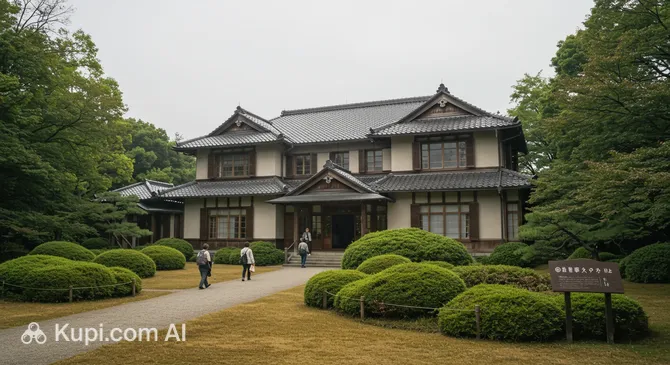
Although Higashiosaka is primarily known as an industrial center, there are true cultural gems hidden here. One of the most unusual attractions is the Shiba Ryotaro Memorial Museum. This site is dedicated to one of Japan's most prolific writers. The museum's main feature is a stunning library with shelves several stories high, housing more than 20,000 of the author's books, creating an incredible atmosphere for lovers of literature and architecture.
Shiba Ryotaro Memorial Museum. Illustration.
Source: Kupi.com AI
Traveler photos:
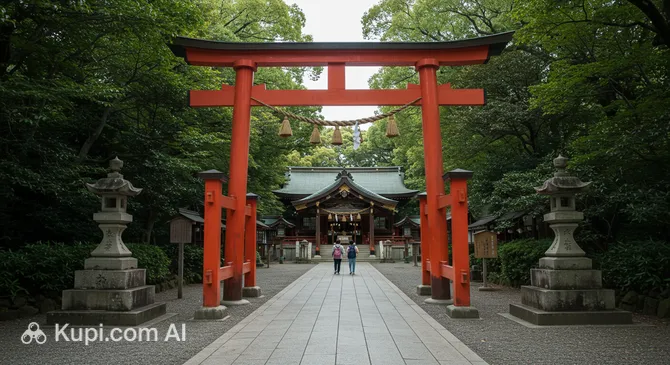
For those seeking tranquility and spiritual solitude, the Ishikiri Tsurugiya Shrine is a must-visit. This ancient Shinto shrine is immensely popular with locals who come here to pray for healing. A walk along the adjacent shopping street will allow you to immerse yourself in the atmosphere of old Japan and try traditional treats.
Ishikiri Tsurugiya Shrine. Illustration.
Source: Kupi.com AI
Traveler photos:
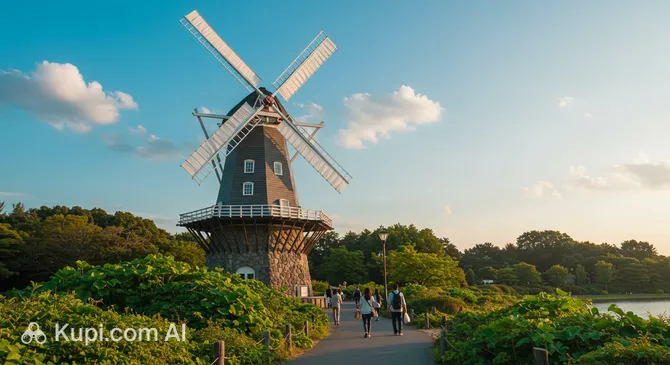
If you want to take picturesque photos, head to the Windmill at Tsurumi Ryokuchi Park. Located on the city's border, this Dutch-style windmill is surrounded by seasonal flowers—tulips in spring or salvias in summer. It is an ideal place for leisurely walks and outdoor relaxation surrounded by beautiful landscapes.
Tsurumi Ryokuchi Park Windmill. Illustration.
Source: Kupi.com AI
Traveler photos:
Local Cuisine
The gastronomic scene in Higashiosaka is a celebration of flavors typical of the Osaka region, which is often called the "nation's kitchen." A cult of hearty and affordable street food reigns here. Be sure to try takoyaki—tender dough balls with pieces of octopus—and okonomiyaki, which are prepared here with special skill. In the city's industrial districts, you will find many authentic ramen shops serving rich broth, favored by local workers for its nutritional value.
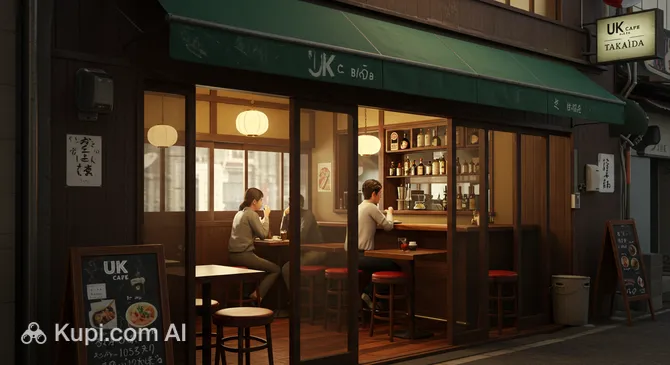
For those seeking a cozy atmosphere and refined cuisine, the restaurant Chez Noix is worth a visit. This establishment is famous for its attention to detail and European flair, offering a great alternative to traditional Japanese eateries. Another notable spot is UK Cafe Takaida, which attracts visitors with its unusual retro design and hearty American-style portions, making it a true legend among locals.
UK Cafe Takaida. Illustration.
Source: Kupi.com AI
Traveler photos:
Dining culture in the city is closely linked to the railway: the best and most affordable establishments are concentrated near the stations. In the evening, it's worth stopping by a local "izakaya" to order a glass of cold Japanese beer and an assortment of fried dishes. Higashiosaka doesn't strive for Michelin stars, but it is here that you will find the most honest and delicious Japanese food at reasonable prices.
Travel Tips
Visiting Higashiosaka will allow you to see Japan without embellishment, just as the Japanese themselves know it. To ensure your trip goes smoothly and leaves only pleasant impressions, use our practical tips.
Clothing by Season: In the Kinki region, summers are very humid and hot, so choose light clothing made of natural fabrics. Winters can be quite chilly, so don't forget a warm jacket. No special dress code is required for visiting shrines like Ishikiri Tsurugiya, but a neat appearance is recommended.
Transport Lifehack: Be sure to purchase a rechargeable card (ICOCA or Suica). This will save you a lot of time at stations. Avoid traveling during rush hours (07:30–09:00) if you don't want to experience the full tightness of Japanese commuter trains.
Finances: Although cards are accepted in malls and hotels, Higashiosaka is a city of small shops and family restaurants where cash is still a priority. Always carry yen with you. There is no tipping culture in Japan—attempting to leave one may embarrass the staff.
Safety: The city is very safe, but in the evenings, industrial zones can be deserted and noisy due to freight transport. Try to stick to well-lit residential neighborhoods after dark.
Connectivity: Wi-Fi is available at major stations and in hotels. For navigation, it's better to buy a local SIM card or rent a pocket router directly at the airport, as it is difficult to navigate the maze of small streets without maps.
Local Etiquette: You must remove your shoes when entering some traditional restaurants or private homes. Loud phone conversations on public transport are considered the height of rudeness.
What to Avoid: Do not attempt to enter factory premises without prior arrangement—this is private property with operating equipment.
Cycling: If possible, rent a bicycle. It is the most popular and convenient way to move around the flat streets of Higashiosaka.
We hope these tips help you feel at home in Higashiosaka and enjoy every moment of your trip!
Entertainment & Nightlife
The nightlife in Higashiosaka is more relaxed and local in character compared to the neighboring entertainment districts of Osaka. Most activity after sunset is concentrated around major railway stations, such as Fuse. Here you will find many cozy bars and traditional Japanese "izakaya" pubs, where local workers and office employees unwind after a workday.
One of the popular spots for evening leisure is Karaoke Mega Big Fuse Ekimae. This is an excellent venue for large groups, where you can rent a private room and sing your favorite hits in a relaxed setting. If you prefer a quiet evening with drinks and snacks in a stylish interior, check out Kichiri Fuse Ekimae—this popular spot offers a modern atmosphere and a diverse menu.
For those looking for large-scale nightclubs or loud dance floors, it is recommended to take a 15–20 minute trip to Osaka's central districts like Namba or Umeda. However, Higashiosaka is perfect for feeling the authentic rhythm of a Japanese suburb, visiting small bars, and enjoying safe walks along the lit streets of the night city.
Parks & Museums
Despite its high building density, Higashiosaka offers several unique spots for cultural and natural relaxation. The most outstanding site is certainly the Shiba Ryotaro Memorial Museum. The museum's architecture, designed by the famous Tadao Ando, is a work of art in itself, and the massive wall of books inside leaves a lasting impression even on those unfamiliar with the writer's work.
Shiba Ryotaro Memorial Museum. Illustration.
Source: Kupi.com AI
Traveler photos:
Nature lovers should head to the eastern part of the city, where Hiraoka Park is located. It is especially beautiful in late February and early March when one of the largest plum groves in the prefecture blooms here. This place is a true oasis of silence, offering magnificent panoramic views of the entire Osaka valley.
Another interesting point on the city map is the Windmill at Tsurumi Ryokuchi Park. Although the main part of the park is in the neighboring district, the windmill is a recognizable symbol of this part of the city. Flower beds are always laid out around it, with views that change depending on the season, creating the perfect backdrop for family vacations or quiet contemplation of nature amidst the city bustle.
Tsurumi Ryokuchi Park Windmill. Illustration.
Source: Kupi.com AI
Traveler photos:
Getting Around
The transport system of Higashiosaka operates with legendary Japanese precision. The foundation of movement is the railways of three companies: JR West, Kintetsu, and Keihan. The JR Osaka Higashi line conveniently connects the city with the hub stations of the metropolis, while Kintetsu trains allow you to quickly reach not only central Osaka but also ancient Nara. Railway transport is the fastest way to get around, although it's worth remembering that during morning hours (from 7:30 to 9:00), trains can be very crowded.
Inside the city districts, there is a well-developed network of buses that complement the railway routes, delivering passengers to more remote residential and industrial zones. For fare payment, it is best to use contactless ICOCA, Suica, or Pasmo cards—they work on all types of transport and eliminate the need to buy paper tickets before each trip. You can buy and top up a card at machines at any station.
For short trips around the neighborhood, locals often use bicycles, which are very popular here thanks to the flat terrain. Taxis are available in the city 24/7 and can be called via popular apps (such as GO or Uber) or hailed near stations. However, for tourists, the most effective and economical method remains a combination of trains and walking through the compact central quarters.
Accommodation
Accommodation options in Higashiosaka are primarily geared towards practical travelers and business tourists. You won't find a vast number of luxury five-star hotels here, but the city offers a decent selection of high-quality business hotels and apartments at very attractive prices. The cost of a standard room usually ranges between 5,000–10,000 yen per night, making the city an excellent base for budget-friendly exploration of the Kansai region.
The most convenient areas to search for accommodation are the neighborhoods around Fuse and Kawachi-Eiwa stations. Staying here provides quick access to the railway lines leading directly to central Osaka or Nara. These areas also have many small restaurants and shops that stay open late, adding convenience for tourists.
If you are planning a trip during "Golden Week" (late April – early May) or during the cherry blossom season, it is recommended to book your accommodation 2–3 months in advance. In addition to traditional hotels, apartment rentals can be found in the city's residential quarters, allowing you to feel like a local and save on food by using your own kitchen.
Nearby Cities
Thanks to its location at the junction of major transport arteries, Higashiosaka serves as an excellent starting point for exploring the surrounding areas. In just 15–30 minutes by train, you can reach the center of Osaka, where the bustling Dotonbori district and the historic castle await. However, the city's immediate neighbors also offer plenty of interest for the curious tourist.
Very nearby is the city of Daito, which attracts history buffs with its ancient temples and picturesque walking trails along the slopes of the Ikoma Mountains. It is also worth visiting Yao, known for its traditional festivals and industrial heritage, which is very similar in atmosphere to Higashiosaka but possesses its own unique flavor.
Don't limit yourself to just the metropolises—the small cities of the Kansai region hide the genuine charm of Japan. Convenient railway connections make it easy to plan day trips, returning in the evening to the calm atmosphere of your hotel.
Shopping & Souvenirs
Shopping in Higashiosaka is a reflection of daily life in a Japanese city. You won't find luxury boutiques of global brands here, but you can make practical and interesting purchases. The main center of trade is the covered Fuse Shopping Street (Shoten-gai). A walk through this traditional shopping gallery will allow you to find everything from fresh local produce to affordable clothing and household items.
If you prefer a modern format, large shopping centers in the vicinity, such as Aeon Mall, are at your service. These are ideal places for buying high-quality Japanese electronics, cosmetics, and everyday clothing from popular Japanese brands. Shops in such centers usually operate from 10:00 to 21:00, and many offer a Tax-Free system for foreign tourists upon presentation of a passport.
As souvenirs from Higashiosaka, it is worth bringing back metal products or small gadgets produced in local factories—they are famous for their impeccable quality. Traditional Japanese sweets from the shops near Ishikiri Shrine are also popular. International cards are accepted for payment in large centers, but it is better to have cash yen with you in small shops on the trading streets.