Support

Tsuboya Pottery Street

About

Tsuboya Pottery Street (Tsuboya Yachimun-dori) is a charming historical district located in the city of Okinawa, Japan, renowned as the heart of traditional Okinawan pottery. It is a place where history and craft intertwine, offering visitors a unique look at the island's rich cultural heritage.
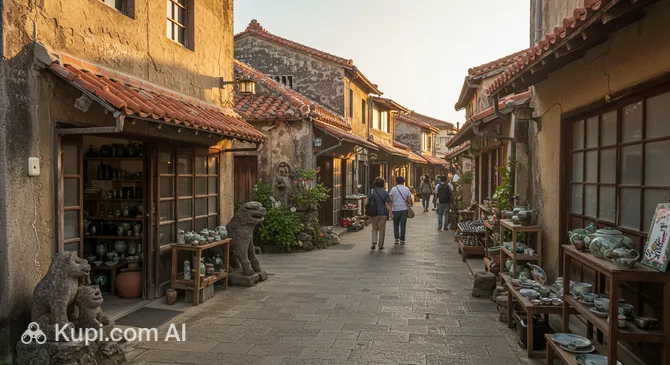
Tsuboya Pottery Street. Illustration.
Source: Kupi.com AI

Traveler photos:

The history of this district dates back to the 17th century when the Ryukyu Kingdom decided to centralize pottery production here in Naha (part of modern Okinawa). Since then, Tsuboya has become a center of attraction for masters and connoisseurs of ceramics, preserving ancient production traditions and serving as one of the most important cultural hubs in Okinawa.

Strolling along Tsuboya Pottery Street, you will find many pottery workshops where you can observe local artisans at work creating traditional Okinawan ceramics. There are also numerous shops offering a wide selection of unique handmade items—from traditional tableware to modern art objects. For a deeper dive into the history and techniques of local pottery, the museum dedicated to this art is well worth a visit.

Visiting Tsuboya Yachimun-dori is not just an opportunity to buy original souvenirs, but also a chance to touch one of the island's oldest crafts and see how centuries-old traditions, passed down through generations, are preserved and developed. It is an unforgettable experience for anyone interested in the culture and art of Japan.

Contacts

For accurate information about Tsuboya Pottery Street, including the opening hours of individual workshops or the Tsuboya Pottery Museum, which is part of this district, it is best to contact the Naha City Tourist Information Center. Current information can also be found on the official tourism portals of Okinawa.

The street itself is a public space located in the Tsuboya district of Naha, Okinawa. It is easily accessible by public transport or taxi, making it a convenient place to visit and stroll around.

How to contactContact
Address1 Chome-16 Tsuboya, Naha, Okinawa 902-0065, Japan

What to Do

Tsuboya Pottery Street in Okinawa is an enchanting place where visitors can immerse themselves in the world of the region's traditional pottery. Walking down this street, you will find numerous pottery shops and workshops, each offering unique items created by local artisans. Here, you can not only admire the finished works but also feel the atmosphere of centuries-old traditions passed down through generations.

The main attraction of the district is rightfully considered the Tsuboya Pottery Museum. Its halls display an extensive collection of ceramic items from various eras, allowing you to trace the history of pottery development in Okinawa. Museum visitors can learn about the intricacies of the production process and the characteristic techniques of local masters. Special attention is given to the two main types of local ware: jo-yachi—elegant glazed items fired at a high temperature of 1200°C, and ara-yachi—coarser, unglazed pottery fired at lower temperatures.

In addition to visiting the museum, you can purchase a variety of traditional ceramic items on Tsuboya Street. Especially popular are the "karakara" pitchers for the local alcoholic beverage awamori, convenient "dachi-bin" pocket flasks, or "masubin" measuring containers for awamori. These authentic souvenirs will be a wonderful reminder of your trip. While there is no specific information about regular workshops, you can often observe potters at work, and with a bit of luck, you might even try your hand at creating your own ceramic masterpiece.

Getting There

Tsuboya Pottery Street is located in the central part of Naha, the capital of Okinawa Prefecture. Thanks to its central location, reaching this colorful street is quite easy for tourists exploring the city.

While specific public transport routes are not listed in the provided data, it is safe to assume that numerous city bus lines lead to the Tsuboya area. Naha has a well-developed public transport system, and stops are likely within walking distance of the pottery street. Taking a taxi is also a good option, especially if you are traveling with luggage or value comfort and speed.

A great landmark for finding Tsuboya Street is the city's main shopping thoroughfare, Kokusai-dori Street. It stretches for two kilometers and is a popular spot for both tourists and locals. From Kokusai-dori, you can walk to the pottery street while enjoying the city's atmosphere. This is an excellent opportunity to combine shopping with an introduction to local crafts.

Nearest city: Okinawa

History & Facts

Tsuboya Pottery Street in Okinawa is more than just a street; it is a living history of Japan's ceramic art, with roots stretching back centuries. Its history began about 300 years ago, when by decree of the Ryukyu Kingdom authorities, all of Okinawa's ceramic workshops were concentrated in this area. A landmark event was the 1682 unification of three major pottery centers—Wakuta, Chibana, and Takaraguchi—under the auspices of the government. It was then that the Tsuboya district in the former capital of Naha (now part of Okinawa) officially became the heart of the famous Ryukyu pottery production.

A key role in establishing Tsuboya as a ceramic hub was played by the master Hirata Tenshu. By royal command, he was sent to China to study pottery. Returning home in that same landmark year of 1682, Hirata Tenshu established the first kilns in Naha, which gave rise to Tsuboya's fame. The items created in this area became known as tsuboya-yaki (壺屋焼). A hallmark of tsuboya-yaki ceramics is their predominantly glazed finish, which gives the pieces a special shine and durability, making them recognizable worldwide.

Pottery production is one of the oldest crafts in Okinawa, and Tsuboya Street is a vivid testament to that. This place attracts special interest due to its rich history and cultural significance for the island. The uniqueness of Tsuboya lies in the fact that pottery production here has never ceased. Masters have passed down their knowledge from generation to generation, and the products themselves have simply changed their purpose, adapting to the needs of different eras—from simple household utensils to exquisite art pieces valued by collectors today.

Time Needed

To get a general overview of Tsuboya Pottery Street in Okinawa, including a walk down the street itself, visiting several pottery shops, and perhaps the Pottery Museum, you should plan for about 2-3 hours. This is usually enough time to enjoy the atmosphere of this unique place, look at the local masters' work, and take a few memorable photos.

If you are a true ceramics enthusiast and plan to study the museum's exhibits in more detail, watch the potters at work, or even participate in a workshop (if available), it is better to set aside half a day for your visit to Tsuboya Pottery Street. This approach will allow you to immerse yourself deeper into the world of traditional Okinawan craft and perhaps purchase some unique souvenirs.

Working Hours

Tsuboya Pottery Street in Okinawa is a charming district that is generally accessible for walking during the daytime. A key site on the street is the Tsuboya Pottery Museum. It is open to visitors from 10:00 AM to 6:00 PM, with the ticket counter closing 30 minutes before the museum closes. Please note that the museum is closed on Mondays.

As for the numerous pottery workshops and shops located along Tsuboya Pottery Street, their working hours may vary. Most likely operate during standard retail hours, but for the most up-to-date information, it is recommended to check directly on-site or on the official websites of specific workshops. Advance booking for a stroll along the street itself is usually not required, but if you plan to attend a workshop at one of the potteries, it is worth checking in advance if a reservation is necessary.

Nearby

Visiting Tsuboya Pottery Street in Okinawa is undoubtedly a highlight, but exploring the surrounding area can significantly enrich your experience. Checking out nearby attractions will allow you to dive deeper into the city's atmosphere, discover new interesting spots, and get a more complete picture of the culture and life in Japan.

The area around Tsuboya Pottery Street offers a variety of options to continue your journey. Whether it's museums, lively streets, or cozy establishments, you will find plenty of ways to complement your itinerary and make your trip even more fulfilling and memorable.

NameDistance
Naha City Tsuboya Pottery Museum0.1 km
Voyager Stand Okinawa0.5 km
Hotel Collective0.6 km
Southwest Grand Hotel0.8 km
A Long Vacation0.8 km
Churasan 6 Okinawa1.3 km
Okinawa Prefectural Museum & Art Museum1.6 km

Have you reached the end of the page?

So the route has been studied inside and out