Support

Tenri

About

Tenri is a charming and cozy city located in Nara Prefecture, in the heart of Honshu island, Japan. It is situated in a picturesque area surrounded by green hills and valleys, just a few kilometers from the ancient capital, Nara. This location makes Tenri an excellent starting point for exploring the historical Kansai region and immersing yourself in the unique atmosphere of tranquility inherent in small Japanese towns.

Administratively, Tenri is part of Nara Prefecture, covering an area of about 86.37 km² with a population of approximately 63,760 people. The city is famous for its harmonious blend of antiquity and modernity, well-kept streets, traditional houses, and friendly residents who carefully preserve their cultural heritage. There is no hustle and bustle of megacities here; Tenri seems to invite you to slow down and enjoy the leisurely pace of the Japanese countryside.

Tenri. Illustration.
Source: Kupi.com AI

For travelers, Tenri is a real treasure trove of experiences. Here you can walk along ancient routes that have held the stories of the past for centuries, visit unique temples imbued with the spirit of antiquity, and admire the beauty of the surrounding nature. The city also offers the opportunity to discover little-known pages of Japanese history and culture, far from popular tourist paths.

If you are looking for authentic Japan, want to touch its origins, and enjoy a peaceful, calming atmosphere, Tenri will be an excellent choice for you. This city will provide unforgettable impressions and allow for a deeper understanding of the rich culture of the Land of the Rising Sun.

You can find more interesting facts on the history of Tenri page.

Weather Overview

When planning a trip to Tenri, it's worth considering the seasonal weather patterns. Overall, you can expect a warm summer with occasional rain and cool, drier winters. Summer months, especially July and August, are characterized by average temperatures around 26-28°C and the highest amount of rainfall (up to 7 mm and 17 rainy days in July). In winter, specifically January and December, the average temperature stays around 4-6°C, and precipitation is minimal (about 2 mm). To better plan your trip, take a closer look at Tenri's monthly climate.

Average monthly temperature

Average monthly precipitation

Interesting Facts

Besides its famous shrines, the city of Tenri holds many surprising stories and features that make it a truly unique place in Japan.

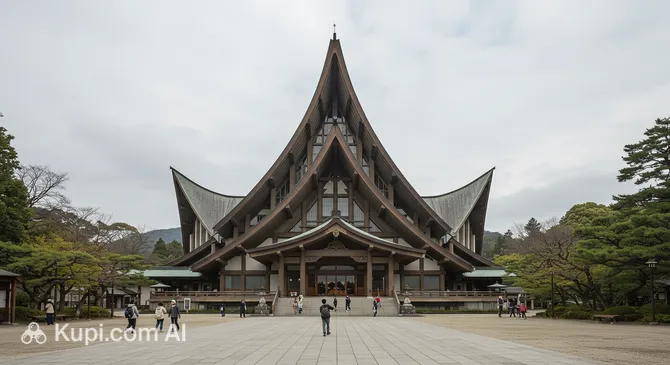
Tenrikyo Church Headquarters. Illustration.
Source: Kupi.com AI

Traveler photos:

  • It is in Tenri that the famous Yamanobe-no-Michi begins – the oldest hiking trail in Japan. This path, winding through picturesque hills, connects the historical cities and shrines of the Kansai region and is considered the place where Japanese statehood was born.

  • The city is the world center of the Tenrikyo religious movement, which emerged in the 19th century. The Tenrikyo Main Temple is located here, where thousands of pilgrims from all over the world gather annually to connect with its teachings and sacred sites.

  • The surroundings of Tenri are rich in archaeological finds documenting ancient settlements of the Yayoi period. One of the most important historical sites, preserving ancient artifacts and legends, is the Isonokami Jingu Shrine, one of the oldest in Japan.

  • Tenri is also known for its traditional festivals, during which you can witness rare rituals and folk dances passed down from generation to generation, reflecting the region's rich cultural history.

How to Get There

You can reach Tenri in several ways, and the choice often depends on your starting point and travel preferences. The main transport hubs serving the region are large airports and railway stations in neighboring cities.

If you are arriving from afar, the most likely option will be by air. The closest airport to Tenri is Itami Airport (ITM), located in Osaka, approximately 42.1 km away. This major airport primarily serves domestic flights. A trip from Itami Airport to Tenri by taxi or using a combination of public transport (e.g., a bus to the nearest train station and then a train) will take roughly 1 hour 20 minutes to 1 hour 30 minutes.

The main international gateway for the region is Kansai International Airport (KIX). It is also in Osaka, on an artificial island in Osaka Bay, about 57.6 km from Tenri. This is one of Japan's largest airports with an extensive network of international and domestic flights. You can get from here to Tenri by train (with possible transfers), bus, or taxi. A taxi ride will take about 1 hour 45 minutes to 2 hours. It is also worth considering Chubu Centrair International Airport (NGO) in Nagoya, which is located about 93.3 km from Tenri and also offers many international destinations.

For convenience, here is a summary of the main airports:

AirportPassenger trafficDistance
Itami Airport14.8 mln42 km
Kobe Airport3.6 mln56 km
Kansai International Airport30.6 mln58 km
Chubu Centrair International Airport12.3 mln93 km
Shirahama Airport438 413112 km

Rail travel is also a popular option for moving around Japan. Although Tenri itself may not have a major hub station serving long-distance routes, you can use stations in nearby cities. For example, Fukai Station is located in the city of Sakai, about 32 km from the center of Tenri. From there, Tenri can be reached by local train, bus, or taxi in about 1 hour.

For your convenience, information about the nearest railway station is provided below:

Additionally, Tenri can be reached by car using Japan's well-developed highway network. If you are traveling by private or rental car, be sure to plan your route in advance and account for potential toll roads. Well-marked roads lead to Tenri from major cities in the region like Osaka or Nara.

Main Attractions

Tenri, a city with deep spiritual roots and a unique atmosphere, offers travelers several outstanding attractions. These places not only reflect the rich cultural and religious heritage of the region but also provide a deeper understanding of Japanese history.

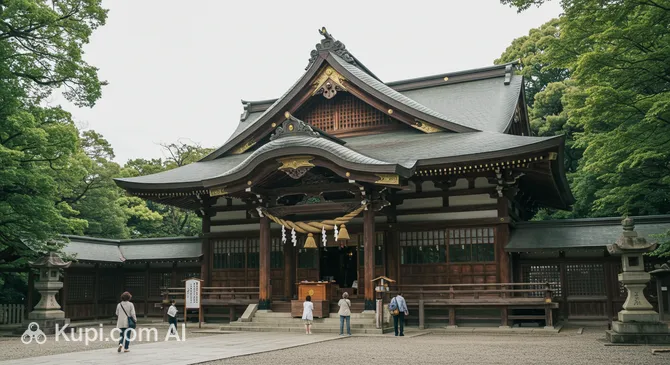
The central point in the spiritual life of the city and its main attraction is, undoubtedly, the Tenrikyo Main Temple. This grandiose complex serves as the headquarters of the Tenrikyo religion and attracts pilgrims and curious tourists from all over the world. Its monumental architecture, vast prayer halls, and special atmosphere of peace make a lasting impression. Visiting the temple provides an opportunity to learn the basics of this religious teaching and see its influence on the life of the city.

Tenrikyo Church Headquarters. Illustration.
Source: Kupi.com AI

Traveler photos:

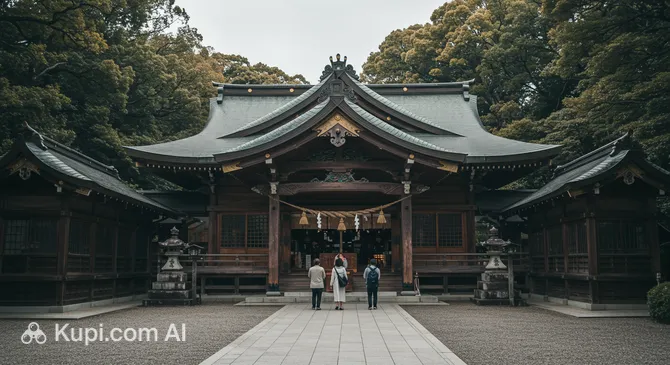
Another iconic site is the Isonokami Jingu Shrine. This is one of the oldest Shinto shrines in Japan, with its history reaching back centuries. The shrine is known for reportedly housing the legendary sword Futsunomitama-no-Tsurugi, one of the symbols of imperial power. For tourists, this place is interesting for its rich history, beautiful traditional architecture, and the chance to encounter ancient Japanese beliefs.

Isonokami Shrine. Illustration.
Source: Kupi.com AI

Traveler photos:

Not far from Tenri is the Oyamato Shrine, which also holds great historical and cultural significance. This ancient shrine is dedicated to the deity Yamatototohimomosohime-no-Mikoto and is connected to the early history of the Yamato state. Surrounded by picturesque nature, it attracts visitors with its calm atmosphere and the opportunity to see ancient rituals and architectural styles characteristic of Shinto shrines.

Oyamato Shrine. Illustration.
Source: Kupi.com AI

Traveler photos:

Local Cuisine

The gastronomy of Tenri is a true immersion into the culinary traditions of Nara Prefecture, where every dish tells a story of the region. The cuisine here is famous for its authenticity and the use of the freshest local products. If you are looking for genuine Japanese flavors away from the noisy megacities, Tenri will be a pleasant gastronomic discovery for you.

Be sure to try the famous local dish – "kakinoha-zushi". This is rice with fish (often mackerel or salmon) skillfully wrapped in persimmon leaves, which give the treat a special subtle aroma and help maintain freshness. This dish is a legacy of ancient trade routes and a testament to the locals' love for natural ingredients. Furthermore, Tenri's cuisine vividly reflects the changing seasons: in spring, dishes are made from fresh mountain herbs; in summer, cold noodles with vegetables are enjoyed; autumn brings treats made from chestnuts and sweet potatoes; and in winter, hearty miso and tofu-based soups provide warmth.

In addition to exquisite seasonal dishes, simple but incredibly tasty street food is popular in Tenri. At local markets and in small shops, you can find appetizing onigiri rice balls with various fillings, hot fried pastries, and traditional Japanese sweets made from rice flour (mochi). This is a great way to quickly and affordably get to know the everyday cuisine of the locals.

Regarding drinks, green tea in its many variations is popular in Tenri, as it is throughout Japan. Among alcoholic beverages, pay attention to local sake, as Nara Prefecture is considered one of the historical centers of its production. You can also find shochu and various fruit liqueurs.

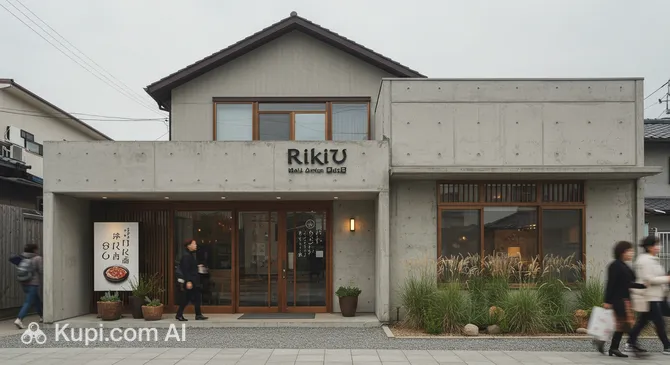
The food culture in Tenri encourages leisurely enjoyment of meals in a cozy setting. Locals and tourists often prefer small family-run cafes and restaurants that serve homemade dishes prepared according to old recipes. One such place to experience the local cuisine is the Rikio restaurant. Farmers' markets also play an important role, offering not only fresh products but also the chance to try street food. Here, you can feel the true atmosphere of the city and the hospitality of its residents.

Rikiō. Illustration.
Source: Kupi.com AI

Traveler photos:

Tenri is also known for its gastronomic festivals held throughout the year. At these events, you can not only taste various local treats but also participate in workshops on preparing traditional dishes, gain a deeper understanding of the secrets of Japanese cuisine, and simply have a good time. A trip to Tenri is a chance to discover the real Japanese province through its unique flavors and culinary traditions.

Travel Tips

Planning a trip to Tenri? This unique city in Nara Prefecture, Japan, is the world center of the Tenrikyo religion and offers its guests a special, peaceful atmosphere. To make your journey truly unforgettable and hassle-free, we've prepared some practical tips.

  1. Clothing and Essentials: The climate in Tenri, like all of Japan, is clearly divided into four seasons. In summer (June-August), it is hot and humid – choose light, breathable clothing. In winter (December-February), it can be quite cold, so don't forget warm clothes, including a hat and gloves. Spring (March-May) and autumn (September-November) are the most comfortable seasons with moderate temperatures. Be sure to bring comfortable walking shoes, as the city and its surroundings are great for exploration on foot. When visiting Tenrikyo's many religious sites, modest clothing covering shoulders and knees is recommended. Don't forget an adapter for electrical appliances (Japan uses type A and B sockets, 100V).
  2. Getting Around the City: Tenri is a relatively small city, and many of its central parts are pleasant to explore on foot. For longer trips, you can use local buses. If you plan to travel to neighboring major cities like Nara, Osaka, or Kyoto, the rail connections (Kintetsu and JR lines) are very convenient and efficient. We recommend purchasing an IC card (e.g., ICOCA, Suica, or Pasmo) – it will significantly simplify paying for public transport not only in the Kansai region but throughout Japan. Taxis are available but can be a rather expensive option. A rental car is unlikely to be necessary for getting around Tenri itself.
  3. Financial Matters: The national currency is the Japanese Yen (JPY, ¥). Although cashless payments are becoming more common, cash is still very important, especially in small shops, some temples, and traditional restaurants in Tenri. You can exchange currency at the airport upon arrival or at banks in major cities. International bank cards are accepted in most hotels, large department stores, and at railway stations. ATMs where you can withdraw cash with foreign cards are easily found in post offices (Japan Post Bank) and 7-Eleven convenience stores. Tipping in Japan is not practiced and may be taken as a misunderstanding. An estimated daily budget (excluding accommodation and major purchases) can range from 7,000 to 15,000 yen.
  4. Health and Safety: Tenri, and Japan in general, is considered one of the safest places in the world. The crime rate here is extremely low. Pharmacies (薬, kusuri) are easy to find, marked with the corresponding character or the word "Drugstore". However, many medications may require a prescription, and the range may differ from what you're used to, so bring a supply of necessary medicines with you. For serious medical assistance, it's better to go to large hospitals in Nara or Osaka, where there's a higher chance of finding English-speaking staff. Be sure to arrange travel medical insurance before your trip.
  5. Language and Communication: The official language is Japanese. In Tenri, as in many small cities in Japan, English proficiency among the local population may not be high, especially outside of tourist sites. Learn a few basic Japanese phrases: "konnichiwa" (hello/good day), "arigato gozaimasu" (thank you very much), "sumimasen" (excuse me/sorry), "wakarimasen" (I don't understand). This is greatly appreciated by locals and will help you communicate. For navigation and translation convenience, install offline maps and a translator app on your smartphone. You can purchase a tourist SIM card or rent a pocket Wi-Fi router at the airport or order online in advance – this will ensure you have stable internet access.
  6. Local Etiquette and Traditions: Japanese people are very polite and place great importance on etiquette. Greetings are usually accompanied by a bow; its depth depends on the status of the person and the situation. In public places, especially on transport, try not to talk loudly on the phone and maintain quietness. Before entering many temples, traditional houses, and some restaurants (especially those with tatami), it is customary to remove outdoor shoes. Follow the rules when visiting Tenrikyo sacred sites: be quiet, respectful, and do not take photos where it is prohibited.
  7. What to Avoid: Do not stick your chopsticks vertically into a bowl of rice – this is associated with funeral rituals. It is not customary to eat while walking on the street (except in designated areas at fairs or festivals). Also, avoid loud arguments or showing negative emotions in public. Do not point at people or objects with your finger – use an open palm instead.
  8. Special Tip – Tenrikyo Spiritual Center: Tenri is the global center and a sacred place for followers of the Tenrikyo religion. The main sites of the religious complex, including the Jiba (the spot where human life began according to Tenrikyo teachings), the main temple, and associated museums (such as the extensive and interesting Tenri Sankokan Museum with ethnography and archaeology collections from around the world), are open for all to visit. This is a unique opportunity to encounter a living religious tradition and culture. Show respect and curiosity, and you will discover a very special side of Japan.

We hope these tips help you better prepare for your visit to Tenri and fully enjoy its unique culture, hospitality, and calm, meditative atmosphere. We wish you an amazing and educational journey to this special corner of Japan!

Entertainment & Nightlife

Evening Tenri offers its guests a calm and cozy atmosphere, distinct from the noisy nightlife of megacities. Here, entertainment is focused more on pleasant pastimes in local establishments rather than loud parties until dawn. The city, known as the center of the Tenrikyo religion, encourages a more peaceful rest after a busy day.

One of the popular ways to spend an evening in Tenri is dining at one of the local restaurants. Here, you can enjoy traditional Japanese cuisine in an authentic setting. For example, for a pleasant dinner, you might consider the Rikio restaurant, which serves local dishes. After dinner, many prefer leisurely walks through the city's quiet streets.

Rikiō. Illustration.
Source: Kupi.com AI

Traveler photos:

As for a more lively nightlife, in Tenri it is represented mainly by small local bars such as izakaya (traditional Japanese pubs), where you can try local drinks and snacks in a relaxed atmosphere. You can also find karaoke venues, a popular entertainment in Japan. The atmosphere in such places is usually friendly and welcoming, gathering mostly a local crowd. Large nightclubs or specialized nightlife districts typical of big cities are likely not common in Tenri. These establishments usually operate until late evening or midnight, and the dress code is generally casual.

When planning your evening leisure, it's best to aim for the time after 7:00 PM – 8:00 PM when most izakaya open. Prices in local establishments are usually moderate. You can get around the city at night by taxi, which is easy to call, or on foot if your accommodation is near the center. Tenri, like most cities in Japan, is considered a safe place for night walks, though it's always worth taking standard precautions.

During the day, Tenri offers a rich cultural program. Guests of the city can visit significant sites such as the Tenrikyo Main Temple, which is a spiritual center, or the ancient Isonokami Jingu Shrine. The Oyamato Shrine is also worth attention. In addition to religious sites, you can find parks for walking and small local museums introducing the history and culture of the region in and around the city.

Parks & Museums

The city of Tenri invites you to discover its rich spiritual heritage and enjoy the tranquility of its iconic sites, where history intertwines with a peaceful atmosphere. While there may not be traditional city parks or numerous museums in the classic sense, the city's cultural and historical sites offer unique experiences.

Central to the cultural and spiritual life of Tenri is the Tenrikyo Main Temple. This is not just a religious building but a vast complex with impressive architecture, serving as the heart of Tenrikyo teachings. It attracts both pilgrims and tourists who wish to experience its unique atmosphere, learn more about the religion, and admire the scale of the structures. The temple grounds are well-maintained and perfect for leisurely strolls.

One of the oldest and most revered sites in the vicinity is the Isonokami Jingu Shrine. It is famous for its centuries-old history and the national treasures kept here, including ancient swords. The shrine is surrounded by forest, creating a sense of peace and seclusion, making it a wonderful place to encounter Shinto traditions and enjoy nature.

Another significant spiritual location is the Oyamato Shrine. This ancient shrine, dedicated to an important deity, is also located in a picturesque area. Visitors come here to feel a connection with history and enjoy the calm and beauty of the surrounding nature. A walk through its territory can be a meditative experience.

While Tenri doesn't have a large number of traditional museums, the temple complexes and shrines themselves often act as keepers of history and culture. For example, the Tenrikyo Main Temple grounds may have exhibitions or information centers telling the history and philosophy of Tenrikyo teachings, as well as the life of its foundress. These places offer a deep immersion into the city's cultural heritage.

For a more authentic experience, walk along the quiet streets around the main shrines, where you can observe the measured life of the city. Pay attention to the local architecture and small gardens often found at residential homes.

Getting Around

Public transport in Tenri offers convenient ways to get around the city and its surroundings, although it is not as extensive as in megacities. The backbone of the transport system consists of trains and buses, typical for Japanese cities of this size.

Main types of transport:

Trains: Tenri is served by railway lines such as the JR Sakurai Line (also known as the Manyo Mahoroba Line) and the Kintetsu Tenri Line. Trains are the primary way to reach Tenri from neighboring cities like Nara or Osaka, as well as for moving between certain districts. Stations are usually equipped with everything necessary for passengers.

Buses: Local bus routes are likely operated by the Nara Kotsu Bus company. Buses connect railway stations with various parts of the city, including residential areas and attractions that are not easily accessible on foot. Schedules are usually posted at stops, but they may not always be in English, so it's useful to have a route planner app.

Payment system:

In Tenri, as throughout Japan, rechargeable IC cards like ICOCA (common in the Kansai region), Suica, or Pasmo are very convenient. These cards can be used to pay for train and bus fares by simply tapping them against the reader at the turnstile or on the bus. You can buy and top up an IC card at machines in major railway stations.

You can also purchase single tickets. For trains, these are bought at station machines before the trip (the price depends on the distance). On buses, payment is usually made upon boarding or exiting; if you don't have an IC card, be prepared to pay in cash (exact change is sometimes required).

There are also various passes for tourists covering the Kansai region (e.g., Kansai Thru Pass or JR Kansai Area Pass), which can be beneficial if you plan to travel around the area extensively, including Tenri. Specialized passes just for Tenri likely do not exist.

Practical tips for tourists:

Buying tickets: Single train tickets at station machines. For buses – pay the driver or use an IC card validator. IC cards are purchased and topped up at railway stations.

Validation: Tap your IC card against the reader at the entrance and exit of railway stations, and upon boarding (sometimes also upon exiting) buses. Paper train tickets are inserted into the turnstile.

Operating hours: Public transport usually starts early in the morning (around 5-6 AM) and finishes near midnight. Intervals may be longer on weekends and holidays. It's always useful to check the current schedule, especially for buses.

For route planning, it's convenient to use online maps or Japanese transport apps (e.g., JapanTravel by Navitime, Google Maps), which show schedules and transfer options.

Alternatives to public transport:

Taxis: Available, especially near railway stations. This is a comfortable but more expensive way to travel, particularly for long distances.

Bicycle rental: Tenri is a relatively compact city, and renting a bike can be a great way to explore it, especially for visiting temples and parks at your own pace. Rental points can be found near stations or tourist centers.

Walking: The central part of the city and some attractions are quite accessible on foot, allowing you to better feel the atmosphere of Tenri.

No unique forms of transport, like a historical subway or cable car, are observed in Tenri. The city's transport system is functional and oriented toward the needs of residents and visitors, providing access to main points of interest.
Accommodation

When planning a trip to Tenri, you will find several accommodation options suitable for different preferences and budgets. The city offers standard hotels as well as more authentic Japanese guest houses (minshuku), and occasionally traditional ryokans, where you can immerse yourself deeper into the local culture. The choice varies from budget options to more comfortable mid-range offerings.

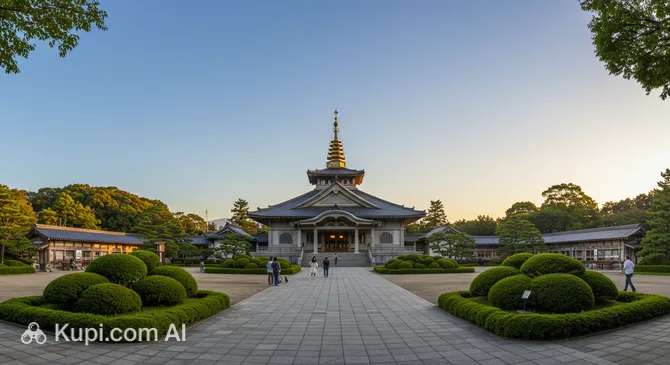
For tourists, areas located near the main attractions may be particularly convenient. For instance, staying near the Tenrikyo Main Temple will allow easy access to this significant religious center. It is also worth considering options near transport hubs, if available, to ensure convenient connections to other interesting places in the region.

Tenrikyo Church Headquarters. Illustration.
Source: Kupi.com AI

Traveler photos:

Although the provided list of attractions does not include specific hotels, various accommodation options can be found in Tenri. Being an important center for Tenrikyo followers, the city has the infrastructure to welcome visitors. The price range varies: you can find both inexpensive guesthouses and mid-level hotels with a good range of services.

To ensure you get the best accommodation option, especially if your trip coincides with major religious events or peak tourist season, it is recommended to book your stay in advance. The most common booking methods include popular online platforms, contacting travel agencies, or, in some cases, booking directly through the websites of hotels or guesthouses.

Nearby Cities

For those looking to explore the surroundings, Tenri serves as an excellent starting point for day trips to several interesting nearby locations. Among them, the following stand out:

  • Nara: Located just 10 km away, Nara is the ancient capital of Japan and is famous for its magnificent park, where friendly deer roam freely, as well as majestic temples like Todai-ji, which houses the famous giant Buddha statue. This place is a must-visit for history and culture enthusiasts.
  • Ikoma: Situated about 16 km from Tenri, the city of Ikoma attracts visitors with Mount Ikoma, offering breathtaking panoramic views of the surroundings from its summit. It also features the popular Ikoma Sanjo Amusement Park, which is great for families.

These and other settlements in the region offer diverse opportunities for short trips. Below is a table featuring some of the nearest cities to Tenri:

CityPopulationDistance
Tawaramoto30 9506 km
Sakurai54 3469 km
Kawai16 9839 km
Nara352 37710 km
Koryo33 61710 km

These nearby destinations allow for a deeper insight into the diverse culture, history, and landscapes of the Kansai region, complementing the experience of visiting Tenri.

Shopping & Souvenirs

Tenri, known primarily as the spiritual center of the Tenrikyo religion, offers a unique experience for shopping enthusiasts. You won't find huge shopping complexes here like in Japan's megacities, but you can immerse yourself in the atmosphere of local shops offering unique goods related to the region's culture and traditions, as well as items of religious significance.

The main shopping spots in Tenri are generally concentrated around Tenri Station and along the streets leading to the major religious sites, such as the Tenrikyo Main Temple. In these areas, you can find small shops, souvenir stalls, and establishments serving both locals and the many pilgrims and tourists.

Large modern shopping centers in the Western sense are unlikely to be found in Tenri. However, you may come across small local department stores or traditional Japanese shopping arcades (shotengai), especially in the station area. For more extensive shopping in large malls, a trip to larger cities in Nara Prefecture or neighboring regions may be necessary.

While Tenri may not have large tourist markets, you can find small stalls selling fresh local products. Occasionally, temporary fairs selling local delicacies and handicrafts may be organized at temples or during festivals. Check out local grocery stores to discover regional specialties.

From Tenri, it's worth bringing back souvenirs that reflect its unique character. These might include items related to the Tenrikyo religion (if you are interested in the subject and approach the choice with respect), such as books, charms, or symbolic crafts. Also, look out for traditional Nara Prefecture crafts: for example, Akahada-yaki ceramics, Nara-fude calligraphy brushes, or local Narazuke pickles. Of course, classic Japanese souvenirs like high-quality tea, traditional sweets (wagashi), and small handmade items are always relevant.

Most shops in Tenri are typically open from 10:00 AM or 11:00 AM to 7:00 PM or 8:00 PM. Small family-run shops may have individual schedules and a closing day during the week. As for payment, cash (Japanese yen) is still widely used, especially in small shops and markets. Credit cards are accepted in larger establishments and shops oriented toward tourists. Transport IC cards may also be accepted for small purchases.

Foreign tourists in Japan can take advantage of the Tax-Free system for purchases over 5,000 yen (excluding tax) at licensed stores. Look for the "Tax-Free Shop" sign. To process the tax refund, you will need to present your passport at the checkout. This system applies to many goods, including souvenirs, clothing, electronics, and cosmetics.

Reached the end of the page?

That means the route is fully explored