Support

Irbid

About

Irbid, known among locals as the "Bride of the North," is a vibrant and dynamic center in northern Jordan. Located approximately 70–100 kilometers from Amman, this city is the second most populous in the country and the unofficial capital of the northern region. Although the city is not considered a typical tourist resort, it possesses a unique energy that combines traditional Arabic flavor with a modern student drive.

Situated at an altitude of about 583 meters above sea level, the city enjoys pleasant Mediterranean air. Irbid owes its modern appearance largely to its status as a major educational center: it is home to Yarmouk University and the Jordan University of Science and Technology. The vast number of young people has turned the city into a hub with countless cozy cafes, bookstores, and lively streets that don't quiet down until late evening.
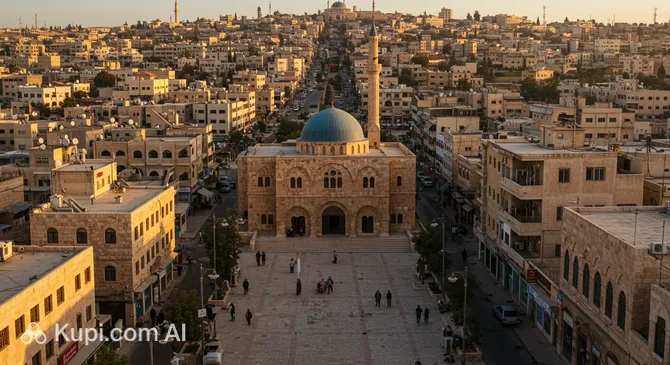
Irbid. Illustration.
Source: Kupi.com AI

For the traveler, Irbid is primarily interesting as a point of contact with the real, unvarnished life of the country and as a convenient base for exploring northern archaeological sites. The city's rich history dates back to ancient times when it was known as Arbila. Today, you can see architectural heritage from the Ottoman period and visit interesting museums housing artifacts from the Bronze Age.

A visit to this city is an invitation to immerse yourself in an atmosphere of hospitality and everyday bustle. We recommend stopping by here to feel the rhythm of modern Jordan, stroll through the university quarters, and enjoy authentic cuisine in local eateries before heading to the famous ruins of Umm Qais or Pella.
Weather Overview

Irbid is characterized by a classic Mediterranean climate with distinct seasons. Due to its elevated location, the weather here is usually a few degrees cooler than in the Jordan Valley, making a stay in the city more comfortable during the summer months.

Summer in the city is hot and virtually rainless: in July and August, daytime temperatures often rise to +33...+35°C, but low humidity helps to bear the heat more easily. Winter, by contrast, brings cool weather and the bulk of the precipitation. In January, the average temperature is about +10°C, and at night it can drop to +6°C. Snow occasionally falls on the hills around the city, but it melts quickly.

The optimal time to visit is spring (March–May) or autumn (October–November), when nature is in bloom and the heat has not yet taken full effect. To better plan your wardrobe, we recommend studying the detailed Irbid climate in advance, as even in spring, the difference between daytime and nighttime temperatures can be quite significant.

Average monthly temperature

Average monthly precipitation

Interesting Facts

  • Irbid earned the poetic nickname "Bride of the North" due to its strategic position as a vital transport hub connecting the south of the country with Syria and the northern regions.

  • The city is home to Yarmouk University, considered one of the leading educational institutions in the Middle East; more than 22,000 students study here, shaping the city's unique demographic profile.

  • The modern city stands on the site of the ancient settlement of Arbila, which is mentioned in historical chronicles as a significant Aramean center long before the arrival of the Romans.

  • Despite the dense construction, Irbid is located at a significant altitude—583 meters above sea level—which provides a milder and cooler climate compared to Jordan's desert regions.

  • It is the country's third-largest urban agglomeration, surpassed in size and population only by the capital Amman and industrial Zarqa.

How to Get There

Irbid is the main transport gateway to the northern part of the country, making it easily accessible for travelers. The city is connected to Jordan's largest population centers by a network of modern highways. The main flow of tourists arrives here from the capital, covering a distance of about 80 kilometers, which allows for planning even a day trip.

For those flying into Jordan on an international flight, the nearest major air hub is Queen Alia International Airport in Amman. The journey from the airport to Irbid by taxi will take about an hour and a half, provided there are no traffic jams. You can also use the comfortable buses from the JETT company, which run regularly between Amman and the northern capital; the ticket price is usually around 5–7 Jordanian dinars.

AirportPassenger trafficDistance
Marka International Airport150 00066 km
Haifa Airport275 00080 km
Queen Alia International Airport9.2 mln94 km
Ben Gurion International Airport21.1 mln109 km
Damascus International Airport2.1 mln113 km

Railway communication in the region is currently poorly developed, so buses and taxis remain the main modes of travel. If you plan to explore ways to get to Irbid in detail, it's worth noting that the city's bus stations are divided by direction: the southern station serves routes to Amman, while the northern platforms serve routes toward Umm Qais and Ar-Ramtha.

StationPassenger trafficDistance
Bakhsha Station203 km

A trip in a rental car is an excellent option for those who value freedom of movement. From Amman, you should head north on the main highway, but be prepared for heavy traffic and possible congestion at the city entrance during peak hours. In Irbid itself, traffic can be chaotic, so many prefer to leave their car in the hotel parking lot and get around the center on foot or by taxi.

Main Attractions

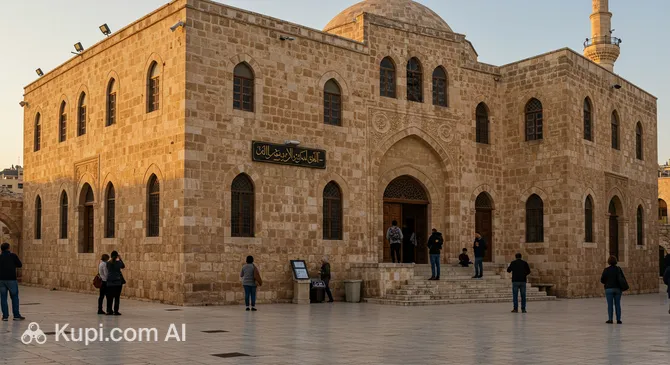
Although Irbid is primarily known as a university center, there are several iconic landmarks in the city itself that deserve attention. One of the main gems is the Dar Al-Saraya Ottoman Museum. This fortress-like building was built in the mid-19th century and served as the residence of the local governor. Today, its halls house an exhibition telling the rich archaeological history of northern Jordan.

Dar As Saraya Ottoman Museum. Illustration.
Source: Kupi.com AI

Traveler photos:

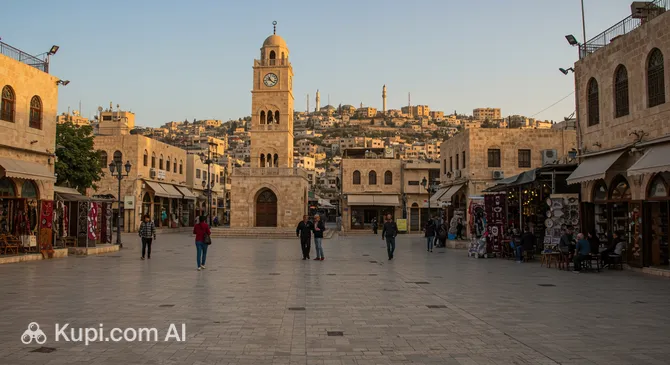
The heart of city life is considered to be the Irbid Clock Tower Square. This recognizable landmark serves as a meeting point for thousands of students and residents. Trade bustles around the square, with numerous shops and street cafes allowing you to feel the city's daily rhythm. It's the best place to simply watch the life of the "Bride of the North."

Irbid Clock Tower Square. Illustration.
Source: Kupi.com AI

Traveler photos:

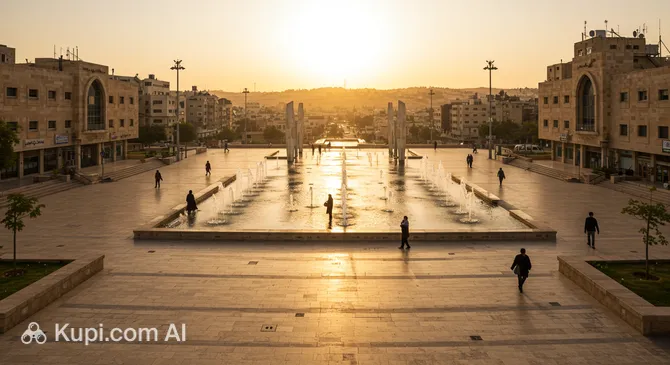
Another important point on the city map is the Al-Hassan Youth City Square. This space symbolizes the modern stage of Irbid's development, being part of a large sports and cultural complex. Public events are often held here, and the area itself is popular among those who prefer active recreation and walks in the fresh air.

Al Hasan Youth City Square. Illustration.
Source: Kupi.com AI

Traveler photos:

For lovers of antiquity, Irbid serves as the perfect "gateway" to the region's famous archaeological sites. The ruins of ancient Gadara (Umm Qais), with breathtaking views of the Sea of Galilee, and ancient Pella are just a 30–60 minute drive away. In the city itself, it is also worth visiting the Museum of Jordanian Heritage at Yarmouk University, which houses rare Ain Ghazal statues that are over 9,000 years old.

Local Cuisine

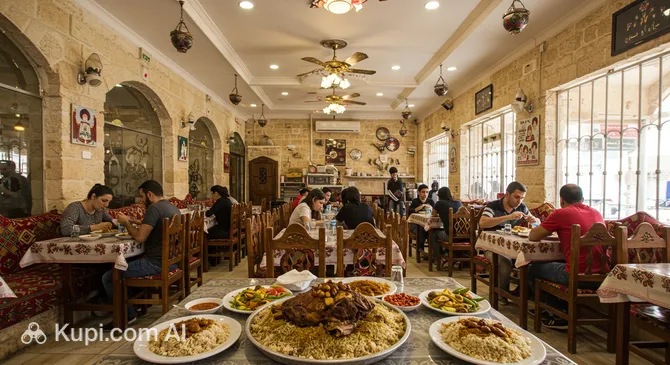
A gastronomic journey to Irbid is an introduction to the heartiest and most aromatic traditions of the Middle East. The city's cuisine is deeply rooted in Jordanian traditions, where hospitality takes center stage. The main dish that every guest must try is mansaf—tender lamb simmered in a sauce of dried fermented yogurt (jameed), served on a large platter with rice and thin flatbreads.

For those looking for the authentic taste of this legendary dish, Al Silawi Mansaf Restaurant, which specializes in classic recipes, is an excellent choice. Here you can feel the atmosphere of a real Arabic lunch, where food brings people together at a shared table. If you want variety, check out Al-Shamal Lebanese Restaurant, which serves magnificent mezze, the freshest salads, and aromatic grilled meats.

Al-Silawi Mansaf Restaurant. Illustration.
Source: Kupi.com AI

Traveler photos:

Street food in Irbid is a treat in itself, especially in the student quarters. Here, at every turn, you can find stalls with hot falafel, creamy hummus, and spicy shakshuka. Be sure to try local pastries fresh from the oven and wash them down with traditional Arabic coffee with cardamom or refreshing ayran. Thanks to the large number of students from different countries, the city's gastro scene is constantly being updated with new budget-friendly establishments featuring modern fast food.

To end a meal in Irbid, it's worth trying Oriental sweets: knafeh or baklava, which are prepared here with special skill. In the evening, local markets are filled with the aromas of spices and grilled meat, creating the unique atmosphere of an Oriental bazaar, where food is not just satisfying hunger but part of the cultural code.

Travel Tips

Before heading to the "Bride of the North," check out these useful tips that will help make your trip to Irbid as comfortable and interesting as possible.

  1. Clothing and Dress Code: Choose modest and conservative clothing, especially when visiting mosques, such as Masjid Shorhbil. Jordan is a conservative country, so shoulders and knees should be covered. In summer, light natural fabrics are useful, and in winter, a windbreaker is needed as it can be cool at high altitudes.
  2. Getting Around the City: It is most convenient to move around in yellow taxis or on foot in the center. Note that during peak hours (7:00–9:00 and 16:00–18:00), the city comes to a standstill in traffic jams, so plan your time in advance.
  3. Finances: The official currency is the Jordanian dinar (JOD). Shopping malls accept cards, but in markets and small cafes, cash is absolutely necessary. You can exchange money at numerous banks in the city center.
  4. Health and Water: Drink only bottled water. It is sold everywhere and is inexpensive. Pharmacies are common in the center, and the staff usually speak good English.
  5. Communication: The main language is Arabic, but thanks to the student environment, many young people speak English quite well. Learn a couple of basic phrases: "Marhaba" (Hello) and "Shukran" (Thank you)—this always brings a smile.
  6. Local Etiquette: Greeting is very important in Jordan. Don't be surprised by long handshakes and questions about "how things are." Bargaining in markets is a normal practice; do it politely and with a smile.
  7. What to Avoid: You should not take photos of people (especially women) without their permission, or of military installations. Also, refrain from eating in public during the daytime during the month of Ramadan.
  8. Specific Tip: Visit the Yarmouk University area in the evening—it's the liveliest place in the city with the best and cheapest street food.

Irbid will give you sincere emotions and warm memories if you are open to communicating with locals and respectful of their traditions. Have a great trip!

Entertainment & Nightlife

The entertainment scene in Irbid has a distinct youth and student character, but it remains fairly quiet compared to the capital. Traditional nightlife with clubs and noisy parties is virtually non-existent here due to the conservative nature of the region. Instead, the center of activity shifts toward the numerous cafes and hookah lounges located around Yarmouk University, where life bustles until late evening.

One of the popular places to spend time is The Study House—a space that combines the atmosphere of a modern co-working area and a cafe, where students and tourists can relax in a quiet environment. If you are interested in larger public spaces or sporting events, you should pay attention to venues such as the Officers Club Arena, where local events and meetings are sometimes held.

The Study House. Illustration.
Source: Kupi.com AI

Traveler photos:

For those seeking classic evening entertainment—cinemas, large shopping malls, and chain restaurants—the main activity is concentrated in the University Street area. It is safe to walk here in the evening, and for moving around at night, it is best to use an official taxi, which can be easily called via an app or hailed on the street. If you crave a real club atmosphere, locals usually plan a trip to Amman, located an hour and a half away.

Parks & Museums

Cultural life in Irbid is centered around its educational and historical centers. A must-visit place is the Dar Al-Saraya Ottoman Museum. Housed in a magnificent restored Ottoman-era building, the museum invites guests to explore archaeological finds covering a vast period from prehistoric times to the Islamic era. A walk through its courtyard and halls literally allows you to touch the region's past.

No less significant is the Museum of Jordanian Heritage at Yarmouk University. It is one of the best scientific collections in the country, displaying artifacts found during excavations in Pella and Umm Qais. The pride of the collection is the unique anthropomorphic statues from Ain Ghazal, considered among the oldest depictions of humans in the world. For history buffs, this place will be a real revelation.

As for green zones, Irbid is a typical densely built Middle Eastern city where the role of parks is often fulfilled by open public spaces. A popular place for walks is the Irbid Clock Tower Square, which serves as a center of attraction for residents. It is also worth visiting Al-Hassan Youth City Square, where conditions are created for recreation and sports. For more extensive outdoor recreation, residents often choose trips to the nearby hills, which offer breathtaking views of the Jordan Valley.

Getting Around

The transport system in Irbid is simple and oriented toward the needs of the local population and the numerous students. The core of public transport consists of city buses and "services" (shared taxis)—white cars that run on fixed routes. This is the most affordable way to get around: the fare usually does not exceed 1 Jordanian dinar, but during peak hours, the cars can be crowded, and traffic jams occur on the roads.

For tourists, the most convenient option for moving around the city is a regular taxi (yellow). A trip within the city will cost a few dinars, but it is recommended to ensure the driver turns on the meter or to agree on a fixed price beforehand. Popular international ride-hailing apps don't always work stably in Irbid, so it's often easier to catch a car right on the street.

Walking is a great way to explore the compact city center and the university quarters. Most interesting places, cafes, and bookstores are located within walking distance of each other. If you plan to travel to the surrounding archaeological sites, it is best to rent a car or arrange with a taxi driver for the whole day, as regular bus service to distant attractions can be inconvenient in terms of timing.

Accommodation

The hotel infrastructure in Irbid is specific and primarily oriented toward business travelers, transit tourists, and students. You won't find a huge number of luxury five-star resorts here; however, the city offers a decent selection of mid-range hotels and budget apartments that are ideal for a short-term stay.

The most convenient area to stay is the neighborhood around Yarmouk University. Most available guesthouses and private apartments are concentrated here, with plenty of inexpensive cafes and shops nearby. The cost of living in such places ranges from 20 to 50 Jordanian dinars per night, making Irbid a very affordable city for budget travelers.

If you plan to visit the city during the start of the academic year or during major university conferences, it is recommended to book accommodation in advance, as demand from students and their families increases sharply. The main booking methods are popular international services, although in small local guesthouses, you can still arrange a place upon arrival.

Nearby Cities

Thanks to its location in the north of the country, Irbid serves as an excellent starting point for exploring the region's most interesting corners. From here, it is easy to reach historical monuments and neighboring cities, each with its own character. The city's surroundings are rich in fertile lands and ruins of ancient civilizations, making day trips rewarding and varied.

Just 15 kilometers away is Ar-Ramtha—an important industrial and trade center on the border, which is interesting for its border-town character. For those who prefer a quieter atmosphere and historical walks, a trip to Al-Husn is ideal, where you can see traditional architecture and feel the rhythm of provincial Jordan. Both destinations are easily reachable by local bus or taxi in 20–30 minutes.

CityPopulationDistance
Al Hisn35 0859 km
Al Mazar ash Shamali16 00011 km
Ash Shajarah27 90213 km
Ar Ramtha155 69315 km
At Turrah34 94816 km

Don't miss the opportunity to visit legendary archaeological sites such as Umm Qais (ancient Gadara) and Pella. These places are within an hour's drive of Irbid and offer tourists a unique opportunity to walk among Roman colonnades and amphitheaters while enjoying panoramic views of the Jordan River Valley. Exploring these surroundings will allow you to see Jordan from a completely different, green, and historically multi-layered side.

Shopping & Souvenirs

Shopping in Irbid is a fascinating blend of traditional Oriental bazaars and modern shopping centers. The city is not a mecca of high fashion, but it offers an excellent selection of everyday goods, books, and authentic souvenirs. The main commercial activity is concentrated around University Street and in the old city center, where shops follow one another in an endless kaleidoscope of colors.

If you prefer a modern format, you should visit Irbid City Center. It is one of the largest malls in the region, featuring both international brands and local labels. Here you can find everything from clothing and electronics to perfumes, as well as relax in the food court. Another popular spot is Arabella Mall, which is very popular with locals for its convenient location and cozy atmosphere.

Irbid City Center. Illustration.
Source: Kupi.com AI

Traveler photos:

For local flavor and souvenirs, it's best to head to the central markets (souks). Here, you should pay attention to high-quality Arabic spices, freshly roasted coffee with cardamom, and traditional sweets. In museum shops, you can find replicas of archaeological finds. Shops in Irbid usually operate from 10:00 until late evening, and shopping malls accept bank cards, although you will definitely need cash—Jordanian dinars—in the markets.

Nearby cities

Reached the end of the page?

That means the route is fully explored