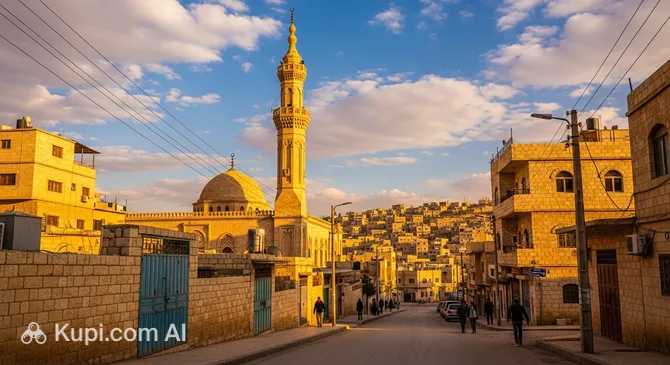
Mafraq is a unique city in northwestern Jordan, whose very name translates from Arabic as "crossroads." This definition perfectly describes the essence of the city: for centuries, it has served as a vital transport hub connecting trade routes between Syria, Iraq, and Saudi Arabia. Today, the city is the administrative center of the governorate of the same name and maintains its status as a strategic hub for the kingdom.
Located approximately 45 kilometers northeast of Amman at an altitude of 695 meters above sea level, Mafraq. Illustration.
Source: Kupi.com AI
the city is a harmonious blend of industrial rhythm and traditional lifestyle. The governorate's population is about 580,000, with a significant portion of residents adhering to Bedouin customs, which gives this place a special flavor. The history of development of the city is closely linked to the railway and international highways, which continue to define its character today.
Although Mafraq is not a typical tourist center, it attracts explorers with its authentic atmosphere and key landmarks, such as Al al-Bayt University—one of the country's leading educational centers. A visit to this city allows you to see the real, non-touristy Jordan, where life revolves around bustling markets and logistical arteries. We invite you to discover this "crossroads of destinies" to better understand the modern rhythm of life in the Middle East.
Weather Overview
The city of Mafraq is dominated by a dry Mediterranean climate with desert features, which is typical for northeastern Jordan. Summers here are usually hot and dry: in July and August, daytime temperatures often rise to +34°C...+35°C, while humidity remains minimal. Thanks to its open terrain, the city is well-ventilated, but dusty winds are possible during dry periods.
Winters in Mafraq are cool and bring most of the annual precipitation. In January, the average temperature is about +9°C, but at night it can drop to +5°C. Precipitation falls mainly from December to March, averaging about 25–55 mm per month. If you are planning a trip, keep in mind that the city's climate requires warm clothing for the evenings, even in transitional seasons.
The most comfortable time to visit is considered to be spring (April–May) and autumn (October–November). During these months, pleasant warm weather sets in with temperatures ranging from +20°C to +27°C, which is ideal for walking and exploring the surroundings. Don't forget sun protection and plenty of water, as low humidity makes fluid loss less noticeable.
Average monthly temperature
Average monthly precipitation
Interesting Facts
The city of Mafraq hides many surprising features that make it an important point on the map of the Middle East. Here are a few facts that will help you get to know this region better:
Unique geographical position: This is the only governorate in Jordan that shares borders with three states at once: Syria, Iraq, and Saudi Arabia.
The country's energy heart: The Mafraq region is home to the Al-Risha field, where natural gas is extracted, providing about 12% of Jordan's electricity needs.
Contrasting density: While it is the second largest governorate in the kingdom by land area, it has one of the lowest population densities, creating a sense of endless desert expanses.
Ancient roots: Despite its modern industrial appearance, the city's surroundings hold traces of Neolithic settlements and artifacts from the time of the Roman Decapolis.
Strategic significance: A major Royal Jordanian Air Force base is located just three kilometers from the city center.
How to Get There
Due to its status as the region's main transport hub, Mafraq boasts excellent road connectivity. The main flow of travelers arrives here by car or bus from Amman. The trip along the international highway from the capital takes between 45 to 60 minutes; however, during peak hours, the journey time can increase to an hour and a half due to heavy truck traffic. Regular bus services are also established with the city of Irbid.
If you plan to get to Mafraq by air, you should take into account that the local airbase is for military use only. The nearest civilian airport is Queen Alia International Airport in Amman. The journey from the terminal to Mafraq by taxi or rental car will take about 1–1.5 hours.
Mafraq Railway Station is a historically significant site, through which a line connecting key cities in the region passes. Currently, the station mainly handles freight traffic and rare domestic routes. For tourists, the railway is more interesting as an architectural monument of the Hejaz Railway era.
Station
Passenger traffic
Distance
Amman Hejaz Railway Station
6
47 km
Beit She'an Railway Station
6
69 km
Afula Railway Station
6
91 km
Migdal HaEmek – Kfar Baruch Railway Station
6
99 km
Karmiel railway station
7
107 km
For the most comfortable travel, it is recommended to use a rental car, which allows you to be independent of bus schedules and easily explore the governorate's surroundings. At the entrances to the city from the borders and Amman, traffic jams caused by active transit traffic are possible during morning and evening hours.
Main Attractions
The city of Mafraq is primarily known as a major industrial and transport center, so there are few classic tourist sites here. Most life is concentrated around the central squares near the railway station and major highways. These places allow you to feel the dynamics of a city where travelers and traders from different countries in the region meet daily.
One of the key architectural and educational landmarks is Al al-Bayt University. Its modern campus, registration building, and municipal library are of interest to those who want to see the intellectual face of modern Jordan. The university environment creates a special contrast with traditional neighborhoods, filling the city with the energy of youth.
For those seeking historical treasures, Mafraq serves as a convenient starting point. Traces of ancient settlements from the Neolithic era and the Roman Decapolis have been preserved in the city's surroundings and throughout the governorate. While many of them are still awaiting large-scale archaeological research, a simple walk across the region's hilly plains gives a sense of touching eternity.
Travelers wishing to see grand ancient monuments are recommended to take a short trip to the neighboring region, where the famous ruins of Jerash are located. In this case, Mafraq acts as an ideal logistical bridge for exploring the northern treasures of the country.
Local Cuisine
The gastronomic scene in Mafraq is a celebration of traditional Jordanian cuisine with a strong Bedouin influence. The main dish that you must try is the legendary mansaf. This is tender lamb meat cooked in a sauce of dried fermented yogurt (jameed) and served on a large platter with rice and thin bread. This dish symbolizes hospitality and is often served at celebrations.
For a quick and tasty snack, you can always find fresh falafel, smooth hummus, and various types of local bread on the city streets. The Mafraq region is famous for its agricultural products, so local shops and restaurants always have an abundance of excellent olive oil, wheat, and barley, which form the basis of simple but hearty dishes.
The drink culture here is inextricably linked to socializing. Be sure to try traditional Arabic coffee with cardamom or very sweet tea with mint or sage. For lovers of a more modern setting, Culaccino Coffee House operates in the city, where you can enjoy familiar coffee drinks in a pleasant atmosphere.
Most restaurants in Mafraq are geared toward locals, which guarantees authentic taste and fair prices. The main establishments are concentrated in the city center and near the university. Although there are few fine-dining restaurants here, every place will delight you with generous portions and the genuine friendliness of the staff.
Travel Tips
Mafraq is a hospitable crossroads city that will become an interesting point on your Jordanian itinerary if you follow our practical tips.
Clothing and Protection: Choose modest and light clothing made of natural fabrics, respecting local etiquette. Due to the dry climate and bright sun, be sure to bring sunscreen, sunglasses, and always have a supply of drinking water with you.
Transport: It is most convenient to move around the city by taxi. If you plan a trip to Amman or Irbid by bus, try to leave early to avoid traffic jams caused by truck traffic on the highway.
Finances: Always carry cash dinars with you. Bank cards are rarely accepted in Mafraq (mainly in large pharmacies or chain outlets), so ATMs in the center will be your best friends.
Communication: The main language is Arabic, but young people and university staff often speak English. Learn a few basic phrases: "Shukran" (thank you) and "As-salamu alaykum" (hello)—this is very much appreciated by the locals.
Connectivity: It is better to purchase a SIM card in advance at Amman airport, but there are also sales points for local operators (Zain, Orange) in the center of Mafraq. Wi-Fi is available in a few modern cafes and hotels.
Local Etiquette: Be prepared for genuine curiosity and friendliness. If you are invited for coffee, it is a sign of respect. Remember that in Jordan, it is customary to take food and pass things only with the right hand.
Safety: The city is generally safe, but tourists are advised to avoid remote eastern areas of the governorate near the borders at night. The center around the university is the most comfortable area.
Planning Features: Mafraq is ideal as a transit base. It is best to stay here for one day on the way to the ruins of Jerash or the northern desert castles.
Following these simple rules will help you feel confident and enjoy the authentic atmosphere of Jordanian hospitality!
Entertainment & Nightlife
Entertainment in Mafraq is predominantly quiet and traditional, which is typical for a provincial Jordanian city. You won't find noisy nightclubs or bars here, as the local culture focuses on family leisure and friendly socializing in cafes. The main meeting places during the day and evening are local coffee shops, where the city's main news is discussed over a cup of strong Arabic coffee.
For those looking for a cozy place with a modern atmosphere, it's worth visiting Culaccino Coffee House. This establishment is popular among Al al-Bayt University students and local intellectuals; it offers quality coffee and light snacks. The university itself periodically hosts cultural events, lectures, and student festivals that may be of interest to visitors.
If you are used to a more intense evening program, keep in mind that city residents usually head to Amman or Irbid for major events and movie premieres. Nevertheless, an evening stroll through the well-lit central streets of Mafraq allows you to enjoy the cool air after a hot day and observe the unhurried life of the locals.
Safety in the city is high; however, for nighttime travel, it is recommended to use official taxis. The best way to spend time in Mafraq is to immerse yourself in the atmosphere of hospitality at one of the local restaurants, trying traditional dishes in the company of friendly locals.
Parks & Museums
The city of Mafraq is located in an arid region, which leaves its mark on the urban environment. You won't find extensive forests here, but there are several cozy places for walking in the city. The main green zones and well-maintained areas are concentrated around Al al-Bayt University. The student campus offers spacious squares and alleys, which are the most developed areas in the city for walking.
Another place to feel the pulse of the city is the square in the railway station area. While it is more of a transport hub, the historical significance of the site makes it interesting to visit. As for museums, there are currently none in Mafraq itself. The region's cultural heritage, including Neolithic findings, is not yet represented in separate local galleries.
For those seeking natural diversity, it is recommended to explore the western part of the governorate. There, the landscape becomes more fertile and green, offering views of agricultural land and hills. City residents often use these suburban areas for outdoor recreation, as urban parks here are minimal in size.
Despite the lack of major museum exhibitions, the city itself can be seen as an open-air museum telling the story of transport and trade in the Middle East. Every old house in the center or preserved element of the railway is a testament to the rich past of this "crossroads" of paths.
Getting Around
The public transport system in Mafraq is oriented toward the needs of local residents and transit passengers. The core of the fleet consists of buses and microbuses (service taxis) that connect the city with Amman, Irbid, and Zarqa. Transport schedules can be unstable, so travelers are advised to arrive at the station early. During peak hours, buses heading toward the capital are often overcrowded.
For getting around within the city itself, the most convenient and popular means are taxis. They are available everywhere, and the fares are quite reasonable. It is important to remember that it is better to agree on the price of the trip in advance or ensure the meter is turned on. Walkability in the central part of the city is decent, but because the outskirts are quite spread out, it is better to call a car for longer trips.
The international highway passing through Mafraq provides the city with excellent connectivity, but it is also the cause of regular traffic jams, especially in the morning and evening when the flow of trucks increases. The railway line today is used mainly for freight, so you should not count on passenger trains as a regular mode of transport.
There are no metro, tram, or trolleybus systems in Mafraq. Payment on buses is made in cash to the driver. Tourists planning active trips around the region are strongly encouraged to consider renting a car—this will provide the necessary freedom and allow you to comfortably explore the governorate's attractions at your own pace.
Accommodation
The choice of accommodation options in Mafraq is limited due to its primarily administrative and industrial status. Most housing here is geared toward expats, transit workers, and students, so there are few classic tourist hotels in the city. Travelers should expect practical service rather than luxury conditions.
One of the best-known options for a short stay is Jawabreh Hotel & Suites. This hotel offers basic amenities and is suitable for those who need to stay in the city for a night or two for business or during a transit trip. Accommodation prices in the city remain affordable, which is a definite plus for budget travelers.
The most convenient areas to find housing are the neighborhoods near Al al-Bayt University and the central railway station, as the main infrastructure and dining establishments are concentrated there. In addition to hotels, you can find offers for apartment rentals and guesthouses in Mafraq, which are often chosen for long-term stays.
Since the tourist flow in the city is small, booking accommodation in advance is not always necessary, but it is recommended if you plan a visit during university events. If you are looking for a wider selection of high-class chain hotels, the best solution would be to stay in Amman and visit Mafraq as part of a day trip.
Nearby Cities
Thanks to its unique location at a crossroads, Mafraq serves as an excellent starting point for exploring the northern and central regions of Jordan. In just an hour, you can reach the country's key cultural and economic centers, making the city convenient for transit travelers.
One of the most popular destinations for a day trip is the ancient city of Jerash, located just 30 kilometers away. It is famous for its magnificently preserved Roman-era ruins, including triumphal arches, temples, and monumental colonnades. It is also worth paying attention to neighboring Zarqa—a major industrial center with developed infrastructure, and the city of Ar-Ramtha, which is very close to the border.
If you want to immerse yourself in a metropolis atmosphere, the road to the capital takes very little time, providing access to the region's best museums and shopping centers. Exploring the surroundings of Mafraq is a wonderful opportunity to see the diversity of Jordan, from ancient archaeological monuments to modern, dynamic cities.
Shopping & Souvenirs
Shopping in Mafraq is primarily an immersion into the atmosphere of an oriental bazaar and the practicality of a provincial center. There are no huge, glittering malls for which Amman is famous, but the city offers a unique shopping experience in local shops and markets. The main commercial activity is concentrated in the central part of the city, especially in the blocks adjacent to the railway station.
In the local markets, it's worth paying attention to high-quality agricultural products. The region is famous for its olives and fresh olive oil, which makes an excellent and healthy gift. You can also find traditional handmade Bedouin items here, such as woven rugs or wool products that reflect the ancient traditions of the governorate's nomadic tribes.
For everyday needs, buying clothes, and household goods, residents and visitors go to the central streets, where shops are open from morning until late evening. Payment in most small shops is made in cash in Jordanian dinars, so it is recommended to always carry small bills and coins. Cards are accepted only in a few modern establishments and large pharmacies.
If your goal is large-scale shopping with international brands and food courts, it is best to plan a trip to Amman or Irbid. Mafraq remains a place where you can purchase authentic local products and see the real commercial life of Jordan without tourist markups.