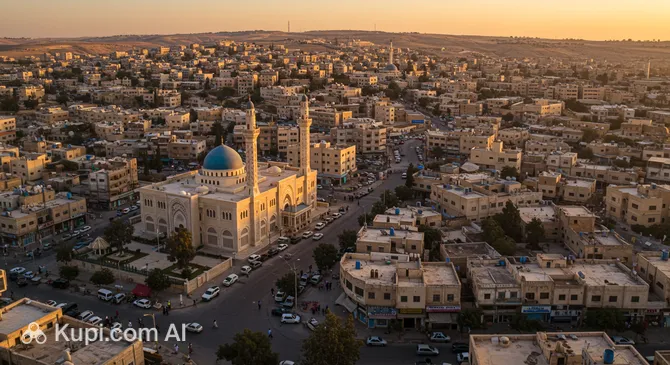
Zarqa is a dynamic and vibrant city that is rightfully considered the industrial heart of Jordan. Located just 20 kilometers northeast of the capital, it is the country's second-most populous metropolis, home to about 500,000 people. Unlike ancient tourist centers, Zarqa captivates with its authentic, working-class atmosphere and the energy of a modern production hub.
Zarqa. Illustration.
Source: Kupi.com AI
The city has a unique and relatively young heritage history, which began in 1902. It was founded by Chechen settlers who built the first adobe houses here along the banks of the Zarqa River. Since then, the settlement has transformed into a powerful industrial center, hosting the country's largest oil refineries and cement plants, which shape the economic landscape of the modern state.
Although Zarqa is rarely called a classic tourist destination, it attracts those who want to see Jordan "without filters." Here, you can feel the true rhythm of life of the local population, browse bustling Middle Eastern markets, and get to know the culture of the Chechen community. A visit to this city is an excellent addition to a journey through the region, allowing for a deeper understanding of the social and economic structure of the kingdom.
Weather Overview
The climate in Zarqa is typical for the central part of the country and is characterized as Mediterranean, but with a noticeable influence from arid desert zones. Summers here are usually hot and dry: in July and August, the thermometer often rises to +35°C and sometimes higher. During this period, there is virtually no precipitation, which makes daytime walks quite tiring.
Winter in the city is mild but rainy. The coldest month is January, with an average temperature of about +9°C, though it can drop to +5°C at night. Expect warm transitional seasons in spring and autumn with comfortable temperatures of +20–25°C, which is the ideal time to visit. A more detailed city climate guide will help you plan your travel dates more accurately.
An important feature is the region's industrial status. The presence of large enterprises can affect air quality, creating extra dust, especially on windy days. Tourists are advised to take this into account when planning long walks in areas adjacent to industrial zones.
Average monthly temperature
Average monthly precipitation
Interesting Facts
The city's name comes from the Arabic word meaning "blue". It was named after the Zarqa River, on whose banks the first neighborhoods grew.
Modern Zarqa was founded by Chechen Muhajirs in 1902. Prior to that time, the territory was practically uninhabited, although archaeologists have found traces of settlements from the 1st century AD.
The city's first mosque, built by the Chechen community in 1904, is still an important spiritual center and a symbol of generational continuity.
The city's rapid growth in the early 20th century was linked to the construction of the famous Hejaz Railway, which turned Zarqa into a key transport hub between Damascus and Medina.
Today, Zarqa produces more than 50% of all industrial output in Jordan, making it a critically important element of the national economy.
How to Get There
Thanks to its location in central Jordan and its proximity to the capital, Zarqa enjoys good transport accessibility. The city effectively merges with the northern outskirts of Amman, allowing tourists to easily reach it by car or public transport. The drive from the capital's center usually takes between 20 to 40 minutes, although extra time should be allowed during peak hours due to heavy traffic in the industrial zone.
For international travelers, the main arrival hub is Queen Alia International Airport (AMM), located south of Amman. From the airport, Zarqa can be reached by taxi or rental car in about an hour. There are also regular bus services connecting the city with the country's major transport hubs. More detailed information on routes can be found in the how to get there section.
Historically, Zarqa developed around the Hejaz Railway, and the old station building still serves as a reminder of that era. Although passenger rail service in the country is limited today, the city remains an important logistics center. The main flow of passengers is now served by numerous minibuses ("services") that run between Zarqa and the kingdom's main cities.
Station
Passenger traffic
Distance
Amman Hejaz Railway Station
6
16 km
Beit She'an Railway Station
6
76 km
Jerusalem—Khan railway station
11
88 km
Jerusalem – Yitzhak Navon railway station
15
90 km
Jerusalem – Malha Railway Station
14
93 km
Main Attractions
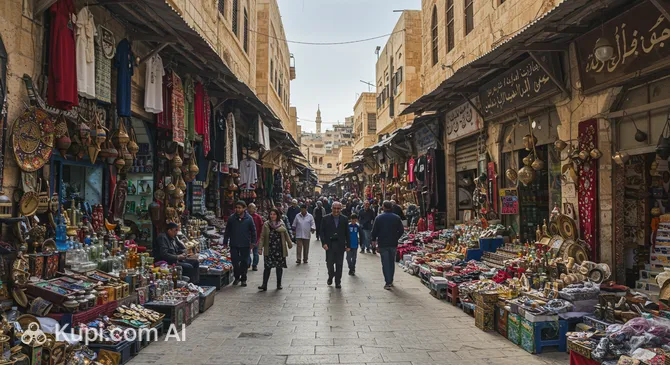
Despite the fact that Zarqa is primarily known as an industrial giant, interesting locations can be found within the city and its surroundings. Modern shopping spaces and markets serve as centers of attraction for locals and visitors alike. One of the most popular places for walking and shopping is Souq Bab Al Madina, where you can experience the flavor of Middle Eastern trade in a modern format.
Bab Al-Madinah Souq. Illustration.
Source: Kupi.com AI
Traveler photos:
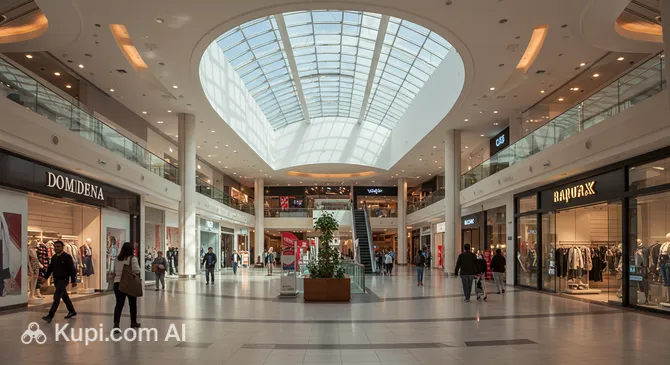
For those who prefer a comfortable experience in air-conditioned premises, the Mohammad Al-Muqadda Shopping Center is open. This place combines shopping opportunities with family leisure, serving as an important social site in the city's infrastructure. The religious and architectural symbol of the community remains the oldest Chechen Mosque, reflecting the history of the city's founding by settlers in the early 20th century.
If you are ready to venture outside the city limits, it is worth heading east of Zarqa. There, amidst desert landscapes, lies the famous Qasr Azraq castle — an ancient basalt fortress that once served as the headquarters for Lawrence of Arabia. Although the castle is located in the governorate rather than the city itself, it remains a key historical landmark of the region.
Local Cuisine
The gastronomic scene in Zarqa is a true feast for lovers of authentic Arabic cuisine. Here you will find classic Jordanian dishes in their most sincere execution. You must try mansaf — the national dish of tender lamb cooked in a sauce of dried fermented yogurt (jameed) and served on a large platter with rice and thin flatbreads.
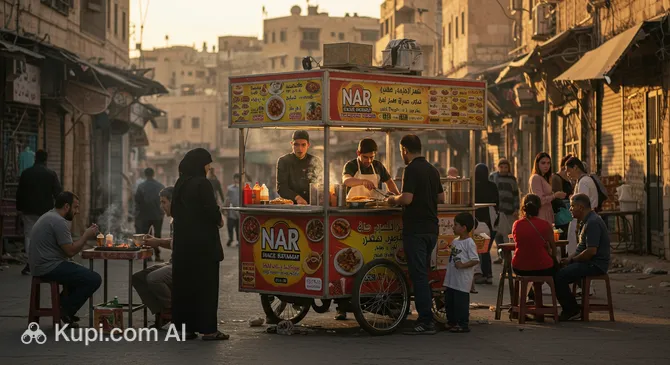
A unique feature of the local cuisine is the noticeable Chechen influence. In family-run restaurants, you can find variations of kebabs and meat pies that perfectly complement the traditional Arabic table. For a quick and tasty snack, locals often choose reliable spots like NAR Snack Restaurant, which serves excellent shawarma and kebabs.
NAR Snack Restaurant. Illustration.
Source: Kupi.com AI
Traveler photos:
Street food in Zarqa is a pleasure in itself. You can always find fresh falafel, smooth hummus, and hot flatbreads straight from the oven at the city's markets. For dessert, try knafeh — a gooey cheese treat soaked in syrup. It is customary to wash down the meal with strong, sweet mint tea or aromatic Arabic coffee with cardamom, served in small cups.
If you want something more familiar, there are modern establishments in the city, such as Firefly Burger, offering high-quality burgers. Remember that alcohol is practically not sold in Zarqa due to religious traditions, so the focus in beverages is on fresh juices and traditional non-alcoholic cocktails.
Travel Tips
Planning a trip to Zarqa is an opportunity to see Jordan from an unusual, industrial perspective. To make your visit to this energetic city as comfortable as possible, we have prepared a few practical recommendations.
Clothing and Dress Code: Zarqa is a conservative city. It is recommended to choose modest clothing (long pants/skirts, covered shoulders), especially when visiting markets and mosques. In summer, bring light natural fabrics, and in winter, a windbreaker, as evenings can be chilly.
Transport and Logistics: Taxis are the most convenient way to move around the city. Keep in mind that traffic jams during peak hours (morning and early evening) can significantly delay you. For trips to Amman, use the "service" minibuses—they are cheap and offer a local experience.
Finance: The official currency is the Jordanian Dinar (JOD). Cards are accepted in large shopping malls and chain restaurants, but for markets and taxis, be sure to have small denomination cash with you.
Health: Drink only bottled water. Due to the proximity of factories, the air in the city can be dusty, so people with allergies should carry necessary medications.
Connectivity: It is best to buy a SIM card at the airport or at one of the mobile provider shops in central Zarqa. Wi-Fi is available in most cafes, but the speed can be unstable.
Local Etiquette: Greetings are very important. A simple "Salam alaikum" will open many doors. Be prepared for hospitality: Jordanians are very friendly and may invite you for tea.
What to Avoid: You should not photograph industrial facilities or people without their explicit consent. Also, try to avoid walking through deserted industrial outskirts after dark.
Shopping Features: At markets (souqs), polite haggling is appropriate and even welcomed; it is part of the local communication culture.
Following these simple rules will help you feel confident and enjoy the hospitality of this hardworking and open city!
Entertainment & Nightlife
Nightlife in Zarqa is significantly different from that of the capital, Amman, and has a more quiet, traditional character. You won't find noisy nightclubs or bars here, as the city adheres to conservative values. The main form of evening leisure for locals is spending time in numerous cafes and coffee shops, where it is customary to play board games, smoke shisha, and discuss the latest news over a cup of strong Arabic coffee.
Youth and families often spend time in modern food courts and fast-food restaurants. For example, a popular spot for an evening bite is Firefly Burger, which always has a lively atmosphere. Markets in the city center also stay open late, turning into places for leisurely strolls once the daytime heat subsides.
Daytime entertainment is centered around shopping malls, such as the Mohammad Al-Muqadda Shopping Center, which features play areas for children. If you crave more vibrant experiences, concerts, or movie premieres, Zarqa residents usually head to neighboring Amman, which is about a half-hour drive away, making the capital's entertainment easily accessible.
Parks & Museums
In a young industrial city like Zarqa, there aren't many classic parks and museums, yet they play an important role in the lives of the townspeople. Due to dense construction and the city's industrial profile, greenery here is concentrated in small squares near mosques and residential quarters, where locals relax in the shade of trees after a workday.
The main cultural and leisure centers here are modern complexes. For instance, Souq Bab Al Madina combines not only shopping stalls but also spaces for social interaction, effectively replacing traditional city squares. For those interested in the culture of daily life, visiting such places becomes a kind of "open-air museum" showcasing the way of life in modern Jordan.
Despite the lack of large parks within the city limits, Zarqa residents often head to suburban areas along the river. The environmental situation in the city remains challenging due to factory operations, so small green corners and embankments are especially valued. For a serious introduction to the region's history, travelers usually head to museums in neighboring Amman or to historical sites in the governorate, such as the reserves in the Azraq Oasis.
Getting Around
The public transport system in Zarqa is oriented toward the needs of the working population and residents commuting daily between the city and the capital. The main means of transport here are buses and minibuses (known as "services"). Routes cover all residential and industrial areas, providing links to Amman. A trip within the city usually takes between 10 to 30 minutes, depending on traffic.
It is worth noting that during peak hours (7:00 to 9:00 AM and 5:00 to 7:00 PM), transport can be very crowded, and congestion forms on the roads due to the high volume of trucks. Fares are usually paid in cash to the driver; the cost of a trip is low, around 0.5–1 JOD. For tourists, the most convenient and fastest way to get around remains the taxi. Official yellow cars are available everywhere, and the cost of a trip around the city rarely exceeds 2 Dinars.
Walking is possible in the central part of Zarqa, where the main markets and shops are concentrated. However, due to heavy traffic, dust, and the lack of an extensive network of bike lanes, cycling is not a popular mode of transport here. If you plan active trips around the surroundings, the best solution would be to rent a car or use taxi apps, though their operation in Zarqa may be more limited compared to Amman.
Accommodation
The hotel infrastructure in Zarqa is more modest than in tourist centers like Petra or Aqaba. Most accommodation options are geared toward business travelers and specialists visiting local enterprises. Nevertheless, you can find budget hotels and guesthouses offering a basic set of amenities for a short-term stay.
For those planning to stay in the city longer, renting an apartment is a popular option. In central areas and near major shopping hubs like Souq Bab Al Madina, the choice of apartments is quite broad. This allows tourists to feel like part of the local community and significantly save on accommodation compared to prices in the capital.
If you are looking for a high level of service or luxury hotel chains, it is advisable to consider staying in Amman. Given the short distance between the cities, many prefer to stay in the capital and visit Zarqa for day trips. In any case, it is recommended to book accommodation in advance during peak periods using popular online services.
Nearby Cities
Zarqa occupies a strategically advantageous position, making it a convenient base for exploring central and northern Jordan. From here, it is easy to take short trips to see both modern metropolises and the ancient ruins for which the region is so famous.
The most obvious destination for a trip is Amman — the country's capital, located just 21 kilometers away. There, magnificent Roman ruins, the Citadel on the hill, and endless opportunities for cultural leisure await you. Very close by is Ar-Rusaifa, which is essentially an extension of Zarqa's industrial belt.
For lovers of antiquity, Jerash is a must-visit. Located about 30 kilometers away, this city is considered one of the best-preserved provincial Roman cities in the world. A walk through its triumphal arches and colonnades will take a whole day and leave an unforgettable impression. It is also worth visiting cozy Fuheis, known for its special atmosphere and green landscapes.
Exploring the surroundings of Zarqa allows you to see the multifaceted nature of the country: from ancient poleis breathing history to modern cities looking toward the future. A developed road network and frequent bus service make such outings simple and accessible for any traveler.
Shopping & Souvenirs
Shopping in Zarqa is primarily about getting acquainted with a real Middle Eastern market. Traditional bazaars are located in the city center, where the air is filled with the aroma of spices, and stalls are packed with fabrics and everyday goods. It is an ideal place to purchase high-quality textiles, leather goods, and unique souvenirs with Chechen motifs, such as traditional embroidery or woodwork.
For those who prefer a modern shopping format, Zarqa offers excellent shopping centers. One of the flagships is Souq Bab Al Madina. Here you can find both international brands and products from local manufacturers in comfortable conditions. This place is popular not only for shopping but also as a family leisure center.
Mohammad Al-Moqaddah Mall. Illustration.
Source: Kupi.com AI
Traveler photos:
Another notable location is the Mohammad Al-Muqadda Shopping Center, which offers a wide selection of clothing, electronics, and home goods. Shops in Zarqa usually open around 9-10 AM and stay open until late in the evening, though many market stalls may close for a break during Friday prayers. Payment is most often made in cash in Jordanian Dinars, but major shopping centers readily accept credit cards.