Support

Temple of Kukulcán

Nearby interesting places

About

The Pyramid of Kukulkan, also known as El Castillo, is a majestic temple structure that serves as the heart of the ancient Mayan city of Chichen Itza on the Yucatan Peninsula in Mexico. This iconic site, recognized as one of the New Seven Wonders of the World, is an outstanding example of the architectural and astronomical genius of the Mayan civilization. Visiting this pyramid is an opportunity to touch the centuries-old history and mysteries of one of the world's most enigmatic cultures.

The structure is a strictly geometric step pyramid approximately 24 meters high. At its summit is a temple dedicated to Kukulkan—a deity in the form of a feathered serpent worshipped by the ancient Maya. The pyramid stands in the center of a vast terrace and has four staircases oriented to the cardinal points, each leading to the upper temple.
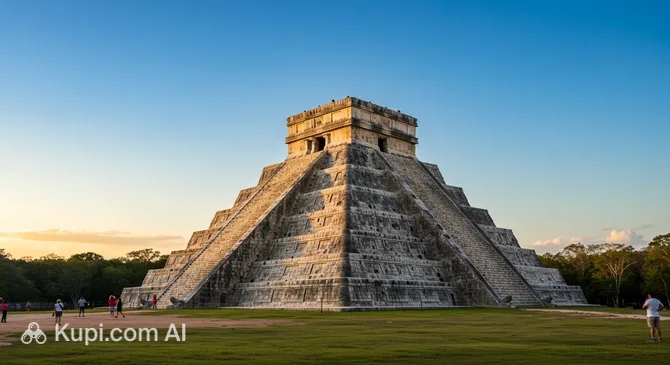
Temple of Kukulcán. Illustration.
Source: Kupi.com AI

Traveler photos:

The true magic of the Pyramid of Kukulkan is revealed twice a year—during the spring and autumn equinoxes. On these days, the play of light and shadow creates a stunning illusion on the steps of the northern staircase: it appears as if a giant serpent is slithering down. This unique spectacle, demonstrating the Maya's profound knowledge of astronomy, attracts thousands of travelers from all over the world.

In addition to visual effects, the pyramid served as a giant stone calendar. Each of the four staircases has 91 steps, which, when added to the top platform, equals 365—the exact number of days in a solar year. The pyramid's nine terraces, according to Mayan beliefs, symbolized the nine levels of the underworld. Thus, El Castillo is not just a temple, but a complex message encoded in stone.

Contacts

The Pyramid of Kukulkan is the centerpiece of the vast Chichen Itza archaeological complex, which is managed by Mexico’s National Institute of Anthropology and History (INAH). For the most up-to-date information regarding opening hours, visitor regulations, and ticket prices, it is recommended to consult official sources.

How to contactContact
Address97751 Tinum, Yuc., Mexico
Phone number+52 985 851 0137
Websitechichenitza.inah.gob.mx

What to Do

Visiting the Pyramid of Kukulkan is primarily an opportunity to admire its grandeur from the outside. Although climbing to the top is currently prohibited, tourists are free to examine the structure's exterior, take impressive photos against its backdrop, and study the unique architectural details. Of particular interest are the stone serpent heads at the base of the northern staircase and the intricate reliefs that testify to the high skill of the ancient builders. Guided tours can help you better understand the symbolic meaning of the pyramid and the rituals associated with it.

The main spectacle that draws thousands of travelers here is the "Feathered Serpent" phenomenon. It occurs only twice a year, during the spring and autumn equinoxes. At this time, the play of sunlight and shadows on the steps creates a striking illusion of a giant snake slithering down the side of the pyramid, symbolizing the deity Kukulkan. This unique event allows visitors to fully experience the connection between Mayan architecture and astronomical cycles.

Viewing the pyramid is part of a larger tour of the entire archaeological complex of the ancient city of Chichen Itza. Near El Castillo are other outstanding monuments of the Mayan civilization that are also must-sees. These include the Temple of the Warriors with its famous Group of a Thousand Columns, the Great Ball Court, and the circular El Caracol observatory. Many tourists join tour groups to hear fascinating stories from guides about the Mayan calendar system and the history of this remarkable place in Mexico.

Getting There

Reaching the Pyramid of Kukulkan, located in the heart of the Chichen Itza archaeological complex, is quite simple as it is one of the most popular tourist destinations on the Yucatan Peninsula. The site is approximately 200 km from Cancun and 120 km from Merida. The most common way to get there is by joining an organized excursion. Tour buses depart regularly from all major resort cities in Mexico, making the trip as comfortable as possible. Alternatively, you can rent a car, which provides the freedom to plan your own day and perhaps visit nearby cenotes.

For independent travelers, public transport is an excellent choice. Comfortable ADO intercity buses run from Cancun, Merida, or Playa del Carmen to the town of Piste, located right next to the archaeological zone. From the bus station in Piste, you can reach the entrance of Chichen Itza on foot (about 20–30 minutes) or by a short taxi ride. Direct buses to the archaeological complex itself are also available from some towns, such as Tulum.

Nearest city: Chichen Itza

History & Facts

The history of the Pyramid of Kukulkan is closely intertwined with the beliefs and culture of the peoples who inhabited the ancient city of Chichen Itza. The structure was built in honor of Kukulkan—one of the supreme Mayan deities, revered as the "Feathered Serpent." Interestingly, the architecture of the pyramid reflects the influence of the Toltecs, a people who came to the Yucatan from central Mexico. It was they who brought new cultural traditions that Mayan craftsmen brilliantly immortalized in stone. To the Spanish conquistadors who discovered the abandoned city, the monumental structure looked like a fortress, leading them to nickname it El Castillo (The Castle).

The pyramid is not just a temple, but a complex stone calendar reflecting the advanced astronomical knowledge of the Mayan civilization. Each of the four sides of the structure has nine levels, which are divided by a staircase. This creates 18 sections on each face, corresponding to the number of months in the Mayan solar calendar. At the top of the pyramid, reached by the stairs, sits a temple where rituals and sacrifices were performed in ancient times—a vital part of the city's religious life.

The fate of this grand structure is full of drama. At the end of the 12th century, the thriving city of Chichen Itza was abandoned by its inhabitants for reasons that remain unclear, and the majestic pyramid was hidden for centuries in the dense jungle. It wasn't until the 20th century, thanks to large-scale archaeological excavations, that the world rediscovered this wonder of the world. Research has shown that another, earlier structure is hidden inside the existing pyramid, indicating multi-stage construction and the sacred significance of this site over the centuries.

Time Needed

To fully explore the Pyramid of Kukulkan and get acquainted with the main highlights of the Chichen Itza archaeological complex, it is recommended to set aside about 2–3 hours. This is usually enough time to leisurely walk around El Castillo, take memorable photos from different angles, and fully appreciate its architectural grandeur. Since climbing to the top is currently prohibited, most of your time will be spent examining the exterior of the structure and its famous details, such as the stone serpent heads at the base of the stairs.

If you plan a deeper dive into the history of the ancient city and want to explore the entire complex without rushing, you should allow more time—up to 4–5 hours or even half a day. This will allow you to visit other significant sites nearby, including the Temple of the Warriors, the Great Ball Court, and the El Caracol observatory. The time may also vary depending on whether you are traveling independently or with a guide, whose stories can make the tour more detailed and informative.

To get the most out of your visit, it is best to arrive at Chichen Itza early in the morning. This way, you will not only avoid the midday heat and the peak tourist crowds that usually begin around 11 AM, but you will also be able to enjoy a calmer atmosphere. The morning light is also considered ideal for photographing the Pyramid of Kukulkan, allowing you to capture it in all its glory.

Working Hours

The Chichen Itza archaeological complex, where the Pyramid of Kukulkan is located, is open to visitors year-round. Standard operating hours are daily from 8:00 AM to 5:00 PM, with the last entry usually at 4:00 PM. Since this is one of the most popular spots in Mexico, it is recommended to arrive early in the morning to avoid both the midday heat and the large influx of tour groups.

While tickets can be purchased on-site, to save time, it is worth considering buying them in advance online, especially if you plan to visit during the high season or on the days of the equinox. This will help you avoid long queues. Given that rules and operating hours may change, it is always useful to check the latest information on the official website of Mexico’s National Institute of Anthropology and History (INAH), which manages the site, before your trip.

8:00 – 16:30

Nearby

Visiting the Pyramid of Kukulkan is just the beginning of your journey through the grand Chichen Itza archaeological complex. To fully appreciate the greatness of the ancient Mayan civilization, it is worth setting aside time to explore other equally impressive structures nearby. Walking through the surroundings will allow you to dive deeper into the history and culture of this amazing site in Mexico.

Many iconic landmarks are within walking distance of the main pyramid, offering travelers a unique opportunity to create a complete itinerary through the ancient city. Below is a list of nearby attractions and interesting sites that will help make your trip even more fulfilling.

NameDistance
Great Ball Court0.2 km
El Caracol0.5 km
Hacienda Chichen Resort0.7 km
Las Mestizas2.2 km
Chichen Itza2.8 km
Ik Kil Cenote3.1 km
Sac-Be Maya Restaurant5.6 km

Have you reached the end of the page?

So the route has been studied inside and out