Support

Chichen Itza

About

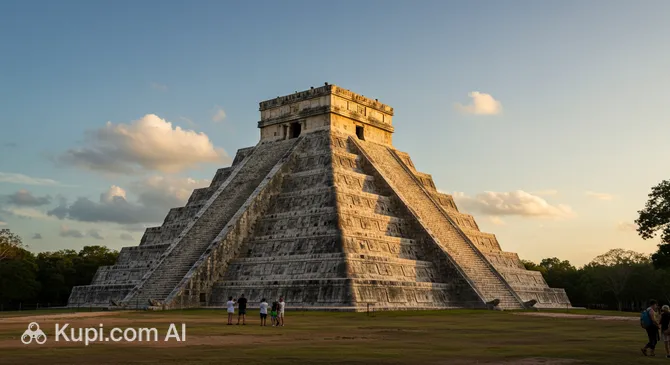
Chichen Itza is not just an ancient city, but a true portal into the mysterious world of the Mayan civilization, located on the Yucatan Peninsula in Mexico. Recognized as a UNESCO World Heritage site and one of the New Seven Wonders of the World, this place attracts travelers with its unique atmosphere and majestic ruins that have been preserved through the centuries.
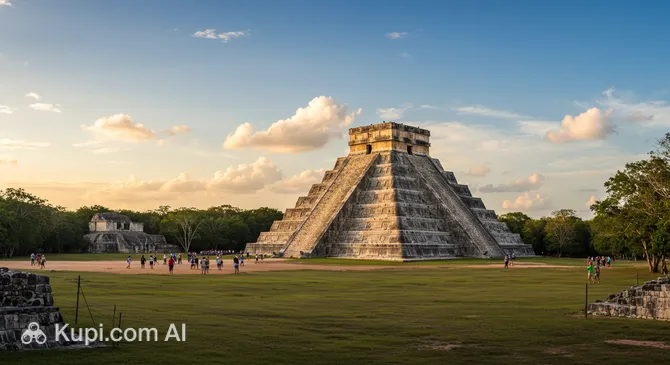
Chichen Itza. Illustration.
Source: Kupi.com AI

Geographically, Chichen Itza is situated in the heart of the Yucatan, approximately 200 kilometers west of Cancun, surrounded by dense tropical jungles and mysterious cenotes—natural wells that held sacred significance for the Maya. Today, it is not a residential city in the traditional sense, but a vast archaeological complex where every stone breathes history and holds the secrets of a long-gone era.

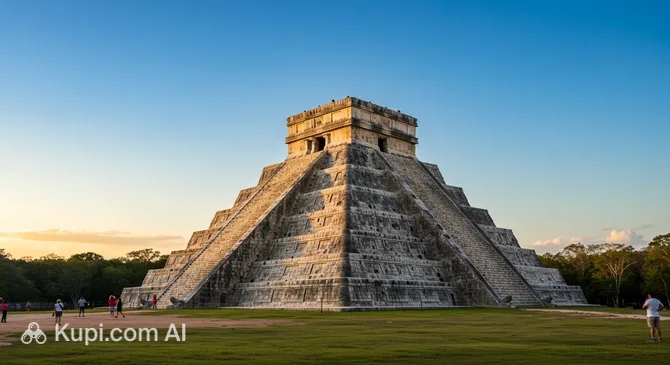
Among the main treasures of Chichen Itza that are a must-see, the famous Kukulcan Pyramid (El Castillo) stands out, striking in its architectural precision and known for the play of light and shadow during the equinoxes. Equally impressive are the Temple of the Warriors with its numerous columns in the form of warriors and reliefs, as well as the Sacred Cenote (Cenote Sagrado)—a natural well that, according to legend, was used for ritual ceremonies. Be sure to visit the massive Great Ball Court, the largest ever discovered in Mesoamerica.

The atmosphere of Chichen Itza is steeped in a spirit of grandeur and mysticism. Walking among the ancient buildings, you can almost hear the echoes of the past and imagine the life of this once-powerful city. A visit to Chichen Itza is an unforgettable journey through time that will provide a wealth of impressions and allow for a deeper understanding of the culture and achievements of the ancient Mayan civilization.

You can find more interesting facts on the history of Chichen Itza page.
Weather Overview

The weather in Chichen Itza is characterized as hot throughout the year. Average annual temperatures are high: for instance, in January, the average temperature is about 24.0°C (with lows around 19.4°C and highs up to 28.6°C), while in the hottest month, May, the average temperature reaches 30.1°C (with lows around 24.5°C and highs up to 35.6°C). April is also very hot, with an average temperature of 29.2°C and maximum values up to 35.3°C.

Regarding precipitation, Chichen Itza experiences a distinct dry season and rainy season. The driest months are February and March, when rainfall is minimal (0 mm) with only 2–3 rainy days. From June to October, the likelihood of rain increases; for example, in June, about 5 mm of rain falls over 17 days, and in August and September, there are 20 rainy days each, although the total amount of precipitation remains moderate (4 mm). Overall, expect hot weather with occasional rain in the summer and autumn months and drier but consistently warm weather in winter and spring. You can learn more about the Chichen Itza climate on the dedicated page.

Average monthly temperature

Average monthly precipitation

Interesting Facts

Beyond its world-famous pyramids and temples, the ancient city of Chichen Itza hides many amazing secrets and striking details. Here are just a few of them:

Temple of Kukulcán. Illustration.
Source: Kupi.com AI

Traveler photos:

  • The main pyramid, the Kukulcan Pyramid (also known as El Castillo), is not just an impressive structure. Twice a year, on the spring and autumn equinoxes, the play of light and shadow creates the illusion of a giant serpent "crawling" down its steps—the embodiment of the god Kukulcan.

  • Chichen Itza is home to the largest known ball court (Pok-ta-pok) in all of Mesoamerica. According to one legend, the captain of the winning team could be sacrificed to the gods, which was considered a supreme honor.

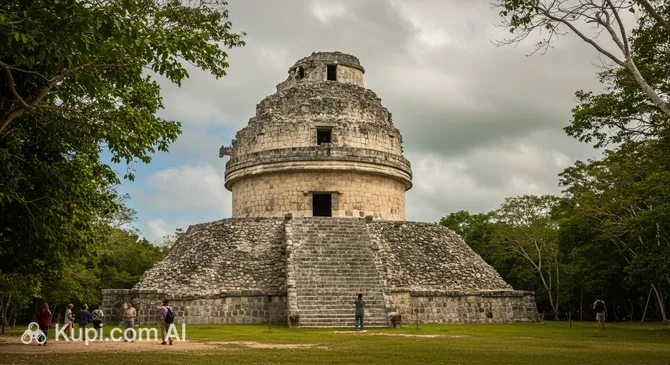
  • The unique circular building El Caracol, meaning "The Snail," served as an observatory for the ancient Maya. Its windows and doors are oriented to track the movements of Venus, the Sun, and other celestial bodies, allowing priests to create incredibly accurate calendars.

  • The Sacred Cenote (Cenote Sagrado), located within the city limits, was not only a source of water but also a site for ritual sacrifices. Archaeologists have recovered many artifacts from the bottom of this natural well, including gold items, jade, and human remains, confirming ancient legends.

How to Get There

There are several ways to reach the famous Chichen Itza archaeological complex, located on the Yucatan Peninsula in Mexico. Since Chichen Itza itself does not have an airport or a train station, travelers usually arrive at one of the international airports in neighboring cities and then continue their journey by land transport.

One of the primary and most popular options is flying into Cancun International Airport (CUN). This is the region's largest international hub, located in the city of Cancun, approximately 180.4 km east of Chichen Itza. A trip from the airport to the archaeological zone by car or bus usually takes about 4 hours and 50 minutes. Cancun Airport offers a multitude of international and domestic flights.

Another convenient option is Manuel Crescencio Rejón International Airport (MID) in Merida. It is located significantly closer to Chichen Itza, about 116.9 km to the west. The journey from here to the ancient Mayan city will take approximately 3 hours and 15 minutes. This airport serves both domestic and some international destinations, being an important transport hub for the state of Yucatan.

It is also worth considering the recently opened Tulum International Airport (TQO). It is located in the city of Tulum, at a distance of about 110.2 km southeast of Chichen Itza. The estimated travel time to the archaeological zone is 3 hours and 5 minutes. This modern airport is quickly gaining popularity and can be a convenient point of arrival, especially if you plan to visit other attractions of the Riviera Maya.

From any of these airports, Chichen Itza can be reached by rental car, which provides freedom of movement and the opportunity to explore the surrounding area. Taxi services and comfortable buses (for example, the ADO company) are also available, regularly running along popular tourist routes. It is recommended to check schedules in advance and, if possible, book bus tickets or transfers, especially during the peak tourist season.

For clarity, here is a summary of the main airports used to reach Chichen Itza:

AirportPassenger trafficDistance
Tulum International Airport1.1 mln110 km
Manuel Crescencio Rejon International Airport3.7 mln117 km
Cozumel Airport677 503172 km
Cancun International Airport32.8 mln180 km
Campeche International Airport107 892223 km

Main Attractions

The ancient city of Chichen Itza, located on the Yucatan Peninsula in Mexico, is one of the most impressive archaeological monuments of the Mayan civilization. This UNESCO World Heritage site attracts tourists from all over the world with its majestic pyramids, temples, and unique structures that demonstrate the Maya's profound knowledge of astronomy and architecture.

The centerpiece of Chichen Itza is the famous Kukulcan Pyramid, also known as El Castillo. This nine-stepped structure is dedicated to the supreme Mayan deity—the Feathered Serpent Kukulcan. The pyramid is famous for its astronomical features: during the spring and autumn equinoxes, the play of light and shadow creates the illusion of a serpent crawling down the steps. This spectacle attracts thousands of visitors wishing to touch the ancient magic.

Temple of Kukulcán. Illustration.
Source: Kupi.com AI

Traveler photos:

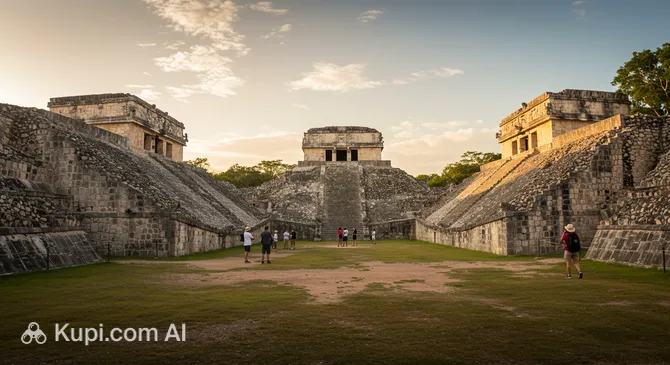
No less impressive is the Great Ball Court—the largest of all known in Mesoamerica. Its dimensions are staggering: about 168 meters long and 70 meters wide. High walls with stone rings are located on the sides of the field, through which players had to throw a rubber ball using only their hips, elbows, and knees. The acoustics of the court are such that a whisper at one end can be clearly heard at the other.

Great Ball Court. Illustration.
Source: Kupi.com AI

Traveler photos:

Another iconic structure of Chichen Itza is El Caracol, or the Observatory. This circular building with a spiral staircase inside (hence the name "The Snail") was used by Mayan priests for astronomical observations. The windows and doorways of the observatory are oriented toward important astronomical points, such as the sunrise and sunset positions during equinoxes and solstices, as well as the path of Venus.

El Caracol. Illustration.
Source: Kupi.com AI

Traveler photos:

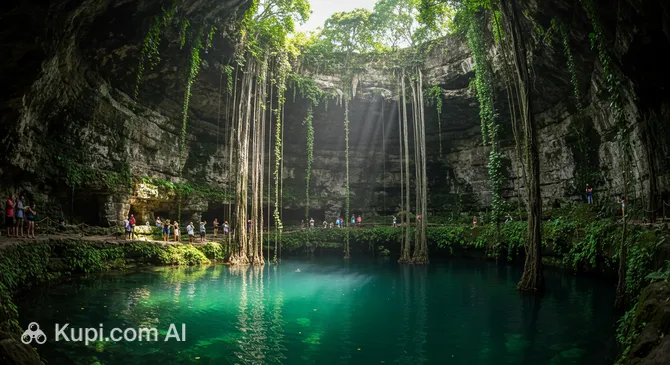
Not far from the main archaeological complex lies Cenote Ik Kil—one of the most picturesque natural formations in Yucatan. This deep karst sinkhole with crystal-clear water, surrounded by hanging vines and lush vegetation, was a sacred place for the Maya. Today, tourists can refresh themselves by swimming in its cool waters, which is especially pleasant after a walk through the ancient city under the hot Mexican sun.

Ik Kil Cenote. Illustration.
Source: Kupi.com AI

Traveler photos:

Local Cuisine

An immersion into the culture of Chichen Itza would be incomplete without experiencing the unique cuisine of Yucatan, which preserves ancient Mayan recipes. A gastronomic journey here promises bold flavors and unforgettable impressions. The region's signature dish is cochinita pibil—tender pork marinated in sour orange juice and annatto, then slow-cooked in banana leaves. Served with pickled red onions and often a spicy habanero sauce, this is a must-try for every visitor.

Beyond the main hit, Yucatecan cuisine offers other delights. Be sure to try sopa de lima—a fragrant chicken soup with the characteristic tang of lime that is perfectly refreshing on a hot day. Don't pass by the street food: tamales (corn dough steamed in corn husks or banana leaves with various fillings), as well as panuchos and salbutes (crispy or soft corn tortillas with beans, chicken, vegetables, and salsa) provide a true taste of local life.

Among traditional drinks, Mayan chocolate holds a special place, prepared according to ancient recipes, often with added spices, and very different from the hot chocolate we are used to. To quench your thirst, agua de chaya is perfect—a refreshing drink made from the leaves of the local chaya plant, known for its health benefits. Of course, fresh juices from exotic fruits are also always available.

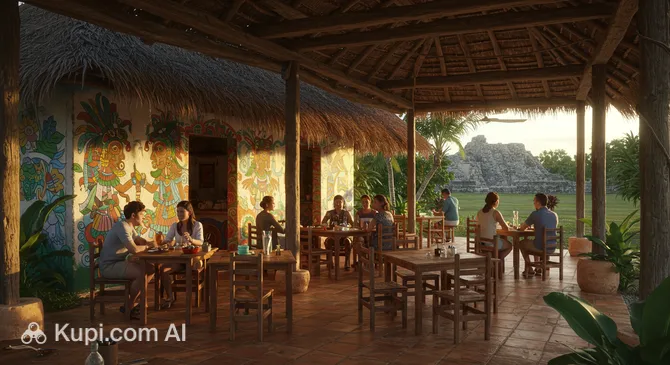
The gastronomic scene in Chichen Itza and its surroundings offers options for every taste and budget. Authentic dishes can be found in small family cafes and bustling markets, as well as in restaurants specializing in Yucatecan cuisine. Many establishments, such as the Las Mestizas restaurant, offer not only delicious food but also an immersion into the region's atmosphere. Local markets are also great places to buy fresh fruit, spices, and homemade sauces to take a piece of Yucatan's flavor home with you.

Las Mestizas. Illustration.
Source: Kupi.com AI

Traveler photos:

The cuisine of Chichen Itza is more than just food; it is part of a rich cultural heritage. Here, ancient Mayan culinary traditions blend harmoniously with Spanish influence, creating a unique gastronomic experience. Attending local food festivals or cooking workshops, if any are held during your trip, would be an excellent addition to exploring the ancient city and will allow you to understand the soul of Yucatan more deeply.

Travel Tips

Planning to dive into the mysterious world of the ancient Maya at Chichen Itza? These practical tips will help make your journey as comfortable, safe, and filled with unforgettable impressions as possible at this majestic site on the Yucatan Peninsula in Mexico.

  1. Clothing and Essentials: The climate in Chichen Itza is hot and humid year-round. Choose lightweight, breathable clothing made from natural fabrics (cotton, linen). Be sure to bring a wide-brimmed hat, sunglasses, and high-SPF sunscreen. For long walks through the archaeological complex, comfortable closed-toe shoes are indispensable, as the area is large and the paths can be uneven. A light raincoat or umbrella won't hurt, especially if your trip falls during the rainy season (usually from May to October). Also, note that Mexico uses Type A and B electrical outlets, so you may need a suitable adapter for your devices.
  2. Getting There and Around: Chichen Itza can be reached by rental car, tour bus from Cancun, Playa del Carmen, Merida, or Valladolid, or by a scheduled ADO bus. Within the archaeological complex itself, you will have to move exclusively on foot. There is no public transport inside, so pace yourself for exploring all corners of this massive site.
  3. Financial Matters: The official currency is the Mexican Peso (MXN). Ticket counters at the entrance to Chichen Itza usually accept bank cards, but for buying souvenirs from the many vendors on-site or for paying a guide, it is better to have enough cash on hand. ATMs may not be available directly at the ruins; the nearest ones are in neighboring towns like Piste. Tipping guides and cafe staff is welcomed.
  4. Health and Safety: The number one rule is to drink plenty of water to avoid dehydration under the scorching sun. Water can be bought on-site, but it will be more expensive. There are first-aid points on the territory, but serious cases will require visiting clinics in the nearest cities. Be sure to take out travel insurance. Stay on designated paths, do not go behind fences, and do not attempt to climb structures where it is prohibited.
  5. Communication: The official language in Mexico is Spanish. In tourist zones like Chichen Itza, staff and guides often speak English. However, knowing a few basic phrases in Spanish (e.g., "Hola" – hello, "Gracias" – thank you, "Cuánto cuesta?" – how much does it cost?) will be helpful and appreciated by locals. For reliable connectivity, it is recommended to purchase a local SIM card upon arrival in Mexico, such as at the airport or at service centers in major cities. Mobile signal and internet can be unstable within the Chichen Itza complex, and free Wi-Fi is likely to be unavailable. Before your trip, look for useful mobile apps with maps or audio guides for Chichen Itza or the Yucatan region that can work offline.
  6. Local Etiquette and Respect for Heritage: Chichen Itza is a UNESCO World Heritage site and a sacred place for Mayan culture. Treat the ancient structures with maximum respect. Do not touch the stones, do not leave graffiti, and do not litter. Photography is usually allowed, but the use of drones is prohibited without special permission. Climbing the main Kukulcan Pyramid (El Castillo) is strictly forbidden to preserve the monument.
  7. What to Avoid: In addition to the ban on climbing the pyramid and other restricted areas, avoid buying souvenirs from unauthorized vendors inside the complex if you want to avoid unwanted attention—there are many of them. Do not ignore warning signs or staff instructions. It is strictly forbidden to take any fragments of ancient structures with you.
  8. Useful Life Hacks for Your Visit:
    • Arrive right at opening time (usually 8:00 AM). This way, you can avoid the bulk of the tour groups and the grueling midday heat.
    • Hire an official guide at the entrance. Their stories will help you gain a deeper understanding of the history and significance of this amazing place.
    • After touring the ruins, consider a swim in one of the nearby cenotes (e.g., Ik Kil). This is a great way to refresh yourself and get another vivid impression.
    • Bring a small snack, as food options on-site can be limited and expensive.

We hope these tips help you plan the perfect trip to Chichen Itza and fully enjoy the magic of this ancient city! Your adventure promises to be unforgettable.

Entertainment & Nightlife

When the sun sets over the ancient stones of Chichen Itza, the site does not fall into complete silence but offers its own special evening entertainment. It is worth noting right away that Chichen Itza is primarily a world-famous archaeological zone, and you won't find noisy nightclubs or bar districts here like in major resort towns. The nightlife here has its own unique flavor, centered on the magic of history and peaceful relaxation.

The main evening event is undoubtedly the light and sound show "Nights of Kukulcan" (Noches de Kukulkán), which is projected directly onto the walls of the famous Kukulcan Pyramid. This mesmerizing spectacle tells the story of the Mayan civilization, bringing ancient myths and legends to life through light and sound. The atmosphere is magical and somewhat mysterious, drawing both tourists and locals who wish to experience history in a new light. It is recommended to arrive early and check the schedule, as it can change. It is best to purchase tickets in advance.

After such an impressive show, the evening can continue with dinner. In the immediate vicinity of the archaeological zone and in the nearby village of Piste, there are several restaurants offering local Yucatecan and Mexican cuisine. One such place is the Las Mestizas restaurant, where you can enjoy authentic flavors in a pleasant setting. Many hotels in the area also have their own restaurants open to guests and visitors. The style of most establishments is relaxed, and the dress code is usually casual. Prices can vary but generally remain affordable.

As for practical advice: if you plan to attend the evening show or have dinner, it is best to arrange transportation in advance. Public transport runs less frequently at night, so a taxi or a rental car is preferable. You can call a taxi through your hotel or arrange it with a driver beforehand. The area around the archaeological complex and hotels is considered quite safe, but standard precautions should always be taken, especially when walking in less-lit areas after dark.

During the day, Chichen Itza offers completely different experiences. The main focus, of course, is on exploring the archaeological complex itself: the majestic Kukulcan Pyramid, the El Caracol Observatory, the Great Ball Court, and other structures. It is a true open-air museum. To cool off after walking through the ancient city, many head to one of the nearby cenotes—natural karst wells with crystal-clear water, such as the famous Cenote Ik Kil. These are essentially natural parks, perfect for swimming and relaxing.

Parks & Museums

Chichen Itza is not just an ancient city; it is a unique place where history comes alive amidst lush nature. There are no traditional urban parks or museums here in the conventional sense, as the archaeological complex itself is a massive open-air museum surrounded by greenery.

The main natural and cultural attraction is, of course, the Chichen Itza archaeological zone itself. A walk through this vast complex allows you not only to touch the mysteries of the Mayan civilization but also to enjoy the surrounding subtropical vegetation. Special attention should be given to Cenote Ik Kil—a natural well (cenote) of incredible beauty located nearby. This karst lake with crystal-clear water, surrounded by hanging vines, was sacred to the Maya and today attracts tourists with the chance to refresh themselves and admire its natural splendor.

Ik Kil Cenote. Illustration.
Source: Kupi.com AI

Traveler photos:

The entire Chichen Itza complex is the main museum. Every structure here is a priceless exhibit. The centerpiece is the majestic Kukulcan Pyramid (El Castillo), known for its complex symbolism and astronomical precision. This structure captures the imagination and is a symbol not only of Chichen Itza but of the entire Mayan culture. Equally interesting is El Caracol, or the Observatory—a circular building used by Mayan priests for astronomical observations. Its unusual architecture and presumed purpose make it one of the most mysterious objects in the complex.

Temple of Kukulcán. Illustration.
Source: Kupi.com AI

Traveler photos:

Among other significant historical sites, the Great Ball Court stands out. It is the largest known field for the ancient Mesoamerican game of pok-ta-pok. Its size and acoustics are impressive, and the bas-reliefs on the walls tell of the ritual significance of this game.

Great Ball Court. Illustration.
Source: Kupi.com AI

Traveler photos:

To get a more complete picture of ancient Mayan life, don't limit yourself to the most famous buildings. Walk along the less crowded paths of the complex, paying attention to the intricate carvings and remains of ancient residential structures. Visiting Chichen Itza early in the morning will help you avoid large crowds and enjoy the magical atmosphere of this place in silence.

Getting Around

Chichen Itza is primarily a vast archaeological complex rather than a city in the traditional sense, so there is no developed public transport system like a metro, trams, or city buses. Movement within the territory of the ancient city itself is done exclusively on foot, which allows you to fully enjoy the atmosphere of this amazing place and examine all the details of the ancient structures.

To reach Chichen Itza, tourists usually use several options. Organized tour groups from Cancun, Playa del Carmen, Merida, and other resort towns are very popular. In this case, transportation is already included in the tour price. Independent travelers often rent cars, providing freedom of movement throughout the Yucatan region. You can also use long-distance buses from companies like ADO or Oriente, which go to the village of Piste nearest to the ruins, from where you can walk to the archaeological zone entrance (about 1.5–2 km) or take a taxi.

Directly at the entrance to the Chichen Itza complex, there is a large parking lot for cars and tour buses. Inside the archaeological site itself, no vehicles are provided for tourists. The territory is quite large, so it is recommended to wear comfortable shoes and carry water, especially in hot weather.

As for alternatives, for moving between Chichen Itza and nearby hotels, cenotes, or the town of Piste, you can use taxi services. It is best to agree on the price in advance. Bicycle rentals are not common in the immediate vicinity of the ruins, as most movement occurs within the pedestrian zone of the complex.

Accommodation

In the vicinity of Chichen Itza, one of Mexico's most iconic archaeological complexes, tourists will find a variety of accommodation options. Most of them are concentrated in the nearest town of Piste, as well as along the roads leading to the ruins. The range includes everything from budget guesthouses and small hotels to more comfortable hotels with swimming pools and restaurants, catering to tourists who want to immerse themselves in the atmosphere of the ancient Mayan city.

For maximum convenience and an early visit to the Chichen Itza archaeological zone, many travelers prefer to stay as close as possible to the entrance of the complex. Some hotels are located literally a few minutes' walk away. Alternatively, hotels in the town of Piste allow for easy access to the ruins via taxi or local transport. Staying in Piste also offers the opportunity to experience local life and taste authentic Yucatecan cuisine.

While specific hotel examples are not listed for Chichen Itza, the region offers a wide selection: from cozy family-run inns to hotels with expanded services such as spa treatments or tour desks. Some are decorated in a traditional style, adding local flavor to your stay. Options range from budget to mid-range and more luxurious offerings, though the latter are more common in Yucatan's larger tourist centers.

Accommodation prices vary depending on the season and the hotel's comfort level. It is recommended to book your stay in advance, especially if your trip coincides with the peak tourist season (for example, the winter months or the spring and autumn equinoxes, when a unique light phenomenon can be observed at the Kukulcan Pyramid). Booking is easy to do through popular online platforms or directly on hotel websites.

Nearby Cities

For those looking to explore the surrounding area, Chichen Itza serves as an excellent starting point for day trips to several interesting nearby locations:

CityPopulationDistance
Valladolid48 97338 km
Espita11 55146 km
Izamal16 19555 km
Chemax14 88566 km
Tizimin46 97168 km

Among these cities, Merida and Valladolid particularly stand out. Merida, the capital of Yucatan state, charms with its colonial architecture, lively markets, and rich cultural life. It is a wonderful place to experience Mayan traditions and Spanish heritage. Valladolid, located much closer, is a picturesque colonial town known for its colorful streets, churches, and proximity to several stunning cenotes, such as Cenote Zaci. Visiting these cities will allow for a deeper immersion into the atmosphere of the Yucatan.

These nearby destinations offer a more complete picture of the rich culture, history, and scenic landscapes of the Yucatan Peninsula. Each trip promises new discoveries and unforgettable impressions, perfectly complementing your visit to the famous ruins of Chichen Itza.

Shopping & Souvenirs

Shopping in Chichen Itza is primarily an immersion into the world of authentic souvenirs and handmade items reflecting the rich Mayan culture. It is important to understand that Chichen Itza is not a city in the traditional sense with a developed infrastructure of shopping streets and malls; it is a world-famous archaeological complex. Therefore, the main shopping opportunities are centered around acquiring mementos related to the history and art of the ancient civilization.

The main "shopping points" in Chichen Itza are the numerous stalls and small shops located mainly at the main entrance to the Chichen Itza archaeological zone, as well as along the access roads and in the nearby village of Piste. Here, local artisans and vendors offer a wide range of goods. These are not classic shopping streets, but rather lively rows of souvenir products.

Chichen Itza. Illustration.
Source: Kupi.com AI

Traveler photos:

You won't find large modern shopping centers in their usual sense in Chichen Itza or its immediate vicinity. The focus here is on unique local products and souvenirs that can be purchased in small shops or directly from the artisans.

The role of markets is played by those same numerous souvenir rows and individual vendors. They offer a variety of goods, and bargaining is quite appropriate here, especially if you are buying several items. These improvised markets are an integral part of the atmosphere around Chichen Itza and provide an opportunity to find truly interesting and original things.

Among the souvenirs worth bringing back from Chichen Itza, the most popular are: wooden products (masks, deity figurines), ceramics with traditional Mayan patterns, replicas of ancient artifacts, textiles (hammocks, ponchos, embroidered blouses), obsidian and silver items, as well as Mayan calendars. Of course, standard souvenirs such as magnets, t-shirts featuring the Kukulcan Pyramid, and sombreros can also be found here.

Most souvenir shops and vendors operate in accordance with the hours of the archaeological complex itself, usually from 8:00–9:00 AM to 5:00–6:00 PM. As for payment, it is preferable to have cash—Mexican Pesos (MXN). Some vendors may accept US dollars, but the exchange rate is generally less favorable. Credit card payments are rare, mostly found in more permanent shops or hotel souvenir stores.

Tax Free services for souvenirs purchased from street vendors or small shops in Chichen Itza are typically not available. This service is more common for large stores and shopping centers in major Mexico cities.

Reached the end of the page?

That means the route is fully explored