Support

Cuernavaca Cathedral

About

Cuernavaca Cathedral, officially known as the Cathedral of the Assumption of Mary, is the heart of the historical center of Cuernavaca and one of the oldest religious structures in Mexico. This majestic complex is not just a church, but a true historical monument reflecting key moments in the country's development.
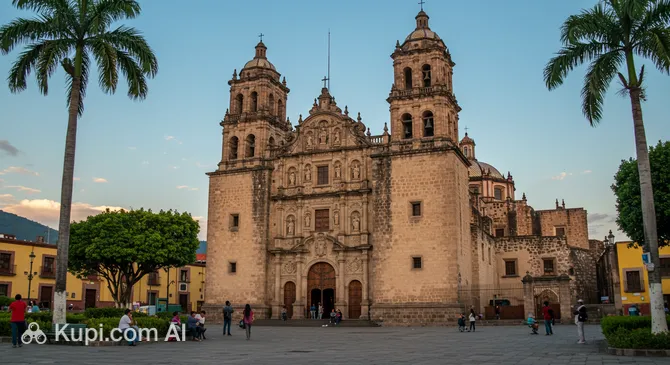
Cuernavaca Cathedral. Illustration.
Source: Kupi.com AI

Traveller photos:

Founded in the 16th century by Franciscan missionaries at the behest of Hernán Cortés himself, the cathedral initially served as a center for converting the local population to Christianity. Its architecture differs strikingly from most churches of that period. Massive walls, austere lines, and minimalist decor give it the appearance of a medieval fortress, making it unique and memorable.

The complex includes not only the cathedral itself but also the adjacent monastery, which is now an important part of this historical ensemble. Walking through its territory allows you to immerse yourself in the atmosphere of the early colonial era and appreciate the scale of the first missionaries' vision. A visit to Cuernavaca Cathedral is an opportunity to touch living history and see one of the region's most significant architectural monuments.

Contacts

Cuernavaca Cathedral is a key historical and religious landmark located in the city center. As it is an active church, visiting hours for tourists may vary. To get the most accurate information on opening times, service schedules, or potential tours, it is recommended to visit the cathedral's official website or contact local tourist information centers directly in Cuernavaca.

How to contactContact
AddressMiguel Hidalgo 17, Cuernavaca Centro, Centro, 62000 Cuernavaca, Mor., Mexico
Phone+52 777 312 1290

What to Do

Visiting Cuernavaca Cathedral is an opportunity to touch the centuries-old history of Mexico. First, take note of its majestic and austere facade, which looks more like a fortress than a temple. On it, you can spot the unusual symbol of the Franciscan order—a skull and crossbones—which immediately sets a historical tone. This is not just an architectural monument but part of a complex listed as a UNESCO World Heritage site.

Upon entering, you will find yourself in a space where an atmosphere of peace and antiquity prevails. The interior's main treasure is the well-preserved 16th-century frescoes depicting scenes from the lives of the first Christian missionaries in Japan. Looking at these murals, you can literally feel the breath of history. Walk through the main nave and side chapels to fully appreciate the scale and spiritual significance of this place.

The exploration isn't limited to the cathedral itself. Be sure to look into the inner courtyard, where an ancient cemetery is located, giving the complex a special depth and mystery. A walk around the adjacent territory will allow for a better understanding of the monastery complex's unique architecture. For those wanting to learn more, tours are often available, including those from Mexico City, where guides provide detailed stories about the cathedral's history and its significance in the life of Cuernavaca.

Getting There

Cuernavaca Cathedral is conveniently located in the historical center of the city of the same name, making it easily accessible for all travelers. If you are planning a trip from the capital of Mexico, Mexico City, which is about 85 km to the north, you can reach Cuernavaca by car or regular bus. The drive along the Mexico City — Cuernavaca highway will take you about 1.5–2 hours, but it is always worth allowing extra time for traffic, especially during peak hours.

Upon arrival in the city, finding the cathedral is easy. Since it is located in the heart of Cuernavaca, the best way to get there is on foot. This way, you can not only see this iconic landmark but also enjoy the atmosphere of the colonial streets. If you are staying in a remote area, you can always use a local taxi. Additionally, organized tours from Mexico City are available for tourists, which often include transfers and guide services—a great option for those who want to learn more about the cathedral's history without any hassle.

Nearest city: Cuernavaca

History & Facts

Cuernavaca Cathedral, also known as the Cathedral of the Assumption of Mary, is one of the oldest cathedrals in Mexico and carries a rich history reflecting a fusion of cultures. Its construction was started by Franciscan missionaries around 1552 and, notably, it was built on the ruins of a pre-Hispanic Aztec temple. Stones from the destroyed pyramid were used to build the new Christian structure, becoming a powerful symbol of the change in eras and beliefs in the region.

Originally, the cathedral was the centerpiece of a large monastery complex that served as both a religious and educational center for the indigenous population. The building's architecture is unique: it combines the austere, almost fortress-like features typical of early monasteries in New Spain with elements of traditional Mexican church architecture. This duality reflects the historical realities of the time when monasteries often served a defensive function.

One of the cathedral's most intriguing details is its facade. You can see a symbol unusual for a church—a skull and crossbones. This is not a pirate sign but the emblem of the Franciscan order, symbolizing the frailty of human life and devotion to faith. Along with other monasteries on the slopes of the Popocatépetl volcano, Cuernavaca Cathedral is listed as a UNESCO World Heritage site, highlighting its exceptional cultural and historical value for Cuernavaca and the entire country.

Time Needed

For a standard visit to Cuernavaca Cathedral, it is recommended to set aside about 1-2 hours. This time is sufficient to get acquainted with its impressive architecture, which resembles a medieval fortress, explore the main nave, admire the frescoes, and feel the special atmosphere of this historical site founded back in the 16th century.

If you plan a more detailed exploration of the cathedral complex, it is better to allow 2-3 hours. This will let you visit not only the cathedral itself but also the adjacent chapels and small museums on the grounds without rushing. Additionally, you will have time for a leisurely stroll through the courtyard and gardens to fully enjoy the tranquility of this unique corner of Cuernavaca.

Working Hours

Cuernavaca Cathedral is not only an important landmark but also an active religious site. As a rule, it is open to visitors daily, but exact opening hours may change depending on the day of the week, the season, and scheduled church services. To avoid disappointment, it is highly recommended to check the current schedule on the cathedral's official website or inquire at a local tourist center before your visit.

Typically, no prior reservation is required for a self-guided tour of the cathedral, and entry is free. However, if you plan to attend a special event or book a guided tour, it is better to check the conditions in advance. The landmark is accessible year-round, making it a convenient stop on any travel itinerary through Cuernavaca.

DayOpening hours
Monday9:00 – 14:00, 4:00 – 19:00
Tuesday9:00 – 14:00, 4:00 – 19:00
Wednesday9:00 – 14:00, 4:00 – 19:00
Thursday9:00 – 14:00, 4:00 – 19:00
Friday9:00 – 14:00, 4:00 – 19:00
Saturday9:00 – 14:00, 4:00 – 19:00
Sunday9:00 – 14:00

Nearby

A visit to Cuernavaca Cathedral is undoubtedly a highlight of any trip to Cuernavaca. However, to truly feel the atmosphere of this historical district, it is worth spending some time in its surroundings. Just a few steps from the cathedral are other iconic sites that will help you gain a deeper understanding of the city's culture and history.

A walk through the nearby streets will reveal cozy squares, interesting museums, and picturesque gardens. Such exploration will complement your impressions and make your visit to Mexico even more rewarding and memorable. Below is a list of interesting places located within walking distance.

NameDistance
Borda Garden0.1 km
Robert Brady Museum0.1 km
Museum of the City of Cuernavaca0.1 km
Revolution Park0.1 km
Juárez Garden0.3 km
Plaza de Armas0.3 km
Regional Museum of the Peoples of Morelos0.4 km

Reached the bottom of the page?

Looks like you know this route inside out