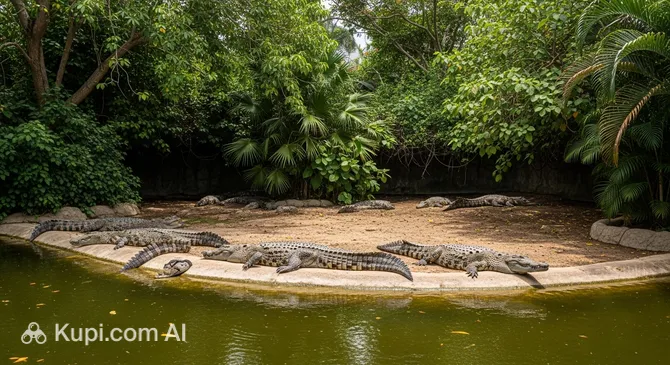
Imagine a corner of untouched nature where ancient reptiles feel right at home. The Crocodile Viewing Platform is a unique site in the city of Puerto Vallarta, offering a glimpse into the world of some of the planet's most mysterious predators. Although often classified as a zoo, it is actually part of the Cipactli research and rehabilitation center located in scenic Mexico.
Crocodile Viewing Area. Illustration.
Source: Kupi.com AI
Traveler photos:
Visitors can observe crocodiles in conditions that closely mimic their natural habitat. The center's primary mission is the rescue and rehabilitation of animals affected by human activity. It is home not only to giant reptiles but also to turtles, coatis, and even wild boars, creating incredible biodiversity in the Banderas Bay area.
This place is highly popular due to its educational value and the opportunity to witness the conservation of rare species firsthand. A stroll through the grounds offers a completely different experience than a typical zoo visit, as the focus here is on authenticity and the careful preservation of wildlife.
Contacts
For those planning a visit, it is important to check the route in advance, as the site is located in a secluded area. You can find the exact location using the following details:
A visit to the platform is more than just passive observation. The highlight of the experience is an interactive tour with a professional naturalist guide who will reveal the secrets of crocodile life: from their mating habits to their unique digestive systems. You will learn why these creatures can go without food for long periods and how they swallow their food whole.
For those seeking closer contact with nature, there is a rare opportunity to hold baby crocodiles or watch the feeding of massive adults. The sanctuary also allows you to meet other rescued animals, each with its own story, such as a blind female crocodile who has become a local favorite.
Beyond the animal encounters, the journey to the platform itself is like a mini-safari, with the drive through the jungle setting an adventurous tone. It is recommended to bring a camera to capture the thrilling feeding moments and the stunning landscapes of the Mexican coast.
Getting There
Getting to this sanctuary is an adventure in itself. The platform is located near Puerto Vallarta in the Nuevo Vallarta area. The most convenient way to reach it is by renting a car or taking a taxi. The trip from the city center will take approximately 30–45 minutes, but be prepared for the final stretches of the journey to be on bumpy dirt roads.
If you are not confident in your off-road driving skills, it is better to book an organized tour that includes a transfer. For independent travelers, signs for the El Cora Crocodile Sanctuary can serve as a guide. Using GPS navigation is essential, as the road has no official name, and turn-offs hidden among the greenery are easy to miss.
Nearest city: Puerto Vallarta
History & Facts
The history of this place is closely linked to the work of the Cipactli research program, which aims to study and protect the American crocodile. These reptiles are indigenous inhabitants of the Pacific coast, having inhabited these lands long before cities appeared. The project emerged as a response to the loss of natural habitat and the need to help animals in distress.
Interestingly, the sanctuary is a private initiative and exists primarily through voluntary donations and tickets purchased by tourists. This supports the infrastructure for animals that cannot return to the wild for various reasons, such as injuries from boat collisions or water pollution.
The center's staff acts as guardians of the region's biodiversity. Over the years, they have managed not only to save dozens of lives but also to significantly change the attitude of locals and tourists towards crocodiles, turning fear into respect and interest in these ancient predators, which play a key role in the ecosystem of Puerto Vallarta.
Time Needed
When planning your trip, it is best to set aside 1 to 2 hours for the visit. The guided tour itself usually lasts about an hour—enough time to walk around the area, listen to the expert's story, and take memorable photos with the center's inhabitants.
Keep in mind that extra time may be needed for travel due to the terrain. If you wish to spend more time watching the adult feedings or learning more about other sanctuary residents like turtles and coatis, it is better to arrive with some time to spare.
Working Hours
According to available data, the grounds are formally open 24/7 throughout the week. However, keep in mind that this refers to the site itself, while full tours and interactive programs are only conducted during daylight hours according to the sanctuary's schedule.
We strongly recommend that visitors check tour and feeding times on the project's official website or with local guides in Puerto Vallarta to ensure the visit is as informative and safe as possible.
Open 24 hours
Nearby
After meeting the formidable reptiles, you can continue your journey around the area. Exploring this part of the coast can significantly enrich your experience, as both modern entertainment complexes and nature parks are located nearby.
The Nuevo Vallarta area offers many options for family vacations and active leisure: