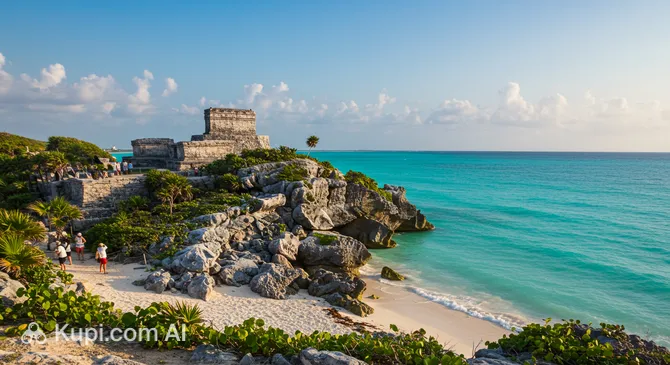
Imagine a place where the azure waves of the Caribbean Sea meet the ancient mysteries of the Maya civilization. Playa Ruinas is one of the most picturesque and recognizable beaches, located in the town of Tulum on the Yucatan Peninsula. Situated in the heart of Mexico, this stretch of coastline offers travelers a unique experience combining a tropical getaway with the study of world historical heritage.
Playa Ruinas. Illustration.
Source: Kupi.com AI
Traveler photos:
The main feature of this location is its incredible setting right at the foot of the ancient city. The soft, snow-white sand and bright turquoise water are framed by majestic cliffs topped with centuries-old Mayan structures. This site is protected as part of the Tulum National Park and is rightfully considered one of the most beautiful corners of the entire Riviera Maya.
The cozy bay, surrounded by palm trees and a rocky shore, creates an atmosphere of true paradise. Here, you can not only enjoy the sun but also feel the greatness of the past, watching how modern nature harmonizes with the architectural legacy of the ancestors. Playa Ruinas is a living postcard that is definitely worth seeing with your own eyes.
Contacts
To help you plan your visit to this amazing place, we have gathered the essential contact information. The beach is part of a popular tourist area and is open to all visitors.
A visit to this coastline promises to be rich and memorable. First and foremost, guests can enjoy a classic beach holiday: take a dip in the crystal-clear waters and sunbathe on the dazzling white sand. It is the perfect place to refresh yourself in the sea right after a walk along the hot archaeological trails of the ancient city.
For fans of active recreation, Playa Ruinas offers excellent opportunities for snorkeling. Coral reefs are located just offshore, where you can observe vibrant marine life. If you are into diving, look into dives along the Mesoamerican Barrier Reef, which runs along the coast and is striking in its biodiversity.
In addition to water activities, it’s impossible to ignore the cultural component. After walking just a few hundred meters, you will find yourself in the center of the Tulum archaeological zone. Thus, your day can turn into a fascinating journey through time: from a morning swim in the Caribbean Sea to exploring the majestic pyramids and temples of the ancient Maya.
Getting There
Reaching this tropical paradise is easy. Playa Ruinas is located approximately 130 kilometers south of Cancun. If you are staying in Tulum itself (Tulum Pueblo), the beach is just 6 kilometers from the center, in the so-called Hotel Zone (Zona Hotelera).
The most convenient way to get around is by taxi or rental car. Tourist shuttles also run regularly from the town. Many travelers prefer to go by bicycle, which allows them to enjoy the local scenery and the sea breeze. Since the beach is located within a protected park, after arriving at the archaeological zone, you will only need to walk a few hundred meters to reach the shore itself.
Nearest city: Tulum
History & Facts
The beach didn't get its name by accident: it is located in the immediate vicinity of the ruins of an ancient Mayan city, which flourished between 1200 and 1500 AD. In those days, Tulum was a key port hub and an important trading center. It was the only major Mayan city built directly on the coast, making it a strategically significant site until the arrival of the Spanish.
Towering over the beach is El Castillo (The Castle) — the most massive and tallest building in the archaeological complex. Researchers believe that in ancient times it may have served as a landmark and navigational aid for Mayan ships, helping them navigate through gaps in the coral reef. Today, its majestic silhouette against the sea is the hallmark of the entire Riviera Maya.
Another historical gem nearby is the unique Temple of the Frescoes. Inside this structure, fragments of original paintings depicting Mayan deities and religious motifs have been preserved. The combination of the bay's natural beauty and the monumentality of the ancient ruins creates a very special, mystical atmosphere here, allowing you to touch the secrets of a vanished civilization.
Time Needed
When planning your visit, expect that you will need between 2 to 4 hours for a relaxing beach stay and a brief introduction to its surroundings. This is plenty of time to swim in the ocean, take spectacular photos against the cliffs, and simply enjoy the moment in the shade of the palms.
If your goal includes a detailed tour of all the structures in the Tulum archaeological zone, it is better to set aside at least half a day for the trip. Keep in mind that this place is very popular with tourists, so it’s best to arrive at opening time to enjoy the peace before the main influx of tour groups.
Working Hours
There are no specific opening hours established exclusively for the beach area; however, access to it is regulated by the rules of the Tulum National Park. Generally, the territory is open to visitors during daylight hours, which coincides with the opening hours of the archaeological complex.
To ensure your visit goes perfectly, we recommend checking the current information on opening hours on the official park website or asking local tour operators for details, as the schedule may change slightly depending on the season or conservation activities.
Nearby
The surroundings of this coastline are rich with unique locations, and exploring nearby sites will help you form a complete impression of the region's culture and nature. The most important monuments of Mayan history and amazing natural sinkholes — cenotes — are concentrated right near the shore.