Support

Mayan Bee Sanctuary

About

Hidden within the emerald jungles of Cozumel island, the Mayan Bee Sanctuary is a unique preserve where nature meets ancient history. This site is dedicated to the conservation of meliponas—the legendary stingless bees that the Mayan people revered as divine beings. Unlike the species we are used to, these bees do not sting, and their honey possesses rare healing properties.
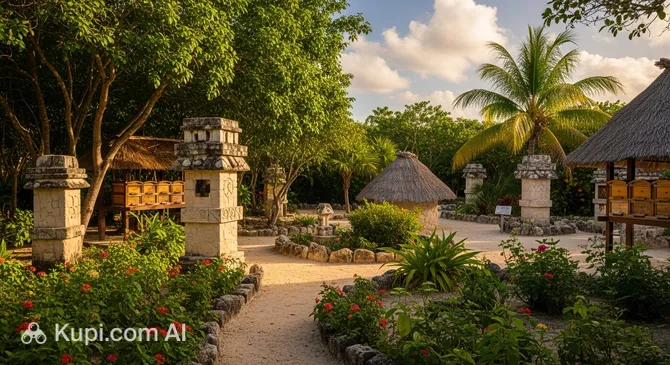
Mayan Bee Sanctuary. Source: Kupi.com AI

The sanctuary is not just an apiary, but a true educational and ecological center. Here, surrounded by wild orchids and bromeliads, the descendants of the great civilization that Mexico once knew demonstrate the sacred connection between humans and the environment. The complex includes authentic Mayan sculptures, shaded trails, and a picturesque cenote that has served as a source of life for local inhabitants for centuries.

Visitors can expect to immerse themselves in a mystical atmosphere: from traditional cleansing rituals to meeting the "Royal Lady Bee" (Xunán Kab). It is an ideal destination for eco-tourists and families wishing to see rare fauna in their natural habitat and discover the secrets of longevity hidden in small wax honey pots.

Contacts

To plan your visit to this unique natural corner, it's helpful to have current contact information at hand. You can contact the sanctuary representatives directly for details regarding private tours or special events.

Address Carr Transversal km 10, 77600 Q.R., Mexico
Phone +52 998 155 0602
Official Website http://www.mayanbeesanctuary.com.mx/

What to Do

Your journey at the sanctuary begins with a deep dive into tradition: before entering the jungle, a local shaman performs a cleansing ritual. It is believed that the fragrant smoke of incense helps leave negative thoughts behind and appease the spirits of the forest—the Aluxes—so that your presence does not disturb the peace of the sacred bees.

Next, you will set off on a walk along a forest trail adorned with statues of deities, leading to the meliponary. Here, you can observe the jobon in detail—traditional hives made from hollow tree trunks. You will see the "guards" working at the entrance and worker bees gathering nectar without any fear of stings. Experienced guides will explain the complex social structure of the hive and why these insects are so vital to the entire region's ecosystem.

The highlight of the visit is the tasting. You will be invited to try the legendary melipona honey, which tastes significantly different from common honey—it features citrusy notes and a light acidity. You can also experience the properties of propolis, pollen, and natural wax. To conclude your visit, stop by the souvenir shop to purchase organic cosmetics, candles, or healing tinctures made according to ancient recipes.

Getting There

Finding this natural oasis is easy: it is located in the heart of the island at Carr Transversal km 10. If you are staying in the city of Cozumel (San Miguel), it is most convenient to use a rental car or take a taxi. The drive east along the well-maintained Carretera Transversal highway will take about 10–15 minutes, and parking is available on-site.

For tourists arriving on cruise ships, the taxi ride from the port to the sanctuary takes about 20 minutes. The fare usually ranges between 20–30 USD per car. Many tour operators also include a visit to the meliponary in their group excursion programs, providing transfers directly from the pier.

Travelers arriving from the mainland must first take the ferry from Playa del Carmen to the island. Once at the port, you will easily find a taxi stand. The road to the sanctuary passes through scenic jungles, allowing you to get into the spirit of nature even before you arrive.

History & Facts

The connection between the Mayan people and the stingless melipona bees dates back more than 3,000 years. These remarkable insects were considered sacred, and their cultivation was an integral part of Mayan culture, religion, and medicine. The ancient Maya believed that the bees were overseen by the honey god Ah-Mucen-kab, whose images are frequently found in the region's archaeological zones.

In ancient times, melipona honey was called "liquid gold." It was used not only as food but also as a potent medicine for healing wounds, treating eye diseases, and even in complex rituals. The Maya were among the first in history to develop a rational beekeeping system, using hollow logs called jobon as hives, which were placed near cenotes—considered gateways to the sacred underworld.

On the island dedicated to Ixchel, the goddess of the Moon and medicine, honey served as an important offering. The modern sanctuary aims not just to showcase traditions but to save the melipona population, which has significantly declined over recent centuries. Today, they preserve 16 species of indigenous Yucatan bees, continuing the work of their ancestors in harmony with the jungle ecosystem.

Time Needed

For a standard tour of the exhibits and participation in the ritual, most visitors need between 1.5 and 2.5 hours. This is plenty of time to stroll leisurely along the jungle paths, listen to the guide's story, and observe the life of the bees at their unusual hives.

If you plan to browse the gift shop, which features propolis and wax-based products, or want to spend more time by the cenote admiring the orchids, it's worth budgeting a bit more time for your visit. Also, keep in mind that tour registration usually begins 15 minutes before the start time.

Working Hours

The sanctuary is open to visitors from Monday to Saturday. Operating hours are from 09:00 to 15:00. Please note that Sunday is a day off, so plan your trip for a weekday or Saturday.

Since tours are conducted on a schedule, it is recommended to arrive 15–20 minutes before the tour begins for registration. It is best to check the current schedule and potential changes for holidays on the official website before heading out.

Nearby

The sanctuary's location in the central part of the island makes it easy to combine your visit with other interesting locations. The surrounding area is rich in both cultural parks and historical ruins, allowing you to create a full day's itinerary.

Name Distance (km)
Pueblo Del Maíz 5.1
Zona Arqueológica San Gervasio 6.3
מגן דוד קוזומל 8.4
La Conchita del Caribe 8.9
Cerveceria Punta Sur 10.1
Casa Cuzamil 10.2
Aqui + Ahora Coffee Bar 10.3
La Monina 10.5
Sunset 10.6
Skyreef Beach Club Cozumel 13.4

Reached the end of the page?

That means the route is fully explored