Support

Agadir Amazigh Heritage Museum

About

In the heart of the popular resort city of Agadir lies a true treasure trove of traditions — the Amazigh Heritage Museum. This cultural space is entirely dedicated to the history, daily life, and art of the Amazigh (Berbers), the indigenous people of North Africa. The museum occupies a modern two-story building, with its entrance adorned by traditional terracotta gates, immediately preparing visitors for an encounter with the ancient customs of Morocco.
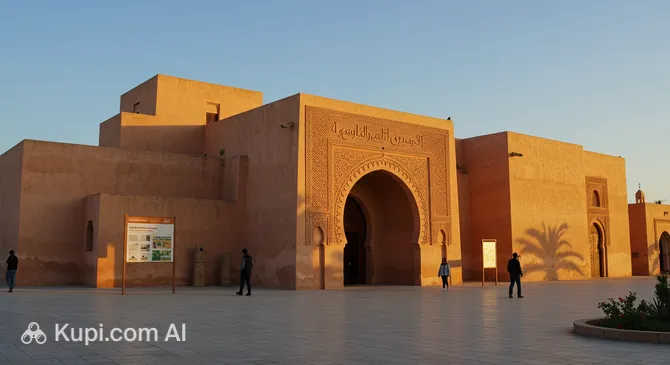
Agadir Amazigh Heritage Museum
Agadir Amazigh Heritage Museum. Иллюстрация. Источник: Kupi.com AI

The museum's collection includes about 1,000 items, with around 200 of the most valuable 18th–19th-century artifacts exhibited in the permanent halls. Here, you can see all aspects of the life of the "free people" (the translation of the name Amazigh): from coarse earthenware and massive wooden doors to exquisite jewelry that served not just as accessories, but as an entire language of symbols.

The museum is divided into thematic zones, including halls with handicrafts, musical instruments, and weapons. A special place in the collection is held by the Massa pendant — a spiral disk that has become the emblem of this site. A visit to the museum offers a deeper look at Morocco than hotel walls allow, touching the roots of the Souss-Massa-Draâ region.

Contacts

For more information about special exhibitions or group visits, you can use the following contact details:

How to contactContact
AddressRue Hassan II, Passage Aït Souss، Agadir 80000, Марокко
Phone+212 5 28 82 16 32
Websitewww.fnm.ma

What to Do

Inside the museum's halls, you will be immersed in a world of symbols and crafts. It's worth starting with a detailed study of the jewelry collection: the massive silver brooches, earrings, and necklaces here are striking in their delicate craftsmanship. Pay special attention to the enamel and the shapes of the jewelry — they encode information about tribal affiliation and the owner's status. Don't forget to find the famous Massa disk, which is the jewel of the exhibition.

For a deeper understanding of Amazigh culture, it is recommended to use the services of a guide. A specialist will help decipher the mysterious patterns on Berber carpets and explain the meaning of the protective talismans that have guarded local residents for centuries. You can also see traditional costumes, musical instruments, and even ancient architectural elements — such as carved wooden doors from mountain villages.

On the ground floor of the museum, there is an interesting art gallery. It showcases works by modern local artists who interpret Amazigh roots and traditions in vibrant colors. After viewing the exhibition, you can stop by the small library to browse books on Moroccan culture. A pleasant bonus is the affordable ticket price (about 20 dirhams), making the visit accessible to every tourist.

Getting There

Finding the Amazigh Heritage Museum is very simple — it is located in the very heart of the city of Agadir on the pedestrian Rue Hassan II. A recognizable landmark is the massive terracotta gates, built in a traditional style, which stand out against the modern buildings. The museum is located just 50 meters from the main city beach, between the busy Boulevard Hassan II and Avenue Mohammed V.

If you are staying in the city center or relaxing on the coast, the best way to reach the museum is on foot, enjoying the sea breeze. For those traveling from outlying areas, the most convenient and fastest method is a taxi. The ride will be inexpensive, and drivers know the location well. Public transport in the city is not as extensive, so a car ride or a walk is the optimal choice for a tourist.

Ближайший город: Agadir

History & Facts

The history of this place is inextricably linked with the indigenous people of North Africa — the Amazigh (Berbers). This people, whose roots go back 9,000 years, call themselves "free people." Their unique culture was formed at the crossroads of African and Mediterranean traditions, preserving its identity despite numerous historical upheavals.

The museum itself was officially opened in February 2000. Its creation was an important step for the city of Agadir as part of the cultural heritage revival following the devastating 1960 earthquake. The initiative to open it came from French volunteers and local authorities, who sought to create a space for preserving the disappearing traditions of southern Morocco.

The core of the collection consists of 18th–19th-century artifacts gathered in the Souss-Massa-Draâ region. Special attention is given to symbolism: every pattern on a carpet or the shape of a piece of jewelry in Amazigh culture is a kind of non-verbal message. The museum's main symbol and pride is the famous Massa pendant — a silver disk with a spiral, representing infinity and the continuity of generations.

Time Needed

The Amazigh Heritage Museum is a compact and very cozy space. To leisurely explore all three halls, study the ornamental details, and see the painting collection, most visitors need about 30 to 60 minutes.

It is an ideal location for an educational break during a walk through the city center or before heading to the beach. Despite its small size, the exhibition is so rich that even in a short time, you will gain a comprehensive understanding of the life and traditions of the indigenous peoples of Morocco.

Working Hours

The Amazigh Heritage Museum is usually open to visitors from 10:00 AM to 6:00 PM. Please note that the standard closing day in most sources is Tuesday, although information may change depending on the season or holidays.

Before your visit, we recommend checking the current schedule on the official website or directly on-site, as in some cases the museum may close for a break or have shorter hours on Fridays.

DayWorking hours
понедельник10:00–18:00
вторникЗакрыто
среда10:00–18:00
четверг10:00–18:00
пятница10:00–18:00
суббота10:00–18:00
воскресенье10:00–18:00

Nearby

The museum's location in the heart of the tourist zone allows you to easily combine an introduction to Berber culture with other activities. A stroll through the surrounding area will reveal the modern sides of the city, from sports grounds to water parks.

Exploring nearby locations will help you better understand the rhythm of modern Agadir and provide plenty of positive emotions for both adults and children.

NameDistance
La Bodeguita Essa0.4 km
Agadir Beach Promenade0.8 km
Agadir City Tour0.8 km
Agadir Beach0.9 km
Olhão Garden1 km
Escape Zone Agadir1.2 km
Agadir Cable Car Station1.4 km

Reached the end of the page?

That means the route is fully explored