Support

Bayt Dakira

About

In the heart of the old medina of Essaouira lies a unique cultural space called Bayt Dakira, which translates to "House of Memory." Located in the historic Jewish quarter of Mellah, this museum serves as a living testimony to centuries of harmonious coexistence between different cultures in Morocco.
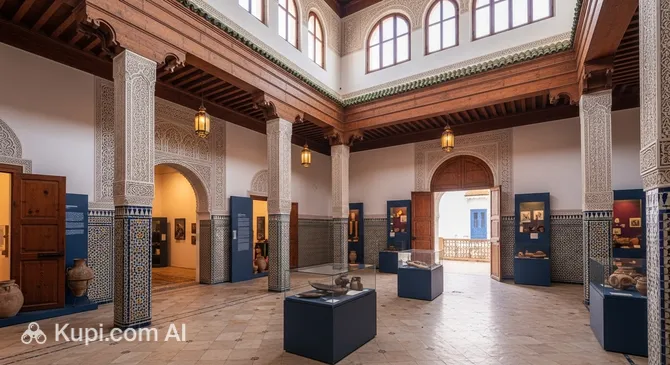
Bayt Dakira
Bayt Dakira. Иллюстрация. Источник: Kupi.com AI

The Bayt Dakira exhibition is entirely dedicated to the city's Jewish community and its contribution to the region's development. Here, visitors are greeted with the unusual welcome "Shalom Aleykoum, Salam Lekoulam"—a hybrid of Arabic and Hebrew symbolizing the spirit of friendship and mutual respect that has reigned in these streets for centuries.

The museum space brings together not only exhibition halls with rare artifacts and photographs but also the Simon Attias Synagogue and a research center dedicated to the history of relations between Judaism and Islam. It is a spiritual and cultural sanctuary that offers a glimpse into the past and an understanding of the unique model of coexistence between the two communities within the walls of this seaside fortress.

Contacts

To plan your visit to Bayt Dakira, it is helpful to have current contact information at hand. You can check details by phone or on the city's official tourism resource.

How to contactContact
AddressRue Ziry Ibn Atiyah, Essaouira, Марокко
Phone+212 5 24 66 35 87
Websitevisitessaouira.net

What to Do

A visit to Bayt Dakira is, first and foremost, an opportunity to immerse yourself in the atmosphere of a bygone era through personal stories and rare artifacts. Guests can examine a detailed collection of vintage photographs, documents, and everyday items that tell the story of the Jewish community's daily life. Particular attention should be paid to the unique texts that demonstrate the deep intertwining of cultural traditions.

Inside the building, be sure to step into the Simon Attias Synagogue, which has been carefully restored and retains its solemn appearance. The architecture of the house itself, a typical example of traditional medina construction, is worth studying in its own right: its two floors and excellently preserved interiors create a sense of authenticity and connection to history.

For those who appreciate a thoughtful dialogue between cultures, visiting the Haim and Celia Zafrani research center will be an interesting experience. Here, you can learn about scholarly works dedicated to the links between Judaism and Islam and spend time in a peaceful setting, reflecting on the importance of heritage preservation in the authentic Mellah quarter.

Getting There

You can find Bayt Dakira tucked away in the labyrinths of Essaouira's old medina on Rue Ziry Ibn Atiyah. The most pleasant and straightforward way to get there is on foot. From the main gates of the medina, such as Bab Doukkala or Bab Marrakech, the walk to the museum takes about 10–15 minutes. Follow the signs toward the Mellah (Jewish quarter).

If you are staying outside the historic center, you can use a petit taxi—small blue city taxis that will quickly take you to the nearest medina entrance. Since motorized traffic is prohibited inside the old city, you will need to leave the car at one of the parking lots by the fortress walls and continue on foot, soaking in the atmosphere of the narrow streets.

For those arriving in the city by bus, the walk from the Essaouira (gare routière) bus station to the medina entrance takes about 20 minutes on foot or just a few minutes by taxi. Once inside the medina, it is easy to navigate using maps, as Bayt Dakira is located in a fairly compact and atmospheric area.

Ближайший город: Essaouira

History & Facts

The history of Bayt Dakira is inextricably linked with the development of the Mellah quarter—the place where the heart of the city's Jewish community beat for centuries. The building that houses the museum today was originally a private residence. Its transformation into the "House of Memory" was a symbolic gesture aimed at preserving the fleeting pages of Moroccan history for future generations.

One of the central elements of the complex is the Simon Attias Synagogue, built in the 19th century. It served not only as a place of prayer but also as an important community center. Today, its walls stand as a reminder of the times when Essaouira was one of the country's primary trading ports, and Jewish merchants and craftsmen played a key role in its prosperity.

The establishment of a research center within Bayt Dakira underscores the city's status as a cradle of tolerance. The museum emphasizes that the history of Moroccan Jews is not a separate layer, but an integral part of the national identity. The preserved interiors and architectural details allow visitors to literally touch the past, which is carefully protected here from being forgotten.

Time Needed

Travelers typically need 1 to 2 hours to thoroughly explore all the exhibits at Bayt Dakira. This is usually enough time for a leisurely look at the photographs, a visit to the synagogue, and a brief stop at the research center.

If you plan to study the archival documents in the Haim and Celia Zafrani Center in detail, or if you simply want to enjoy the tranquility of this place for longer, you should set aside a bit more time. The museum is small but rich in detail, inviting thoughtful contemplation.

Working Hours

The doors of the Bayt Dakira museum are generally open to visitors from 09:30 to 18:30. This schedule is in effect from Monday to Friday, as well as on Sundays. Please note that the museum is closed to visitors on Saturdays.

As the official schedule may change depending on holidays or special events, visitors are encouraged to check for the most current information on the official website before their visit.

DayWorking hours
понедельник09:30–18:30
вторник09:30–18:30
среда09:30–18:30
четверг09:30–18:30
пятница09:30–18:30
субботаЗакрыто
воскресенье09:30–18:30

Nearby

Essaouira is a compact city, and a visit to Bayt Dakira can easily be combined with exploring other iconic sites. A stroll through the surrounding streets of the medina will allow you to see ancient gates and bastions and feel the sea breeze by the fortress walls.

Exploring the area around the Mellah quarter will reveal new facets of the history of this port city, where every stone holds a memory of the past.

NameDistance
Khmissa Restaurant0.1 km
Cafe Restaurant Berber0.1 km
Essaouira City Walls0.1 km
Le Love0.2 km
Palazzo Desdemona0.2 km
Place Moulay Hassan0.2 km
Bab Sbaa Gate0.3 km

Reached the end of the page?

That means the route is fully explored