Support

City Walls

About

Imagine massive stone fortifications where the foamy waves of the Atlantic crash with a roar—this is how the majestic Essaouira City Walls greet their guests. This impressive 18th-century defense complex, located in the coastal city of Essaouira, is one of the most recognizable landmarks that Morocco is proud of. Designed by a French architect at the Sultan's request, these walls harmoniously blend European military engineering with Moroccan flair.
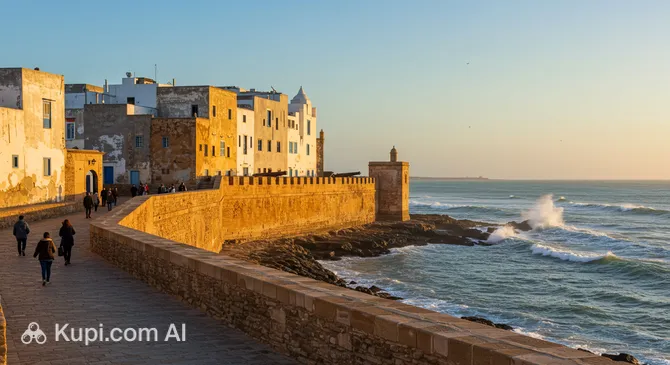
Essaouira City Walls
Essaouira City Walls. Иллюстрация. Источник: Kupi.com AI

The main feature of these fortifications lies in their unique layout, inspired by the French fortress of Saint-Malo. White stone bastions with rows of old Spanish cannons have repeatedly protected the wealthy trading port from sea raids. Today, they serve as an ideal observation deck, offering breathtaking views of the Purple Islands and the endless ocean horizon.

As part of the historic center recognized as a UNESCO World Heritage site, the city walls create a unique atmosphere of a medieval port. Here, you can wander endlessly along the wide parapets, breathing in the salty sea air and admiring how the whiteness of the walls contrasts with the azure water and the blue fishing boats in the harbor.

Contacts

For those planning a visit to this historical monument, key navigation information is provided below. The walls surround the old part of the city and are easy to find by following the sound of the surf and the visible bastions.

How to contactContact
AddressEssaouira, Morocco

What to Do

The main reason to climb the walls is for a leisurely stroll along the Skala de la Ville (Scala del Mar) bastion. Here, you can touch the cold barrels of ancient cannons and capture the famous view of the port, where hundreds of blue boats bob on the waves. Don't miss the chance to wait for the sunset: the sun dipping straight into the ocean against the backdrop of crenelated walls creates a truly magical scene.

From the height of the fortifications, it’s fascinating to watch the bustling life below: there's an excellent view of the fish market and the shipyards, where craftsmen still repair wooden vessels using traditional methods. Often at the foot of the walls, you can hear the hypnotic rhythms of Gnawa music or meet street artists drawing inspiration from the raw beauty of the surf.

Film buffs might find these places familiar—the city walls and gates have frequently served as backdrops for Hollywood films, including "Kingdom of Heaven." After walking through the stone corridors of the bastions, be sure to stop by one of the seaside cafes to taste the freshest seafood while enjoying a panorama that has remained virtually unchanged for the last two centuries.

Getting There

Reaching this coastal city from the country's major tourist hubs is quite simple. Essaouira is located approximately 180 km west of Marrakech. The most popular method is via comfortable buses operated by CTM or Supratours, with the journey taking about 3 hours. You can also use grand taxi services or book a private transfer. If you are flying in directly, Essaouira-Mogador Airport is just 20 km from the city center.

The defensive structures themselves are located directly in the medina, next to the port area. From the city's main bus station, you can reach the fortifications on foot in just 5–10 minutes by simply heading towards the ocean. Inside the old city, movement is only possible on foot, by bicycle, or using special carts, as the streets are too narrow for cars.

For drivers, parking zones are available near the port where you can leave your car for a small fee. Remember that walking along the walls requires comfortable shoes, as the stone paving can be uneven, and strong Atlantic winds often blow across the open bastions.

Ближайший город: Essaouira

History & Facts

The history of this place is rooted in deep antiquity: as early as the 7th century BC, the Phoenicians established a trading post here. Later, these shores were favored by the Romans, who harvested valuable dye on the Purple Islands. However, the appearance we see today began to take shape in the 1760s at the will of Sultan Mohammed III ben Abdallah, who decided to turn the city into the empire's main strategic port.

The uniqueness of the city walls lies in their architectural origin. The project was designed by French military engineer Théodore Cornut, who modeled it after the fortifications of the French fortress-city of Saint-Malo. This is why the Moroccan bastions feature a European style of military architecture that is so unusual for North Africa. In its heyday, the port of Essaouira was called the "Port of Timbuktu," as it was the arrival point for caravans carrying gold and ivory from the heart of Africa.

For centuries, Muslims, Christians, and Jews coexisted in peace and harmony behind these walls, making up a significant portion of the city's population and engaging in international trade. The fortifications successfully protected this prosperous hub until the mid-19th century. Since 2001, the entire medina, along with its majestic walls, has been included in the UNESCO World Heritage list as an outstanding example of architectural synthesis between East and West.

Time Needed

To leisurely soak in the atmosphere of this historic site, the average tourist needs about 1.5 to 2.5 hours. This is plenty of time to walk along the main bastions, take panoramic photos of the ocean, and examine the antique cannons mounted on the observation decks.

If you plan to combine your tour of the walls with a visit to the fishing port, watching the local boat builders at work, or relaxing in one of the panoramic cafes overlooking the Atlantic, it's better to set aside half a day. It is especially beautiful here during the pre-sunset hours when the walls are painted in warm golden tones.

Working Hours

There is a specific schedule for visiting the city fortifications and bastions. According to current data, the site is open to tourists daily from 9:00 AM to 6:45 PM. This provides ample time to catch both the bright daylight and the soft light before sunset.

Despite the official opening hours of the bastions themselves, the adjacent sections of the walls within the medina are often accessible 24/7. However, for the safest and most comfortable experience, it is recommended to stick to the official schedule and daylight hours.

9:00 – 18:45

Nearby

A stroll along the mighty bastions is just the beginning of your acquaintance with the charm of this port city. The proximity of historic forts, bustling markets, and cultural centers allows you to immerse yourself in the centuries-old history of the region in a single day.

Exploring the surroundings beyond the main walls will help you better understand the soul of Essaouira: from craft shops to the ruins of old palaces buried in the sand. Below are the attractions located within walking distance:

NameDistance
Bayt Dakira0.1 km
Cafe Restaurant Berber0.1 km
Khmissa Restaurant0.2 km
Palazzo Desdemona0.3 km
Place Moulay Hassan0.3 km
Bab Sbaa Gate0.4 km
Grain Market Square0.4 km

Reached the end of the page?

That means the route is fully explored