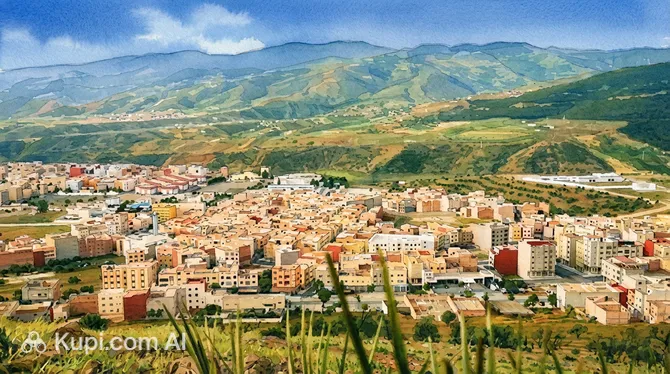
Targuist is a charming and quiet provincial hub located in the northern part of Morocco. The town is nestled among the picturesque hills of the Rif Mountains, offering travelers a rare opportunity to experience the authentic lifestyle of the region away from the noise and bustle of popular tourist routes. An atmosphere of tranquility prevails here, while the traditional architecture and narrow streets invite leisurely strolls.
Located in the Al Hoceima Province, the town serves as an important administrative and cultural node for the surrounding villages. The population of Targuist is approximately 13,390 people, which helps maintain a cozy, almost family-like environment. This region is famous for its rich Berber heritage, carefully preserved by the locals and evident in everyday life, traditional crafts, and vibrant weekly markets.
Targuist. Illustration.
Source: Kupi.com AI
Tourists are drawn here not only by cultural authenticity but also by the proximity to the majestic nature of the Rif. The surrounding areas are ideal for ecotourism: the clean mountain air and panoramic views of the valleys make this place a perfect spot for a reset. Everyone should immerse themselves in the city's historical heritage to see Morocco from its most sincere and hospitable side.
Weather Overview
Targuist features a typical subtropical Mediterranean climate, significantly influenced by its location in the Rif Mountains. Summers here are usually warm and dry: in July and August, daytime temperatures often reach +30–35°C. However, thanks to the altitude of about 500 meters above sea level, summer nights bring a pleasant coolness, unlike the coastal regions.
Winter in the town is mild but fairly wet. The bulk of the annual precipitation falls between November and March, making spring incredibly green and blooming. In the winter months, daytime temperatures usually hover around +10–15°C, while at night they can drop to +4–6°C. Snow in the town itself is extremely rare, but the peaks of the surrounding mountains are sometimes covered with white caps.
The most favorable time for a visit is considered to be spring (April–May) and autumn (September–October). During these periods, the weather in the city is as comfortable as possible for walking and exploring the surroundings. You can enjoy the mild sun and the absence of exhausting heat, which is ideal for active recreation in the mountains.
Average monthly temperature
Average monthly precipitation
Interesting Facts
Targuist is located in the Rif Mountains at an altitude of about 500 meters above sea level, which keeps it pleasantly cool even in the height of summer.
Berber culture dominates the town, and most locals communicate in the Riffian dialect of Tamazight, although Arabic is also widely used.
The town is an important center for agricultural trade: the local market is famous for having the region's best olive oil, figs, and high-quality cereals.
Targuist is known in Morocco as the birthplace of several famous athletes and outstanding performers of Berber folklore.
Despite its provincial nature, the town's population is growing steadily, making it one of the dynamically developing small centers in the north of the country.
How to Get There
The town of Targuist has decent transport accessibility for travelers exploring the northern part of Morocco. The main way to get here is by bus. Regular services by CTM and private carriers connect the town with major centers such as Al Hoceima (located about 40 km away) and Tetouan. The road passes through picturesque mountain serpentines, and the journey from nearby cities usually takes between one and two hours.
For those who prefer to travel independently, renting a car is the most convenient option. You can reach Targuist from Tangier or Fez via the N2 and N16 national highways. The travel time is approximately 3–4 hours. Despite the good road surface, drivers should be extremely careful due to the sharp turns in the Rif Mountains.
The nearest airport to the town is in Al Hoceima. It handles flights from Casablanca and some European cities. After landing, tourists can take a taxi or a scheduled bus to Targuist. More detailed information on how to plan your route can be found on specialized transport pages.
There is no direct rail connection to the town itself, as the mountainous terrain makes it difficult to lay tracks. Travelers accustomed to trains will have to combine rail transport with buses or taxis from larger hub stations in the north of the country.
The main center of attraction in Targuist is the traditional souk (market). It is the living heart of the town, where you can not only purchase fresh produce, spices, and unique items from local artisans but also observe the authentic rhythm of life in the Moroccan provinces. Cozy cafes and a mosque are located in the town's central square, creating a unique atmosphere, especially during the cool evening hours.
For lovers of history and architecture, the Kasbah—an ancient fortress rising on a hill above the town—is of particular interest. Its walls bear traces of Berber architecture and serve as a reminder of the strategic importance of this region in past centuries. From the height of the fortifications, a magnificent view opens up over the entire town and the surrounding mountain landscapes.
The natural riches around Targuist are equally impressive. The Rif Mountains offer numerous trails for hiking through olive groves. Additionally, natural hot springs are located in the vicinity, popular with both locals and the occasional tourists seeking seclusion and natural healing. These spots are ideal for picnics and contemplative relaxation in the heart of the wild.
Local Cuisine
The culinary traditions of Targuist are closely intertwined with Berber culture and the use of fresh farm products. The main dish that you must try is the tagine. Here it is prepared with special care, simmering lamb with vegetables and aromatic spices over an open fire in a clay pot. Couscous is also very popular and is traditionally served on Fridays.
Proximity to the Mediterranean Sea provides the town with fresh seafood, so you can often find fried fish dishes in local cafes. Another gastronomic pride of the region is the delicate goat cheese produced in the surrounding mountain villages. Start your lunch with a thick and hearty harira soup, and try pastilla—a layered pie with an unusual combination of sweet and savory flavors—as an appetizer.
The dining culture in Targuist is centered around small family cafes and market stalls. That is where you can find the most authentic food at affordable prices. As for drinks, no visit is complete without traditional Moroccan mint tea, which is brewed very strong and sweet here. Also, be sure to try the freshly squeezed pomegranate juice—pomegranates from this region are considered some of the most delicious.
Travel Tips
A journey to Targuist promises to be an unforgettable experience of immersion into the real Moroccan provinces, and these practical tips will help make your trip as comfortable as possible.
Clothing and gear: Choose comfortable closed shoes suitable for walking over rugged mountain terrain. Since the town is in the mountains, evenings can be cool even in summer—bring a light jacket or sweater.
Transport: It is best to get around on foot within the town, and use grand taxis for trips to neighboring cities. Always confirm the fare before getting into the car.
Finance: Be sure to carry a sufficient supply of cash Dirhams. There are ATMs in the town, but cards are only accepted in very rare establishments. Tipping in cafes is encouraged; usually, 5–10% of the bill is sufficient.
Health and safety: Drink only bottled water and avoid ice in drinks at street cafes. Pharmacies can be found in the town center, but it is better to bring specific medications with you.
Communication: The main languages are Arabic and Berber; English is not widely spoken. Learn a few phrases, such as the greeting "Salam Alaikum"—this will immediately win over the locals.
Local Etiquette:Targuist is a conservative town. Dress modestly: shoulders and knees should be covered. Always ask for permission before photographing local residents.
What to avoid: It is best not to discuss political topics or criticize local customs. Also, avoid walking alone on remote mountain trails after sunset.
Additional tip: Try to time your visit to coincide with the weekly market (souk)—it is the best time to see the town in all its local color.
By following these simple rules, you will be able to fully enjoy the hospitality and beauty of this amazing corner of the Rif Mountains.
Entertainment & Nightlife
Entertainment in Targuist is of a quiet and traditional nature, reflecting the unhurried pace of life in the Rif Mountains. You won't find noisy nightclubs or modern discos here, as the town focuses on family vacations and the preservation of cultural traditions. Evening life is mainly centered in small cafes in the town center, where locals gather to drink mint tea, exchange news, and listen to the stories of the elders.
A true highlight of the town's cultural life is the local festivals of Berber music, which often take place on weekends or during holidays. The traditional Ahwash dances leave a special impression on guests. This mesmerizing spectacle, accompanied by the rhythmic sounds of drums and chants, allows one to deeply feel the spirit and energy of the local culture.
For daytime leisure, strolls through the central squares or visits to the weekly markets, which are vibrant attractions in themselves, are excellent options. Otherwise, Targuist offers a safe and welcoming environment for night walks under the starry mountain sky, allowing you to enjoy the silence and peace that are so hard to find in large metropolises.
Parks & Museums
There are no large parks in the conventional sense within Targuist itself; however, the town is surrounded by natural green zones of incredible beauty. Olive groves and endless mountain meadows sprawling across the slopes of the Rif serve as the primary recreation spots for locals. These natural sites are perfect for long hikes, nature contemplation, and organizing picnics with views over the valleys.
In the town center, a small square with a fountain is a point of attraction, where you can rest in the shade of trees on a hot day. For tourists seeking active leisure, the surrounding natural trails in the Rif Mountains replace any landscaped parks, offering unique routes through groves and rocky sections where you can meet local shepherds and discover the region's wild flora.
Regarding cultural institutions, the town lacks large museums, but the historical core of Targuist itself can be viewed as an open-air museum. If you wish to visit ethnographic exhibitions or see collections of archaeological finds, the nearest major museums are located in the city of Al Hoceima. They feature displays detailing the history of Berber tribes and the maritime past of the region.
Getting Around
The public transport system in Targuist reflects its status as a small mountain town. The primary means of communication between the town and neighboring settlements is the grand taxi. These are shared taxis (usually older Mercedes) that depart once they are filled with passengers. This is the fastest and most affordable way to reach Al Hoceima or Tetouan. Regular minibuses also operate, with service intervals ranging from 30 to 60 minutes.
Within Targuist itself, transport services are provided by motor rickshaws and small taxis; however, due to the town's compactness, most tourists prefer to get around on foot. This allows for a better look at the architecture and a chance to feel the atmosphere of the streets. Fares in taxis and rickshaws are paid in cash to the driver, and it is better to agree on the cost of the trip in advance, as meters are rarely used here.
For those who want to independently explore the surroundings of the Rif Mountains, renting a scooter or bicycle can be an excellent alternative. This will give you the freedom of movement and the opportunity to peek into the most remote corners inaccessible to buses. When planning trips on rented transport, take into account the mountain terrain and the condition of roads in rural areas, which can be quite steep.
Accommodation
Accommodation options in Targuist primarily consist of traditional Moroccan guesthouses and cozy riads. This family-style lodging allows tourists to fully immerse themselves in the local way of life. Accommodation prices here are very affordable and usually range from 20 to 50 euros per night, making the town accessible for budget travelers.
The most convenient area to find lodging is the town center and the vicinity of the main market. By staying here, you will be within walking distance of all the main shops, cafes, and transport stops. Guesthouse owners are famous for their hospitality and often offer homemade breakfasts prepared according to ancient recipes.
If you are looking for more modern and comfortable hotels with a wide range of services, you should consider options in neighboring Al Hoceima, where the choice of hotels is significantly larger. When planning a visit to Targuist during local holidays, it is recommended to book accommodation in advance, as the number of rooms in quality riads is limited. Booking is usually done through international services or directly via the owners' contact details.
Nearby Cities
The town of Targuist is an excellent starting point for exploring the northern region of Morocco, where mountain landscapes give way to the azure coast. Just 40 kilometers away is Al Hoceima—a popular resort town known for its magnificent beaches and lively port. A trip there is an ideal option for those who want to combine a mountain holiday with sea swimming.
Lovers of peace and secluded villages should head to Bni Gmil or visit Snada. These small settlements, located less than 20 km from the town, allow you to see the life of the Rif Mountains in all its pristine beauty. Also of interest is Sidi Abdelkader, where you can get acquainted with the traditional rural lifestyle of Morocco.
City
Population
Distance
Bni Gmil
9 513
18 km
Snada
9 176
18 km
Sidi Abdelkader
20 854
18 km
Bni Boufrah
9 653
20 km
Ouaouzgane
16 772
20 km
If you have time for a longer excursion, be sure to visit the legendary Chefchaouen, located about 150 km away. This famous "Blue City" with its labyrinth of azure streets and cozy markets will leave an unforgettable impression. Each of these destinations reveals new facets of the region's amazing nature and culture, making your trip rich and diverse.
Shopping & Souvenirs
Shopping in Targuist is, above all, an immersion into the atmosphere of traditional Moroccan bargaining. You won't find modern shopping malls with international brands here, but you can visit the famous weekly souk. Residents from all the surrounding villages gather at this market, bringing unique goods that cannot be found in major cities. The market is the best place to feel the spirit of Berber trade.
The main souvenirs to bring back from Targuist are the products of local artisans. Handmade rugs with traditional Riffian patterns and unique ceramics deserve special attention. The region is also famous for its gastronomic products: be sure to purchase a bottle of natural olive oil, aromatic spices, and honey collected in the mountains. These products are characterized by their high quality and naturalness.
The main stalls and shops are concentrated in the central district of the town. Shops usually operate from morning until late evening, though many close for a break during the hottest hours of the day. Payment in most places is made exclusively in cash (Moroccan Dirhams), so you should take care of currency exchange in advance. Bargaining at the market is not only appropriate but is an important part of the purchasing ritual, allowing you not only to lower the price but also to converse with the seller.