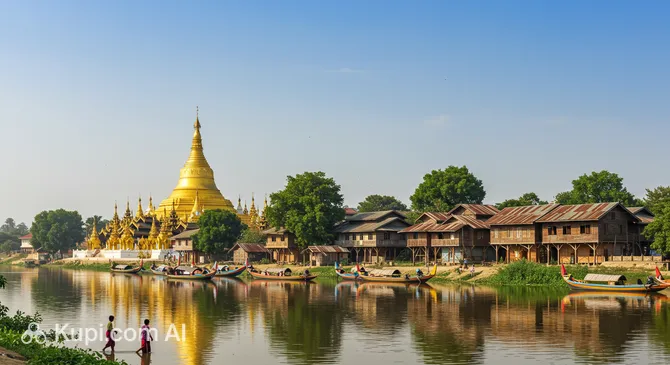
Pathein is a vibrant port city nestled in the heart of the Irrawaddy Delta. As the capital of the eponymous region in Myanmar, the city charms visitors with its authenticity and slow pace of life. Unlike bustling metropolises, Pathein retains the character of a provincial center, where everyday life is closely intertwined with Buddhist traditions and lively trade along the waterfront.
Pathein. Illustration.
Source: Kupi.com AI
Geographically, the city is located 190 kilometers west of Yangon. With a population of about 300,000, it is one of the largest cities in the country and serves as a vital transport hub. The rich history of Pathein dates back to the Mon kingdom era, making it older than famous centers like Bagan or Mandalay. Today, you can find a unique blend of colonial architecture and traditional Burmese buildings here.
The city's main symbol is the famous Pathein umbrella. Workshops producing these colorful accessories made of bamboo and silk are scattered throughout the center, and watching the crafting process is a must-see. The city is also famous for its majestic pagodas, dominated by the golden Shwemokhtaw Paya. Visiting this city is an invitation to see the real, non-touristic life of the Irrawaddy Delta, filled with the aroma of spices and the sounds of a river port.
Weather Overview
The climate in Pathein is determined by its location in the Irrawaddy Delta and is distinctly tropical monsoon in nature. High temperatures ranging from +25°C to +35°C prevail throughout the year. March and April are considered the hottest period, when the thermometer often rises above +36°C, and air humidity begins to grow rapidly before the arrival of the rains.
The rainy season lasts from June to October, bringing heavy rainfall that can reach 500-700 mm per month. During this time, the city's climate is characterized by almost daily downpours and high cloud cover. However, it is during this period that the nature of the delta looks most lush and vibrant. The dry season begins in November and lasts until May, offering tourists sunny days and comfortably warm nights, making it the ideal time to visit.
Expect humid, hot summers and dry, warm winters. Travelers should keep in mind that the proximity of the river and port provides natural ventilation; however, it can be dusty in the city during the dry season. Humidity remains consistently high throughout the year, so light cotton clothing and sunscreen will be your best companions on the trip.
Average monthly temperature
Average monthly precipitation
Interesting Facts
Pathein is Myanmar's fourth-largest city and a key port in the Irrawaddy Delta, playing a strategic role in the country's trade.
The city has ancient origins: it was part of the Mon kingdom and is historically older than famous cultural centers like Bagan and Mandalay.
According to one version, the city owes its name to the Burmese word "Pathi," meaning "Muslim," related to the historical presence of Arab and Indian traders.
Pathein is considered the national capital for the production of decorative paper and silk umbrellas, prized throughout Myanmar for their quality and elegant painting.
The city preserves traces of its colonial past, including the remains of a fort built in 1826.
How to Get There
The transport accessibility of Pathein makes it a convenient destination for those exploring the Irrawaddy Delta. The most popular and practical way to get here is by bus from Yangon. The 190-kilometer distance is covered in about 4–6 hours. Buses depart from the Dagonay bus station; it is recommended to choose morning departures to avoid traffic leaving the capital and to enjoy the views of rice fields along the way.
For those who prefer air travel, there is Pathein Airport (IATA: BSX). Although regular flights are infrequent, the flight from Yangon takes only about 40 minutes. The airport is located close to the city center, and you can reach your hotel by taxi or motor rickshaw. It is also possible to arrive by water: ferries cruising the delta offer a unique travel experience, though the journey can take 8 to 10 hours depending on the season.
Railway service in this region is less developed than bus service, so trains are rarely considered by tourists as a primary option. If you plan to explore the routes in detail, it is worth checking the ways to get to the city in advance. The main focus in Pathein is on road infrastructure connecting the city with the coast and the capital.
Station
Passenger traffic
Distance
Yangon Central railway station
10
152 km
Yangon Central railway station
10
152 km
Main Attractions
The main spiritual and architectural landmark of the city is the magnificent Shwemokhtaw Paya. According to legend, its foundation was laid by the Indian King Ashoka as early as 305 BC. The temple's modern appearance is impressive: it stands over 46 meters tall, and its spire is decorated with gold, silver, and thousands of precious stones, including hundreds of diamonds and rubies. It is a center of attraction not only for pilgrims but for all lovers of Eastern aesthetics.
A stroll through Pathein inevitably leads to the picturesque Irrawaddy riverfront. This is the living heart of the city, where you can watch ships being loaded and the daily bustle of the river port. Nearby are the famous workshops for making traditional Pathein umbrellas. Tourists can see with their own eyes how artisans hand-paint the umbrellas with bright patterns, turning an ordinary household item into a true work of art.
For evening relaxation, Maha Bandula Park is ideal. As dusk falls, it fills with lights and the aromas of street food, becoming a favorite meeting place for locals. Also worth noting are the Shan Ywar Monastery and the historic Baptist church, which reflect the diversity of the city's cultural heritage. Although Pathein is not a classic resort, its temples and markets create a unique atmosphere of authentic Myanmar.
Local Cuisine
The gastronomy of Pathein is a classic embodiment of Burmese culinary traditions with a strong emphasis on the bounty of the Irrawaddy River. The main dish that accompanies locals from early morning is mohinga—a fragrant fish soup with rice noodles, ginger, and lemongrass. Thanks to the city's port status, you can always find the freshest river fish, shrimp, and crabs, prepared with plenty of spices or simply fried to a crisp.
Be sure to try lahpet thoke, the traditional Burmese fermented tea leaf salad. This unique dish combines sour, salty, and bitter notes and is often served with fried garlic, peanuts, and sesame seeds. The basis of the daily diet also includes various types of curries, which in Pathein are served with plenty of rice and fresh vegetables.
The food culture in the city is centered around markets and street stalls along the waterfront. A relaxed atmosphere prevails here: locals and visitors eat in small family cafes where the cost of a hearty portion rarely exceeds a few thousand kyats. It is customary to wash down the meal with the famous Burmese tea with condensed milk or refreshing natural juices made from tropical fruits.
Travel Tips
A trip to Pathein will be a pleasant and comfortable experience if you consider a few important practical points characteristic of the Myanmar province.
Clothing and Dress Code: When visiting pagodas, be sure to choose clothing that covers your shoulders and knees. Remember that when entering temples, you must remove not only your shoes but also your socks. It is recommended to wear light, natural fabrics due to high humidity.
Finances: There are very few ATMs in the city that accept international cards, so always carry a sufficient supply of cash in local kyat. It is better to exchange currency in advance in Yangon.
Getting Around Town: The most convenient way to move is by motorcycle taxi. Always agree on the price of the trip in advance, as meters are not used here.
Health: Drink only bottled water and avoid ice in street cafes. There are many mosquitoes in the Irrawaddy Delta, so be sure to use repellents, especially in the evening.
Communication: English is not widely spoken, so it is useful to learn a few basic phrases in Burmese. For connectivity, it is better to buy a local SIM card (e.g., MPT or Ooredoo), as Wi-Fi in hotels can be unstable.
Local Etiquette: Burmese people are very friendly and modest. Greet people with a slight bow of the head and try not to show strong emotions in public.
What to Avoid: Never touch the heads of locals (especially children) and do not point at objects or people with your feet—this is considered a gross insult.
Best Time: Plan your visit for the period from November to May (the dry season), when the weather is most favorable for walking and trips to the coast.
Following these simple rules will help you win the favor of the locals and make your journey through the Irrawaddy Delta truly unforgettable.
Entertainment & Nightlife
Entertainment in Pathein is calm and traditional, reflecting the religious lifestyle of the local population. You won't find noisy nightclubs or modern bars with loud music here. Instead, the city offers the charm of evening walks along the Irrawaddy waterfront and visits to tea houses, where you can spend time in leisurely conversation over a cup of strong Burmese tea while watching the river flow.
The center of evening activity is Maha Bandula Park. When the cool air arrives, families and young people gather here, and numerous snack stalls create a cozy atmosphere of a city festival. For those interested in local life, visiting karaoke halls—one of the most popular forms of leisure for city dwellers—can be an interesting experience. Occasionally, football matches are held at city stadiums like Myoma or Koe Thein, drawing passionate fans.
For travelers seeking more intense nightlife or beach parties, Pathein serves only as a transit point. For active nightlife, people usually head to Yangon or popular coastal resorts like Ngwe Saung or Chaung Tha, which can be reached by bus in a few hours. However, it is the lack of a mass entertainment industry that allows you to experience the true, unhurried life of the Burmese province in Pathein.
Parks & Museums
Green spaces in Pathein are mainly concentrated around its central part and the waterfront. The most famous place for city dwellers to relax is Maha Bandula Park. This well-kept square with neatly trimmed trees and lighted alleys becomes especially lively in the evening hours. Here you can not only walk in the shade but also try local snacks from street vendors while observing the slow-paced city life.
Another important recreational zone is the Irrawaddy riverfront. Although it is not a park in the classic sense, the open space by the water creates a sense of spaciousness and freshness, which is crucial in tropical heat. Many people come here to admire the sunset over the delta when the river turns golden.
As for museums, they are virtually absent in Pathein. The city's cultural and historical memory is concentrated in its religious sites. Instead of galleries, tourists visit the Shwemokhtaw Paya or ancient monasteries like Shan Ywar, which are themselves open-air museums preserving ancient traditions and artifacts. For those who appreciate nature, the region around the city offers endless water landscapes of the delta, which are as picturesque as any man-made parks.
Getting Around
The transport system of Pathein is perfectly suited for a city of its size and is characterized by the absence of capital-city bustle. The main means of transportation for locals and tourists are motorcycle taxis (known locally as saaran) and traditional cycle rickshaws. These types of transport allow you to get anywhere in the city quickly and inexpensively, and a trip through the center usually takes no more than 10–20 minutes.
Public buses also run through the city, connecting the main markets, pagodas, and bus stations. The fare is minimal—from 200 to 500 kyat—but navigating the routes without knowledge of the local language can be difficult. Fares are paid in cash to the driver or conductor. Traffic jams in Pathein are rare, so moving around the city remains predictable throughout the day.
Given the compactness of the center, many attractions can be explored on foot, but it is worth keeping the high humidity and heat in mind. For longer distances, such as to the airport, it is better to arrange a price with a taxi or motor rickshaw driver in advance. Car rentals are not common here, but you can rent a bicycle if you wish, which is an excellent way to explore the waterfront and quiet residential neighborhoods at your own pace.
Accommodation
The hotel infrastructure in Pathein is primarily aimed at travelers stopping over on their way to the beaches or visiting the city for business. The choice of accommodation is not very large: mostly budget guesthouses and mid-range hotels are represented. Prices for standard rooms in guesthouses start from $10–30 per night, making accommodation very affordable.
The most convenient area to stay is the city center, located near the Shwemokhtaw Paya and the waterfront. This is where the main umbrella shops and cafes are concentrated, and transport is easiest to find. Another cluster of inexpensive hotels is located near the bus station, which is convenient for transit tourists planning an early departure to Yangon or the coast.
Since Pathein is not a mass tourist destination, booking accommodation in advance is usually not required, except during major religious festivals. Luxury seekers should note that five-star resorts are absent here—for premium service, it is better to head directly to the Ngwe Saung or Chaung Tha resorts. When choosing a hotel in the city, it is recommended to look for air conditioning, as the climate in the delta is characterized by high humidity.
Nearby Cities
Due to its location in the Irrawaddy Delta, Pathein serves as an excellent starting point for exploring the coastal areas and colorful settlements of the region. Most travelers use the city as a gateway to the best beaches of the Bay of Bengal, which are just a few hours' drive away.
One of the most popular destinations is Chaungtha—a cozy coastal town famous for its sandy beach and abundance of seafood. It is also worth visiting Myaungmya, a small center that allows for a deeper look at the agrarian way of life in the delta. For those interested in the everyday life of Myanmar, a trip to Ngapudaw or the larger Kyaunggon would be interesting.
City
Population
Distance
Ngapudaw
10 632
27 km
Myaungmya
58 698
28 km
Chaungtha
10 181
37 km
Wakema
48 405
51 km
Kyaunggon
163 035
59 km
Exploring the surroundings of Pathein allows you to see Myanmar without embellishment: endless rice fields intersected by numerous river channels and hospitable villages where life flows much as it did centuries ago. A trip to any of the nearby towns, such as Wakema, will be a wonderful addition to your itinerary through the southern part of the country.
Shopping & Souvenirs
Shopping in Pathein is primarily an introduction to the unique crafts of the region. The city is world-famous for the production of traditional Pathein umbrellas (Pathein Htee). These products made of cotton, silk, and bamboo, decorated with hand painting, are the main souvenir worth bringing from here. The workshops are concentrated in the central districts, and buying an umbrella directly from a master is a great reminder of the trip.
For food and the atmosphere of an authentic Asian trade, head to the city's central markets. Here you can find not only fresh tropical fruits and spices but also lacquerware, fabrics, and traditional Burmese longyi clothing. Pathein's markets are known for low prices and friendly sellers, and bargaining is considered a natural part of the buying process.
There are practically no modern large shopping centers in the city; trade is conducted in small shops and street stalls, especially along the waterfront. Shops usually operate from early morning until sunset. Only cash (Burmese kyat) is accepted, so it is worth taking care of currency exchange in advance. Despite the simplicity of the local trade infrastructure, the authenticity of the goods and the opportunity to purchase handmade items make shopping in Pathein truly interesting.