Support

De Kuip

About

De Kuip, which translates as "The Tub," is a legendary football stadium located in the city of Rotterdam, the Netherlands. Its official name is "Stadion Feyenoord," and it serves as the home arena for the famous football club of the same name. Located in the Feijenoord district, this stadium is not just a sports facility but a true symbol of the city and one of the most iconic arenas in the country.
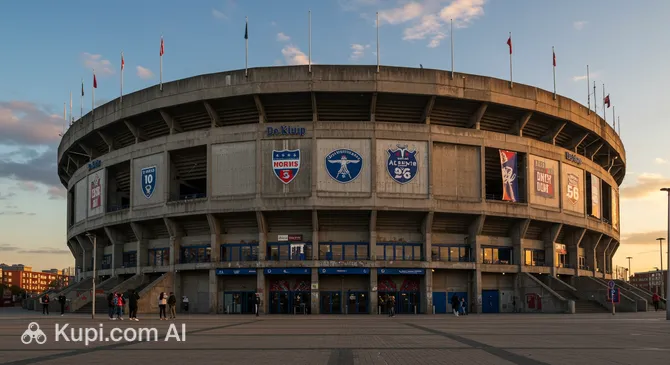
De Kuip. Illustration.
Source: Kupi.com AI

Traveler photos:

The stadium's architecture, once considered a model for post-war Europe, still impresses today with its thoughtful design. The stands are bowl-shaped and situated as close as possible to the football pitch. This layout creates a unique and intense atmosphere during matches, allowing fans to literally become part of the game and provide powerful support for their team.

A visit to De Kuip will be of interest not only to passionate football fans but also to architecture enthusiasts. This arena is more than just a stadium; it is a place with a rich history where great victories have been won, and it is rightfully considered one of the iconic sports structures of the Netherlands.

Contacts

For the most accurate and up-to-date information on events, stadium tours, or ticket purchases, it is recommended to visit the official website of the arena. Although the main language of the site is Dutch, all the necessary information can be found there. Below are the primary contact details for reaching the stadium administration.

How to contactContact
AddressVan Zandvlietplein 1, 3077 AA Rotterdam, Netherlands
Phone number+31 10 492 9444
Websitewww.dekuip.nl

What to Do

The main reason to visit De Kuip is, of course, a football match. The stadium is the home arena of the Feyenoord club, and attending a game allows you to fully experience Rotterdam's famous football culture. A special feature of the arena is its unique acoustics and the maximum proximity of the stands to the field, which creates an indescribable and intense atmosphere during competitions. You can become part of the spectacle, watching the game from the stands and supporting the team along with thousands of dedicated fans.

Even if you don't make it to a match, there's plenty to do at the stadium. 90-minute guided tours are available for everyone, offering a behind-the-scenes look at sporting life. During the tour, you can walk through the players' tunnel, sit on the coach's bench, enter the locker rooms, and visit the Feyenoord club museum, which houses trophies and memorabilia. It's a great opportunity to learn more about the history of the club and the stadium itself, which is an important part of the Netherlands' sporting heritage.

In addition to football matches and tours, the stadium occasionally hosts other major events, such as concerts and business meetings. In the past, an ambitious renovation project for the arena was discussed, proposed by the OMA architectural firm, which involved building a new stadium and transforming the old building into a multifunctional space with residential and commercial areas. However, as of 2025, there is no definite information regarding the implementation of this plan, and De Kuip continues to function in its historical form, delighting sports fans with its unique atmosphere.

Getting There

Getting to the De Kuip stadium is quite simple, as it is located in Rotterdam — a city with a well-developed transport infrastructure. The Netherlands is famous for its sophisticated public transport system, and Rotterdam is no exception. Regardless of which part of the city you are in, you will have several convenient options for reaching the arena.

The most convenient way to reach the stadium is by public transport. From Rotterdam Centraal, you can take a direct tram No. 23 (towards Beverwaard) to the Stadion Feijenoord stop, which is located right in front of the arena. On match days and during major events, special trains often run, stopping at the Rotterdam Stadion railway station, situated just a few steps from De Kuip. You can also take a bus or use other tram routes that stop within walking distance.

If you prefer comfort, a taxi ride from the city center will take about 15–20 minutes, depending on traffic conditions. Additionally, as in many Dutch cities, cycling is a popular way to get around. Special bicycle parking is available near the stadium, making this option not only eco-friendly but also very convenient, allowing you to avoid traffic jams on event days.

Nearest city: Rotterdam

History & Facts

The history of the De Kuip stadium is an integral part of the sporting chronicles of the Netherlands. The arena was founded in 1935, and its construction continued until 1936. The grand opening took place on March 27, 1937, and from that moment, the stadium instantly gained iconic status among football fans. From the very beginning, it became an important venue for landmark matches and a center of attraction for everyone who loves football.

In the post-war years, De Kuip was considered a true model of modern sports architecture in Europe. Its design, with stands close to the field and excellent visibility from any seat, became an example for many other stadiums. Although the arena has undergone several renovations aimed at modernization, it has managed to preserve its unique architectural appearance and, most importantly, that inimitable atmosphere for which it is so loved by fans.

Throughout its long history, the stadium has hosted countless important events: from decisive national championship games and cup finals to major international competitions. De Kuip is not just a sports facility, but a genuine cultural symbol of Rotterdam. It embodies the city's sporting traditions and is rightfully considered one of the country's most legendary football arenas.

Time Needed

When planning a visit to the De Kuip stadium, you should consider what kind of experience you are looking for. For a standard introductory visit, including a tour, it is enough to set aside about 1.5–2 hours. This is enough time to explore the key areas of the arena at a leisurely pace.

The main way to experience the stadium from the inside is through a 90-minute guided tour. As part of the tour, you can walk through the players' tunnel, peek into the locker rooms, visit the Feyenoord club museum, and sit on the coach's bench by the touchline. Taking into account time for buying tickets, visiting the fan shop, and taking commemorative photos, two hours will be quite sufficient for full immersion in the arena's history.

If your goal is to experience the true and indescribable atmosphere of De Kuip, you should plan to attend a football match. Such an event will take significantly more time — at least a few hours or even half a day. Factor in travel time, stadium entry, the pre-match atmosphere, the 90-minute match itself with a break, and the time to leave the arena after the final whistle.

Working Hours

The De Kuip stadium is open to the public primarily through guided tours, which are held year-round. However, it is important to understand that the schedule is very flexible and directly depends on the schedule of football matches, training sessions, and other events. On match days, access to the stadium for tours may be limited or closed entirely. Generally, tours are conducted several times a day, but specific hours can vary.

For the most accurate information on tour start times and availability, it is highly recommended to check the official stadium website. Be sure to book your tickets online in advance, especially if your trip coincides with weekends or school holidays. This will guarantee you a spot in a group and avoid disappointment if all tickets for your preferred time are sold out.

Nearby

Visiting the De Kuip stadium is a vibrant event, but exploring its surroundings can make your trip to Rotterdam even more enriching. The Feijenoord district and adjacent areas offer many interesting places, from architectural masterpieces to cozy parks, allowing you to dive deeper into the atmosphere of this dynamic city.

Exploring nearby attractions will help you gain a more complete picture of the southern part of Rotterdam. Just a few kilometers from the stadium, you will find both modern city icons and historical sites that are easily accessible on foot, by bike, or by public transport. Below is a list of interesting places located nearby.

NameDistance
De Hef (Koningshaven Bridge)2.7 km
Rotterdam Ahoy2.7 km
Trompenburg Arboretum2.8 km
The Rotterdam2.8 km
Erasmus Bridge3 km
REMASTERED3.3 km
Wereldmuseum Rotterdam3.3 km

Have you reached the end of the page?

So the route has been studied inside and out