Support

Japanese Garden

About

The Japanese Garden in Düsseldorf, Germany, is a true oasis of Eastern harmony, comfortably situated within the city's Nordpark (North Park). This beautiful garden was a generous gift to the city from the Japanese community and the Japanese Chamber of Commerce and Industry as a token of appreciation for the city's hospitality, and it has since attracted all who seek tranquility and aesthetic pleasure.
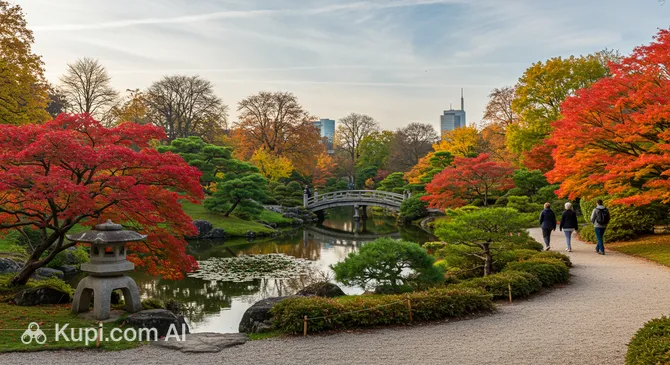
Japanese Garden. Illustration.
Source: Kupi.com AI

Traveler photos:

Across an area of 5,000 square meters, a harmonious space has been created where every element carries meaning and contributes to the peaceful atmosphere. Here, you will find all the essential attributes of a classic Japanese garden: water, represented by picturesque ponds and streams symbolizing the flow of life; stones, artfully arranged to represent mountains and islands; carefully selected plants, such as mosses, maples, and azaleas that change their appearance with each season; as well as traditional architectural elements—stone lanterns, bridges, and a small pavilion.

Also known as the "Japanese Garden on the Rhine" or the "Garden of Contemplation," it invites visitors not so much for active recreation as for quiet contemplation and inner dialogue. This is not just a replica of Japanese gardens; it was specifically designed for Düsseldorf, taking into account the local landscape and mentality while carefully preserving the deep philosophy and traditional principles of Japanese gardening. Visiting this garden is an opportunity to touch the culture of Japan and find inner harmony.

Contacts

Since the Japanese Garden is part of the public Nordpark, separate contact details are generally not published. The garden is open for free public access during park opening hours.

For the latest information on Nordpark's opening hours, potential events, or specific visiting rules, it is best to check the official tourism portal of Düsseldorf or the information boards located directly at the park entrance. You can reach the Japanese Garden by following signs for Nordpark; it is easily accessible by public transport from various parts of the city.

How to contactContact
AddressKaiserswerther Str. 380, 40474 Düsseldorf, Germany
Phone number+49 211 8994800
Websitewww.duesseldorf-tourismus.de

What to Do

In the Japanese Garden in Düsseldorf, visitors can expect an immersion into an atmosphere of exceptional peace and harmony, so characteristic of traditional Japanese gardens. The main activity here is contemplation and reflection, which fully aligns with the deep philosophy of Japanese garden art. Guests can stroll leisurely along picturesque, carefully planned paths, admiring the skillful composition of stones, diverse plants, and water features. Together, these elements create a wonderful model of a perfect world in miniature, inviting quiet observation and inner dialogue.

The garden's special charm lies in its organic integration into the broader landscape of Nordpark. Here, you can see plants with striking, sometimes whimsical shapes that are particularly impressive in certain lighting—for example, when the sun's rays literally "gild" them against the more familiar greenery. An important part of the overall ensemble is the man-made lake, stretching for 170 meters, which is a major attraction of Nordpark in its own right. Visiting the Japanese Garden is a wonderful opportunity to briefly escape the city's hustle and bustle, find a quiet corner, and immerse yourself in a state of meditative calm.

Getting There

The Japanese Garden is nestled within Nordpark (North Park) in Düsseldorf, making it easily accessible for visitors. There are several ways to reach this peaceful corner of Germany, but the most convenient and popular method is public transport.

If you are planning to travel by public transport, the closest stops to the Japanese Garden are tram and bus stations. You can use tram lines U78 and U79, traveling to the Messe Ost/Stockumer Kirchstr. stop. From there, the garden is just a few minutes' walk away.

Another option is the bus. Route No. 722 will take you to the Messe-Center stop, which is also within walking distance of Nordpark, where the Japanese Garden is located. Since Nordpark is one of Düsseldorf's most famous and visited parks, finding the garden within its extensive grounds is usually easy by following the signs or simply enjoying a stroll through the park.

Nearest city: Dusseldorf

History & Facts

The history of the Japanese Garden in Düsseldorf, Germany, dates back to 1974. That was when the "Japanese Garden" society was founded, taking on the mission of creating this unique corner of Eastern culture. The garden's grand opening took place in 1975, and the honor of cutting the ribbon was given to the then Japanese Ambassador, Akira Sono. The choice of Düsseldorf for such a project was no coincidence: the city boasts one of the largest Japanese communities in Germany, earning it the playful nickname "the Japanese capital on the Rhine."

The concept and detailed design of the Japanese Garden were created by prominent Japanese landscape architects—Iwaki Ishiguro and his son Shojiro Ishiguro. To bring their ideas to life, six professional gardeners were specially invited from Japan. It was their craftsmanship that allowed traditional Japanese principles to be harmoniously integrated into the local landscape, creating a truly authentic space filled with tranquility and beauty.

Notably, the garden's connection with its Japanese creators did not end after the opening. Japanese landscape design specialists still visit the Japanese Garden in Düsseldorf every few years for inspection. Their goal is to ensure that German gardeners are carefully maintaining the original concept of the garden as a place for contemplation and peace, preserving its unique spirit and meticulously designed atmosphere for all visitors.

Time Needed

A full and leisurely exploration of the Japanese Garden in Düsseldorf, Germany, usually takes from 1 to 2 hours. This time is generally sufficient to immerse yourself in its peaceful atmosphere, wander all the winding paths, admire the carefully selected plants, stones, and water features, and simply sit in silence, enjoying the harmony of the place. The garden is designed for contemplation and meditative relaxation, so there is no need to rush.

Of course, the duration of your visit may vary depending on your interests. If you just want to get a general overview of the garden, 30–40 minutes might be enough. However, if you are passionate about Japanese culture or landscape design, love photography, or are simply looking for a place for extended solitude and reflection, you could easily spend more than two hours here. It is also worth considering that the Japanese Garden is part of the larger Nordpark, and your visit can be part of a longer walk through the entire park complex.

Working Hours

The Japanese Garden in Düsseldorf is part of the public Nordpark, and access is generally open during the park's operating hours. Entry to the garden is typically free and does not require advance ticket booking for individual visits. The garden is likely open year-round; however, Nordpark's opening hours may change depending on the season (for example, in winter, daylight hours are shorter, and the park may close earlier).

As exact opening hours can vary, it is highly recommended to check current information on the official Düsseldorf tourism portal or directly on the information boards at the Nordpark entrance before your visit. This will help you plan your trip, avoid potential inconveniences, and learn about any special events taking place in the garden or park.

Open 24 hours

Nearby

A visit to the Japanese Garden in Düsseldorf is undoubtedly an immersion into a world of tranquility and Eastern philosophy. However, to make your trip even more rewarding and complete, it is worth exploring the attractions located nearby. Discovering the surroundings will allow you to get to know this area of the city better and perhaps find new interesting spots, enriching your overall experience of visiting Germany.

Near the Japanese Garden, you will find other park areas, cultural sites, and entertainment centers that can perfectly complement your visit. A short walk or a quick ride on public transport will allow you to expand your Düsseldorf itinerary, adding new bright moments and discoveries to your journey.

NameDistance
Aquazoo Löbbecke Museum0.4 km
Düsseldorf Arena1 km
Jump Galaxy Trampoline Park2.6 km
Museum Kunstpalast3.1 km
Stadterhebungs Monument3.7 km
Kunstsammlung Nordrhein-Westfalen3.8 km
Düsseldorf Memorial3.8 km

Have you reached the end of the page?

So the route has been studied inside and out